Yesterday marked a milestone that feels almost impossible to wrap my head around, even in a world where we’re used to seeing tech move at light speed. On February 21, 2026, The Legend of Zelda officially hit the big four-zero. For four full decades, we’ve been waking up in damp caves, scrounging around for wooden shields that break way too easily, and collectively wondering why on earth a boy in a green tunic is the only thing standing between a terrifying Pig Ganon and a total, scorched-earth apocalypse. According to the folks over at IGN Video Games, this isn’t just a series we play; it’s a career-defining obsession. For so many of the editors who grew up with a controller practically fused to their hands, Zelda wasn’t just another game on the shelf—it was the very reason they started writing about this medium in the first place.
It’s easy to look at the cold, hard numbers and see a corporate juggernaut, but that doesn’t tell the whole story. We’re talking about a franchise that has managed to secure seven different 10/10 scores from IGN since 1996. Just think about that for a second—that’s more than any other series in the history of the industry. But the real “Zelda magic” isn’t found in a high score or the fact that Breath of the Wild sat comfortably at the top of the “Greatest Games of All Time” list back in 2021. No, it’s found in the personal, often weird, and occasionally painful memories we’ve built around these digital worlds. Whether you were squinting at an original NES on a tube TV or you’re currently exploring Hyrule on the latest Switch OLED, Zelda has this uncanny way of anchoring itself to specific chapters of our lives.
The beautiful, frustrating mess of the early years: Why we still talk about Zelda II
Most people look back at The Legend of Zelda: The Adventure of Link on the NES with a bit of a shudder, and honestly? I don’t blame them. It’s long been labeled the “black sheep” of the family—the side-scroller that was so punishingly difficult it felt like the developers actually had a personal vendetta against children in the late 80s. But for some of us, that sheer brutality was exactly what hooked us. There’s something to be said about a game that flat-out refuses to hold your hand. In an era where modern titles often feel like they’re playing themselves, looking back at the sheer, unadulterated frustration of Death Mountain reminds us that Zelda used to be a genuine test of human endurance. It wasn’t about the destination; it was about surviving the walk there.
I remember one editor sharing a story about how they rented Zelda II from the local video store week after week, despite the fact that they never actually liked the gameplay. They were just obsessed with the vibe—the incredible Japanese art style in the instruction manual, the strange, jarring transition from an overhead map to side-scrolling combat, and the feeling that anything could happen. It’s a powerful reminder that gaming in the 80s and 90s was as much about our own imaginations as it was about the pixels on the screen. A 2024 Statista report noted that Tears of the Kingdom sold over 20 million copies within its very first year on the Switch, which is a far cry from the niche, experimental days of the NES sequel. Yet, if you look closely, that experimental DNA is exactly what allowed the series to eventually redefine the entire open-world genre—not once, but twice.
“I didn’t really even understand what the hell was going on. I just fell in love with the setting… It set my young imagination on fire.”
— Reflection on Zelda II, via IGN Video Games
And let’s be honest for a second: we wouldn’t have the JRPG obsession we see today without the experience point grind introduced in that weird second Zelda game. It was a bridge between genres that didn’t even know they were supposed to be separate yet. It was messy, it was “unfun” by modern standards, and it probably caused more than a few broken controllers, but it set the stage for the depth and complexity we crave in 2026. It was the growing pains of a legend.
Survival of the fittest: How Link’s Awakening turned us all into lunch-money entrepreneurs
By the time 1993 rolled around, Nintendo did something that changed the landscape of the industry forever: they took Hyrule and shoved it into our pockets. The Legend of Zelda: Link’s Awakening on the original Game Boy was a total revelation. Before the Switch made “Zelda on the go” the industry standard, the idea of taking a full-scale, epic adventure on a yellow school bus was mind-blowing. It was the kind of thing that led to some… let’s call them “questionable” financial decisions for the youth of the 90s. I’ve heard countless stories of kids skipping their cafeteria meals, surviving on nothing but those sugary Otis Spunkmeyer cookies, just to save two dollars a day in lunch money. It’s the kind of childhood hustle that only a truly great game can inspire. If you were a kid in ’93, Link’s Awakening wasn’t just a game; it was a reason to survive the school day.
Ironically, for a lot of people, having Zelda at school actually helped them focus. The promise of a quick dungeon crawl during recess or a hidden session under the desk during history class was the carrot on the stick that got them through their math tests. A 2023 Pew Research Center study found that about 85% of teens play video games, and looking back at the Zelda trajectory, it’s clear Nintendo understood this demographic long before anyone else. They didn’t just make a “smaller” or “lite” Zelda for the Game Boy; they made a weird, surrealist masterpiece that proved portability didn’t have to mean a compromise in quality. That philosophy eventually led us straight to the Switch, a console that effectively erased the line between home and handheld gaming once and for all.
The art of the pivot: Why the ‘Zelda formula’ is actually just a lack of one
So, why are we still talking about this forty years later? Why does it still feel fresh? It’s not just nostalgia, though that’s certainly a part of it. If it were just about looking backward, the series would have quietly died out during the Wii U era. Zelda stays relevant because it stubbornly refuses to be just one thing. It’s a series that gave us the bright, cartoon sailing of The Wind Waker, the dark, gritty, and borderline depressing transformation of Twilight Princess, and the groundbreaking “chemistry engine” physics of the modern era. Nintendo, as a developer, has this uncanny, almost frustrating ability to break their own rules just when we think we’ve finally figured them out.
When Tears of the Kingdom launched a few years back, there was a lot of noise about it being “more of the same.” People were worried. Instead, we got a building mechanic that turned every single player into a pseudo-engineer, creating hovercrafts and giant robots. It’s that willingness to risk the “meta” of the franchise that keeps it at the very top of the pile. Zelda isn’t afraid to be a roguelike for a minute, or a complex puzzle game, or a high-stakes combat sim. It’s a canvas for whatever new technology or crazy idea Nintendo is trying to push into the world.
Looking ahead, the rumors of the next big step for the franchise are already swirling through the usual channels. Will we see a return to the traditional, tightly-packed “small room” dungeons of the past, or will the world expand even further into the stars? Whatever happens, the 40th anniversary has proven that Zelda is that rare, unicorn franchise that grows with its audience rather than just for them. We aren’t just playing as Link anymore; we’re playing as our own memories of every Link that came before us. It’s a heavy mantle, but we wouldn’t have it any other way.
What was the first portable Zelda game?
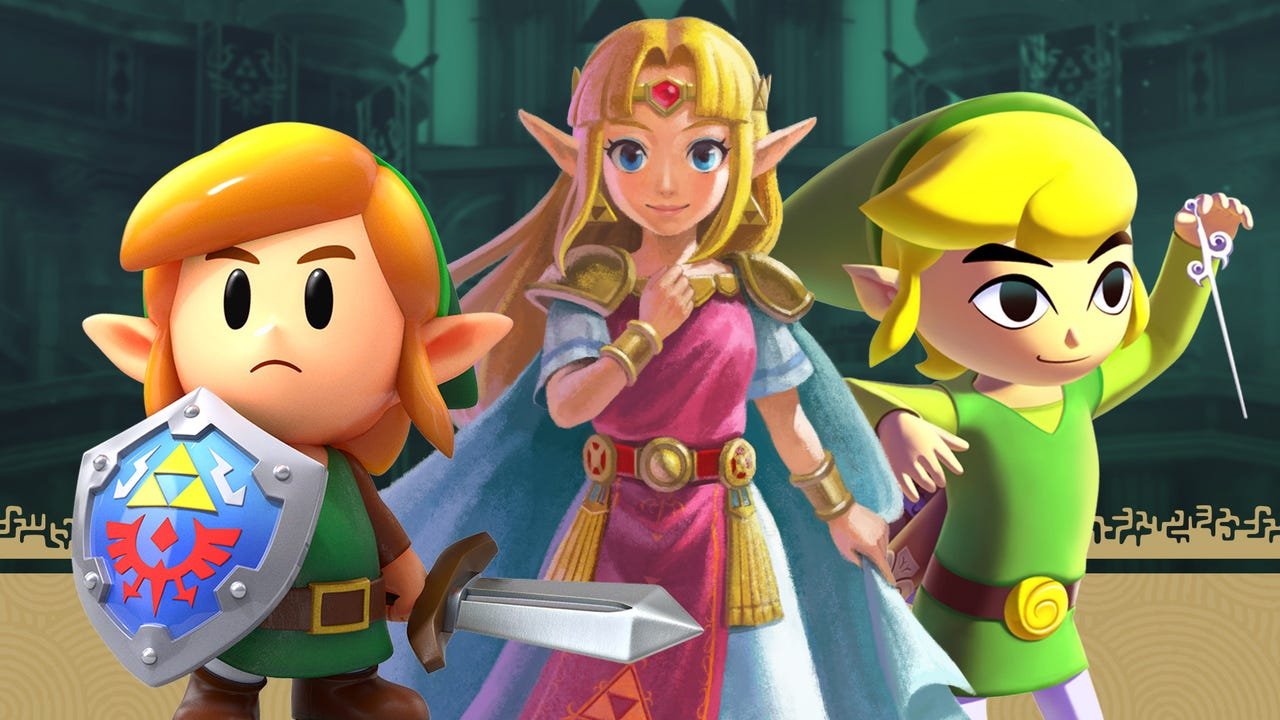
That honor goes to The Legend of Zelda: Link’s Awakening, which hit the Nintendo Game Boy back in 1993. It was a massive deal at the time because it didn’t feel like a “watered down” version of the console games. It was so beloved that Nintendo eventually remade it for the Switch in 2019 with that gorgeous “toy-like” art style that looked like a living diorama.
How many Zelda games have received a perfect 10/10 from critics?
While everyone has their own opinion, the critics at IGN Video Games have famously awarded seven different Zelda titles a perfect 10/10 since they started scoring games in 1996. That officially makes it the most critically acclaimed franchise in their history, which is no small feat given how much the industry has changed in thirty years.
Is Zelda II: The Adventure of Link considered a “mainline” game?
Absolutely. It’s the direct sequel to the original NES game, but it’s always been seen as the “weird cousin” of the family. Because of its side-scrolling combat and RPG-style experience points—things Nintendo largely ditched when they made A Link to the Past—it remains a unique, if polarizing, part of the official timeline.
The inheritance of a legend
In the end, Zelda has always been about inheritance. History in Hyrule is passed down from one generation to the next, usually through a dusty old scroll, a song played on a magical instrument, or a telepathic message from a princess in distress. In the real world, it’s passed down from parents to children. We’ve reached the point where the kids who once skipped lunch to save up for Link’s Awakening are now sitting on the couch watching their own kids explore the Great Plateau for the first time. It’s a beautiful, full-circle moment that most franchises can only dream of.
It’s a cycle that shows no signs of breaking. As we move further into 2026, the legacy of Hyrule feels more secure than ever. It’s a testament to the power of genuinely good design and the enduring appeal of a simple, universal story: a hero, a sword, and a world that is always worth saving. Happy 40th, Link. Just do us a favor and try not to break too many pots this year—those things are expensive.
This article is sourced from various news outlets. Analysis and presentation represent our editorial perspective.
About the Author