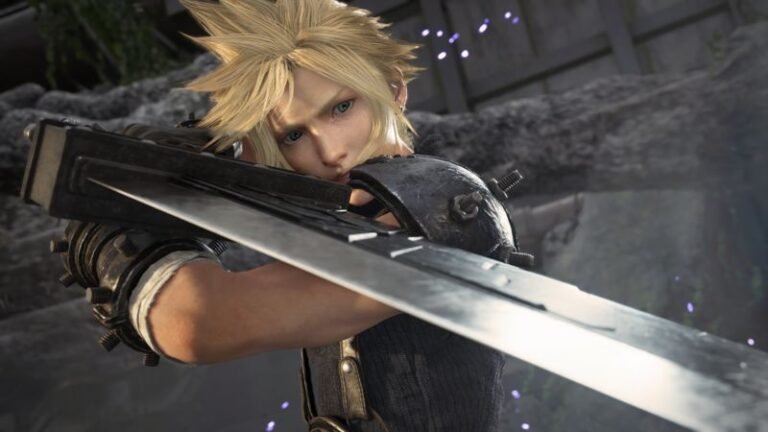
Look, I’m not gonna sugarcoat this—Final Fantasy VII Rebirth is a monster of a game that’ll eat 80+ hours of your life, and honestly? I’m not even mad about it. This is what the Remake project should’ve been from the start: massive, gorgeous, and willing to let you actually explore the world instead of running down linear hallways for 40 hours.
My Setup
Running this beast on my RTX 4060 with an Intel i7-12700 and 16GB RAM. Played on High settings (couldn’t quite push Ultra without some stuttering in the Grasslands region) for about 45 hours before writing this. Game version 1.020, installed size is a chunky 145GB, so yeah, clear some space. Loading times between regions averaged around 8-12 seconds on my SSD, which is honestly pretty reasonable for a game this dense.

What I Loved (Be Specific)
The open world actually feels worth exploring. Remember how Remake kept you trapped in Midgar’s metal corridors? Rebirth throws you into the Grasslands in Chapter 2 and just… lets you breathe. The World Intel system with Chadley could’ve been annoying Ubisoft-tower nonsense, but it’s surprisingly well-paced. I spent like 6 hours in the Junon region alone just doing the Fort Condor Protorelic questline, which is basically a tower defense minigame that has NO right being as addictive as it’s. At 1440p on High, the Cosmo Canyon region at sunset legitimately made me stop and screenshot. The red rocks, the lighting, the draw distance—my RTX 4060 was flexing hard there, steady 60fps with occasional dips to 55 in combat-heavy areas.
The Dynamic difficulty setting is a game-changer. I’m a casual player who only gets a few hours a week to game, so I usually overlevel by accident doing side content. Dynamic mode fixes this completely. Enemies scale to your level, so that random Mu encounter in Chapter 10 actually requires you to think instead of just mashing Square. I switched to it around Chapter 4 after steamrolling the Turks fight in Junon, and suddenly the game had teeth again. Boss fights like the Materia Guardian in Chapter 1 and especially the Temple of the Ancients finale in Chapter 13 actually made me sweat.
Synergy Abilities make party composition matter. The first time I accidentally triggered Cloud and Tifa’s “Relentless Rush” synergy skill, it clicked—this isn’t Remake’s combat anymore. You NEED to use multiple characters effectively. Barret’s “Steelskin” synergy with Red XIII saved my ass during the Mt. Corel chapter when I was getting destroyed by those fire-element enemies. The ATB charge rates feel faster too, so combat flows better. I’m averaging 2-3 minute random encounters instead of the 5-minute slogs from Remake.
The relationship system adds actual replayability. I’m a sucker for branching paths, and the hidden Affinity mechanic had me genuinely stressing over dialogue choices. Did I pick the right response to Aerith in Kalm? Should I’ve done Tifa’s “A Rare Card Lost” side quest before progressing? The Gold Saucer Date in Chapter 12 changes based on who you’ve been nice to, and I got Barret (which was hilarious but not what I was aiming for). The game doesn’t tell you who you’re vibing with until later when the relationship status indicators unlock, so there’s actual mystery to it.

What Annoyed Me
The Chocobo excavation intel is mind-numbingly repetitive. Look, I get it—you need crafting materials… But riding around on a Chocobo waiting for the “sniff” prompt to pop up so you can dig up the same three recipes in every region? After doing this in the Grasslands, Junon, AND Corel, I just… stopped. There are like 60+ excavation points total and the rewards aren’t even that good. Just give me a normal treasure chest, Square Enix.
Chapter 8 at the Gold Saucer drags HARD. I appreciate minigames as much as the next person, but making me play through multiple rounds of G-Bike and the shooting gallery to progress the story felt like padding. The chapter took me nearly 5 hours because the game forces you to engage with every attraction. Some of them are fun (the chocobo racing is actually solid), but others feel like PS2-era filler content. And don’t even get me started on the Moogle herding minigame from the Moogle Emporiums—I failed that thing four times in Costa del Sol before rage-quitting and coming back the next day.
Performance issues in crowded areas. My RTX 4060 handled most of the game at a locked 60fps on High, but Junon city during the parade sequence in Chapter 5? Dropped to 38-42fps with noticeable frame pacing issues. I had to drop to Medium settings temporarily just to get through it smoothly. For a game this polished, those hitches stand out. Also encountered a weird bug in Chapter 9 where Aerith’s character model clipped through the floor during a cutscene in Gongaga—had to reload a checkpoint to fix it, losing about 15 minutes of progress.

Is It Pay-to-Win? (Monetization Breakdown)
Here’s the good news: Final Fantasy VII Rebirth is old-school premium pricing with zero predatory nonsense. You pay $69.99 for the standard edition, $99.99 for the Deluxe Edition (which includes some cosmetic weapons and a digital artbook), and that’s it. No battle pass, no gacha, no “spend $5 to unlock Hard Mode early” garbage.
The only DLC is pre-order bonus stuff—summon materia like Ramuh and some early-game equipment that becomes obsolete by Chapter 4 anyway. If you missed the pre-order window, you’re not missing anything critical. The Deluxe Edition cosmetics are purely for fashion, zero gameplay advantage. After playing for 45 hours, I haven’t felt even a HINT of pressure to spend more money. All the post-game content—Hard Mode, the Legendary Combat Simulator, Chapter Select—is included in the base price. This is how single-player games should be monetized. You buy it once, you get the complete experience. Refreshing in 2024, honestly.
Is It Worth Your Time?
If you’re a Final Fantasy fan or enjoyed Remake, this is a no-brainer—buy it. If you’re a casual player like me who only games a few hours a week, it’s STILL worth it, but pace yourself. This isn’t a weekend sprint; it’s a marathon. The 80-hour main story is legit (I’m at 45 hours and only on Chapter 11), and completionists will easily hit 120+ hours with all the World Intel activities.
Who’s it for? Anyone who wants a meaty JRPG with excellent combat, gorgeous visuals (if your PC can handle it), and a story that actually respects the source material while adding new twists. Who’s it NOT for? People who hate open-world collectathons or can’t stand lengthy cutscenes—this game has both in spades.
Value-wise, at $69.99, you’re getting way more content per dollar than most AAA games. Compare it to something like Resident Evil 4 Remake (amazing game, but only 15-20 hours) or even God of War Ragnarok (50-ish hours). Rebirth is DENSE. Just know what you’re signing up for.
The Dynamic difficulty and Synergy combat make this more accessible than Remake for casual players, but the sheer TIME investment is the real barrier. If you can commit, it’s one of the best JRPGs I’ve played in years.
Reader Questions
Q: Can I play this without finishing Remake first?
No, don’t even try. Rebirth literally starts the second the party leaves Midgar, assuming you know who everyone is and what happened. I watched a story recap on YouTube before starting and still felt lost during the Nibelheim flashback in Chapter 1. Play Remake first or at least watch a full story summary. You’ll thank me later.
Q: How hard is Dynamic difficulty compared to Normal?
Dynamic is noticeably tougher but not unfair. On Normal, I was breezing through encounters by Chapter 5 because I’d done too much side content and overleveled. Switched to Dynamic and suddenly basic mob fights required actual strategy—pressuring enemies, using elemental weaknesses, swapping characters. If you’re even slightly competent at action RPGs, start on Dynamic. You can always drop to Normal if it gets frustrating.
Q: What’s the deal with the Gold Saucer date—can I choose who I want?
Not directly, it’s based on hidden Affinity points you build through dialogue choices and side quests. I tried to romance Tifa, did all her side quests, picked every supportive dialogue option… and still got Barret because I used too many Synergy Skills with him in combat. The game tracks EVERYTHING. Look up a guide if you want a specific character, or just roll with it for a more natural first playthrough.
Q: Is the PC port good or should I wait for patches?
Mostly solid but not flawless. On my RTX 4060 setup, I got 60fps on High in most areas, but crowded scenes (Junon parade, Gold Saucer) tanked to the low 40s. Had one crash in 45 hours and that Aerith floor-clip bug I mentioned. Nothing game-breaking, but if you’re sensitive to performance issues, maybe wait for a patch or two. The game DOES look stunning when it’s running smoothly though—those Cosmo Canyon sunsets are chef’s kiss.
Q: How much of the original FF7 story does this cover?
Roughly from leaving Midgar through the Forgotten Capital—so Kalm, Junon, Gold Saucer, Cosmo Canyon, Nibelheim, and the Temple of the Ancients. If you know the original, you know what happens at the Forgotten Capital in Chapter 14, though Rebirth adds some timeline-altering twists. It’s NOT a 1:1 remake; they’re changing stuff. I’d say it covers about the middle third of the original game’s story, but with way more detail and padding.
Q: Are the side quests worth doing or just filler?
Mixed bag. The Protorelic questlines (Fort Condor, Gears and Gambits) are legitimately fun and offer unique rewards. Combat Assignments and Chocobo Stops? Quick and painless. Excavation Intel? Skip unless you desperately need crafting materials—it’s boring busywork. The relationship-specific side quests (like Tifa’s card quest or Aerith’s flower gathering) are short but boost Affinity, so do those if you care about the date scene. I’d say 60% of side content is worth it, 40% is skippable padding.
—
Final Score: 8.5/10 — A sprawling, gorgeous JRPG that finally delivers on the promise of an open-world FF7 experience. Combat is excellent, the world is stunning, and there’s enough content to last months. Just be ready for some filler, performance hiccups, and a MASSIVE time commitment. For the price of a standard AAA game, you’re getting a complete, non-predatory experience that respects both your wallet and your intelligence. Just not always your time.
Now if you’ll excuse me, I need to finish Chapter 11 before the sun comes up. Worth it.
About the Author