<a href="https://assetsio.gnwcdn.com/aethus.jpg?width=1200&height=630&fit=crop&enable=upscale&auto=webp" target="_blank" rel="noopener">Image Source</a>
I was scrolling through my usual feeds the other day, nursing a pretty heavy case of “survival game fatigue.” You know the feeling—where every new announcement feels like a slightly different flavor of punching trees or mining rocks to build a slightly shinier pickaxe. But then I stumbled across something that actually made me pause. According to the latest from Rock Paper Shotgun, there’s a new sci-fi project called Aethus that’s trying to swim against the current. It’s the brainchild of Alex Kane, a guy who’s put in serious time at heavy hitters like Rockstar and Splash Damage, and he’s now striking out on his own with Pawsmonaut Games.
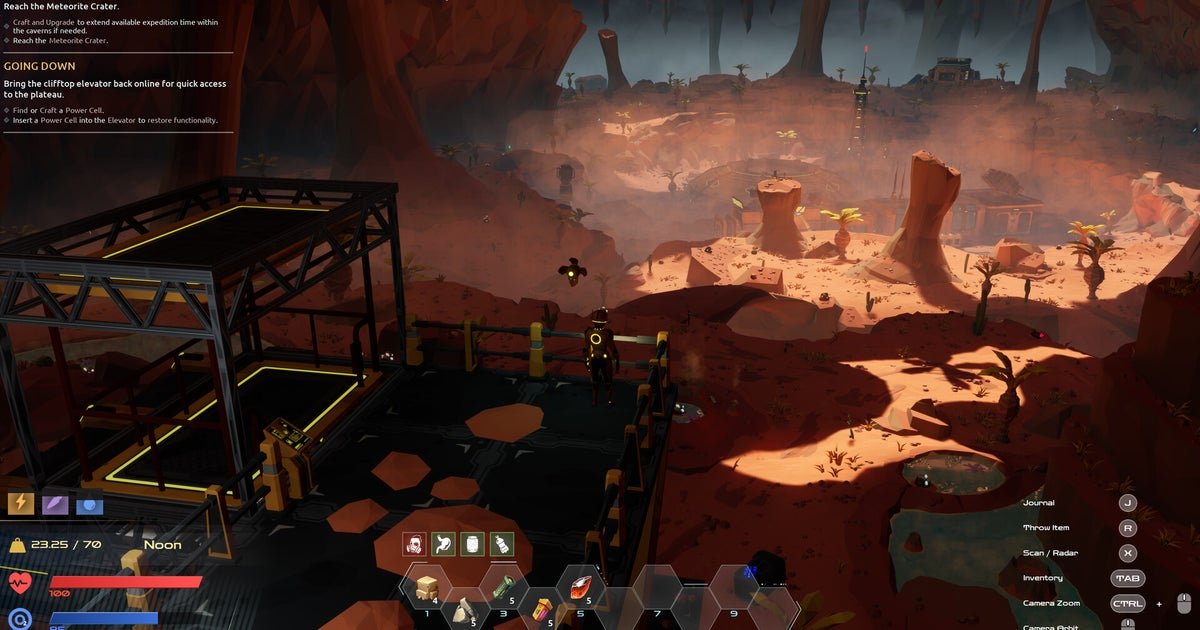
Aethus isn’t just another game about braving the elements; it’s a narrative-driven experience viewed from a Diablo-style isometric perspective. You play as a woman working for a massive galactic megacorp (because of course you are), digging into a layered underground world on a strange planet. You’ve got a drone pal, some holographic building tools, and a mystery to solve regarding a doomed expedition. It sounds a lot like Satisfactory, especially with the promise of automation later on, but it carries a weight of “old-fashioned ethical development” that feels almost rebellious in 2024.
The Weight of a Rockstar Resume in an Indie World
We see the “former [insert AAA studio] developer” tag used constantly in marketing these days. Sometimes it’s a bit of a reach, but with Alex Kane, the resume is actually quite meaty. We’re talking about a guy who did QA for Rockstar, scripted for Build A Rocket Boy, and served as a senior technical designer at Splash Damage. That’s a lot of institutional knowledge about how “Big Games” are made—and more importantly, why they sometimes feel so soulless. It’s no surprise that for his first self-funded project, he’s leaning hard into a specific kind of creative purity.
And let’s talk about that “self-funded” part for a second. In an industry where a 2024 Statista report noted the global market is projected to hit over $282 billion, the pressure to bake in “monetization loops” is staggering. Choosing to go it alone, without the safety net (or the creative handcuffs) of a massive publisher, is a gutsy move. It allows for the kind of “ethical development” Kane is touting on the Aethus Steam page: no AI, no early access, and absolutely zero microtransactions. It’s a bold stance, even if it feels a little like he’s shouting into a hurricane of industry trends.
“I’m quite weary of games about being the lonely stooge of some breezily villainous extraction racket. This particular seam of satire has long since been gutted.”
Rock Paper Shotgun Editorial Analysis
I have to agree with the sentiment above. We’ve been the “underpaid corporate drone” in Lethal Company, Hardspace: Shipbreaker, and Deep Rock Galactic. While it was a fun, biting satire five years ago, it’s starting to feel like the default setting for any game involving a mining laser. We get it: corporations are bad, and we’re expendable. But Aethus seems to be trying to weave a more specific mystery into that framework, focusing on the secrets buried beneath the strata. Whether it can actually make us care about the “corpo-villainy” again remains to be seen.
In a World of Algorithms, Being Human is the New USP
One of the most fascinating aspects of Aethus’s marketing is the explicit “No AI” pledge. It’s a sign of the times, isn’t it? A few years ago, we were looking for “No Loot Boxes.” Now, as generative AI becomes a flashpoint for labor disputes and creative ethics, developers are using its absence as a selling point. According to a 2024 GDC State of the Games Industry report, roughly 31% of developers said they were already using generative AI in their workflow. By standing firmly in the “No AI” camp, Kane is positioning Pawsmonaut Games as a bastion of human-crafted art.
But is this just smart marketing, or does it actually change the game? If the mining feels “lumbering and charmless,” as some early impressions suggest, does it matter if a human or an algorithm designed the rock you’re lasering? Personally, I think it matters for the soul of the game. When you’re building glass tunnels and placing mildly hopeless coffee tables in your underground base, there’s a certain charm in knowing a designer spent hours debating the placement of those pixels. It creates a connection that feels increasingly rare in the age of procedural generation and asset flips.
Why Going Isometric Might Be the Secret Sauce for Base Building
Most survival games—think Rust, Ark, or Subnautica—prefer the first or third-person “over-the-shoulder” view. It’s immersive, sure, but it can make complex base building a total headache. By shifting to an elevated, isometric perspective, Aethus is tapping into a different kind of player psychology. It’s the “god view” we love from Diablo or Project Zomboid. It makes the logistics of automation feel more like a puzzle and less like a chore.
And let’s be honest, the underground setting is just a vibe. There’s something inherently cozy—and terrifying—about being miles below the surface, carving out a home in volcanic strata. If the game can nail the transition from “scrabbling for resources” to “running a massive, automated underground complex,” it might just find its niche on PC and potentially PS5 or Xbox down the line, though Steam is the primary focus for the March 6th launch.
I look at the Steam charts and I see an absolute sea of survival titles. It’s a genre that refuses to die because the “loop”—gather, build, upgrade, repeat—is hardwired into our lizard brains. But we’re reaching a point where players are demanding more than just a loop. We want a why. We want to know why we’re on this planet and why we should bother building another glass tunnel. If Aethus can make the act of unearthing “dirty secrets” as satisfying as unearthing rare minerals, it’ll be a winner. But if it’s just 100 boulders standing between me and the next plot point, I might just find myself drifting back to my Minecraft hole in the ground.
What platforms will Aethus be available on?
Currently, Aethus is confirmed for a PC release via Steam on March 6th. While there’s no official word on PS5, Xbox, or Switch ports yet, many indie titles in this genre eventually migrate to consoles if they find success on PC.
What makes Aethus “ethical” compared to other games?
The developer, Pawsmonaut Games, has committed to a “no AI, no microtransactions, and no early access” policy. This means the game is being built entirely by human hands and will be sold as a complete, finished product without hidden costs or predatory monetization.
Is there automation in Aethus?
Yes, while the early game focuses on manual mining and exploration, the developer has indicated that automation systems—similar to those found in games like Satisfactory—will become available as players progress through the narrative.
Breaking the Cycle of the Corporate Stooge
I really hope Aethus manages to subvert the “lonely stooge” trope it seems to be embracing. There’s a fine line between a clever satire of corporate culture and a tired cliché. The fact that it’s narrative-driven gives me hope. Maybe we aren’t just a cog in the machine; maybe we’re the wrench that breaks it. And if we can do that without having to buy a “Battle Pass” or deal with AI-generated dialogue, then I’m all in.
At the end of the day, Alex Kane is taking a massive risk. He’s betting that there’s a market for “old-fashioned” games made with modern sensibilities. In a world of DLC, nerfs, and “games as a service,” a standalone, story-heavy survival game feels almost radical. Whether the mining is “lumbering” or the base-building is “standard,” the intent behind the project is something worth supporting. We’ll find out on March 6th if the execution matches the ambition.
This article is sourced from various news outlets, including Rock Paper Shotgun. Analysis and presentation represent our editorial perspective on the indie gaming landscape and the shift toward ethical development practices.
About the Author