There was a time, and it really wasn’t all that long ago, when Build A Rocket Boy (BARB) was arguably the most electrifying name in the entire Scottish tech landscape. When Leslie Benzies—the legendary figure who basically steered the massive Grand Theft Auto ship at Rockstar North for the better part of two decades—announced he was striking out on his own, the industry held its breath. This was supposed to be the “Rockstar killer,” a studio born from the DNA of gaming’s most successful franchise but freed from the constraints of corporate oversight. But lately, the news trickling out of the Edinburgh-based studio feels less like a triumphant success story and more like a high-stakes corporate thriller where the plot is getting increasingly dark and nobody is quite sure who the villain is supposed to be. According to the latest reports from Rock Paper Shotgun, the situation inside the office has taken a decidedly dystopian turn, with management reportedly installing invasive monitoring software on staff PCs without bothering to tell them first. It’s the kind of move that doesn’t just raise eyebrows; it sets the whole house on fire.
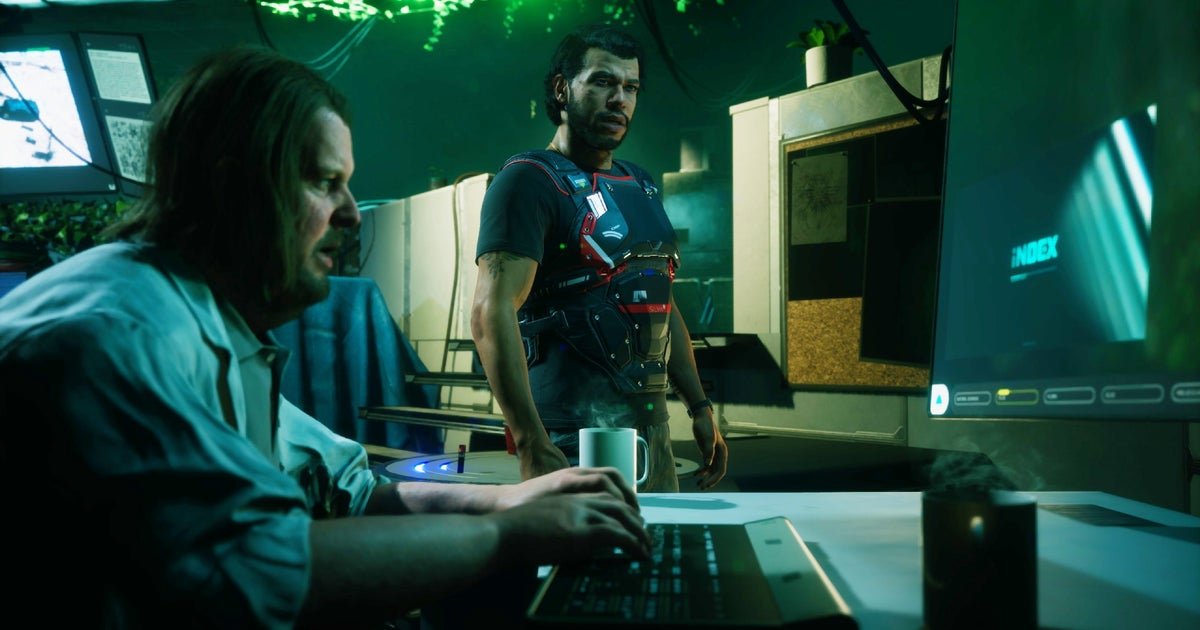
It’s the sort of executive decision that usually signals a total, catastrophic collapse of trust between the C-suite and the people actually doing the work. Just imagine the scene: you’re sitting at your desk, deep in the zone, trying to optimize a complex physics engine or iron out a lighting bug for the PS5 and Xbox Series X versions of MindsEye, and you notice your machine is starting to chug. In an environment where every frame of performance is a hard-won battle, a sudden slowdown is a red flag. Naturally, you’d assume it’s a memory leak in the latest build or a hardware hiccup. But no—the reality is far more unsettling. It’s actually Teramind, a “proactive protection” suite, quietly humming in the background and watching your every move. It is genuinely hard to imagine a faster way to incinerate the creative spark in a high-end studio than effectively telling your developers they’re being treated like suspects because a tiny fraction of them might be “saboteurs.”
When Your Boss Thinks 1% of the Office Is Out to Get Him
Things apparently came to a head during a rather tense all-hands meeting in late January. Co-CEO Mark Gerhard reportedly stepped up to try and smooth things over, but his choice of words was… well, let’s just say they were “interesting” in the way a car crash is interesting. He acknowledged the palpable “confusion” and “mistrust” that the secret software rollout had caused among the rank-and-file, but then he immediately doubled down on why it was supposedly a necessity. He made this claim that they could trust 99.9% of the business, but that “the 1%” was the real problem. It’s a classic “burn the entire haystack to find a single needle” approach, and honestly, that rarely ends well for company culture. When you treat 100% of your staff like criminals to catch one person, you don’t find the culprit; you just lose the respect of the other 99.
But why the sudden, desperate need for digital handcuffs? Management at BARB seems absolutely convinced that MindsEye—which, if we’re being completely honest here, received a pretty lukewarm-to-negative reception when it was first revealed—is being actively sabotaged from the outside. Gerhard didn’t just stop at internal concerns, either. He went as far as to claim that a “very big American company” has been actively spending money specifically to tank the studio’s reputation and undermine the game. While he didn’t explicitly name names, let’s look at the board: in the world of high-budget, open-world action games, there aren’t exactly dozens of “big American companies” that would view a Scottish indie-ish studio as a legitimate existential threat worth a covert ops budget. It feels a bit like the corporate version of the “the dog ate my homework” excuse, but played out on a multi-million dollar scale. Is it possible? Sure. Is it likely? That’s a much harder sell.
“Sadly, we do have evidence that there has been a coordinated campaign to purposefully and maliciously damage Build A Rocket Boy’s reputation and undermine confidence in MindsEye,”
Build A Rocket Boy Spokesperson
Now, look, I’m not saying corporate sabotage is a myth. The tech world is a shark tank, and dirty tricks do happen. But usually, when a game gets panned by critics or players, it’s for the usual reasons: game-breaking bugs, poor optimization, or gameplay loops that just don’t click with the audience. Blaming an invisible, well-funded cabal of “external saboteurs” is a bold, almost desperate move. It effectively shifts the narrative away from “maybe we made a game people didn’t like” to “we made a masterpiece that the world is being paid to hate.” It’s a much more comfortable story for executives to tell themselves in the boardroom, but it’s a incredibly bitter pill for the actual developers to swallow while they’re being tracked by Teramind every time they switch tabs.
Cracks in the Foundation: Why the Real Threat Might Be Coming from the Inside
The real irony in this whole mess is that the biggest threat to MindsEye and the future of BARB might not be some mysterious American rival at all, but the internal friction and resentment brewing within the studio’s own walls. Just last October, a group of 93 current and former staff members signed an open letter accusing the leadership of badly mishandling a round of redundancies. That is not a small number of disgruntled people. When nearly a hundred professionals are willing to put their names on a document like that in a relatively small industry, you aren’t looking at a “1%” issue anymore—you’re looking at a systemic, cultural breakdown. According to the 2024 State of the Game Industry report, roughly 35% of all developers were already losing sleep over layoffs and job stability last year. Adding secret “bossware” to that existing pile of stress is like throwing high-octane gasoline on a bonfire of anxiety. How are you supposed to do your best creative work when you’re wondering if you’ll have a job next month or if your boss is watching you type your resume?
And then, of course, there’s the Leslie Benzies of it all. The man who was the literal face and soul of the studio is currently on “temporary leave” to recharge his batteries. This happens to coincide with a period where he’s had to publicly and forcefully deny some pretty heavy allegations regarding the Epstein files—allegations he has dismissed as being completely and utterly false. Whether his leave is truly about avoiding burnout after years of high-pressure development, or a more strategic move to distance the studio’s brand from personal headlines, it has left a massive power vacuum at the top. Mark Gerhard is now the one standing in front of the microphone, spinning tales about “the 1%” and “American saboteurs,” and I’m just not sure that’s the unifying message the team needs to hear right now while they’re grinding away on a project that feels increasingly under siege.
The actual rollout of the software was, by most accounts, incredibly clumsy. Workers didn’t get an email or a heads-up; they only realized something was wrong because their high-end development rigs started acting like they were ten years old. In a world where developers are constantly fighting for every single frame of performance and every megabyte of RAM on high-end PC builds, having your own IT department stealth-install a resource-heavy monitoring suite feels like a genuine slap in the face. It’s like a professional race car driver pulling into the pits only to find out their own mechanics put a 50lb lead weight in the trunk just to see if they’re actually trying hard enough to win. It’s counter-productive, it’s insulting, and it’s a technical nightmare for the people trying to polish a “next-gen” experience.
The High Cost of “Big Brother” in a Creative Workspace
Is this just the “new normal” for the tech industry? Well, not exactly, but it is certainly becoming a more common—and more controversial—trend. According to a 2023 Gartner report, nearly 50% of large employers were using some form of monitoring software, a massive jump from just 16% before the pandemic shifted everyone to remote work. However, there is a yawning chasm between “productivity tracking” in a high-volume call center and “insider threat detection” in a high-level creative studio. Game development isn’t about how many keys you hit per minute; it’s about problem-solving, artistic expression, and collaboration. Those things require a level of psychological safety that surveillance absolutely destroys. When you know you’re being watched, you stop taking risks. You stop experimenting. You just do the bare minimum required to keep the “activity” bar green on the manager’s dashboard.
The research on this is pretty clear: when employees feel they aren’t trusted, their actual performance drops off a cliff. A Statista study from a couple of years back suggested that workplace monitoring can lead to a 20% increase in stress levels among tech workers. In an industry that is already infamous for “crunch” culture and high burnout rates, adding a layer of “Big Brother” surveillance is a perfect recipe for a mass exodus of talent. And in the world of game dev, the talent is quite literally the only real asset you have. You can have the most expensive proprietary engine in the world and the slickest marketing campaign, but if the people who actually know how to make the code sing are all busy polishing their resumes and looking for the exit, you are in serious trouble. You can’t replace a veteran lead dev with a fresh grad and expect the same results, no matter how much monitoring software you have.
Perhaps the most bizarre part of this whole saga is what Gerhard reportedly told the staff regarding the future of the software. He said they hope to remove it within three months, but there’s a massive catch: it apparently depends on the eventual success of MindsEye. That is a wild, almost hostage-like ultimatum to give to a professional team. “We’ll stop spying on you once the game is a hit.” It creates this incredibly weird incentive structure where the “reward” for success isn’t a performance bonus, a promotion, or a well-deserved vacation, but simply the restoration of basic workplace privacy. It’s hard to imagine that’s going to inspire anyone to go the extra mile or put in that extra bit of creative polish. If anything, it just makes the office feel even more like a pressure cooker.
Can a Game Built on Paranoia Ever Actually Be Fun?
So, where does all of this leave the game itself? MindsEye was supposed to be the breakthrough—a sprawling, cinematic, high-octane experience that would be such a “next-gen” leap it would make us all forget how long we’ve been waiting for GTA VI. Instead, it’s rapidly becoming a textbook case study in how not to manage a high-profile, high-talent studio. This “sabotage” narrative is certainly a fascinating one, and if Build A Rocket Boy actually has the receipts to prove it, they should probably present them to the public or a court of law. If a major competitor is truly spending millions of dollars to destroy a rival’s reputation through shadow campaigns, that would be a landmark legal case that would change the industry forever.
But if they don’t have the receipts? If it’s all just speculation and deflection? Then it’s nothing more than a distraction from the real issues. It’s a way for leadership to avoid looking in the mirror and asking why 93 people felt the need to sign a letter against them. It’s a way to ignore the possibility that the game simply didn’t resonate with the audience in the way they hoped. And most importantly, it’s a way to justify treating your own employees like suspects and traitors instead of the creative partners they are. You can’t build a community-driven “metaverse” or a gripping cinematic thriller if the foundation of the studio is built on a lack of trust and digital surveillance.
The real tragedy in all of this is that there are clearly some incredibly talented, hard-working people at Build A Rocket Boy. You simply do not build a game of that technical scale without having some of the best minds in the business on your side. But those people are now forced to work in an environment where their co-CEO publicly suggests that one out of every hundred of them is a malicious traitor working for the enemy. That is a heavy, soul-crushing weight to carry into the office every morning. Whether MindsEye can eventually pivot, find its audience on PC, and make a splash on consoles remains to be seen, but it’s starting to look like the studio’s internal culture might need a much bigger patch than the game itself.
Is workplace monitoring actually legal in the UK?
The short answer is yes, but it comes with some pretty significant legal caveats. Generally speaking, UK employers have to inform their staff if they are being monitored and they must be able to prove a “legitimate interest” for doing so. Secretly installing software on personal or work machines and then asking staff to sign a policy after the fact—which is exactly what is reported to have happened at BARB—is a massive legal gray area. It’s the kind of thing that almost always leads to internal friction, union intervention, and messy HR disputes that can drag on for years.
What exactly is Teramind software?
Teramind is an incredibly powerful, enterprise-grade monitoring tool that corporations use to keep a very close eye on employee activity. It isn’t just a simple clock-in tool; it can record screens in real-time, track every single keystroke, monitor internal and external emails, and even use AI to alert management to “suspicious behavior” or potential data leaks. While the company markets it as a security tool designed to prevent massive data breaches or IP theft, it is frequently criticized for being way too intrusive, especially in creative environments where privacy is a key component of the workflow.
Who is Leslie Benzies, anyway?
If you’ve played a video game in the last twenty years, you know his work even if you don’t know his name. Leslie Benzies is a true titan of the industry, best known for his long tenure as the President of Rockstar North. He was the lead producer and one of the primary creative forces behind the Grand Theft Auto series, starting from the industry-changing GTA III all the way through the record-breaking GTA V. After leaving Rockstar under some very litigious and public circumstances, he founded Build A Rocket Boy with the goal of creating Everywhere—a massive gaming platform—and its flagship cinematic title, MindsEye.
At the end of the day, great games are built on a foundation of passion, late-night breakthroughs, and genuine collaboration. You can’t code “soul” or “fun” into a project when you’re constantly looking over your shoulder, worried about whether your keystroke frequency or your idle time is being logged by a cold algorithm. If BARB really wants to save MindsEye and reclaim its status as the future of Scottish gaming, they might want to start by uninstalling the surveillance and trying to reinstall some basic human trust. Because without that, the most advanced game engine in the world won’t be enough to save them.
This article is sourced from various news outlets and industry reports. The analysis and presentation provided here represent our editorial perspective on the ongoing situation at Build A Rocket Boy.
About the Author