You know that specific, almost electric kind of magic that happens when a niche passion project—the kind of game you’ve been quietly rooting for in Discord servers and niche forums—suddenly explodes into a global cultural phenomenon? We’ve seen flashes of it before, certainly. We saw it with the indie darlings of the 2010s that redefined our expectations of what a small team could do. But what unfolded in Paris recently feels fundamentally different, almost like we’ve crossed a threshold we can’t go back through. It’s no longer just about the raw sales numbers or the manufactured “hype” cycles that dominate our social feeds. According to the latest reports from Gamebrott.com, the French government has done something truly unprecedented: they have officially bestowed the prestigious Order of Arts and Letters upon the entire core team at Sandfall Interactive. This isn’t just a polite “good job” or a local commendation from a regional governor; we are talking about 28 developers being named Chevaliers (Knights) for their visionary work on Clair Obscur: Expedition 33. It’s a staggering moment that demands we stop, take a breath, and really think about where gaming actually sits in the modern pantheon of human expression. Are we finally past the point of defending games as art? It certainly feels like it.
I distinctly remember sitting through that first reveal trailer back in 2024. I remember thinking that the “Clair-Obscur” art style—that intense, dramatic interplay of light and shadow—looked almost too ambitious for a debut title. It felt like a promise that might be too heavy to keep. But here we are in February 2026, and the game hasn’t just survived its high-stakes launch on PC, PS5, and Xbox Series X/S; it has fundamentally shifted the goalposts for what a turn-based RPG can actually be. When a Ministry of Culture steps in to hand out medals that are usually reserved for world-class novelists, legendary painters, and avant-garde film directors, you know the conversation has shifted. This isn’t just a “win” for a single studio in Montpellier; it’s a massive, formal validation of the entire medium. It’s the world finally admitting that a controller can be as powerful as a pen or a brush.
The Night the Trophies Weren’t Enough: Why 2025 Changed Everything
To really get a handle on why the French government acted with such characteristic flair, you have to look back at the absolute trail of destruction Expedition 33 left behind during the 2025 award season. Last December, the game didn’t just participate in The Game Awards; it essentially set the building on fire. It walked away with the most trophies in a single night in the history of the event, breaking records that many thought were untouchable. It was nominated in eight out of nine possible categories—a feat that felt, frankly, almost unfair to its competitors. But that massive commercial and critical success was just the catalyst. It’s one thing to be loved by gamers who already “get” the language of the medium; it’s an entirely different beast to be recognized by a G7 nation as a vital pillar of national identity and cultural heritage. It’s the difference between a box office hit and a national treasure.
The hard numbers back up this cultural pivot, and they are nothing short of staggering. According to a 2025 report by Statista, the French video game market has reached a valuation of over €6 billion. This growth wasn’t just luck; it’s the result of the government aggressively subsidizing creative tech through the CNC (National Center for Cinema and the Moving Image). This isn’t an accident or a happy coincidence. France has always treated its “French Touch” in gaming—the lineage that gave us the likes of Ubisoft and Arkane—with a level of institutional respect that other nations are only just now starting to scramble to emulate. By knighting 28 members of the Sandfall team at once, the Republic is sending a clear, loud signal to the rest of the world: your code is as valuable as our canvas, and your stories are as essential as our statues.
“By honoring this team, the Republic affirms: the video game is a major art and an essential industry. Clair Obscur: Expedition 33 has established itself as a major moment in our cultural history.”
— The French Minister of Culture, Paris Ceremony 2026
Baroque Shadows and Single-Player Defiance: The Secret Sauce of Expedition 33
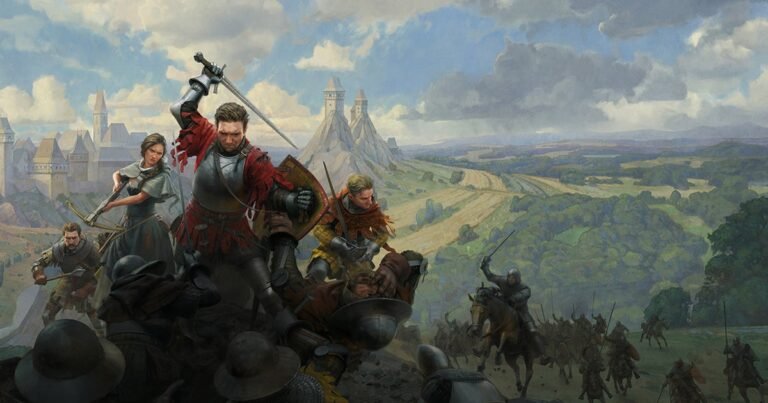
So, we have to ask the obvious question: why this game? Why now? If you’ve spent any time playing through the campaign, the answer is etched into every single frame of the experience. The game didn’t just lazily borrow aesthetic cues from French history; it breathed them back to life. The “Clair-Obscur” technique isn’t just a fancy, high-brow name for a new lighting engine—it’s a direct, loving nod to the 17th-century Baroque masters like Caravaggio. Sandfall Interactive managed to do something nearly impossible: they wrapped high-octane, reactive turn-based mechanics inside a narrative that felt less like a product and more like a philosophical treatise on mortality, legacy, and memory. It never felt like a piece of software designed to satisfy a quarterly earnings report or a board of directors; it felt like a living painting that you could actually interact with, influence, and inhabit.
But there’s also the “meta” of the whole situation to consider. In an era where so many AAA titles feel like they’re desperately chasing the same live-service dragon—bloated with microtransactions and “forever game” mechanics—Expedition 33 was a defiant, almost stubborn return to the single-player epic. It served as a loud reminder to the industry that there is still a massive, hungry audience for games that have a clear beginning, a meaningful middle, and a definitive, impactful end. The community’s feedback on the end-game content—which Sandfall famously addressed with a level of transparency and humility we rarely see in this business—only served to strengthen the bond between the creators and the players. They weren’t just developers sitting in an ivory tower; they were the stewards of a world that millions of us had effectively moved into. They listened, they adjusted, and they respected the player’s time.
Dignity in the Code: Redefining the “Developer” as a Cultural Icon
Let’s get into the actual analysis of what this means for the person sitting in a bedroom in Jakarta, Seattle, or London right now, trying to figure out how to code their first roguelike. This knighthood effectively breaks the “glass ceiling” of prestige that has hovered over this industry for decades. For far too long, developers were seen as the “IT guys” of the creative world—the technicians who made the toys. You’d have a “Director” for a movie, but a “Lead Programmer” for a game. The titles themselves implied a subtle, lingering hierarchy where the digital was somehow “less than” the physical. When 28 people from a single studio are given a title that dates back to the middle ages, it doesn’t just change their resumes; it levels the entire playing field for everyone in the industry.
The data suggests the public is already there. According to a 2024 Pew Research Center study, nearly 40% of young adults now view video games as a more impactful storytelling medium than traditional literature. That massive shift in perception is finally—finally—reaching the legislative and governmental level. We’re witnessing a future where the title “Game Director” carries the exact same cultural weight as “Auteur” does in cinema. Sandfall’s achievement suggests a new path: if you lean into your specific cultural heritage and push the boundaries of your medium, your government won’t just tax your profits—they’ll celebrate your contribution to the human story. It’s a powerful incentive for developers to be more than just skilled technicians; it’s a clarion call for them to be unapologetic artists.
The “Expedition-like” Ripple Effect and the End of the Lone Genius Myth
And we really need to talk about the “meta” impact on the games themselves. The runaway success of Expedition 33 has already sparked a massive resurgence in the turn-based RPG genre, which many pundits had prematurely declared dead or “niche.” We’re seeing more and more studios experiment with “reactive” combat—systems where your timing during an enemy’s turn actually matters—rather than just clicking through static menus while checking your phone. Sandfall proved that “old school” genres aren’t obsolete; they just needed a fresh coat of (admittedly very expensive) paint and a genuine soul. I wouldn’t be surprised at all if the next few years are dominated by “Expedition-likes,” much in the same way that every game in the 2010s seemed to want to be the next Dark Souls.
But more importantly, this knighthood sets a vital precedent for how we treat the “credits” at the end of a game. Usually, the spotlight is reserved for the big, recognizable names—the Hideo Kojimas or the Neil Druckmanns of the world. But Sandfall and the French government chose to honor 28 people. That is a massive statement. It recognizes that a masterpiece in this medium isn’t the work of one solitary “genius” working in a vacuum; it’s a collective, Herculean effort involving artists, QA testers, writers, and engineers. It’s a much more honest and transparent look at how modern art is actually made in the digital age. It’s a victory for the team, not just the figurehead.
The Weight of the Medal: Navigating the “Establishment” Trap
The big, looming question now is: how on earth do you follow up on a literal knighthood? Sandfall Interactive is no longer that “scrappy underdog debut studio” from Montpellier. They are now the standard-bearers, the ones everyone else is looking to for the next big leap. With the monumental success of Expedition 33, the expectations for their next project—or even the heavily rumored DLC—are through the roof. There’s a inherent danger here, too. When you suddenly become “The Establishment,” do you risk losing that experimental, slightly dangerous edge that made your first game so special in the first place? Do you start playing it safe because you have a reputation to protect?
Personally, I don’t think that’s going to happen. If you look at their recent LinkedIn posts and community updates, the team sounded less like they were resting on their laurels and more like they were genuinely energized by the new responsibility. They spent a significant amount of time thanking the “millions of players” who brought their world to life. That player-first, community-driven mentality is exactly what saved them when fans initially complained about the end-game grind, and it’s likely what will keep them grounded even now that they’re wearing medals. The entire industry is watching Sandfall now, and for the first time in a very long time, the eyes aren’t just on the stock price or the quarterly projections—they’re focused squarely on the art itself.
Is the “Order of Arts and Letters” a common award for game developers?
While it’s certainly not common, it is becoming a more frequent sight in France as the medium matures. Industry legends like Shigeru Miyamoto and Michel Ancel have received it in the past, but the act of honoring 28 members of a single team simultaneously for a debut project is an absolutely unprecedented move by the French Ministry of Culture. It signals a shift from honoring individuals to honoring the collective creative process.
Will this award affect the development of future Sandfall games?
Directly? No. It’s a cultural honor and a mark of prestige, not a financial grant or a check. However, the indirect benefits are massive. This kind of prestige significantly increases their “clout” with publishers and investors, making it much easier for them to secure massive budgets and attract top-tier global talent for their next title, whether that’s on the PS5 or whatever future hardware comes next. It puts them in the “must-work-with” category for the entire industry.
A New Dawn for the Digital Knight
As we survey the gaming landscape of 2026, the story of Sandfall Interactive feels like the beginning of a brand new chapter in a much larger story. We’ve finally moved past that defensive era where games had to constantly “prove” they were worth our time or our respect. They’ve already done that a thousand times over. Now, we’ve entered the era of formal, institutional recognition. Whether it’s Clair Obscur: Expedition 33 sweeping the trophies at TGA or the French Republic formally knighting its creators in a grand ceremony, the message remains the same and it’s louder than ever.
Gaming is the primary language of the 21st century. It’s where our most complex stories are being told, where our most innovative art is being seen, and where our most vibrant, global communities are being built and sustained. To the 28 new Knights of Sandfall: your long journey through the light and shadow of game development has paid off in a way few could have imagined. You’ve changed the game—literally, in terms of mechanics, and figuratively, in terms of cultural status. And for the rest of us? We’re the lucky ones who just get to sit back and enjoy the masterpieces that are inevitably going to follow in your wake. The bar has been raised, and I can’t wait to see who tries to clear it next.
This article is sourced from various news outlets. Analysis and presentation represent our editorial perspective.
About the Author