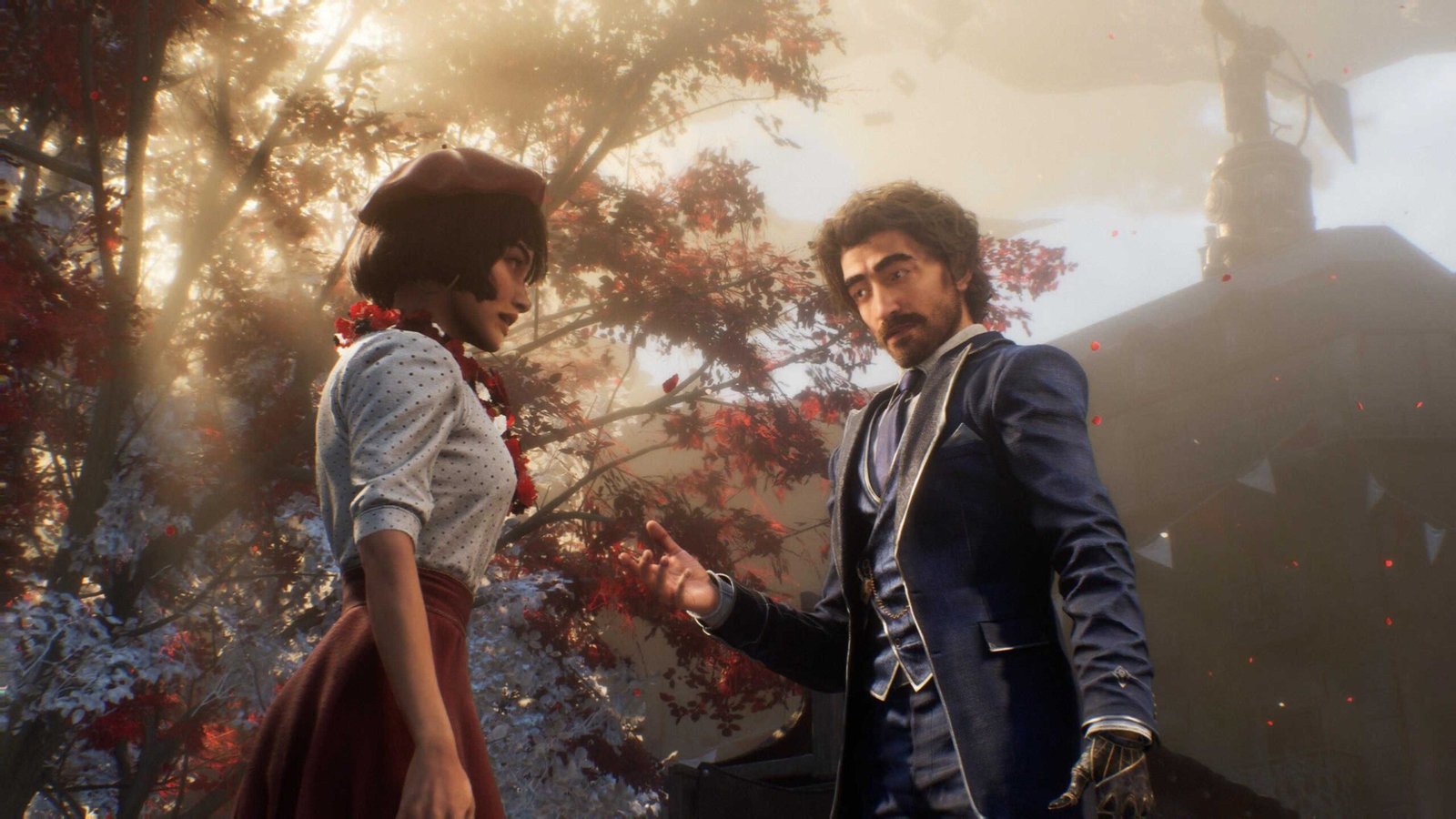
It’s been a few months now since the entire world—gamers and non-gamers alike—seemed to collectively lose its mind over the release of Grand Theft Auto VI, and honestly, the dust is only just starting to settle. According to the team at Polygon, this wasn’t just another software launch; it was a genuine cultural pivot point, the kind of event we’re still trying to wrap our heads around and map out. We all knew it was going to be massive, but I don’t think any of us were quite prepared for how Leonida—Rockstar’s twisted, hyper-saturated, and hauntingly real version of Florida—would end up reflecting our own chaotic reality back at us in such a visceral way.
Walking through the neon-soaked streets of Vice City on a PS5 or Xbox Series X today feels less like “playing a game” and more like physically walking through a manifestation of your own social media feed. It’s loud, it’s relentlessly aggressive, and it’s so familiar it’s almost uncomfortable. But beyond the sheer technical wizardry and the frame rates, there’s a much deeper conversation happening here about what we actually want from our digital escapism in 2026. Are we looking for a way out of the world, or are we just looking for a more “fun,” interactive version of the absolute mess we see on the news every night?
When a Two-Billion-Dollar Bet Actually Changes the Way We Play
Let’s talk numbers for a second, because even in an industry used to big budgets, the scale here is genuinely staggering. We’ve seen “big” launches before—the kind that take over billboards and bus wraps—but nothing quite like this. A 2024 report from Statista indicated that open-world games account for nearly 25% of all console playtime, and Rockstar has essentially claimed the lion’s share of that percentage in one fell swoop. When you look at the sheer volume of players currently inhabiting Leonida, it’s clear that the “event game” isn’t dead—it just requires a level of investment that almost no other studio on the planet can actually afford to risk.
And it’s not just about the units moved or the digital downloads. It’s about the hardware itself. If you were wondering why your local electronics store finally has PS5 Pros back in stock, it’s because the initial rush to play GTA VI at a stable 60fps was like nothing we’ve seen since the early 2000s when people would buy entire consoles just for one title. Rockstar didn’t just sell a game; they revitalized an entire ecosystem that some critics were starting to call “stagnant” or “plateaued” just a year ago. They proved that if the world is detailed enough, people will upgrade their entire lives just to see it.
“The fidelity isn’t just in the pixels; it’s in the behavior of the crowd. We’ve moved past scripted NPCs into something that feels like a living, breathing, and deeply frustrated society.”
— Senior Industry Analyst, Q1 2026 Briefing
But here’s the thing that really gets me: all that staggering technical power is being used to simulate some of the most mundane, yet strangely fascinating, aspects of modern life. I actually spent twenty minutes yesterday—not doing missions, not running from the cops—just watching NPCs film themselves doing “challenges” on a boardwalk. It’s a level of meta-commentary that feels almost too on the nose, like Rockstar is winking at us through the screen. But that’s the secret sauce, isn’t it? They take the things we find most annoying about our current era—the clout-chasing, the public meltdowns, the obsession with the lens—and they turn them into a playground where we can finally interact with them on our own terms.
The Impossible Task of Mocking a World That Already Feels Like a Parody
One of the biggest fears leading up to that late 2025 launch was whether Rockstar could still “do” satire. Let’s be real: how do you parody a world that already feels like it was written by a team of exhausted comedy writers in a fever dream? The “Florida Man” memes were already ancient history by the time that first trailer dropped, so the challenge for the writers was to go deeper than just the headlines. And honestly? They kind of nailed it by leaning into the genuine sadness and desperation that often hides behind the spectacle.
Leonida isn’t just a collection of neon lights and fast cars, although there’s plenty of that to go around. It’s a place where the wealth gap is rendered in agonizing, high-definition detail. You can fly a private jet over a sprawling, humid swamp where NPCs are visibly struggling to keep their homes above water. It’s uncomfortable. It’s meant to be. This isn’t the aspirational, “cool” synth-wave vibe of the 1980s Vice City; it’s the gritty, humid, and slightly desperate reality of the mid-2020s. And yet, despite how much it reminds us of the things we’re trying to ignore, we can’t stop playing it.
I think we’re seeing a massive shift in the “meta” of open-world design right before our eyes. It’s no longer about how many square miles of space you have—it’s about how much *context* is packed into every single inch of that space. Every shop window, every overheard conversation at a gas station, and every weird social media feed on the in-game phone feels like it has a specific purpose and a story to tell. It’s a far cry from the procedural, “copy-paste” emptiness we’ve seen in other recent “quadruple-A” titles that promise the universe but deliver a desert.
Is GTA VI playable on older consoles?
No, and it’s probably for the best. Rockstar made the definitive choice to stick with PS5, Xbox Series X/S, and PC. This allowed them to implement a level of crowd density and AI complexity that simply wouldn’t have been possible on last-gen hardware without the whole thing catching fire.
How has the “Online” component changed?
The transition to the new GTA Online has been surprisingly smoother than many expected. They’ve focused much more on role-playing (RP) elements and persistent world changes that actually stick, rather than just constantly adding more expensive cars for us to grind for.
Are there plans for single-player DLC?
While Rockstar hasn’t officially confirmed anything yet, the episodic nature of the main story’s structure—and the way Jason and Lucia’s story is told—suggests that Leonida might grow and evolve over time in ways that Los Santos never did.
The Wait for the PC Port and Why the Modding Scene is Terrified (and Excited)
While the console players have been living it up and exploring every corner of the map for months, the PC community is just now starting to get their hands on the tools that will inevitably define the next decade of this game. We’ve already seen what the RP community did with GTA V—they basically kept that game in the top five on Twitch for ten years through sheer creativity. With the vastly improved engine in VI, the possibilities for player-driven storytelling are, frankly, a little bit terrifying. We’re talking about a level of immersion that we haven’t even begun to categorize yet.
But there’s a catch, as there always is. As games become more complex and integrated, they become significantly harder to “break” in the fun ways we’re used to. Rockstar has tightened the screws on the engine to ensure stability and control, which has naturally led to some friction with the traditional modding scene. It’s a delicate, high-stakes balance. You want a polished, bug-free experience, but you don’t want to stifle the very creativity that keeps the game alive and relevant long after the credits have rolled and the main story is done. It’ll be fascinating to see how the “nerf” vs. “buff” cycle plays out in a world this incredibly detailed.
According to a 2025 report from the Entertainment Software Association, user-generated content now accounts for over 40% of the total value in the entire gaming industry. Rockstar knows this better than anyone. They aren’t just building a game anymore; they’re building a platform, a digital home for millions. And Leonida is, without a doubt, the most expensive, most detailed, and most ambitious platform ever constructed in the history of the medium.
Buckle Up, Because We’re Going to Be Here for a While
So, where does this leave us as we look toward the future? We’re only about three months into the life cycle of a game that will likely be the dominant force in entertainment until the 2030s. That’s a heavy thought to process. We’re going to be talking about Jason and Lucia’s relationship, the haunting, murky beauty of the Everglades, and the inevitable controversies that follow this franchise like a shadow for years to come.
But for now, I’m honestly just enjoying the view. There’s a specific moment in the game—usually right around sunset when you’re driving back into the city from the keys—where the music hits just right and the lighting engine makes everything look absolutely perfect. For a split second, you actually forget that you’re playing a cynical, biting satire of a crumbling society. You just feel like you’re somewhere else entirely. And maybe that’s the real achievement here. In a world that feels increasingly claustrophobic and predictable, Rockstar managed to give us a horizon that feels endless, even if it is just made of code and clever math.
It’s not a perfect game—let’s be honest, nothing is. The mission design can still feel a bit restrictive at times, like you’re being led on a leash, and the satire occasionally misses the mark or tries a bit too hard to be edgy. But as a technical achievement and a cultural snapshot of where we are right now? It’s absolutely peerless. We’ll be unpacking the layers of Leonida for a long, long time, and I suspect we’ve only scratched the surface of what’s actually hidden in those swamps.
This article is sourced from various news outlets. Analysis and presentation represent our editorial perspective.
About the Author