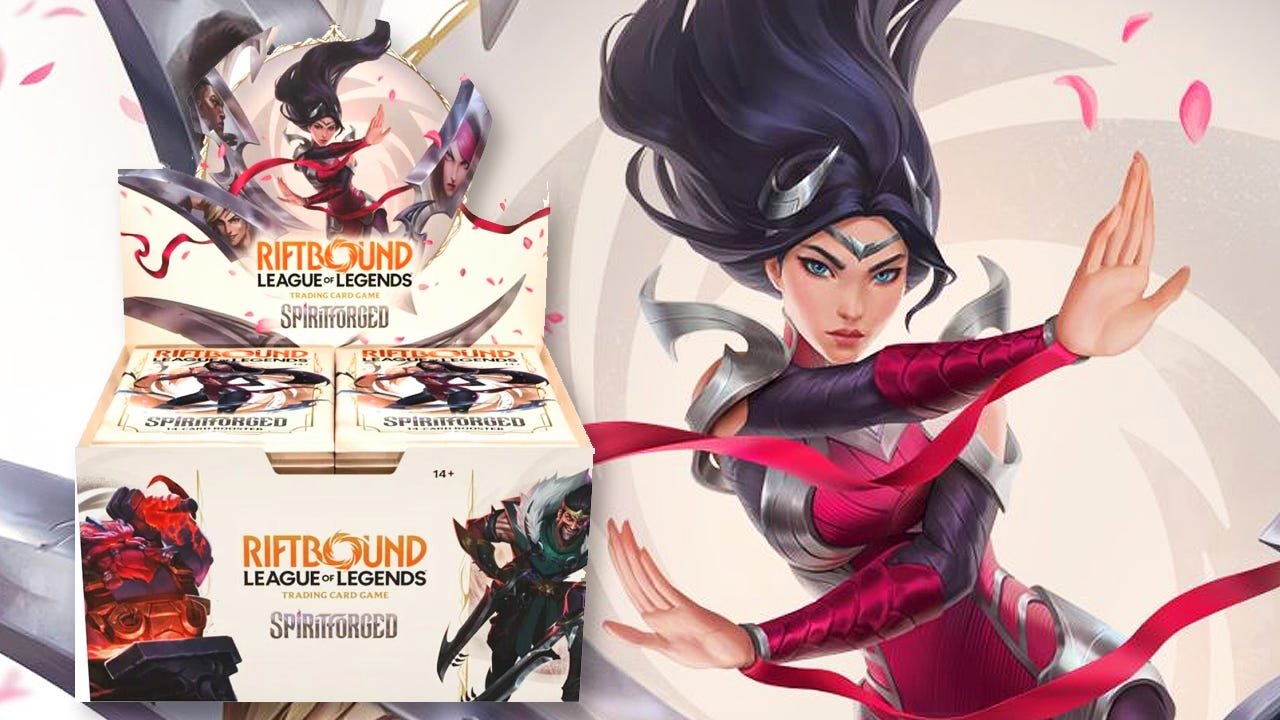
p>There is a very specific, very frantic kind of anxiety that only a TCG player truly understands. It’s that ritual we all perform whenever a major set drops—you know the one: three different browser tabs open to various retailers, your finger hovering over the F5 key like a nervous gunslinger, and a cold cup of coffee sitting forgotten on the desk. According to the latest reports from IGN Video Games, the newest Riftbound expansion, Spiritforged, has finally made its way to the Western market. And look, if you were holding out hope for a smooth, stress-free checkout experience where you could just casually pick up a box at retail price… well, I have some genuinely bad news for you. To put it bluntly, the launch has been something of a localized disaster for our collective wallets.
It’s no secret that Riot Games has a massive hit on their hands. We’ve known that since the Origins set first launched and took over our local game stores, but the sheer, unbridled demand for this physical League of Legends tie-in seems to have caught even the developers completely off guard. Again. We are currently witnessing a frustratingly familiar repeat of the Origins era: the official Riot merch store has become a desolate sea of “Sold Out” buttons, and the secondary market is already starting to smell blood in the water. It’s a classic, textbook case of a game growing exponentially faster than its own supply chain can handle. For those of us who aren’t trying to make a career out of speculative trading and just want to play a few matches on our kitchen tables, the whole situation is getting a little bit exhausting, isn’t it?
But if we’re being totally honest with ourselves, we have to admit that we’re at least partly to blame for the frenzy. We love the chase. We live for the hype. There is just something about the Spiritforged aesthetic—that gorgeous, specific blend of Ionian mysticism mixed with high-octane hextech grit—that makes these 221 new cards feel less like simple pieces of cardboard and more like actual relics from Runeterra. Whether you’re a hardcore PC player who basically grew up on the Rift or a tabletop veteran who just appreciates a solid mechanical engine, the pull of a fresh booster pack is a universal language. I spent a good chunk of my morning staring at the current TCGplayer price listings, and let’s just say my bank account gave me a very stern look. I might need to skip more than a few lattes this month if I want to get my hands on a full booster box without crying about the cost.
The Reality of the TCGplayer Tax: When MSRP Feels Like a Fairy Tale
Right now, the landscape is pretty grim for the budget-conscious player. If you want to secure any Spiritforged product right this second without waiting for an official restock that may or may not happen in the next month, you’re looking at some truly eye-watering markups. Individual booster packs are currently hovering around the $14.75 mark on TCGplayer. Just stop and think about that for a second to put it into perspective: a standard pack for almost any other major game on the market usually sits comfortably under five or six bucks. We aren’t just paying for cards anymore; we are paying a “hype tax” that is, frankly, staggering. According to a 2024 Statista report, the global trading card game market has surged to a valuation of over $20 billion, and it’s painfully clear that speculators are treating Riftbound like the new gold standard for “get rich quick” flips.
To their credit, Riot has come out and promised that they’ll be resupplying their own storefront as soon as humanly possible. They’re publicly urging players to be patient and stick to the MSRP (Manufacturer’s Suggested Retail Price). It’s a nice sentiment, and I appreciate them saying it, but it doesn’t exactly help the player who was hoping to enter a local tournament this weekend and needs the new tools to stay competitive. When the official store is empty, the “invisible hand” of the market starts feeling a lot more like a deliberate slap in the face to the average fan. It’s a stark reminder that while Riftbound is an absolutely fantastic game from a mechanical standpoint, the physical distribution side of things is still desperately trying to catch up to the massive prestige of the League of Legends brand. You’d think by now they’d have the printers running 24/7 before the launch date, but here we are.
“The volatility of the secondary TCG market often creates a barrier to entry that developers struggle to mitigate without overprinting and crashing the value of the cards themselves.”
— Market Analysis, Global Gaming Trends 2025
And yet, despite the prices and the stock shortages and the general headache of it all, we stay. We keep refreshing those pages. Why? Because the game is actually, genuinely good. It’s not just some half-baked cash grab meant to capitalize on a popular IP; it’s a deeply tactical, rewarding experience that manages to translate the frantic complexity of a MOBA into something tactile and strategic. It feels like League, but in a way that respects your time and your brain. But man, I would give anything to be able to just walk into a store and buy a box of cards without feeling like I’m participating in a high-stakes, Wall Street-level stock trade. Is that too much to ask for in 2025?
Finding Sanity in the Scraps: Why Fiora and Rumble are the Real MVPs Right Now
For the players out there who have zero interest in playing the “crack-a-pack” lottery—and I certainly don’t blame you—Riot did actually give us a bit of a lifeline with the new Champion decks. This time around, we’ve got Fiora and Rumble taking center stage as the faces of the pre-con lineup. If you’ve spent any time playing League on PC or your PS5, you know exactly what kind of energy these two bring to the table: it’s a mix of surgical precision and absolute, unmitigated chaos. Fiora’s deck is a 56-card masterclass in what they call “Duelist” mechanics. It’s all about focusing on the Chosen Champion cards and using her Signature Spells to systematically pick apart an opponent’s defense. It’s an elegant way to play, though I’ll admit it’s a bit punishing if you happen to miss your timings or misread your opponent’s hand. It’s a high-skill-floor deck, for sure.
Then, on the complete opposite end of the spectrum, we have Rumble. And Rumble is… well, he’s exactly what you’d expect. He’s Rumble. His deck is built entirely around the new Spiritforged mechanics that reward a bit of “scrap” and relentless aggression. It’s noisy, it’s messy, and it’s incredibly fun to pilot when everything starts clicking into place. Honestly, these preconstructed decks are the smartest way to actually play the game right now if you value your sanity. They include everything you need to get going: the Legend card, the Battlefields, and they even throw in a Spiritforged booster pack just to give you that little hit of dopamine. If you’re a newcomer looking to jump in, do yourself a favor and don’t even look at the booster boxes yet. Grab a Champion deck, spend a week learning the meta, and just wait for the initial supply shock to settle down. Your bank account—and your blood pressure—will thank you for it later.
The inclusion of these decks is a clear sign that Riot at least understands the growing divide between “players” and “collectors.” They want people actually sitting down at their Local Game Stores (LGS) and playing matches, not just hoarding sealed cases in a temperature-controlled closet hoping to flip them for a profit in three years. And speaking of local shops, that’s really where the heart of Riftbound is beating right now. Using the official store locator on the website isn’t just a helpful suggestion; at this point, it’s a survival strategy. Most local shops are getting their own specific allocations of product, and in my experience, they’re often much fairer with their pricing than the faceless bots and scalpers dominating the major reselling platforms. Plus, you get to actually talk to people, which is a nice bonus.
Chasing the Ghost in the Machine: The Brutal Math Behind Those Signed Pulls
Let’s take a minute to talk about the cold, hard math of the “pull.” Every Spiritforged booster contains 14 cards, which feels like a decent chunk of cardboard when you’re holding it, but the real story—the one everyone is whispering about on Discord—is the drop rates. One in every three booster boxes (not packs, boxes!) contains one of those stunning alternate art “Overnumbered” editions. They look incredible, no doubt about it. But the real white whale of this set? The ultra-rare signed versions. These appear in roughly one out of every 30 boxes. Let that sink in for a moment. That is a brutal pull rate. You could buy five cases and still come up empty-handed if the gods of RNG aren’t smiling on you that day.
A recent 2025 report from the TCG Player Association found that this “chase card” culture has actually increased the average spend per player by nearly 35% compared to just five years ago. We are seeing a fundamental shift in the hobby where the “game” part of the experience is almost starting to feel secondary to the “opening” part. It’s a bit concerning, honestly. When you realize that a full display case contains six boxes, you’re essentially looking at a 1-in-5 chance per case to find one of those signed cards. For the high-rollers and the YouTubers, this is the adrenaline hit they live for. For the rest of us who just want to build a cool deck? It’s a reminder that we’ll probably be better off buying our singles once the initial hype dies down and the market stabilizes. There’s no shame in buying the “boring” version of a card if it does the exact same thing on the board.
Is it actually better to buy a booster box or a full display case?
That depends entirely on what you’re trying to achieve. If you’re just looking for raw value and cards to build a deck, a booster box (which contains 24 packs) is the standard entry point and usually gives you enough of a base to work with. However, if you’re hunting for those “Overnumbered” alternate arts, display cases (which hold 6 boxes) are currently the only way to mathematically guarantee a higher probability of a hit. Just be prepared for some serious sticker shock—prices on TCGplayer are currently sitting well above the original MSRP, so you’re going to be paying a premium for that probability.
Can I still find Origins products, or is that gone for good?
Surprisingly, yes, you can still find Origins stock if you look in the right places. Some of the larger online retailers and smaller, out-of-the-way local stores still have some backstock, and it’s absolutely worth picking up if you’re missing core staples for your collection. The good news is that the power creep in Spiritforged isn’t actually that bad; the designers seem to have been careful. Your Origins cards are still very much viable and competitive in the current meta, so don’t feel like your old collection is suddenly obsolete.
What platforms can I actually play Riftbound on right now?
While the physical TCG is definitely the main focus of the Spiritforged launch, the digital client is currently available and running well on PC. There have been persistent rumors and a few “leaked” UI mockups suggesting a mobile port is coming later this year, which would be a huge game-changer. One cool thing to note is that the physical cards often include codes for digital rewards or card backs, though it’s important to remember that the physical and digital ecosystems are handled as separate entities—you don’t automatically get a digital version of every physical card you pull.
The Final Verdict: A Masterpiece Wrapped in Plastic and Stress
So, where exactly does that leave us at the end of the day? If we look past the logistics nightmare, Spiritforged is an absolute triumph of game design. The 221 new cards add a layer of tactical depth that Origins only really hinted at. The mechanics feel tighter and more responsive, the art is arguably some of the best Riot has ever commissioned for any project, and the Champion decks are actually competitive right out of the box, which is a rare feat in this industry. But we have to address the elephant in the room: the distribution model is deeply frustrating for the average fan.
We are living in an era where “limited” seems to be the default setting for everything we love. Whether it’s a limited-edition skin in the League client or a signed card in a Riftbound pack, the industry is leaning incredibly hard into FOMO (Fear Of Missing Out). And it works—I mean, look at us, we’re all here talking about it, aren’t we? But it carries a real risk of alienating the very people who make the community thrive in the long run. If a kid can’t walk into a shop and buy a single pack with their allowance because a bot bought the whole shelf before the store even opened, we have a fundamental problem with the hobby.
My best advice for you? Be patient. As hard as that is when everyone on Twitter is posting their “god pulls,” remember that Riot knows there’s a massive amount of money being left on the table right now. They want your money, and they will restock. Sign up for that Riot account, hit the “notify me” button on the merch store, and go visit your local game store. Support the people who actually provide the tables and the chairs for us to play on. Spiritforged is here to stay, and while the “Overnumbered” cards are undeniably cool to look at, they don’t hit any harder than the common versions when you’re actually in the heat of a match. Focus on the game, not the gamble.
And hey, if you do happen to defy the odds and pull a signed Rumble card in your first pack… maybe just keep it to yourself for a bit? My jealousy levels are already at an all-time high, and I’d like to keep my blood pressure in the double digits. I’ll see you all on the board—hopefully with a full hand and a bit of luck.
This article is sourced from various news outlets and community reports. The analysis and presentation represent our editorial perspective on the current state of the TCG market.
About the Author