There has long been an unwritten, almost sacred rule in the survival horror genre: if you aren’t alone, you aren’t really scared. We have all experienced that specific moment of immersion-breaking. You are creeping through a pitch-black, derelict hallway, the floorboards are groaning under your character’s weight, and your own pulse is thumping in your ears like a drum. Just as the tension reaches its peak, your co-op partner’s mic crackles to life with: “Hey, did you see that weird thing back there? Also, I think my DoorDash is here.” And just like that, the spell is shattered into a million pieces. The atmosphere evaporates instantly, replaced by the mundane reality of cold fries and a guy named Steve talking over a Discord call. It’s the classic co-op curse.
According to the latest industry analysis from the Eurogamer.net feed, this exact tension—the tug-of-war between companionship and a terrifying atmosphere—is what Tarsier Studios had to navigate with their latest nightmare, Reanimal. Having spent a significant amount of time with the game on both PS5 and PC since its release last year, I’ve found myself completely rethinking that old “solitude equals fear” rule. Tarsier—the brilliant, twisted minds behind the first two Little Nightmares games—didn’t just tack on a second player as an afterthought or a marketing gimmick. Instead, they baked the concept of “two against the world” into the very marrow of the gameplay experience. It’s not just about having a buddy; it’s about how that buddy makes you even more vulnerable.
It’s a fascinating, bold pivot for a studio that essentially perfected the “lonely child in a big, scary world” aesthetic. We’ve seen them do isolation better than almost anyone else in the business. But as it turns out, having a friend along for the ride doesn’t necessarily make the journey any less bumpy or the monsters any less grotesque. In fact, in Reanimal, having a partner often makes the horror feel a whole lot more personal and, surprisingly, more intense. It’s a different kind of pressure when someone else’s survival depends on your ability to not freak out.
Why the “Alone is Scarier” Rule is Finally Starting to Break
For the longest time, the gaming industry operated under the assumption that horror was strictly a solo sport. You look at the heavy hitters—Amnesia: The Dark Descent, the early Silent Hill titles, or the claustrophobic reboot of Resident Evil 7—and they all lean heavily on the psychological weight of total isolation. There’s a very practical reason for that, of course. When you’re alone, you are the only person responsible for your survival. There’s no one to blame but yourself when things go sideways, and there is absolutely no one to share the burden of a jump scare. You are the only target, and that’s a heavy thought to carry through a ten-hour campaign.
But the market has been shifting in a really interesting way. According to recent data from Statista, the global horror games market has seen a consistent compound annual growth rate of roughly 13% over the last few years, and a huge chunk of that growth is being driven by the explosion of “social horror” titles like Phasmophobia, Lethal Company, and Dead by Daylight. We’ve collectively realized that there’s a completely different brand of fear found in groups—the fear of letting your team down, the panic of hearing a friend scream in the distance, or the sheer, chaotic energy of a collective flight-or-fight response. It turns out, screaming with friends is just as addictive as screaming alone.
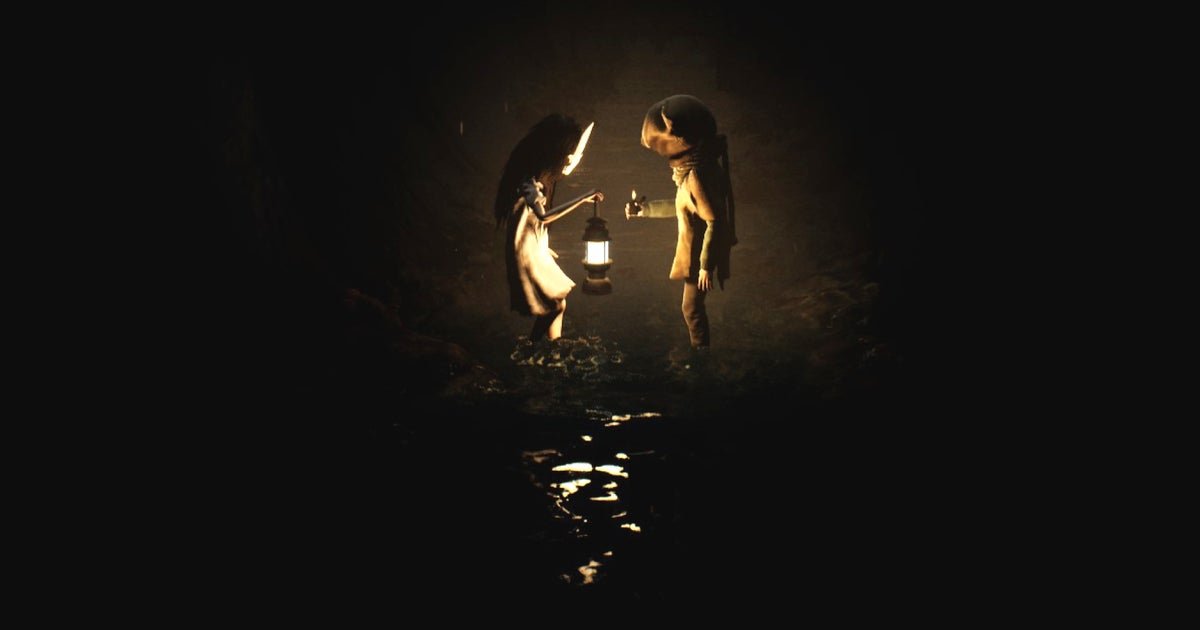
Tarsier clearly recognized this shift. Reanimal follows a brother and sister through a landscape that looks like a fever dream filtered through a rusted, blood-stained meat grinder. It’s bleak, it’s violent, and it’s deeply unsettling. It’s everything we loved about their previous work, but with a persistent second shadow always in your periphery. While you can absolutely play it solo with an AI companion—and it’s still a masterclass in atmosphere that way—the real meat of the game is found in the friction of two human minds trying to stay in sync under extreme pressure. It’s about that shared look of “what the hell was that?”
“Horror thrives in isolation, silence is the foundation of tension, so shove a second person into the mix and the set-up is antithetical to sustained atmosphere.”
Eurogamer Editorial Analysis
Now, that’s the traditionalist view, and for a long time, I would have agreed with it. But Reanimal argues that human connection is its own kind of vulnerability. When you’re playing co-op, you aren’t just managing your own fear; you’re managing the coordination of two bodies in a space that wants both of them dead. If you move too fast, you leave them behind. If they hesitate, you both get caught. That creates a brand of tension—a social anxiety mixed with survival instinct—that a solo game simply can’t replicate. It’s not about being alone; it’s about the terrifying responsibility of not being alone.
The Terrifying Reality of Having Someone Else to Blame
One of the smartest design choices Tarsier made with Reanimal was avoiding the “superhero” trap that plagues so many multiplayer games. In most co-op titles, two players feel twice as powerful as one. You have more guns, more health, and more tactical options. But in Reanimal, you often feel twice as clumsy and twice as fragile. Think about those frantic, heart-pounding chase sequences—the kind where a giant, multi-limbed monstrosity is breathing down your neck. In a solo game, your success depends entirely on your own reflexes. In co-op, you’re only as fast as your slowest player, and that realization is horrifying.
I’ve had moments where my partner and I were trying to navigate a narrow, crumbling ledge while being pursued by something that looked like a discarded, sentient anatomy project. It was pure chaos. One of us mistimed a jump. The other hesitated for just a fraction of a second to see if the first person was okay. In that split second of “Wait, where are you?” the horror didn’t disappear—it intensified tenfold. It became a frantic, whispered argument over the mic. “Go, go, go!” “I can’t, the camera shifted!” “Jump now or we’re both dead!” That isn’t a break in immersion; it’s a new layer of it.
This “friction” is entirely intentional. Whether you’re cranking a heavy, rusted valve together or giving each other a literal leg-up to reach a high vent, the game constantly reminds you that you are two separate, fallible entities. It’s not the seamless, invisible cooperation of an AI bot that perfectly anticipates your every move. It’s the messy, fumbling, panicky reality of two humans trying to stay alive. It actually reminds me of a 2023 Pew Research Center report which noted that nearly half of younger adults (47%) say they play video games specifically to connect with friends or family. Reanimal takes that social connection and weaponizes it. It takes the bond you have with your player-two and puts it directly in the crosshairs of a monster.
The Art of the Quiet, Grotesque Moment
It’s not all screaming and sprinting for your life, though. Tarsier are absolute masters of the “uncomfortable silence,” and they haven’t lost that touch here. Even in co-op, Reanimal manages to maintain a heavy, oppressive mood that feels like it’s physically weighing down on you. A lot of this comes down to the incredible camera work. Much like Little Nightmares, the game uses a cinematic, side-on perspective that swings, tilts, and zooms to highlight the sheer, terrifying scale of the world. Even on a high-end PC or the Xbox Series X, the level of detail in the grime, the rust, and the lighting makes you feel incredibly small and insignificant.
There is a specific kind of magic when you and your friend stop to look at a particularly gruesome set-piece—say, a giant, bloated creature trapped in a cage of its own making, twitching in the dark. In those moments, there’s a shared sense of awe. You don’t even need to talk. You both just stand there, your characters huddled together against the cold, and you feel the weight of the artistry. This is where the “popcorn blockbuster” comparison really fits. Much like Supermassive’s The Dark Pictures Anthology or The Quarry, Reanimal is designed as a communal experience. You’re sharing the “eww” moments and the “wow” moments in real-time, and that shared memory makes the game stick with you much longer than a solo run might.
The Genius of the Friend Pass: Bringing a Bodyguard for Free
We really need to talk about the business side of this game, because it’s actually a huge reason why it has stayed so relevant and talked-about since its launch. Tarsier and THQ Nordic were smart enough to implement a “Friend Pass” system. If you own the game, you can invite a friend to play the entire thing with you for free, even if they don’t own a copy themselves. It’s a brilliant move we’ve seen before with games like It Takes Two, and it’s an especially savvy strategy for a horror title. Let’s be honest: horror can be a very hard sell for a lot of people.
There’s always that one friend in the group who flat-out refuses to play scary games alone. They just won’t do it. By offering a Friend Pass, Tarsier effectively lowered the barrier to entry. They essentially said, “We know this world is terrifying, so feel free to bring a bodyguard.” It turned the game release into an event rather than just a solitary purchase. It wasn’t just another digital item in a library; it was a weekend plan. “Hey, I bought Reanimal, let’s play through it this Friday night.” That’s how you build a community around a niche genre.
This approach taps into the growing trend of gaming as our primary social venue. In an era where “couch co-op” is often treated by big publishers as a relic of the 90s, Reanimal’s support for both split-screen and online play felt like a genuine love letter to the way we used to play games. There’s something irreplaceable about sitting on the same sofa, jumping at the exact same scare, and then immediately laughing at each other’s terrified expressions. It’s a human element that no solo horror game, no matter how well-written or high-budget, can truly provide. It’s about the memory of the scare as much as the scare itself.
Does a Second Player Kill the Vibe, or Just Change It?
I’ll be completely honest with you: if you are looking for the absolute, purest form of psychological dread, you should probably play Reanimal solo for your first run. There is an undeniable loss of that “insidiously creeping menace” when you have a buddy making bad jokes or asking about their dinner in your ear. The isolation of the solo experience allows the game’s incredible sound design—the wet slaps of unseen feet, the distant, distorted cries of something that used to be human—to really get under your skin and stay there.
But here is the thing: playing solo feels like reading a dark, lonely poem, whereas playing co-op feels like living through a dark folk tale. The narrative of two siblings lost in a hellscape is actually *reinforced* by having two human players. You aren’t just controlling a character who is scripted to care about their sibling; you *are* a person trying to look out for another actual person. When the Boy and Girl hold hands to run through a dark forest, it’s not just a cute animation. It’s a visual representation of the real-life link between you and your friend. The stakes feel higher because they are social.
Is Reanimal harder in co-op?
In many ways, yeah, it actually is. While you have two sets of eyes to spot danger, the puzzles and chase sequences require much tighter coordination. If one person panics and goes the wrong way, both players usually end up paying the price. The AI in solo mode is much more “perfect” in its execution, which, ironically, removes some of the tension that comes from human error. There’s nothing scarier than your friend missing a jump when a monster is two inches away.
Do I need to have played Little Nightmares to enjoy this?
Not at all. While the “vibe” and the art style will feel very familiar to fans of that series, Reanimal is a completely standalone universe with its own unique lore and mechanics. If anything, it’s a bit more “mature” and visceral than Tarsier’s previous work. It leans much harder into body horror and bleak environmental storytelling, making it feel like a natural evolution rather than a simple retread of old ground.
A Masterclass in Making You Care About Your Partner
As we move further into 2026, I think we’re going to see more “prestige” horror games start to experiment with this cooperative model. Reanimal didn’t necessarily disprove the idea that isolation is the king of horror, but it certainly proved that companionship is a very capable queen. It found that elusive middle ground where the artistry and atmosphere aren’t sacrificed for the sake of multiplayer, and where the presence of another human being actually adds a layer of emotional stakes that total isolation just can’t touch. It makes the world feel bigger and the threats feel more personal.
Tarsier Studios took a massive gamble by moving away from the solo-focused formula that made them famous in the first place. They could have easily played it safe and made Little Nightmares 3 (which, as we know, moved to a different development team), but instead, they chose to explore the “horror of the duo.” It’s a grittier, stickier, and more collaborative kind of fear. It serves as a stark reminder that even in the darkest, most twisted versions of hell, having someone to hold onto is both our greatest strength and our biggest liability. It’s that duality that makes the game so special.
So, if you haven’t had the chance to check it out yet, grab a friend, use that Friend Pass, and dive in. The water is dark, the monsters are hungry, and the world is falling apart. Just remember the golden rule of co-op horror: pee first. Because once that first chase starts and the adrenaline kicks in, nobody is stopping for a bathroom break. You’re in this together until the very end, for better or worse.
This article is sourced from various news outlets, including Eurogamer. Analysis and presentation represent our editorial perspective.
About the Author