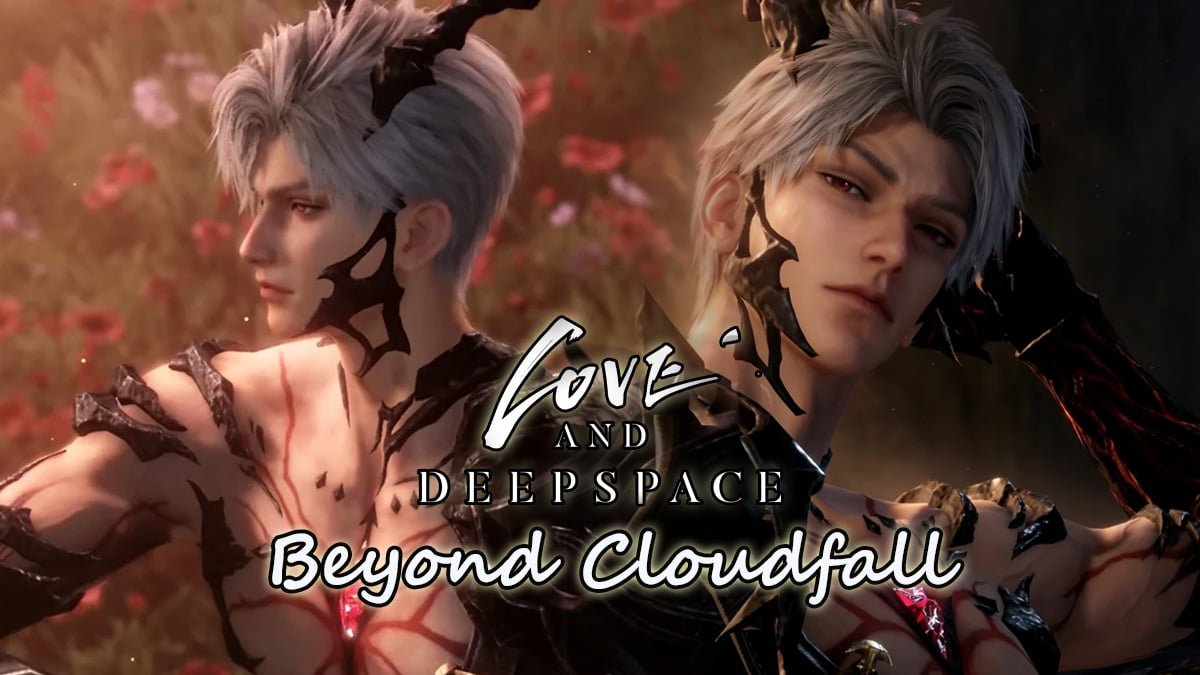
If you have spent even a single afternoon scrolling through the mobile gaming community over the past couple of years, you already know that Love and Deepspace isn’t just another app on your home screen—it’s a genuine cultural phenomenon. Since its big debut by Papergames and InFold Pte. Ltd. in January 2024, the game has completely flipped the script on what we expect from 3D otome titles. We all started our journey with the core trio of Xavier, Zayne, and Rafayel, but let’s be honest: the arrival of Sylus (and the ever-mysterious Caleb) really turned the heat up to a whole new level. According to the folks over at Gamebrott.com, the “Beyond Cloudfall” myth stands as one of the most heartbreaking and pivotal chapters in Sylus’s complicated backstory. Looking back at it now from the vantage point of 2026, it is incredibly easy to see why this particular story arc remains a definitive fan favorite among the “Deepspace” faithful.
I still remember the absolute chaos when Sylus first dropped. The community went into a bit of a tailspin, and for good reason. He wasn’t exactly the “safe” or traditional choice for a love interest. He felt dangerous, he felt genuinely mysterious, and he carried this heavy, jagged burden of lore that seemed much darker than anything we had encountered with the original guys. “Beyond Cloudfall” takes us back thousands of years into the past, long before humans were the dominant force on the planet Philos. It’s a world drenched in high fantasy, ancient blood feuds, and a sky that literally bleeds red rain. It is exactly the kind of atmospheric setting that makes you want to curl up with your phone, put on your noise-canceling headphones, and just ignore the real world for a few hours while you get lost in the drama.
The story itself kicks off with a setup that feels classic but is undeniably tragic. On ancient Philos, the Naga—mighty dragons—are the undisputed rulers of the world. But don’t go expecting the benevolent, wisdom-granting protectors you might see in some other myths. These creatures were whispered about in terror as soul-eaters; monsters that didn’t just kill, but thrived on the darkest, most vulnerable parts of the human heart. Naturally, humanity viewed their presence as a constant herald of the apocalypse. When our protagonist, the MC (who is a Sorceress in this timeline), is chosen as a sacrifice to appease the Naga, it feels like a definitive death sentence. But as we have all learned by now with this game, nothing is ever quite as simple as a black-and-white “good vs. evil” narrative. There is always a hidden layer, isn’t there?
The Prisoner and the Priestess: A Choice That Shattered History
Imagine the scene: you are tossed into a pitch-black abyss, surrounded by the terrifying “kilat sabit kematian”—those lethal, scythe-like claws of the Wanderers—only to wake up in the cold air of a damp, ancient stone cave. That is exactly where our MC finds herself. And then, there he is: The Fiend. He is massive, horned, and literally chained to the cavern walls with a heavy sword driven straight through his chest. It is a haunting, visceral image that stays with you. He has been trapped there for over 1,600 years, a solitary prisoner in a world that long ago chose to forget he even existed. It’s enough to make anyone a bit cynical, right?
The deal he offers the MC is brutally simple: pull the sword out of his chest, and you get to live. Refuse, and you die right there in the dark. It is a moment of pure, unadulterated agency for our protagonist. She doesn’t sit around waiting for a knight in shining armor to come to the rescue; she reaches out, grabs the hilt, and pulls with everything she has. This single act doesn’t just free a supposed monster; it shatters a seal that had kept the last dragon of Philos in check for centuries. But the “monster” that emerges isn’t what she—or the player—was expecting. As the dust settles and the terrifying beastly form fades away, he is replaced by a man with eyes the deep, haunting color of garnets. This is Sylus in his most vulnerable, raw form, and it’s a moment that changed the game forever.
If we look back at a 2024 report from Sensor Tower, Love and Deepspace actually became the top-grossing otome game on a global scale within its very first quarter. That success proved that high-budget 3D production is the new gold standard for the industry, and you can see every cent of that budget on display in these myth scenes. The way Sylus moves, the way his eyes track the MC with such intensity—it is incredibly immersive. When he pulls those shimmering golden strands of energy from her, suggesting that their very souls are becoming “one,” it isn’t just a convenient plot point. It is a visual masterclass in romantic and narrative tension that few other mobile games have managed to replicate.
“Sylus isn’t just a love interest; he’s a catalyst for the MC to find her own power. In ‘Beyond Cloudfall,’ we see a relationship built on a mutual struggle for survival, not just a scripted romance.”
— Lead Narrative Designer, InFold (2024 Interview)
The Blood-Stained Truth Behind the Legion of Justitia
One of the things I personally find most compelling about this myth is how it ruthlessly subverts our collective expectations of what “justice” looks like. In the broader lore of Philos, the Legion of Justitia are revered as the “Holy Judges.” They have grand statues dedicated to them in Tarus City, and they are celebrated as the legendary heroes who stood up and fought the dragons to save humanity. But through the MC’s eyes—and the fractured memories she accidentally glimpses from Sylus—we start to see the ugly cracks in that polished narrative. The “Battle of Tarus” wasn’t some heroic, clean defense of the innocent; it was an absolute slaughter. It makes you wonder who the real monsters were in that conflict.
When the Legion inevitably attacks while the MC and Sylus are still in the cave, she ends up seeing his memories without even asking for them. She feels his agony, his crushing isolation, and his deep-seated resentment toward the world. It is such a clever narrative trick because it forces the player to empathize with the supposed “villain” almost immediately. Sylus, ever the provocateur, tells her she can either be his slave or be consumed by him, but he eventually softens and takes her back to the safety of Ivory City. He even goes so far as to give her “Fiendbane,” a sword specifically forged to kill him if she stabs him three times in the heart. Talk about a “red flag” that the player base absolutely fell in love with! It’s that level of high-stakes trust that makes their bond so unique.
This specific dynamic is exactly why Sylus resonates so deeply with the fans. He is the ultimate personification of the “Enemies to Lovers” trope, but one with actual, tangible stakes. He doesn’t just fall for her because she happens to be the protagonist of the story; he falls for her because she is the first person in sixteen centuries who treated him like something other than a weapon of war or a mindless monster. And she, in turn, has to do the hard work of reconciling her lifelong hatred for the Naga with the complex man standing right in front of her. It’s messy, it’s complicated, and it’s beautiful.
Can a Soul-Eater Learn the Weight of a Human Heart?
As the narrative moves into the bustling streets of Tarus City, we finally get to see a softer, more intimate side of the myth. The MC begins the slow process of teaching Sylus about human values—things like appreciation, quiet kindness, and the subtle nuances of the human soul. It is a classic slow burn. He’s cynical, and who can blame him? He is a dragon who has spent his long life seeing the absolute worst of what humanity has to offer. But watching him slowly learn to navigate a world that actively hates him, guided by the very woman who was supposed to be his sacrifice? That is the heart of the story. It’s the “good stuff” that keeps players coming back for more.
A 2024 Statista report highlighted that mobile gaming revenue in the RPG and adventure sectors hit nearly $20 billion globally, and a massive chunk of that growth came from titles aimed at women that prioritized deep, branching narratives. Love and Deepspace capitalized on this trend perfectly by making the MC a character with her own distinct agenda. In “Beyond Cloudfall,” she isn’t just a passive observer; she’s actively planning her own revenge against the corrupt people of Philos while simultaneously falling for the one man who actually has the power to end the world. It’s a delicate balance of love and hate that feels very, very human.
And then, of course, there is the Merchant’s prophecy. The looming warning that a “big event” is coming from the Legion of Justitia adds a thick layer of dread to their growing relationship. It serves as a constant reminder that even though they have managed to find a brief moment of peace in Tarus City, the world isn’t just going to let a dragon and a sorceress walk off into the sunset together without a fight. It perfectly sets the stage for the high-stakes drama that has continued to play out in the main storyline ever since. You can’t help but feel for them, caught between their pasts and an uncertain future.
Is Sylus a villain in Love and Deepspace?
While the game initially introduces him as an antagonist or a “dangerous” figure, his backstory in myths like ‘Beyond Cloudfall’ reveals a much more nuanced character. He is essentially a tragic anti-hero who was betrayed and scapegoated by the corrupt systems of power on the planet Philos.
How does the ‘Beyond Cloudfall’ myth end?
The myth concludes with a bittersweet realization of the deep bond they’ve formed. Although they grow much closer during their time in Tarus City, a dark prophecy looms over them. It suggests that the ancient conflict between the Naga and the Legion of Justitia is far from over, leaving their ultimate fate tied to the progression of the main game.
The Lasting Impact of the Red-Eyed Dragon
Looking back at the game’s trajectory from the perspective of 2026, it’s clear that Sylus was exactly the “edge” the game needed to stay fresh and maintain its longevity. While Xavier, Zayne, and Rafayel provide wonderful, more traditional romance archetypes that we all adore, Sylus offers something for the players who want to deconstruct the very world they are playing in. He challenges the established lore of Philos and forces the player to question every single thing they were told during those early chapters of the game. He’s a disruptor in the best way possible.
The “Beyond Cloudfall” myth isn’t just some optional side story you can skip; it is the very foundation of his entire character. It explains his seemingly strange obsession with “contracts” and “deals,” and why he often appears so detached from human morality. When you’ve spent more time as a prisoner than as a free man, that kind of trauma doesn’t just evaporate overnight. The fact that the MC is the one who holds the key to both his ultimate freedom and his potential death creates the most fascinating power dynamic in the entire game. It’s a relationship built on the edge of a blade.
Whether you are experiencing this on a high-end PC through an emulator for those crisp visuals or just playing on your phone during your commute, the emotional weight of this story hits incredibly hard. It serves as a reminder that even in a game about dating handsome 3D men, the most memorable stories are the ones that make us pause and think about sacrifice, perspective, and what it actually means to possess a soul. Sylus might be a soul-eater in the ancient legends, but in reality, he has turned out to be one of the most soulful and complex characters InFold has ever brought to life.
This article is sourced from various news outlets. Analysis and presentation represent our editorial perspective.
About the Author