p>It’s funny how things have a way of coming full circle in this industry, isn’t it? Just when we all thought Bloober Team had permanently moved on to the big leagues of high-budget remakes and ambitious new sci-fi IPs, they’ve gone and pulled us right back into the drafty, paint-splattered hallways where it all began. According to the latest from IGN Video Games, the Polish studio has officially pulled back the curtain on Layers of Fear 3. And honestly? It’s about time we had a real conversation about what this means for the self-appointed kings of psychological horror.
I distinctly remember sitting in a pitch-black room back in 2016, tentatively making my way through the first Layers of Fear. At the time, we called it a “walking sim” in the truest, most literal sense, but it had this nasty, brilliant habit of shifting the geometry of the world right behind your back. You’d turn a corner, find a dead end, turn back around, and the door you just walked through was gone—replaced by a solid wall or a disturbing painting. It was simple, it was effective, and it’s the game that arguably put Bloober on the global map. Fast forward to today, February 16, 2026, and the studio is a different beast entirely. They’ve survived the absolute pressure cooker of the Silent Hill 2 remake—which, if we’re being honest, exceeded almost everyone’s cynical expectations—and they successfully launched Cronos: The New Dawn just last year. So, the question on everyone’s mind is: why go back to the well for a third time? Is there really more to say about haunted artists and crumbling manors?
But see, that’s the thing about Bloober Team. They’ve always been a bit obsessed with their own legacy, almost to a fault. CEO Piotr Babieno recently took a moment to celebrate the franchise’s 10th anniversary, personally thanking the fans for keeping the series “close to their hearts.” It’s a sentimental move, sure, and maybe a little self-indulgent, but it’s also a deeply strategic one. Layers of Fear isn’t just a game to them; it’s their DNA. It’s the foundation that allowed them to eventually be trusted with Konami’s crown jewels. Returning to it now feels like a victory lap, but it’s a victory lap fraught with a specific kind of challenge: proving they can still innovate within the very sub-genre they helped define, now that they have the eyes of the entire industry on them.
Beyond the Jump Scares: What William Blake Tells Us About Bloober’s New Direction
The teaser for Layers of Fear 3 is exactly what you’d expect from a studio that has spent a decade refining its aesthetic: it’s atmospheric, it’s pretentious in a way that actually kind of works, and it’s deeply, deeply unsettling. We’re shown a man sitting in a grand, decaying room—it’s giving very strong “Gothic mansion” vibes—reading William Blake’s The Sick Rose. Now, if you’re not a total literature nerd, here’s the gist: the poem is essentially about a secret, invisible worm that finds a rose’s “bed of crimson joy” and destroys it with its “dark secret love.” It’s classic horror fodder, but in the context of this specific series, it’s a massive neon sign pointing toward the theme of corrupted beauty and the rot hidden beneath a polished surface. It’s a metaphor for the creative process gone wrong, which has always been the heart of this franchise.
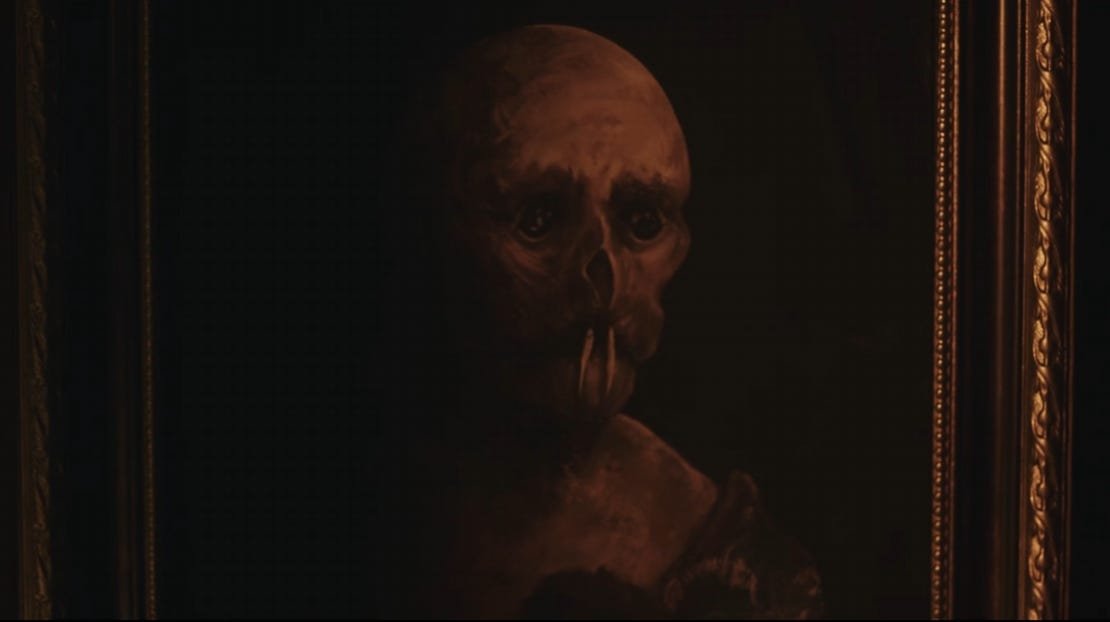
We see paintings, of course—it wouldn’t be Layers of Fear without them. One depicts a woman, presumably the “rose” from the poem, and another shows a humanoid figure with its mouth sewn shut. The imagery is visceral and lingers a bit longer than you’d like. But there’s a moment in the teaser that caught me off guard: the man waves off a ghostly figure, dismissively calling it his “little friend” who hasn’t quite mastered the afterlife yet. That little detail sets a tone that is slightly more self-aware and perhaps even a bit darker than previous entries. It’s not just “boo, a ghost!” anymore. There’s a sense of domesticity with the macabre—a familiarity with the supernatural—that feels fresh for the series. It suggests that the protagonist isn’t just a victim of the house; they’re a participant in its madness.
And let’s talk about that tagline for a second: “Some Things Never Leave The Walls. They Only Learn To Wait.” It’s a chilling reminder of the franchise’s core conceit—that the environment itself is the primary antagonist. In the original 2016 game, the house was a direct reflection of a crumbling, guilt-ridden mind. In Layers of Fear 2, it was a ship reflecting the art of cinema and the masks we wear. Now, with the power of the PS5 and Xbox Series X/S having fully matured, the technical potential for “impossible spaces” is through the roof. We aren’t just looking at shifting walls anymore; we’re looking at total environmental gaslighting on a level that simply wasn’t possible ten years ago. I want to see a room dissolve into a forest while I’m standing in it. I want the floor to turn into a ceiling without a single loading screen. That’s the promise of a current-gen Layers of Fear.
Money, Malice, and Meta: Why the Industry is Finally Taking Psychological Horror Seriously
To really wrap your head around why Layers of Fear 3 matters, you have to look at the studio’s trajectory over the last two years. They aren’t the “B-tier” developers people used to label them as back in the day. The success of the Silent Hill 2 remake changed the math for them entirely. According to 2024 sales data from Konami, that remake moved over 1 million units in its first week alone. That’s a massive number for a niche horror title, and it proved once and for all that Bloober could handle the “Triple-A” spotlight without blinking. They took a legendary, almost sacred title, updated the combat meta, and somehow managed to keep the original soul intact—a feat many thought was impossible.
“The horror genre isn’t just a niche anymore; it’s a pillar of the industry’s growth, driven by technical fidelity and deep psychological narratives.”
— Industry Analyst Report (2025)
Furthermore, a 2025 report on the gaming industry found that the “Psychological Horror” tag on Steam has seen a 22% year-over-year increase in player engagement. People don’t just want to be jumped at by monsters anymore; they want to be disturbed on a fundamental level. They want stories that stay with them after the console is turned off. Bloober knows this better than anyone. By returning to Layers of Fear, they are doubling down on their absolute specialty. While Cronos: The New Dawn leaned more into the survival-horror roguelike elements and active combat, Layers of Fear 3 feels like a return to pure, unadulterated atmosphere. It’s a statement that they haven’t forgotten the art of the slow burn.
The Bloober Empire: From High-End Ray Tracing to the Switch’s Swan Song
It’s not just about the big consoles, either. Bloober is playing a very clever, multi-front game with their various subsidiaries. While the main “A-team” works on Layers of Fear 3 and maintains their ongoing, lucrative relationship with Konami, their subsidiary Broken Mirror Games is quietly handling the “Project M” mystery. A Switch exclusive? That’s a bold, almost bizarre move in 2026, especially with all the rumors of the Switch’s successor being the primary focus for most developers. But it shows a desire to dominate every single corner of the horror market, from high-end ray-tracing on PC to portable spooks that you can take on a plane. They want to be the name you think of when you think of digital fear, regardless of the hardware you’re using.
But let’s be real for a second, because we have to address the elephant in the room. The “walking simulator” label has always been a bit of a double-edged sword for Bloober. While The Medium tried to break out of that box with its dual-reality mechanic, and Silent Hill 2 was a full-blown third-person action game with actual stakes, Layers of Fear has always been about the experience over the mechanics. It’s about the journey, not the fight. If Layers of Fear 3 is just another “walk forward and watch the wall change” simulator, will it actually survive in the landscape of 2026? The audience has grown significantly more sophisticated. We’ve seen games like Alan Wake 2 and the recent Resident Evil entries push the absolute boundaries of what horror can be, blending narrative and gameplay in ways that make the old “walking sim” style feel a bit dated.
I suspect Bloober is well aware of this pressure. The Valentine’s Day warning in the teaser and the prominent appearance of a sand timer suggests a potential time-loop or a ticking-clock mechanic that could add some much-needed tension to the exploration. They need to move beyond the simple jump scares and the “look at this creepy painting” tropes that they’ve relied on in the past. To truly succeed, they need to make us feel complicit in the horror, not just passive observers of it. They need to give us a reason to keep walking that isn’t just “I want to see the next cool visual effect.”
The Final Curtain Call: Can Layers of Fear 3 Actually Redefine the Studio’s Legacy?
So, where do we go from here? Bloober hasn’t officially given us a launch window yet, but if I were a betting man, my gut says we’re looking at a late 2026 or early 2027 release. They’ve got a lot on their plate right now. Between self-publishing Cronos and managing their subsidiary’s output, they are essentially becoming the A24 of video games—prolific, stylish, occasionally divisive, but always interesting. They have carved out a space where they can take risks that larger publishers might shy away from.
The real question is whether Layers of Fear 3 will be the “final” chapter, as the anniversary presentation heavily hinted. The tagline “They Only Learn To Wait” feels awfully final, doesn’t it? It has a sense of closure to it. If this is indeed the end of the trilogy (and we’re ignoring the 2023 remake/compilation for a moment), it needs to go out with a bang. It needs to be the definitive statement on what “Bloober-style horror” actually is. It needs to justify its existence in a world where we’ve already seen so many haunted artists lose their minds.
And honestly? I’m actually quite optimistic. The studio has grown up. They’ve learned how to pace a narrative, how to use sound design to crawl under your skin, and how to optimize for PC and consoles so the experience is seamless and immersive. If Layers of Fear 3 can successfully combine the raw, experimental energy of the first game with the technical polish and narrative depth they showed in Silent Hill 2, we might be looking at a new masterpiece of the genre. I want to be surprised. I want to be terrified. I want to turn around and find that the door I came in through has been replaced by something I never could have imagined.
Is Layers of Fear 3 a sequel or another remake?
This is a common point of confusion, but let’s clear it up: Unlike the 2023 release, which was more of a reimagining and technical compilation of the series in Unreal Engine 5, Layers of Fear 3 is a brand-new entry. It’s a fresh story with new characters, continuing the psychological horror legacy rather than just retreading old ground.
What platforms will Layers of Fear 3 be on?
While we’re still waiting on the official confirmation list, Bloober Team’s recent history and the high technical requirements of their modern titles strongly suggest a release on PC, PS5, and Xbox Series X/S. Their subsidiary is also working on a Switch exclusive codenamed Project M, which shows they haven’t forgotten about Nintendo fans, even if the main game might be too heavy for current Switch hardware.
Does the game have a release date?
As of February 16, 2026, Bloober Team has not announced a specific launch window. However, the teaser ended with a very thematic Valentine’s Day warning. This has led many in the community to speculate on a 2027 release, perhaps aiming for a February launch to tie into that “love/horror” theme mentioned in the teaser.
In the end, Bloober Team is no longer just “that studio that makes those weird horror games.” They are a genuine powerhouse in the industry. Layers of Fear 3 is their chance to show the world that they haven’t forgotten where they came from, even as they look toward a future filled with bigger budgets, broader horizons, and more complex stories. It’s a return to form, but hopefully, it’s a form we haven’t seen before. Just a word of advice: when you finally get your hands on it, don’t expect the walls to stay where you left them. They’ve been waiting a long time for you to come back.
This article is sourced from various news outlets. Analysis and presentation represent our editorial perspective.
About the Author