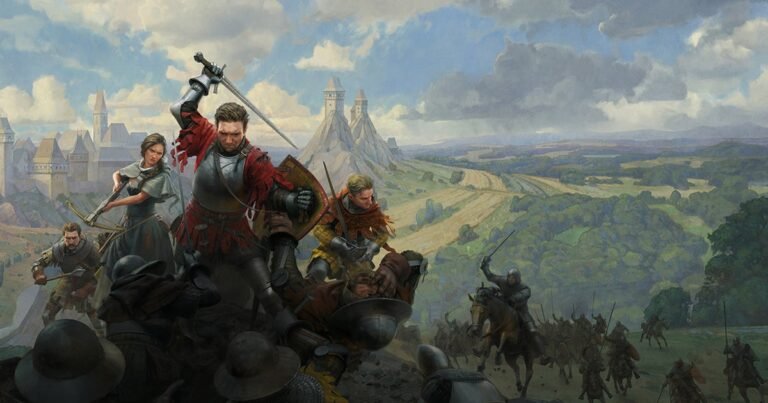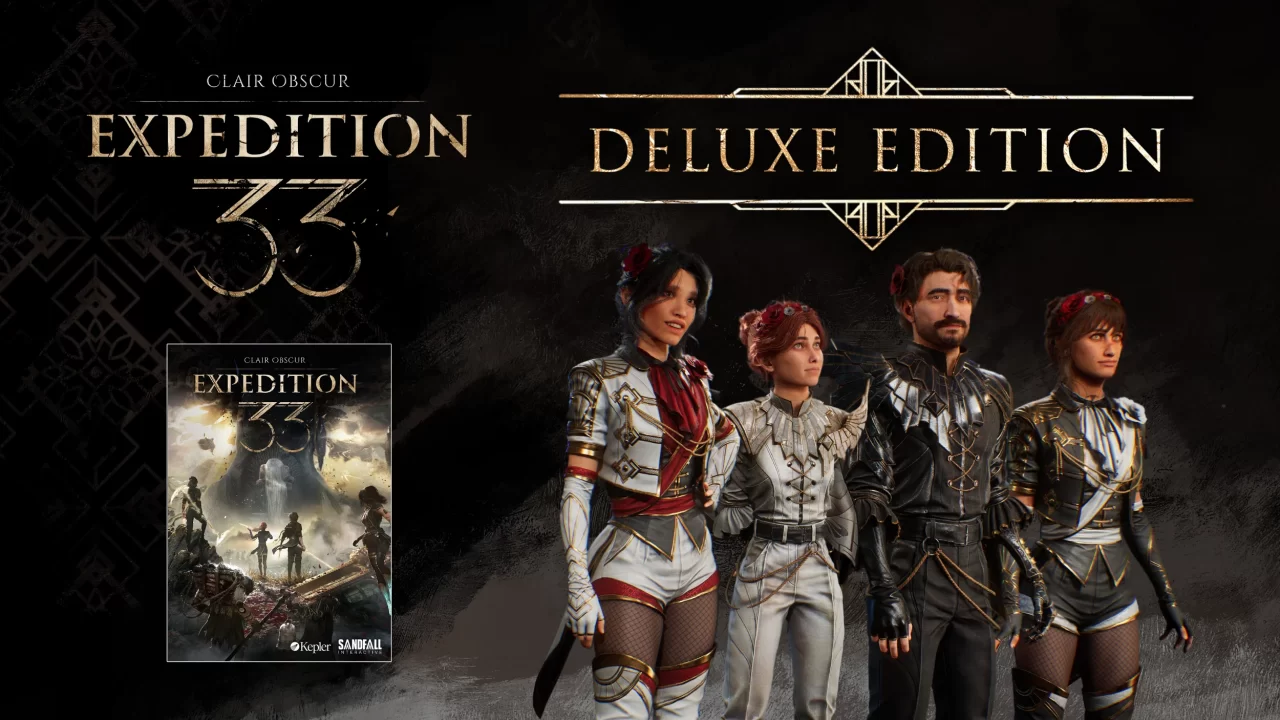
If you were tuned into the DICE Awards last night, you probably noticed a recurring theme pretty early on. Actually, it wasn’t just a “theme”—it was a total landslide. According to the folks over at Gamebrott.com, the Academy of Interactive Arts and Sciences basically handed Sandfall Interactive a massive, career-defining victory. Clair Obscur: Expedition 33 didn’t just win; it walked away with five major trophies, including the one everyone actually cares about: Game of the Year. It’s the kind of night that doesn’t just look good on a resume; it changes the entire trajectory of a studio forever. And honestly? It’s about time we started talking about how this game has completely shifted the goalposts for what we expect from an RPG on PC, PS5, and Xbox Series X/S.
I still remember the first time those early trailers for Expedition 33 dropped. There was a lot of healthy skepticism floating around the forums—could a relatively new French studio actually pull off a high-fidelity, turn-based RPG that felt like a modern blockbuster? Well, the industry just gave its definitive answer. Beyond that massive GOTY win, they scooped up Outstanding Achievement in Art Direction, Story, and Game Direction, while also being named Role-Playing Game of the Year. That is a staggering haul. It’s the kind of performance that puts them in the same breath as the industry’s heavy hitters. We aren’t just looking at a “good game” anymore; we’re looking at a genuine cultural landmark for the mid-2020s.
Chasing the Grand Slam: Can Anything Stop the Expedition 33 Juggernaut?
There is something special happening here, something we haven’t really witnessed in a few years. By securing that DICE trophy, Expedition 33 is now three-fifths of the way toward a “Grand Slam”—or what some call the “Big Five” of gaming awards. It’s already got the Golden Joystick and The Game Awards tucked safely under its belt. Now, all eyes are turning toward the GDC Awards next month and the BAFTA Game Awards in April. If Sandfall pulls this off, they’ll be the first team to sweep all five major GOTY titles since Baldur’s Gate 3 did it back in 2023. And let’s be real, that’s elite company to be keeping.
It’s funny, isn’t it? We’re always looking for the “next” successor to Larian’s masterpiece, but Expedition 33 didn’t try to be Baldur’s Gate. It didn’t need to. Instead, it leaned hard into its own identity—that unique, “reactive” turn-based combat and a surrealist French aesthetic that feels like a fever dream in the best possible way. According to a 2025 report by Newzoo, the turn-based RPG genre has been seeing a massive resurgence lately, with player engagement up by nearly 18% year-over-year. It turns out people are genuinely hungry for tactical depth when it’s combined with high-end production values. Sandfall didn’t just find that sweet spot; they built a house there.
“The success of Expedition 33 proves that ‘prestige’ gaming isn’t just the domain of third-person action-adventures anymore. We are seeing a return to systems-heavy storytelling that respects the player’s intelligence.”
— Industry Analyst Perspective, 2026
But let’s be real for a second—winning at DICE just hits differently. These awards aren’t a popularity contest; they’re voted on by peers. These are actual developers who know exactly how hard it is to make a character move naturally across a screen or to write a script that doesn’t make the player cringe. When your fellow coders, designers, and artists say you’re the best in the business, it carries a weight that fan votes, as great as they are, just can’t match. It’s a validation of the craft itself, not just the marketing hype.
More Than Just Pretty Pixels: When Game Art Becomes a Diplomatic Incident
One of the most fascinating side stories of this entire awards season is just how much the French government has embraced the team at Sandfall. I mean, did you hear about this? The dev team was actually knighted. That’s not some weird metaphor for winning an award—they received official state honors for their contribution to French culture. It sounds like something out of a different century, doesn’t it? But it speaks volumes about the “Clair Obscur” (Chiaroscuro) art style that defines the game. It’s a visual identity that borrows heavily from 17th-century painting techniques, mixing light and shadow in a way that makes every single screenshot look like it belongs on a wall in the Louvre.
I was actually chatting with a friend of mine who recently tried to buy the physical artbook—or well, he *tried* to. Apparently, the book is so detailed and “intense” that it actually got flagged by customs in a few different regions. There’s a story floating around about a gamer in Iraq whose artbook was seized because the local authorities didn’t quite know what to make of the surrealist, haunting imagery. It’s wild to think that a game’s art direction can be so provocative that it causes international shipping hurdles. But I guess that’s the power of a strong, uncompromising vision, right? It isn’t meant to be “safe.” It’s meant to be striking.
A Statista study from late 2024 highlighted that 62% of gamers now prioritize “artistic uniqueness” over “brand familiarity” when they’re looking at new IPs. Sandfall bet big on that uniqueness. They didn’t go for the generic, safe fantasy look that we’ve seen a thousand times. They went for something that feels like a haunted opera, and clearly, it paid off. Every time you use a “Paint” mechanic in the middle of a fight or explore the decaying beauty of the world, you’re seeing exactly why those Art Direction and Game Direction awards were so well-deserved. It’s art you can feel.
Beyond the Main Stage: Ghosts, Porters, and a Surprising Fighting Game Museum
While Sandfall was undoubtedly the star of the show, they weren’t the only ones taking a victory lap. Sucker Punch’s Ghost of Yotei had a really solid night, taking home three awards of its own. Atsu, the new protagonist, won for Outstanding Achievement in Character, which has to be a huge relief for the studio. Transitioning away from a beloved character like Jin Sakai was always going to be a massive risk, but Atsu has clearly resonated with the industry. They also grabbed Adventure Game of the Year and Music Composition. It’s a good reminder that even in a year dominated by a breakout RPG, the “Sony formula” for polished, character-driven action is still very much alive and well.
Then you have Hideo Kojima’s Death Stranding 2: On the Beach and the indie darling Blue Prince, both of which snagged two awards each. It’s such an interesting mix of winners. On one hand, you have the massive, experimental budget of Kojima Productions, and on the other, you have the focused, incredibly clever design of Dogubomb. This kind of variety is what makes the DICE Awards feel less like a corporate pat on the back and more like a curated gallery of what’s actually moving the needle in game design today.
And can we talk about the biggest surprise of the night? Digital Eclipse winning Best Fighting Game for Mortal Kombat: Legacy Kollection. Usually, this category is a locked door for the latest Street Fighter or Tekken. Seeing a retro collection take the crown is… well, it’s a bit weird, right? But it’s a real testament to how much work Digital Eclipse puts into the concept of preservation. They didn’t just dump some old ROMs on a disc and call it a day; they built a digital museum. In an era where we’re constantly worried about digital games disappearing into the ether, the industry decided to reward the team that’s actually keeping history alive and playable.
The New Standard for “Prestige” Gaming
So, where do we go from here? Expedition 33 is no longer just a “successful indie-adjacent project” we’re keeping an eye on. It is the new benchmark. For Kepler Interactive, the publisher, this is a massive win that proves their model of supporting “triple-i” or high-end independent studios actually works. They gave Sandfall the space and the resources to make a game that is unapologetically weird, deeply European, and mechanically dense, and the reward is a shelf full of gold trophies.
I honestly think we’re going to see a lot of “copycats” in the next few years—games trying to mimic that reactive turn-based flow where you’re dodging and parrying in real-time during what is ostensibly a menu-based battle. But it’s hard to capture lightning in a bottle twice. The magic of Expedition 33 isn’t just in the mechanics; it’s in the mood. It’s that haunting feeling of being on a doomed journey where the stakes are existential and the world is beautiful but fundamentally broken. You can’t just “patch” that kind of atmosphere into a game.
As we look toward the GDC Awards on March 12, the momentum is clearly behind them. If they win there, the BAFTA in April is going to feel less like a competition and more like a coronation. We are witnessing the birth of a new “prestige” franchise right before our eyes. Whether Sandfall decides to make a direct sequel or move on to something entirely different, they’ve already secured their place in the history books. For now, I’m just going to go back and try to finish my second playthrough on “Expedition” difficulty. Those nerfs to the late-game boss health were much needed, by the way—thanks for looking out for us, Sandfall!
Is Expedition 33 a Soulslike?
Not exactly, though I get why people ask. While it features some pretty challenging combat and a “reactive” system where timing your parries and dodges is absolutely vital, it is fundamentally a turn-based RPG at its core. Think of it as a mix between the strategic depth of a classic Final Fantasy and the active, twitch-based engagement of a modern action game.
What are the “Big Five” awards in gaming?
The “Big Five” refers to the Game of the Year honors from the five most prestigious awarding bodies in the industry: The Game Awards, the Golden Joystick Awards, the DICE Awards, the GDC Awards, and the BAFTA Games Awards. Winning all five is the gaming equivalent of an EGOT.
Who is the developer of Clair Obscur: Expedition 33?
The game was developed by Sandfall Interactive, a talented studio based in France, and published by Kepler Interactive. The team has become famous for their “French Touch,” which blends high-concept art with deep, narrative-driven storytelling.
This article is sourced from various news outlets. Analysis and presentation represent our editorial perspective.
About the Author