We’ve been hearing about the “AI revolution” for a few years now, haven’t we? For the most part, it’s felt like something happening way off in the background—a clever little tool for generating weird images or a faster way to summarize a boring meeting. But lately, that revolution has started to feel a lot more like a tax on our wallets. If you’ve been wondering why your favorite hobby is suddenly getting hit with delays and price hikes, you can stop looking at the game developers and start looking at the massive data centers popping up everywhere. According to the latest reports from Eurogamer, the massive push for AI dominance by tech giants is creating a memory shortage so severe that it is actually reshaping the very future of gaming hardware as we know it.
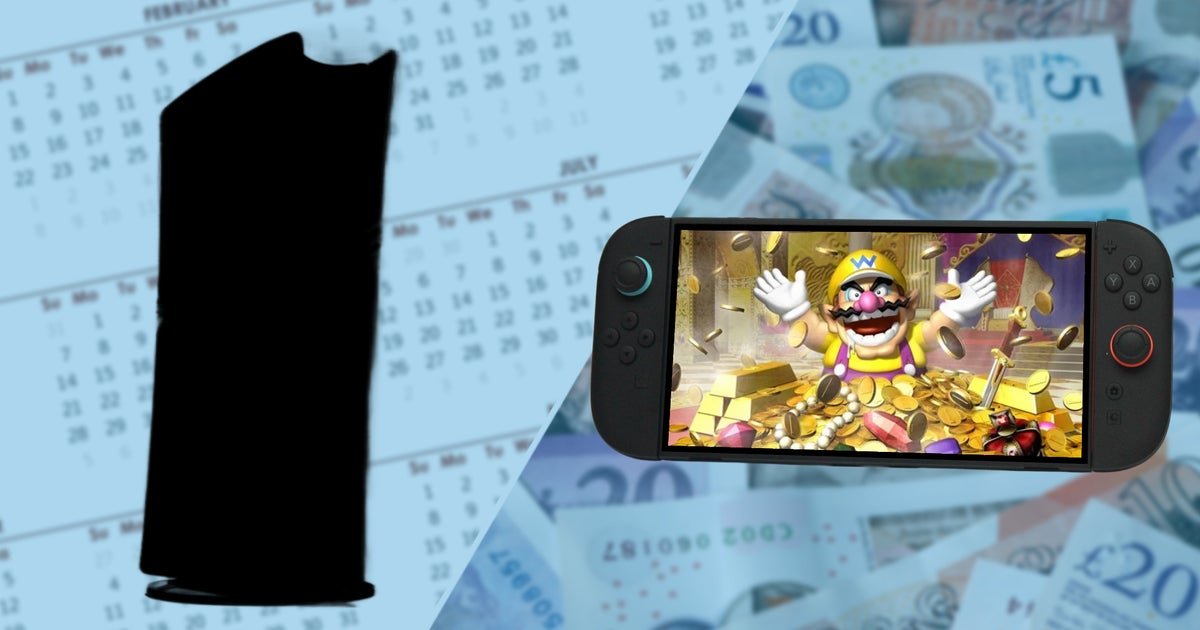
It’s a bit of a gut punch, honestly. We’re currently seeing reports that Sony is seriously considering pushing the PlayStation 6 launch back as far as 2028 or even 2029. Meanwhile, Nintendo—a company that usually plays it incredibly safe with their pricing models—is looking at a mid-cycle price hike for the Switch 2. It’s not that these companies suddenly forgot how to build machines; it’s that the “guts” of the hardware, specifically the high-speed RAM, are being swallowed up by the likes of Microsoft, Google, and Meta. When you’re competing for resources against companies with trillion-dollar market caps who are desperate to win the AI arms race at any cost, the average gamer usually ends up being the one who pays the price. It’s a classic case of being outbid by the biggest players in the room.
Why exactly is AI making my gaming console more expensive?
It comes down to simple supply and demand. Artificial Intelligence platforms require massive amounts of high-speed RAM to function and process data. Because tech giants are buying up the global supply to build out their massive data centers, there is simply less available for consumer electronics. This leads to global shortages and significantly higher costs for manufacturers like Sony and Nintendo, who then have to decide whether to eat those costs or pass them on to us.
Waiting for the PS6: Why the Next Generation is Suddenly a Moving Target
For a while there, it really felt like we had a solid handle on when the next generation of consoles would arrive. Sony’s PlayStation 5 launched back in late 2020, and the historical seven-year cycle pointed directly at a 2027 release for the PS6. Even leaked documents from a couple of years ago suggested Sony was aiming for that exact window. But let’s be real—the world looks a lot different in early 2026 than it did in 2022. The demand for specialized memory has spiked so aggressively that Sony is reportedly rethinking its entire “orchestrated strategy” for the next decade.
If the reports are true and we don’t see a PS6 until 2028 or even 2029, we’re looking at an eight- or nine-year generation. In the tech world, that’s an absolute eternity. Sony’s biggest challenge right now isn’t just the hardware itself; it’s keeping us interested for that long. How do you sustain user engagement on a PS5 for nearly a decade without things feeling stale? We’ll likely see even more “Pro” iterations or aggressive DLC strategies to bridge the gap, but it’s a risky move that could alienate fans. According to a 2024 Statista report, the global semiconductor market was already projected to face some cyclical volatility, but the sustained “AI-first” pivot has turned what should have been a ripple into a total tsunami. Sony isn’t just fighting Xbox for market share anymore; they’re fighting the very infrastructure of the modern internet for basic parts.
And let’s be honest—Sony is in a really tough spot here. If they launch too early with expensive components, the PS6 becomes a $700 or $800 machine that nobody wants to buy. But if they wait too long, they risk the hardware feeling outdated and “last-gen” before it even hits the shelf. It’s a balancing act that I definitely don’t envy them for, especially when their competitors at Microsoft are also reportedly looking to hike prices on the Xbox Series X and S just to keep up with the spiraling costs of RAM. It feels like the days of the $399 flagship console are well and truly behind us.
The Unthinkable Nintendo Price Hike: Even Mario Can’t Outrun the RAM Crisis
Then there’s Nintendo. The Switch 2 launched last year to massive fanfare, and it’s been a certified hit, selling over 17 million units in record time. But even the House of Mario isn’t immune to the “AI tax.” Earlier this month, Nintendo President Shuntaro Furukawa dropped a bit of a bombshell during a routine briefing. He suggested that while they initially thought they could weather the RAM shortage, they might actually have to raise the price of the Switch 2 later this year if market conditions don’t improve. That’s a huge shift in tone for a company that prides itself on stability.
This is a big deal because Nintendo almost never raises prices on existing hardware. Usually, the trajectory is predictable: the price only goes down as the console gets older and components get cheaper to make. But the cost of memory and storage has become so volatile that the old rules simply don’t apply anymore. Citing “people familiar with the company’s thinking,” Bloomberg reports that Nintendo is actively contemplating this hike behind closed doors. It’s a move that would have been unthinkable five years ago, but in a world where every scrap of RAM is being diverted to power Large Language Models, it’s the new, unfortunate reality we’re living in.
“The current market is a perfect storm of unpreparedness, panic, and greed. We are seeing consumer electronics being pushed to the back of the line so that AI can stay at the front.”
— Tech Industry Commentator via Eurogamer Analysis
I can’t help but wonder what this does to the “meta” of console buying. If we know a price hike is coming, does that cause a fresh wave of panic-buying and scalping? Almost certainly. We’ve already seen Valve delay its latest hardware iterations because they couldn’t secure enough memory and storage at a reasonable price point. It’s starting to feel like the entire hardware landscape is becoming a high-stakes game of musical chairs, and the music is being controlled by companies that don’t even make games. It’s frustrating to think that our leisure time is being dictated by server farm logistics.
Stuck in the Middle: How Hardware Scarcity is Rewriting the Developer’s Playbook
It’s not just the big three console makers feeling the squeeze, either. The entire gaming ecosystem is starting to feel the pressure. Developers are having to optimize games for older hardware for much longer than they ever expected. We’re seeing more “cross-gen” titles that might have been “next-gen exclusives” by now if the transition had gone smoothly. If the PS6 is pushed all the way to 2029, developers are going to have to get really creative with how they squeeze performance out of the aging PS5 and Xbox Series X. We might see a rise in “roguelike” or smaller indie-style games becoming the dominant force on consoles simply because they’re easier to run on hardware that’s starting to show its age.
And then there’s the PC market—the place where this all usually hits first. If you’ve tried to build a new rig or even just upgrade your current one lately, you already know the pain. According to a recent Reuters report, the price of high-density memory modules has increased by nearly 40% year-over-year in some regions. This isn’t just a “gaming problem” anymore; it’s a systemic “tech problem.” But gamers are the ones who feel it most because our hobby is so dependent on constantly pushing the envelope of what hardware can do. When the envelope gets too expensive to manufacture, the push inevitably stops.
Is there any kind of silver lining here?
Maybe, if you look hard enough. If Sony and Microsoft are forced to extend this generation, it might actually give developers more time to truly master the current hardware. We’ve seen in the past that some of the most impressive, best-looking games come out at the very end of a console’s life cycle—think of how incredible The Last of Us looked on the PS3. If the PS5 is our primary home for the next four years, we might see some truly miraculous optimization. But honestly, that’s a small comfort when you’re staring at a potential $100 price hike on a console that’s already been out for a year. It’s a “wait and see” situation that favors the patient, but punishes the early adopters.
The End of the ‘Affordable’ Console: Are We Entering a New Era of Luxury Gaming?
It feels like we’re entering a weird, slightly uncomfortable era where gaming hardware is starting to feel like a luxury good again. For a long time, the goal was to make consoles as accessible as possible—the famous “loss leader” strategy where you sell the box at a loss and make it back on the software. But with the cost of raw materials skyrocketing, that model is breaking down. If Nintendo, the undisputed king of affordable gaming, is considering a price hike, then the concept of the “affordable console” might be a thing of the past. We might have to adjust our expectations for what a new system costs.
I think we have to ask ourselves a pretty tough question: are we okay with our entertainment being sidelined for the sake of AI development? Because that’s essentially what’s happening in the global supply chain. The memory that would have gone into your PS6 or a more affordable Switch 2 is currently sitting in a server farm somewhere, helping an AI learn how to write corporate emails a little bit better. It’s a strange trade-off, and one that I don’t think many of us would have signed up for if we actually had the choice. It’s a shift in priority that’s happening above our heads, but hitting our wallets directly.
Ultimately, the next few years are going to be a real test of patience for the gaming community. We’re going to have to get used to longer wait times, higher price tags, and a lot of “if” and “maybe” from the big manufacturers. It’s not exactly the high-tech future we were promised when this decade started, but it’s the one we’re living in. And until the world’s insatiable hunger for AI memory is finally satisfied, our consoles are going to keep bearing the brunt of the bill. It’s not a great outlook, but at least now we know who to blame when the next “buy” button is a few hundred dollars higher than we expected.
Is the PS6 still actually coming out?
Yes, the PS6 is definitely still in development, but it’s likely coming later than we originally thought. While early rumors pointed to a 2027 release to keep the 7-year cycle alive, current market conditions and those pesky memory shortages have led analysts to predict a launch closer to 2028 or 2029. It’s going to be a long wait.
Should I buy a Switch 2 now or wait for a sale?
Given the reports of a potential price hike later this year, the usual “wait for a sale” advice might not apply here. It might actually be wiser to purchase a Switch 2 sooner rather than later if you can find one at the current retail price. In this economy, the price is more likely to go up than down in the short term.
This article is sourced from various news outlets. Analysis and presentation represent our editorial perspective on the current state of the industry.
About the Author