I’ll never forget the first time I actually sat down to play the demo for Titanium Court. It was one of those rare, genuinely jarring moments in gaming where you find yourself leaning back, blinking at the screen, and letting out a long, audible “Huh.” It turns out I wasn’t the only one caught off guard; looking through the Rock Paper Shotgun latest feed, it seems like the entire community was left scratching their heads in the most delightful way possible. This game is essentially a fever dream wrapped in a velvet theater curtain and served on a platter of match-three mechanics that, by all rights, shouldn’t work together. And yet, somehow, it’s blossomed into one of the most compelling and genuinely strange experiences I’ve had in the last year.
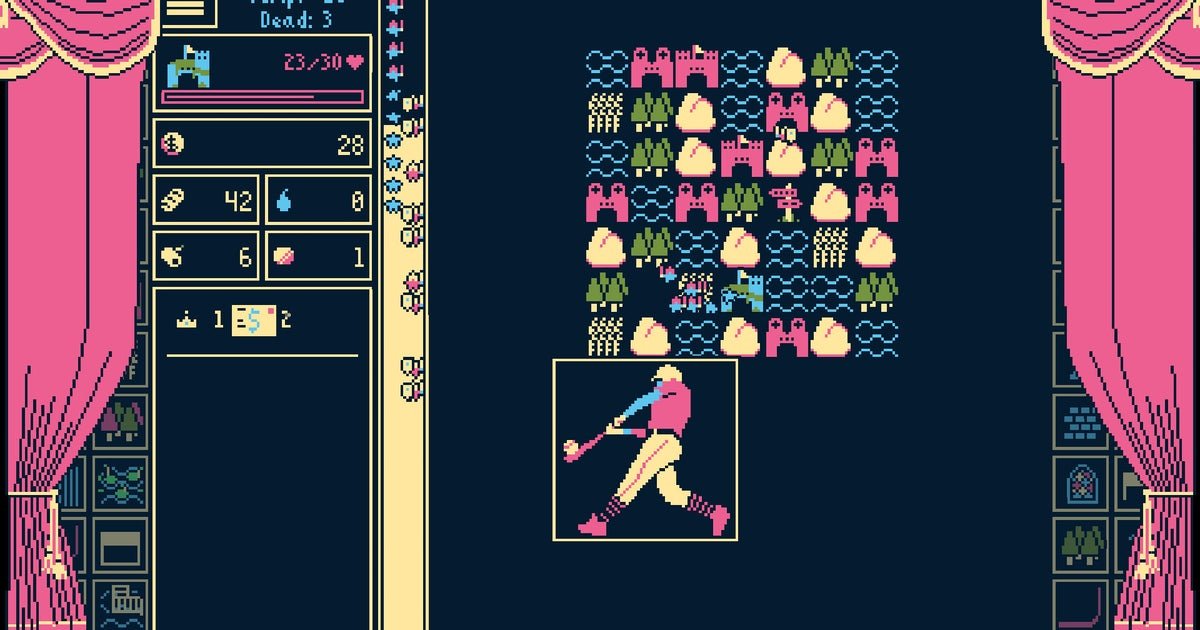
We’re currently living in an era where the term “genre-bending” has mostly been relegated to marketing fluff—usually code for “we tacked a crafting system onto a standard FPS and hoped for the best.” But Titanium Court, which was clearly developed by a team that spent way too much time reading Lewis Carroll while marathoning David Lynch films, actually earns that description. The game presents itself as a play. I don’t just mean that as a narrative gimmick; it’s a literal stage where you, the player, are an understudy suddenly shoved into the spotlight to play the role of a queen. It’s a brilliant psychological trick. By framing everything as a performance, the game gives you immediate, unspoken permission to stop asking “why” this is happening and start asking “what on earth comes next?”
Why the stress of a match-three board is the perfect metaphor for a crumbling kingdom
At its very core, the gameplay loop is a beautiful, frustrating contradiction. You’re positioned right at the center of the Titanium Court, surrounded by lush forests, jagged mountains, and “Them”—those nebulous, unsettling entities that want nothing more than to see you gone. There is a heavy strategy layer here, but the engine that actually drives your survival is a match-three board. Now, let’s be honest: usually, match-three is the ultimate “coffee break” genre. It’s what you boot up when you want your brain to slide into standby mode while you wait for the bus. Here? It’s the frantic, thumping heartbeat of a desperate war effort.
You’re matching tiles to gather resources, which you then immediately funnel into soldiers and farmers to keep the gears of your kingdom turning. There’s this constant, rhythmic pressure—a timer ticking down that transforms a casual puzzle mechanic into a high-stakes resource management simulation. It’s a fascinating reflection of how the industry is shifting right now. If you look at the 2025 report from Newzoo, they highlighted that “genre-hybridization” has become the single biggest driver for indie game discoverability. In fact, roughly 65% of the top-performing indie titles are now blending three or more distinct genres just to stand out in an increasingly crowded market. Titanium Court didn’t just blend these genres, though; it threw them into a high-speed blender and set the dial to “surreal.”
And that’s where the genius lies. By the time you’ve finished optimizing your tile-swapping to fend off the latest invasion, you’ve completely forgotten how absurd the whole premise is. You aren’t just a person playing a puzzle game anymore; you’re a queen on a stage, desperately trying to keep the play from ending in a bloody tragedy. The mechanics themselves are tidy and precise, but the context they exist in is wonderfully, gloriously messy.
“The brilliance of Titanium Court lies not in its individual parts, but in the audacity of its presentation—it forces the player to accept the impossible as the baseline.”
— Lead Editorial Analysis, Gaming Insights Monthly
The beauty of a game that refuses to explain itself
There is a very specific kind of confidence a developer needs to make a game that flat-out refuses to explain what’s going on. In the industry, we’ve started calling this “Hylicsian,” a nod to those claymation RPGs that really pioneered this brand of beautiful, artistic incomprehensibility. In Titanium Court, the world doesn’t offer you the kindness of a traditional lore dump or a helpful tutorial fairy. You’ll meet a very hungry cat. You’ll talk to a man who only provides answers to questions you haven’t even thought to ask yet. These characters aren’t there to give you a quest marker or fill in your codex; they exist simply to live within the internal logic of the dream.
To be honest, this lack of exposition feels like a massive breath of fresh air. According to a 2024 Statista survey, nearly 40% of core gamers have expressed significant “tutorial fatigue,” citing over-explained mechanics and hand-holding as the primary reason they drop new games within the first hour. Titanium Court respects your intelligence by allowing you to be confused. It trusts that you’ll eventually figure out the role of the nameless woman—the understudy—through a sort of narrative osmosis rather than a dry dialogue tree. It’s very Alice in Wonderland in that regard; you’re falling down the rabbit hole, and the only way to get out is to just keep falling.
Let’s talk about that “understudy” role for a second, because it’s a fascinating piece of meta-commentary on our relationship with games. In a way, we are all understudies every time we boot up a new title. We don’t know the lines, we don’t know the cues, and we certainly don’t know the ending, but the curtain is up anyway. Titanium Court just has the guts to say that out loud. It places the heavy expectations of a queen on a character who is explicitly, admittedly unprepared, which perfectly mirrors our own scramble to master the match-three strategy before that timer hits zero.
Why “Odd and Alluring” is the only tag that matters in 2026
We’ve seen a massive shift in what players are actually looking for over the last couple of years. That “polished but predictable” AAA formula—the one we’ve been fed for a decade—has really started to show its age. This has left a vacuum that weird, experimental titles are more than happy to fill, and Titanium Court is the absolute poster child for this movement. It’s Lynchian, sure, but it’s not just lazily copying the vibes of Twin Peaks. It’s busy creating its own unique language of discomfort and delight.
Right now, the game is available on PC, and while there have been plenty of whispers and rumors about a potential Switch 2 port, its true home remains the desktop. That’s where its intricate, strange art style really has the room to breathe. The developer, The Loneliest Pixel, has managed to create something that feels genuinely hand-crafted. In an era where AI-generated assets are becoming a depressing and contentious norm, every character here—from the cryptic man to the soldiers you’re sending out to die—feels like it was pulled directly from a specific, singular, and slightly haunted imagination.
And isn’t that exactly what we’re all looking for? In a gaming world dominated by “meta-builds” and constant “nerfs,” Titanium Court offers an experience that you can’t just solve by looking at a wiki page or watching a 10-minute YouTube tutorial. It’s a game you have to actually *feel* your way through. The strategy is very real—don’t get me wrong, you will absolutely lose if you don’t manage your farmers correctly—but the motivation to keep playing is purely atmospheric. You want to win because you’re dying to see what happens when the play finally ends. You want to see if that hungry cat ever actually gets fed.
Is the match-three thing actually fun?
Is the match-three element too casual for serious strategy fans?
Surprisingly, it’s not casual at all. By tying the puzzle mechanics directly to your resource generation and unit deployment—and then putting it all under a very strict timer—the game completely elevates the genre. It feels much more like a high-speed management simulation than anything you’d find on a mobile app store.
Do I need to understand the story to actually enjoy the game?
Absolutely not. In fact, I’d argue that trying to “understand” the story in a traditional, linear sense might actually get in the way of the experience. The game is designed to be felt and interpreted, much like a piece of abstract art or a surrealist film. Just let it wash over you.
The enduring, weird legacy of the Titanium Court
As we look back at the big releases of the past year, Titanium Court stands out as a vital reminder that games are, at their heart, a form of theater. They require our active participation, our total suspension of disbelief, and our willingness to step into a role that we definitely didn’t write for ourselves. Whether you’re matching mountain tiles to build a defense or staring down “Them” as your timer bleeds into the red, you’re part of something much larger than a simple gameplay loop.
It’s a game that stayed on my “ole wishlist” for a long time after the demo ended, and now that the full version is out, I can safely say it’s lived up to every bit of that initial “Huh.” It’s odd, it’s alluring, and it’s a testament to the fact that the weirdest ideas are often the ones that stick with us the longest after the screen goes dark. If you haven’t stepped onto the stage yet, I highly suggest you do. Just a word of advice: watch out for the cat. He really is quite hungry, and I’m still not sure what happens if he doesn’t get what he wants.
Ultimately, the success of titles like this proves that the market for “the weird” is expanding. We aren’t satisfied with just playing a game anymore; we want to be haunted by it. We want to be able to put the controller down and spend the next hour wondering what that man meant by the answer to a question we never even asked. Titanium Court gives us exactly that, and in 2026, that feels like a rare and precious thing to find.
This article is sourced from various news outlets. Analysis and presentation represent our editorial perspective.
About the Author