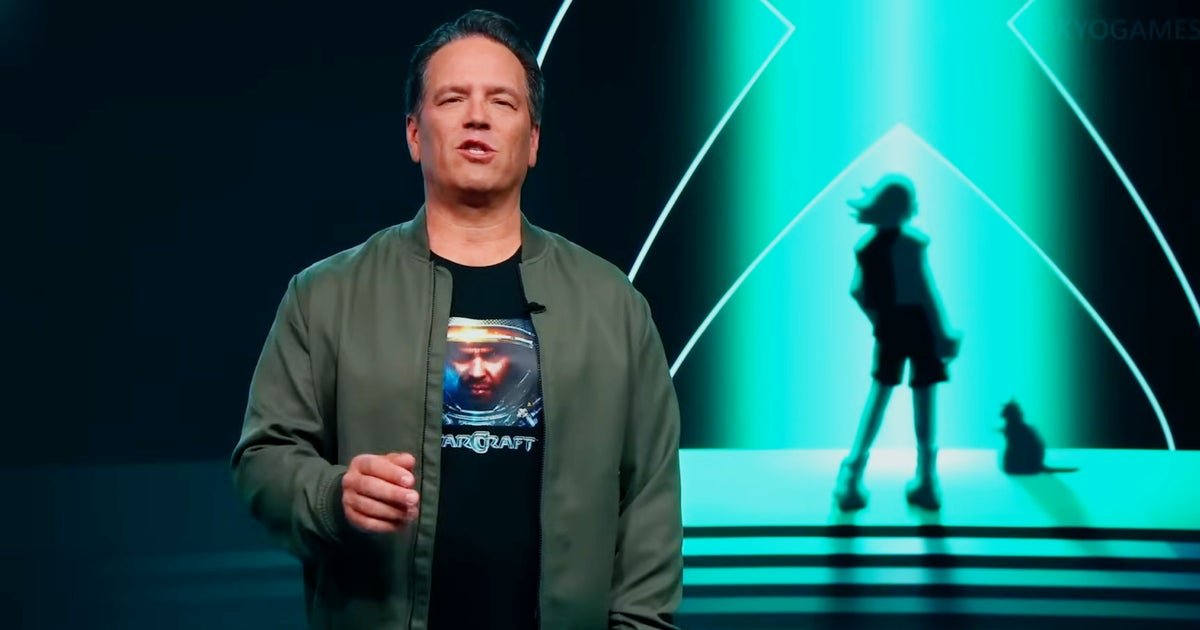
It is Friday night, and while most of us were probably looking forward to a quiet weekend of clearing our backlogs or maybe diving back into some PC favorites, Microsoft decided to drop a literal nuclear bomb on the industry. According to the Rock Paper Shotgun Latest Articles Feed, the long-standing king of the “green team,” Phil Spencer, is officially retiring as the CEO of Microsoft Gaming this coming Monday, February 23, 2026. And he is not the only one walking out the door; Sarah Bond, the president of Xbox who many of us assumed was the heir apparent, has also resigned. It is a massive, sudden shift that feels like the end of an era and the beginning of something much more… algorithmic.
The person stepping into Spencer’s shoes is Asha Sharma. If that name does not ring a bell for you in a gaming context, there is a reason for that. She has been serving as the president of Microsoft’s CoreAI product. Before that, she was a big deal at Meta and Instacart. This is not just a change in leadership; it is a fundamental shift in what Microsoft thinks a “gaming company” should be. We are moving away from the “gamer-first” vibes of the Spencer years and directly into an era where AI is not just a tool, but the boss. It is a lot to process for a Friday night, but the implications for Xbox, PS5, and even the Switch are going to be felt for the next decade.
The House that Philly Built: 38 Years of Spencer
Phil Spencer has been at Microsoft for 38 years. Let that sink in for a second. He was there when the first Xbox was just a pipedream, and he was the one who pulled the brand out of the absolute gutter after the disastrous Xbox One launch back in 2013. He was the guy in the graphic tees who actually seemed to like video games. He gave us Game Pass, he bought Bethesda and Activision Blizzard, and he championed the idea that you should be able to play your games anywhere. Whether you loved him or hated the corporate consolidation he oversaw, you cannot deny he had a vision that felt human.
But that era is over. Spencer is sticking around in an “advisory role” through the summer, which is corporate-speak for “helping the new person find the bathroom and the keys to the Call of Duty vault.” According to a 2024 report by Newzoo, the PC and console market saw a growth of 2.6% in 2023, reaching $93.5 billion, and Spencer was the one steering that ship for Microsoft through some of its most turbulent waters. He transformed Xbox from a struggling console box into a massive service ecosystem. Now, he is handing those keys to someone whose primary expertise is artificial intelligence.
“Over 38 years at Microsoft, including 12 years leading Gaming, Phil helped transform what we do and how we do it.”
— Satya Nadella, Microsoft CEO
It is a bittersweet moment. We are losing the executive who would show up on a livestream to play Destiny 2 with fans. In his place, we are getting the “CoreAI” perspective. And while I am sure Asha Sharma is brilliant, there is a legitimate fear that the “soul” of Xbox might be getting replaced by a very sophisticated large language model.
The Sarah Bond Mystery and the New Guard
The most shocking part of this “musical chairs” routine is the departure of Sarah Bond. For the last few years, Bond has been the face of Xbox‘s future. She was instrumental in the Game Pass expansion and the hardware strategy. To see her leave right as Spencer retires is… well, it is telling. It suggests that the new direction Microsoft is taking was not one she wanted to lead, or perhaps she was passed over for the top spot in favor of the AI-centric approach.
Instead of the Spencer-Bond duo, we now have Asha Sharma and Matt Booty. Booty is getting a promotion to Chief Content Officer, which is a big win for him. He is the “gaming guy” now, tasked with making sure the studios like Obsidian, Bethesda, and Rare actually keep making games people want to play. Satya Nadella seems to think this is the “dream team” of consumer product leadership and gaming depth. But let’s be real: Sharma is the one in charge, and her background is in Meta’s “metaverse” projects and grocery delivery. It is a weird mix, to say the least.
Statista data from 2025 suggests that AI integration in game development workflows has increased by nearly 40% among major AAA studios looking to cut costs. This is the world Sharma is coming from. She is not here to talk about “the power of the cloud” in the way we used to; she is here to figure out how to automate the pipeline. The question is: will that result in better games, or just more efficient ones?
The “No AI Slop” Promise: Can We Trust It?
Asha Sharma’s first memo to the staff was surprisingly self-aware. She specifically used the term “soulless AI slop,” promising that under her watch, games will remain art crafted by humans. It is a bold thing to say when your previous job title literally had “CoreAI” in it. She wants to use AI to “empower” developers and players to create and share their own stories. In gaming terms, this sounds like she wants to turn every Xbox game into a Roblox-style platform where user-generated content (UGC) is king, powered by generative tools.
But we have heard this before. Every time a new technology comes along—be it NFTs, cloud gaming, or VR—the suits promise it will only “enhance” the art. Then, three years later, we are looking at a DLC shop filled with procedurally generated horse armor. The skeptical part of me thinks that “no AI slop” is just a catchy phrase to keep the fans from revolting while they figure out how to nerf the cost of human developers. If you can have an AI write the side quests for the next Elder Scrolls, why pay a writer?
And yet, Sharma talks about taking risks and entering new categories. She mentions “iconic franchises” and “bold new ideas.” There is a glimmer of hope there. Maybe she realizes that in a world where every game is starting to feel like a roguelike or a live-service grind, the only way to win is to actually invest in “unforgettable characters and stories that make us feel.” We can only hope she means it.
The Multiplatform Pivot and the “Return of Xbox”
One of the most interesting points in Sharma’s vision is her goal for a “multiplatform return of Xbox.” We have already seen the cracks in the exclusivity wall over the last year, with titles like Sea of Thieves and Hi-Fi Rush jumping to PS5 and Switch. It seems that under Sharma, this is not just an experiment; it is the strategy. The “Return of Xbox” does not mean selling more consoles; it means putting the Xbox ecosystem on every screen you own.
This is a pivot away from the traditional console war. Microsoft has realized that they cannot beat Sony or Nintendo at the hardware game. Instead, they are going to try and own the platform of play. If they can get Game Pass on your TV, your phone, and your rival’s console, they win. A 2025 report from the Entertainment Software Association found that over 70% of gamers now play on more than one device. Sharma’s background at Meta and Instacart—companies that live and die by their platform reach—makes a lot more sense in this context.
But what does that mean for the Xbox hardware itself? Is the next console going to be a specialized AI box? Or are we looking at the final generation of traditional Xbox hardware? If the focus is on “new business models” and “leaning into what we already have,” we might be seeing the beginning of the end for Xbox as a piece of plastic under your TV, and the start of Xbox as a pervasive, AI-driven service.
What Happens Next?
As we head into this transition on Monday, the mood is definitely “wait and see.” Phil Spencer’s departure feels like the final sunset on the era of the “celebrity executive.” We are moving into a period of cold, hard efficiency. Sharma has a lot to prove to a community that is notoriously protective of its hobby. You cannot just “disrupt” gaming the way you disrupt grocery delivery. Gamers have a very high “BS detector,” and if the first few projects under her tenure feel like “soulless AI slop,” the backlash will be legendary.
However, if she can actually use Microsoft’s massive AI resources to give developers the tools to make bigger, weirder, and more ambitious games without the soul-crushing crunch that has defined the industry for years, then maybe—just maybe—this change is what Xbox needs. But for tonight, let’s just pour one out for “Spenny.” He was one of us, even when he was a suit.
Who is replacing Phil Spencer?
Asha Sharma, the former president of Microsoft’s CoreAI product and an executive with experience at Meta and Instacart, will take over as CEO of Microsoft Gaming on February 23, 2026.
Did Sarah Bond leave Microsoft?
Yes, Sarah Bond, the former President of Xbox, has resigned as part of this major leadership shakeup. Her future plans have not been officially announced.
What will happen to Matt Booty?
Matt Booty has been promoted to Chief Content Officer. He will work alongside Asha Sharma to lead Microsoft’s game studios and content pipeline.
Is Xbox going multiplatform?
Asha Sharma’s vision explicitly mentions a “multiplatform return of Xbox,” suggesting that Microsoft will continue to bring its titles to other platforms like PS5 and Switch while expanding its service ecosystem.
This article is sourced from various news outlets. Analysis and presentation represent our editorial perspective.
About the Author