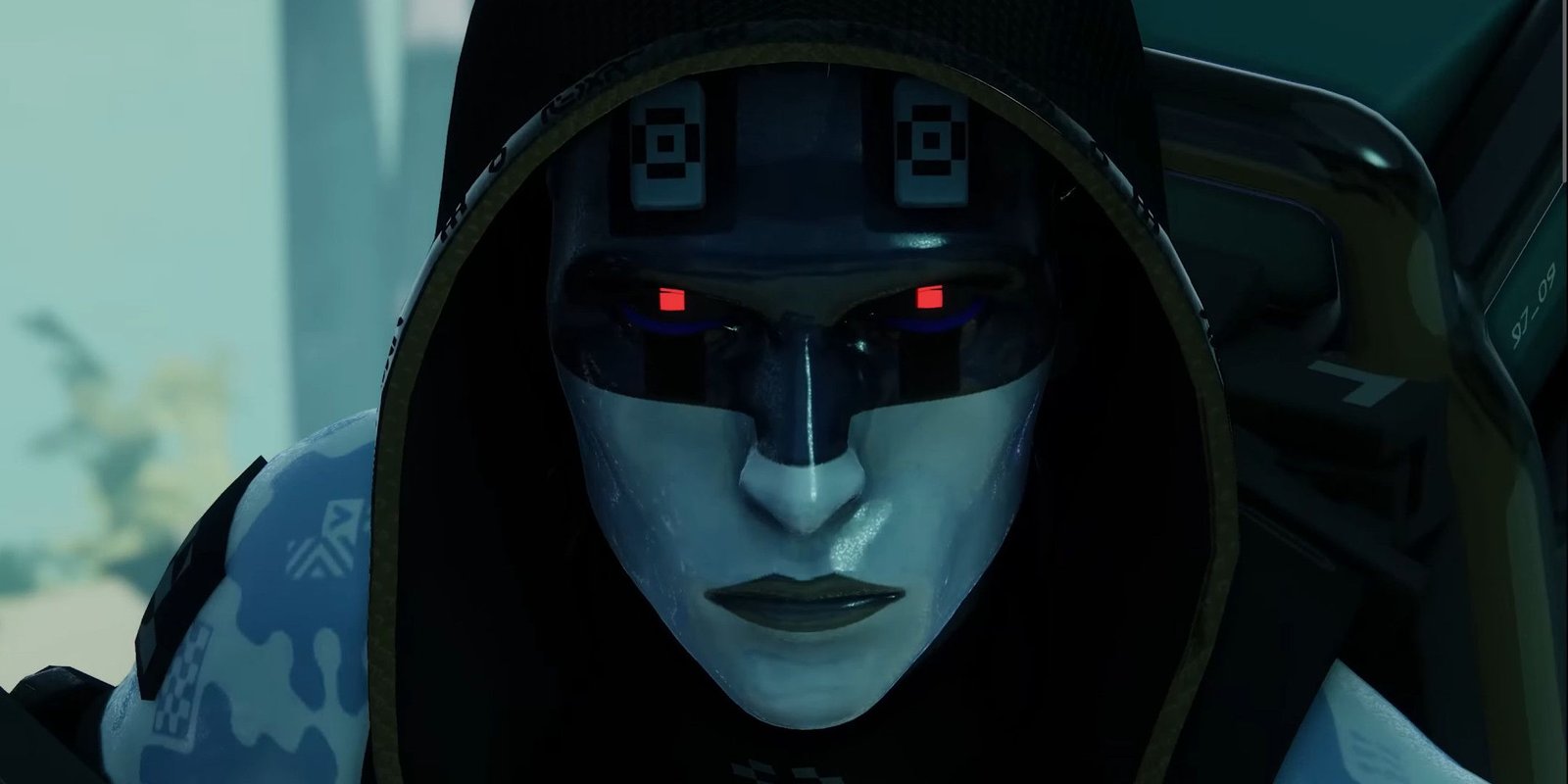
You know that exact moment when you boot up a new indie game, die horribly in the first ten minutes, and realize you unlocked absolutely nothing for your trouble? Yeah, me neither. Because that particular brand of design philosophy is practically a fossil. According to TheGamer, the massive cross-platform 1.0 launch of Hades II across PC, PS5, Xbox Series X, and Switch didn’t just shatter concurrent player records — it quietly drove a beautifully crafted stake through the heart of the traditional, unforgiving roguelike.
And honestly? Good riddance.
For years, developers operated under the assumption that the secret sauce of the genre was pure, unadulterated punishment. Random number generation that actively despised you. Bosses that demanded frame-perfect dodges. We were told — repeatedly, often condescendingly — that the thrill of the run was enough. The industry has since shifted underneath everyone’s feet. The real meta isn’t about how hard a game is anymore. It’s about how good it feels to lose.
The pure roguelike — where a death wipes your progress entirely and leaves you with nothing but hard-earned bruises — has been almost completely absorbed by the “rogue-lite.” That hyphenated distinction used to ignite furious Reddit threads. As of early 2026, it’s just the baseline expectation for anyone dropping twenty dollars on Steam.
Fourteen Thousand Games Released Last Year. Nobody Has Time for Your Death Spiral.
Consider the sheer volume of titles competing for attention right now. Staggering doesn’t quite cover it. Per data published by Statista, Steam saw over 14,000 new titles released in 2023 alone — a torrent that only intensified through 2024 and into 2025. A considerable chunk of those releases? Procedurally generated dungeon crawlers, naturally.
When the storefront is that saturated, slapping randomized corridors onto a mediocre action game and expecting an audience is a fantasy. Players are exhausted.
Mechanical mastery, on its own, stopped being a compelling hook about three years ago. Sink 60 hours into a game and you need — genuinely need — to know that your terrible, embarrassing deaths are feeding something larger. Unlocking a new weapon tier. Nudging a side character’s arc forward by a single conversation. Earning just enough persistent currency to buy a permanent health upgrade so the next run doesn’t collapse quite so fast. That forward motion is the whole point now.
This craving for persistent reward loops connects directly to how our brains process digital frustration. An overview of gaming psychology from Psychology Today highlights how modern game design leans on micro-rewards to sustain engagement even during failure states. When the dopamine shuts off entirely the moment the “Game Over” screen appears, the player closes the application. Sometimes permanently.
A Nerf Isn’t a Punishment — It’s a Forced Vacation to a Different Playstyle
This shift has fundamentally rewired how developers approach balance and post-launch support. Think about how patches land in massive live-service shooters. A developer drops a heavy nerf on a beloved assault rifle and the community detonates — threads locked, petitions circulated, Discord servers in open revolt.
But in a finely tuned roguelike? A nerf just rotates the meta.
Suddenly, that poison-damage build you’ve been actively ignoring for three weeks becomes the most viable path through the third biome. The best studios understand this dynamic intuitively. They don’t balance the game purely to make it harder; they balance it to manufacture variety. Patches become a subtle behavioral nudge — a way to push players toward mechanics they’d otherwise walk right past.
Game Developer Magazine
“Players don’t mind dying, provided the death serves a narrative purpose and offers a tangible mechanical reward. The friction of failure must be heavily lubricated by progression.”
Which brings up the DLC problem — one the industry still hasn’t fully solved. Old-school roguelikes might get an expansion that bolted a new, impossibly punishing level onto the game’s tail end. Now, paid content has to weave itself seamlessly into the existing randomized pool from day one. It has to expand the game’s width, not just its length. If a new expansion doesn’t meaningfully perturb the early-game meta — introducing a new item class, reshuffling the synergy pool, something — players register it as a cash grab before the weekend is out.
The Switch Was Perfect for This Genre. Then the Hardware Got Old.
Where people actually play these games matters more than the discourse typically acknowledges. For the better part of a decade, the Nintendo Switch reigned as the undisputed home of indie gaming. Running a quick 20-minute session of Balatro or Dead Cells on a train was — in practice — genuinely magical. The hardware and the format were built for each other in a way that felt almost accidental.
But the hardware realities are biting hard now.
The computational weight of modern procedural generation — layered particle effects, dynamic lighting, sprawling interconnected room logic — is grinding older silicon toward its ceiling. A clear migration back toward PC and the heavy-duty consoles is already underway. Players on PS5 and Xbox Series X have recalibrated their expectations: they want the graphical spectacle of a AAA release married to the compulsive loop of an indie crawler. Not one or the other. Both, simultaneously, without compromise.
Returnal cracked that door open years ago, proving a high-budget roguelike could genuinely move console units. That expectation has since trickled down to mid-tier studios who can no longer afford to ignore it. A pixel-art platformer with permadeath and a chiptune soundtrack isn’t going to top the PlayStation store charts in 2026. The audience wants voice acting. Cinematic death sequences. Cross-progression that lets them carry a save file seamlessly from a desktop to a living room without surrendering a single unlocked weapon.
The Spelunky Faithful Are Still Out There — Just Fewer of Them Every Year
The hardcore crowd has a point, though. Worth acknowledging.
There remains a fiercely dedicated audience for games that refuse persistent stat boosts on principle — titles where your 500th run begins with the exact same shallow health pool and weak starting weapon as your very first. No shortcuts. No meta-currency. The only thing that accumulates across sessions is your actual, demonstrable skill. When tested against that design philosophy firsthand, there’s a particular clarity to it — a purity that the rogue-lite, for all its commercial wisdom, genuinely cannot replicate.
Raw. Unmediated. Honest.
But honesty demands we acknowledge the trend lines. That audience is contracting. As the demographic that cut its teeth on brutally unforgiving arcade cabinets ages into its late 30s and 40s, gaming habits are changing in predictable but significant ways. A Pew Research Center survey on digital habits found that older players typically prioritize media that respects their limited free time — a finding that maps directly onto the rogue-lite explosion. Session-based gameplay is attractive precisely because it doesn’t punish a 45-minute window. But the same player also needs the session to feel like it meant something.
Dying to a random spike trap and losing an hour of forward momentum doesn’t read as a fun challenge anymore. It just feels like a waste of a Tuesday night — and Tuesday nights are finite.
Will the “pure” roguelike ever make a mainstream comeback?
Probably not in the AAA or high-tier indie space. The financial exposure is simply too severe. Micro-indies will always push into brutal permadeath territory — that experimentation never really stops — but any studio depending on substantial sales across Xbox, PS5, and PC needs the safety net of meta-progression to hold onto casual players past the first rough hour.
How do live-service elements fit into this?
They’re bleeding into the genre, for better and occasionally for worse. Seasonal content models, rotating daily challenges, time-limited cosmetic unlocks — the whole apparatus is migrating in. It keeps the game visible in the Twitch directory long after launch hype evaporates, which is commercially rational even when it feels creatively cynical.
Is procedural generation becoming a crutch?
In some cases, unambiguously yes. When developers lean on randomized rooms purely to stretch a two-hour experience into a twenty-hour one, players clock it almost immediately. The games earning genuine praise in 2026 use RNG to generate surprising combat scenarios and unexpected item synergies — not as a substitute for hand-crafted level design that someone actually had to think about.
The Death Screen Is Where the Real Game Begins
So where does that leave the genre? Not dead — evolved. Reshaped into something softer around the edges, perhaps, but demonstrably more compelling for the vast majority of people currently holding a controller.
Developers who are thriving understand something their predecessors didn’t: the death screen isn’t a punishment. It’s an administrative phase — the moment you spend hard-earned currency, catch up with a compelling NPC, stress-test a new build configuration, and plunge back into the procedural chaos. The friction hasn’t disappeared so much as been redistributed. Replaced by a dangerously frictionless loop of constant, microscopic rewards that the hands-on reality of modern roguelites makes almost impossible to voluntarily exit.
Breaking that loop — choosing to stop, to close the application, to go to bed — is genuinely harder than it used to be. Which is either a triumph of design or a mild public health concern, depending on your perspective.
For any indie developer trying to carve out space in this market right now, the calculus is blunt: you better have something compelling to say when the player dies. A piece of lore. A currency drop. A voice line that recontextualizes the run. Because if all you’re offering is a “Game Over” screen and a cold restart, the uninstall button is two taps away — and players in 2026 have absolutely no patience for the walk back to the beginning.
Based on reporting from various media outlets. Any editorial opinion is that of the author.
About the Author