There is a golden rule on the internet that corporate executives seemingly refuse to absorb. Never fake your geek cred. The internet will always find out — and when it does, it arrives with a full dossier.
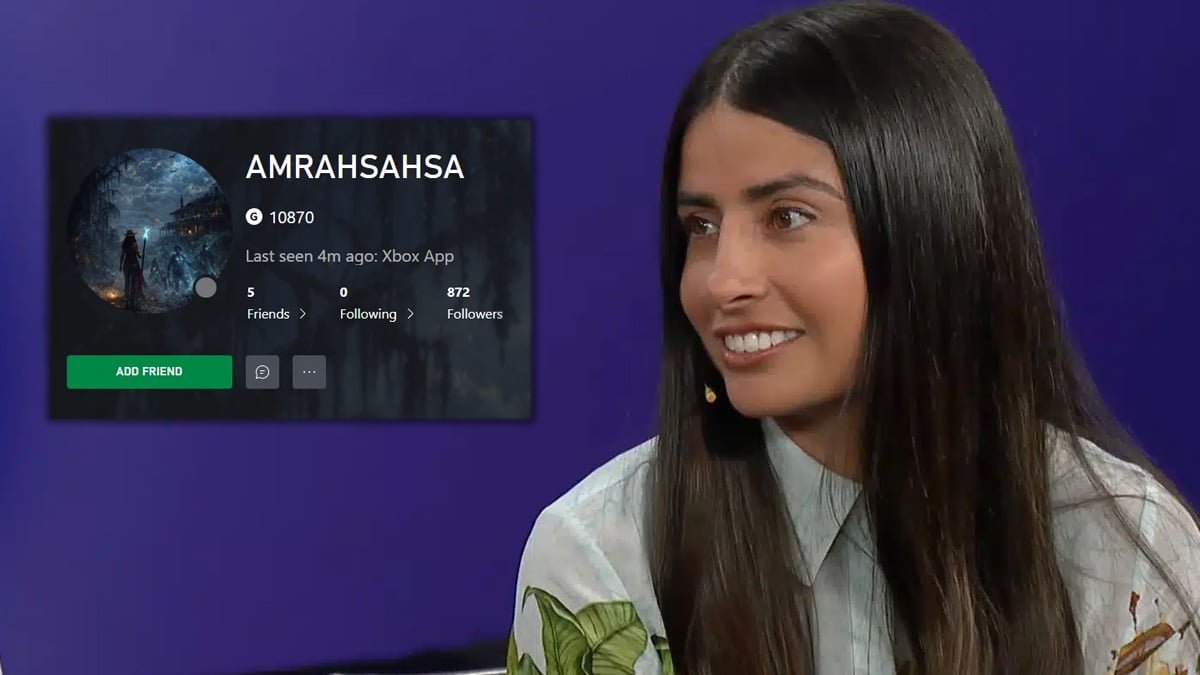
As of early 2026, the newly appointed CEO of Xbox, Asha Sharma, is learning this the hard way. Taking over the cultural weight of the role from the widely respected Phil Spencer, Sharma recently declared herself a “gamer” across her social media channels and, to back the claim, proudly shared her Xbox profile. It was supposed to be a clean PR move — a quick torch-passing to reassure the community that the green brand remained in sympathetic hands. Someone who gets it.
It detonated almost immediately.
Gamers are, arguably, the most forensically minded digital detectives on the planet. Hand them a gamertag and they will dismantle your entire digital footprint inside of twenty minutes. What the community found when they actually looked at Sharma’s freshly surfaced profile wasn’t a fellow hobbyist. It was a strange, apparently manufactured paper trail of statistically improbable gaming feats — the kind that leaves the whole community asking exactly who has been holding that controller.
Phil Spencer Set a Bar That Can’t Be Faked
To understand why this is such a catastrophic unforced error, you have to reckon with the guy who just vacated the office. Phil Spencer wasn’t a suit playing dress-up. He was “P3” on Xbox Live — genuinely, verifiably present. You could find him logging punishing hours in Destiny 2 raids, or quietly grinding indie titles on his PC and Xbox Series X at odd hours. He felt real. Even when Microsoft made genuinely baffling business calls, fans extended Spencer considerable grace because they believed — correctly, it seems — that he actually played the games.
Sharma comes from an entirely different world. She is an AI specialist, and her appointment to lead Microsoft’s gaming division earlier this year clearly telegraphed the tech giant’s shifting priorities. Honestly? That is completely fine. Nobody expects the CEO of a multi-billion dollar division to be a ranked esports competitor.
But instead of owning that background — which is, in its own way, genuinely interesting — the PR apparatus apparently went into overdrive to dress her up as a hardcore gamer. The profile she shared featured an impressive friends list, including notable names like Stein (Senior Social Media Manager) and Spencer himself. On the surface, it scanned as credible. She was logging time in Fallout 76, Forza Horizon 5, Halo Infinite, and Borderlands 2.
Then someone actually checked the timestamps.
The Achievement Data Doesn’t Add Up — At All
The controversy caught real fire when Twitter user @eXtas1stv started pulling the raw achievement data from Sharma’s profile. The numbers, in practice, are genuinely difficult to explain with a straight face.
Take Ball x Pit. According to publicly visible data on the Xbox network’s achievement system, Sharma’s profile hit 100% completion on this title — which required the account to log 43 hours of playtime inside a single week. Forty-three hours. Seven days. That is a full-time job, plus overtime.
According to a 2023 report from the Entertainment Software Association, the average adult gamer plays around 13 hours per week. We are being asked to believe that the brand-new CEO of Xbox — a woman charged with steering a sprawling global corporation through a pivotal transitional period — spent six hours a day on an obscure indie title. While running one of the most scrutinized divisions in tech.
It compounds from there. The profile shows a clean 1000/1000 achievement score in Firewatch — a great game, no argument there. But then comes Minecraft. The account unlocked some of the rarest, most time-hungry achievements in that game with fewer than 12 hours of total playtime on record. Any veteran player will tell you that is mathematically indefensible unless you are either heavily manipulating the game client or dropping into a pre-built server engineered specifically to trigger achievement pops. There is no third explanation.
When you step into the shoes of someone who genuinely spent their weekends grinding with fans, the community expects a certain level of authenticity that simply cannot be manufactured by a marketing team.
And the detail that really crystallizes the whole mess? Based on the very first achievement unlocked in Halo, the entire account appears to have been created on January 15, 2026. Weeks ago. A profile assembled, apparently, from scratch — and then immediately loaded with suspicious completion data before being handed to the press.
Inside the World of “Joki” — Paid Account Pilots for Hire
In gaming circles, particularly across Southeast Asia, there is a term for this: “Joki.” Roughly translated, it means an account pilot or booster — someone you pay to grind your rank in Valorant, farm rare drops in an MMO, or, in this particularly strange episode, harvest achievements to make a corporate executive look convincingly passionate about games.
The community’s working theory is that Sharma’s account has been piloted by at least one person — possibly more. The arithmetic demands it. A brand-new account, created mid-January, accumulating statistically improbable completion times while the supposed owner is fielding board meetings and navigating the most consequential period in Xbox’s recent history. The whole setup screams of a panicked internal directive: “Get the new boss some gamer cred, and get it fast.”
What makes it genuinely galling is the condescension baked into the attempt. It assumes the Xbox audience is too incurious to check the receipts. In an ecosystem where players track fractional weapon damage changes across patch notes with spreadsheet-level precision, believing you could float a fabricated achievement profile past them undetected isn’t just naive — it is a special kind of corporate arrogance.
An AI Expert Whose Online Presence Failed the Turing Test
The irony here is thick enough to stop a Spartan in their tracks. Sharma is an AI specialist. And yet, when fans began engaging with her “gamer” posts on social media, they quickly flagged something off about her replies. They lacked the casual shorthand, the in-jokes, the comfortable messiness of how actual players talk about games with each other. Several users noted — with some precision — that her responses read exactly like a large language model generating enthusiastic, brand-safe corporate enthusiasm.
So: an AI expert, accused of leaning on AI to communicate with gamers, while allegedly employing real humans to behave like bots and grind achievements on her Xbox account. You could not commission better satire.
This matters well beyond the embarrassment, because Xbox is navigating genuinely choppy waters right now. Game Pass remains a compelling service — when actually tested against competitors, it holds up — but the hardware story is considerably messier. Recent data tracking global console market share shows the PS5 and Nintendo Switch continuing to command traditional retail, leaving the Series X/S scrapping for relevance on the shelf. The absolute last thing Microsoft needs in this climate is a widening credibility gap between its leadership and the player base that has kept the brand alive through every stumble.
Is the timing of this stumble recoverable? Probably. But the window is not unlimited.
Just Say You’re Not a Gamer — We Can Handle It
Here is the reality that Microsoft’s communications team apparently failed to consider. Gamers do not actually need the CEO of Xbox to be clocking 40-hour weeks in Borderlands 2. That has never been the requirement.
What the community wants — and what it has always responded to — is a leader who understands the industry’s culture, respects the developers building inside it, and commits real resources to good projects. If Asha Sharma spends her weekends reading ML research papers instead of raiding in Fallout 76, that is a perfectly defensible way to spend a weekend. Some of Nintendo’s most legendary executives weren’t avid players either (per Nintendo’s own historical record). Certain of the sharpest minds in this industry are, first and foremost, business strategists — and the community has made room for that before. The non-negotiable, though, is honesty.
Fabricating a gamer persona is the most corrosive kind of PR misstep, because it signals something specific: that you view the audience’s passion as a box to be ticked. A costume. Something a marketing budget can assemble by paying someone to grind Minecraft over a long weekend and hoping nobody notices the timestamps.
They noticed.
Xbox carries real work ahead in 2026. The push toward AI integration across the ecosystem is not a question of if but when, and Sharma is, in all likelihood, precisely the right architect for that particular transition. But until she sets aside the manufactured controller and starts engaging with the community in her own voice — her actual voice, with its actual background — that shiny, freshly minted Xbox profile will keep functioning as a symbol of how far the boardroom has drifted from the living room. And in a space that runs on trust, that is a gap worth taking seriously.
Why did Phil Spencer leave Xbox?
Phil Spencer quietly stepped down from his role as CEO of Microsoft Gaming recently, opening the door for a leadership transition. Microsoft tapped Asha Sharma — an executive with a deep background in artificial intelligence — as his successor, a move that signals a notable strategic reorientation for the company’s gaming division.
What is account boosting or “Joki”?
Boosting — referred to as a “joki” service in parts of Southeast Asia — is the practice of allowing a third party to access your gaming account and hit specific targets on your behalf. That might mean climbing the ranked ladder in a competitive game, farming rare drops, or, as suspected here, unlocking tedious achievements to make an account look more seasoned than it is. In this case, gamers believe PR staff or paid players have been actively farming achievements on Sharma’s account to build a credible-looking profile.
Can you really get 100% in Minecraft in under 12 hours?
Legitimately? No. Earning the rarest achievements in Minecraft typically demands a substantial time commitment — gathering the right resources, navigating to specific dimensions, and defeating end-game bosses. Completing that checklist in under 12 hours points strongly toward the use of pre-built “achievement worlds,” servers designed specifically to trigger unlocks without the actual gameplay required to earn them.
Based on reporting from various media outlets. Any editorial opinion is that of the author.
About the Author