I still remember the exact moment the news dropped. The gaming community collectively froze, staring at screens, trying to process the sudden power vacuum at one of the biggest brands in entertainment. Phil Spencer — the public face of Xbox for a full decade — quietly stepped down. Sarah Bond, President and Chief Content Officer, followed him straight out the door. Just like that, the old guard was gone.
According to Gamebrott.com, this wasn’t some standard corporate reshuffle. It was a hostile takeover by the algorithm. The new CEO of Xbox is Asha Sharma — and if that name draws a blank in gaming circles, there’s a very specific reason for it. Prior to ascending to the top seat at Xbox, Sharma ran Core AI at Microsoft. She isn’t a game developer. She isn’t a studio head. She is, at her core, a data executive now occupying a role that demands an intimate feel for pop culture, artistic instinct, and brutally demanding consumer hardware.
Honestly? The whole thing feels grim in a way that’s hard to shake.
Xbox’s New Boss Is an AI Executive — and the Co-Creator of the Console Is Already Calling It
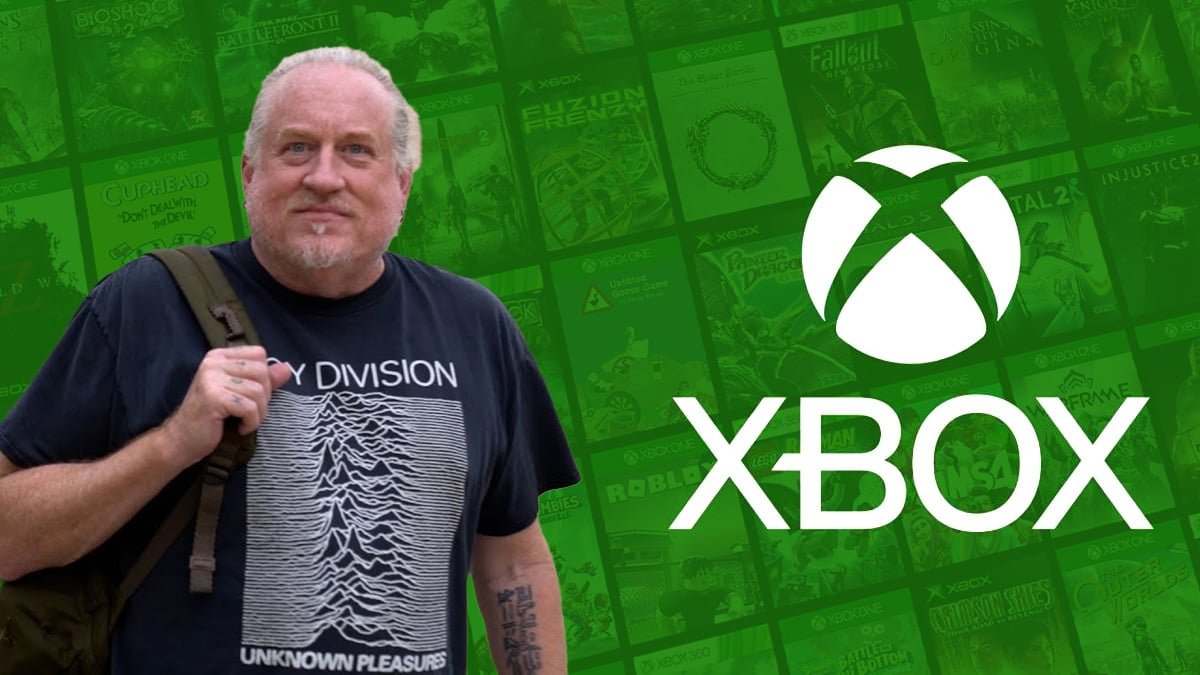
You don’t have to dig far to find industry veterans who are genuinely unsettled by this pivot. Seamus Blackley — the legendary co-creator of the original, gloriously chunky Xbox — has been watching this unfold with visible unease. When asked about the future of the brand he helped build from nothing, he didn’t soften the blow.
“Many Microsoft businesses not related to Core AI will be shut down. And Xbox, like most businesses not centered around the AI core, will be closed. The new CEO will have a role like a palliative care doctor, slowly leading Xbox to its end.”
— Seamus Blackley, Xbox Co-Creator
Palliative care. Sit with that for a moment.
Blackley isn’t predicting that Microsoft will yank the Xbox servers offline tomorrow morning. What he’s describing is something far more calculated — a managed decline, where the patient is kept comfortable while the parent company quietly drains whatever subscription revenue remains. That reading makes unsettling sense when you map it against the broader financial reality of 2026. Microsoft is, functionally, an AI company now. Everything else is a legacy asset.
Per a recent Reuters analysis, Microsoft’s capital expenditure on AI infrastructure has dwarfed its gaming investments across the past two years by a hard-to-ignore margin. When a sprawling tech conglomerate decides its entire trajectory hinges on machine learning, any division that doesn’t feed the data pipeline eventually gets starved out. That isn’t pessimism. That’s just how the money flows.
Her Xbox Profile Looks Like It Was Generated by a Script — Gamers Noticed Immediately
Naturally, Sharma moved quickly to calm the waters. She announced publicly that her goal is to revive both the brand and the physical console. She even pledged she has no interest in flooding the ecosystem with “lifeless AI content.” For a brief, flickering moment, even skeptical corners of the gaming community felt something resembling cautious hope.
Then they looked at her X account.
Social media is typically where gaming executives try to build real rapport with the community — Phil Spencer was practically famous for it. Sharma’s interactions, in practice, feel deeply off. Her replies read like output from a language model: too measured, too structurally pristine, scrubbed clean of the messy emotional texture that actual human communication carries. Like a poorly programmed NPC attempting to clear a Turing test and almost getting there.
But the more damning evidence surfaced on her actual Xbox profile. Sharma presents herself as a gamer. Her account, though, tells a different story — suspiciously fresh, with playtime data that defies basic mathematical logic. Ultra-rare achievements unlocked after only a handful of hours. Endgame DLC trophies appearing before any reasonable playthrough could have reached them. You don’t clear a 100-hour roguelike before lunch. The numbers simply don’t hold up under scrutiny.
It looks, to anyone who cares to examine it, exactly like someone ran a script to fabricate a credible gaming history from scratch. And gamers — people who spend their leisure hours analyzing frame data, hunting pixel-level visual glitches, and theorycrafting exploit routes — clocked it almost immediately. The community response was swift and showed precisely zero mercy.
When the Person Running Xbox Views Games as Data Sets, What Actually Happens to the Games?
Which brings us to the question that actually keeps people up at night. What does an AI-first Xbox mean for the titles we actually sit down and play? If the executive at the top of the org chart processes the world through the lens of machine learning and behavioral data sets — how long before that philosophy bleeds down into the first-party studios themselves?
The backlash against generative technology in creative spaces has already been ferocious and well-documented. Players don’t want an algorithm architecting their worlds. Picture booting up the next sprawling RPG and realizing, somewhere around hour three, that the side quests are procedurally generated filler and the dialogue feels hollow in a way you can’t quite articulate but absolutely feel. Gamers want hand-built experiences. They want intentional, deliberate art. They want a developer to issue a targeted weapon nerf because a human being understood how it was breaking the multiplayer meta — not because an automated balancing system flagged an outlier in a spreadsheet.
Soulless. That’s the word players keep reaching for, and it’s not an accident.
This is precisely the territory where Xbox’s rivals are currently eating its lunch without breaking a sweat. Sony sits comfortably with the PS5, steadily releasing prestige, cinematic single-player narratives that dominate awards cycles. Nintendo keeps doing what Nintendo has always done — leaning on the near-inexplicable magic of its first-party catalog to move hardware that, on paper, shouldn’t be competitive. PC gaming, meanwhile, remains the undisputed standard-bearer for flexibility and raw performance headroom.
A Statista market report from early 2025 found that while overall console hardware sales have softened across the board, player engagement remains tightly bound to compelling, exclusive narratives. People buy a box to play one specific, extraordinary game. They don’t buy a box because its backend has tidy AI integration. That has never once been the pitch that moved units.
Microsoft Spent Billions Buying the Best Studios in Gaming — and Now Appears Unsure What to Do With Them
There’s a profound disconnect playing out in Redmond right now, and it’s the kind that turns heads among anyone who’s followed this industry for more than a few years. Microsoft spent years — and genuinely staggering sums — acquiring landmark studios like Bethesda and Activision Blizzard. They assembled, piece by piece, an extraordinary catalog of classic gaming IP. And now, in practice, it feels like the parent company doesn’t quite know what to do with any of it.
Game Pass was, and remains, genuinely brilliant — the Netflix model applied to gaming, executed with enough momentum to reshape how players think about purchasing software. But subscription services plateau. That’s not opinion; it’s the observable arc of every subscription business that’s ever scaled. And when growth stalls in the tech sector, executives don’t sit quietly — they reach for the next magic bullet. Right now, that bullet is AI.
Here’s the problem, though: gaming is not a spreadsheet.
You cannot optimize the joy out of a video game and reasonably expect players to keep showing up. The satisfaction of a perfectly timed parry. The specific, awful feeling of a final boss dismantling everything you thought you understood about the fight. The late-night LAN party haze that somehow still feels recent even fifteen years on — these are irreducibly human experiences, and no amount of backend efficiency captures them. When you install a data executive at the helm of a cultural institution, you run a very real risk of stripping out the very soul that made people care about it in the first place.
Is Microsoft going to stop making traditional consoles?
While official PR statements still claim new hardware is in the pipeline, the aggressive internal shift toward cloud gaming, Game Pass apps on smart TVs, and AI integration suggests the traditional “box under the TV” is no longer their primary focus.
How does AI actually threaten game development?
The fear isn’t just about AI displacing developers — it’s about a measurable drop in quality. Automated QA testing, procedurally generated dialogue, and algorithmic art assets typically result in games that feel repetitive, oddly hollow, and disconnected from what players actually came for in the first place.
Maybe Blackley Is Wrong — But the Evidence Isn’t Pointing That Way
Perhaps Seamus Blackley is mistaken. Maybe Asha Sharma is precisely the kind of unsentimental, forward-tilting visionary that Xbox genuinely needs to survive the unforgiving economics of the modern tech market. Maybe she threads the needle — successfully weaving AI into the Xbox ecosystem in ways that genuinely sharpen the player experience without hollowing out the craft of game design in the process. Stranger things have happened.
But the evidence available right now tells a different story.
A CEO whose public communication reads like generated output. An Xbox profile that looks scripted rather than lived-in. A parent company in the grip of a full-scale identity pivot toward machine learning, with gaming somewhere further down the priority list than it has ever been. And a community of loyal, long-term fans who feel — with some justification — entirely abandoned by the brand they grew up defending in console-war comment sections.
The Xbox 360 era feels almost mythological at this point. Raw power, green-tinted attitude, a genuine conviction that they had the best games and wanted you to know it. Today, the feeling is something closer to watching a beloved local institution get absorbed by a faceless holding company — the signage stays up for a while, but something essential has already left the building. If this really is the opening chapter of the end, it’s a strangely sterile way to go out. No dramatic implosion. No defiant final stand. Just a slow, managed fade — administered, with professional calm, by an algorithm.
Reporting draws from multiple verified sources. The editorial angle and commentary are our own.
About the Author