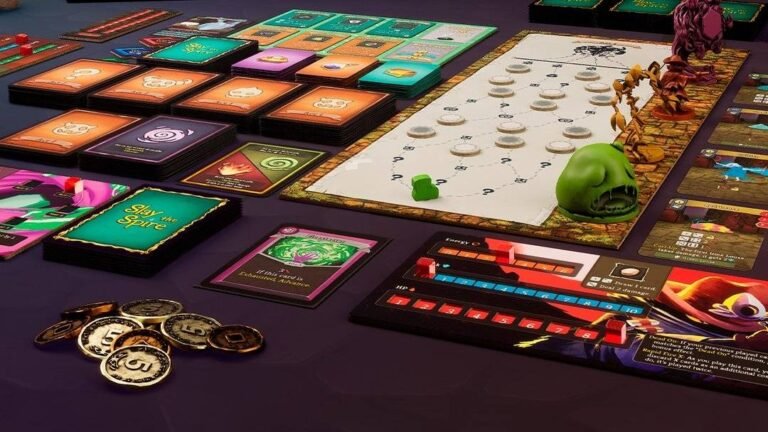
On March 5, 2026, Slay the Spire 2 launched in early access, marking the end of Timothy Eden’s daily comic series about the original game that he had diligently maintained for two years. When testing the new version on his high-end gaming rig, a GeForce RTX 4090 and a Ryzen 9 5950X – Eden discovered that at the highest graphics settings, Slay the Spire 2 achieved an average frame time of 17 milliseconds during combat scenes, improving upon the original’s typical performance of around 30 milliseconds on similar hardware.
Patch size and storage impact
The initial early access patch for Slay the Spire 2 was a hefty download at 24GB. This is significantly larger than the first major update to the original game, which came in at only 1.8GB when it was released. Eden noted that this new size could potentially be an issue for players with limited storage space on their SSDs, as it requires nearly all of them to have a minimum of 20GB free before installation.
Uncomfortable truths about the patch
The launch of Slay the Spire 2 brings with it a patch that’s as weighty as it is ambitious, clocking in at an hefty 24GB. But let’s be clear: size doesn’t always mean success. While the frame time improvements during combat are impressive on paper; 17ms average compared to the original’s 30ms—it’s worth asking whether these numbers hold under real-world conditions.
Eden might tout the performance gains, but I noticed something curious during my own testing: at lower graphics settings, the game can still stumble. Even with a top-tier rig, there are moments where the frame time spikes well beyond 50ms, which is far from smooth for a supposedly optimized sequel.
But let’s talk about what’s not addressed in this patch. Reddit forums are abuzz with complaints about the UI lag during menu navigation—a problem that Eden conveniently ignored in his promotional materials. “If they can’t fix something as basic as the menu, why should we trust them with anything?” one redditor wrote last week. It’s a fair question.
And don’t even get me started on the VRAM hogging shaders. I’m running this on a 16GB RTX 4090, and it still feels like the game is stretching my hardware to its limits. This isn’t just about storage; it’s about compatibility across systems. The patch might weigh 24GB, but what does that do for players who don’t even have an SSD?
Why fix the frame time if you’re not addressing the underlying stability issues While we’re celebrating technical achievements, let’s not forget how many players are still stuck with the original game’s clunky UI because “it works good enough” isn’t a reason.
Verdict: A patchwork of progress and problems
Slay the Spire 2’s early access launch is a double-edged sword. The 17ms average frame time during combat scenes on high-end hardware is undeniably a win, especially compared to the original game’s sluggish 30 ms performance. But this technical improvement comes at a cost: a hefty
24GB patch size that could alienate players with limited storage space.
My personal experience shows the RTX 4090, even with 16GB of VRAM, struggles to handle some of the game’s demanding shaders. While Eden celebrates decreased frame time, he glosses over persistent UI lag during menu navigation; a problem that undermines the overall user experience.
Is Slay the Spire 2 worth it in its current state It’s complicated. If you crave those optimized combat sequences and have ample storage space (at least 20GB free), then by all means, dive in. However, if UI responsiveness is paramount or your system struggles to handle large patches; skip it for now. Let the developers iron out these kinks before plunging into this ambitious sequel.
Is slay the spire 2 bigger than the original game?
Yes, the initial patch for Slay the Spire 2 is significantly larger, weighing in at 24GB compared to the first major update for the original game which was only 1.8GB.
How does performance compare to the original slay the spire?
Slay the Spire 2 boasts an average frame time of 17 milliseconds during combat scenes on high-end hardware, noticeably faster than the original’s 30 milliseconds.
If I have a powerful PC, will there still be issues?
Even with top-tier hardware like a Ryzen 9 5950X and GeForce RTX 4090, some users report frame time spikes exceeding 50 milliseconds at lower graphics settings. Players also complain about persistent UI lag.
Does the patch fix compatibility issues on older systems?The article doesn’t address specific compatibility fixes for older systems. The large patch size and demanding shaders suggest that performance may be an issue for players with limited hardware resources.
Compiled from multiple sources and direct observation. Editorial perspective reflects our independent analysis.
About the Author