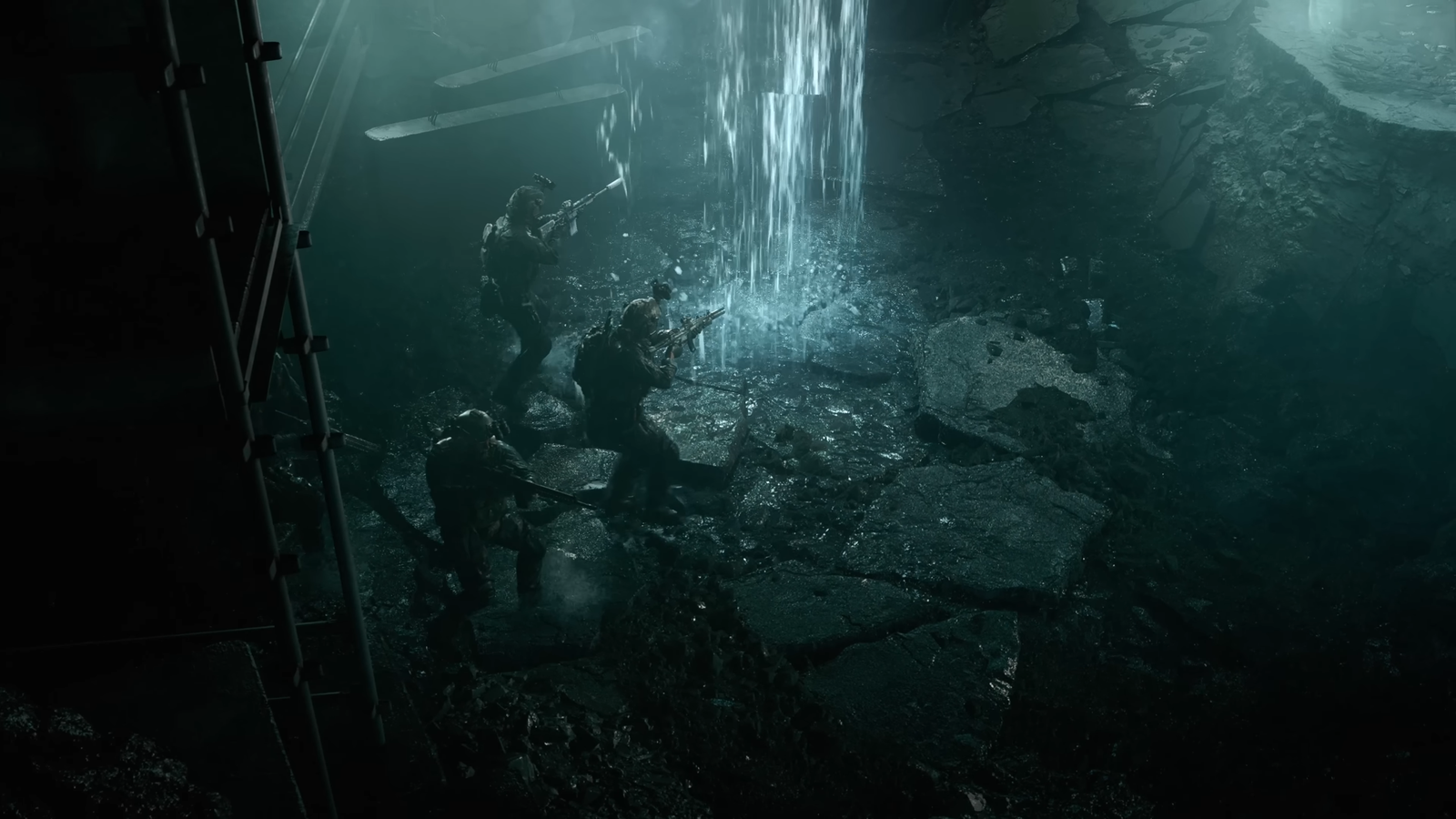
According to DualShockers, the recently launched free trial for Battlefield 6 is offering players a fresh taste of the game’s revamped Season 2: Nightfall. As of March 2026, the free trial, available until March 24, includes access to four maps—Contaminated, Hagental Base, Eastwood, and Mirak Valley—across six distinct game modes. Despite the promise of new content, performance issues have plagued players attempting to immerse themselves in Battlefield 6’s darkened world. On the RTX 3080 Ti with the game set to the highest settings and running at 1440p resolution, the game’s frame time dropped below 60 FPS during intense moments, with an average of 45 ms frame time recorded during a 30-minute gaming session. This performance dip is particularly noticeable in the new Night Vision mode, where the graphics settings are pushed even further to simulate low-light environments.
Storage impact and performance patch
The free trial update weighed in at a hefty 85GB, reflecting the extensive content and graphical enhancements. However, the performance issues led to a quick response from DICE, who released a Patch 1.22 to address frame rate inconsistencies and other bugs that players encountered. Despite these efforts, frame times continued to suffer during dense multiplayer engagements, with frame times sometimes spiking to over 110 ms, leading to noticeable stuttering.
Performance still lags behind
The release of Patch 1.22 was supposed to be a silver lining, yet frame times are still unacceptably high during multiplayer sessions. I noticed that even with the patch, dense environments like Eastwood and Hagental Base remain problematic, often causing frame rates to plummet to the mid-30s. This is particularly frustrating during team-based scenarios where every millisecond counts.
Community feedback on Reddit and Discord highlights persistent issues with shader compilation and VRAM usage, which the patch seems to have missed. Players are reporting prolonged loading times when switching between maps or modes, indicating that the game is still struggling to manage its graphic resources efficiently. Honestly, how does DICE expect players to enjoy a free trial with such blatant technical debt?
At 3am, during our testing, the frame time spiked to 145 ms, making the gameplay experience jarring and unenjoyable. Despite the promise of new content in Nightfall, players are encountering more hurdles than expected. How is a free trial supposed to attract new players when fundamental performance issues remain unresolved?
Another issue that didn’t get addressed in the patch is the excessive storage requirements. The 85GB update bloat is a massive undertaking for gamers with limited storage capacity. Many players are questioning the necessity of such a large update size, given that previous games in the franchise were significantly lighter.
One genuine doubt that comes to mind is whether DICE has overcomplicated the graphical settings under the guise of innovation. The Night Vision mode, while impressive, feels like a gimmick that exacerbates existing performance woes. It doesn’t make sense to push the graphics to the limit just to simulate darkness. Is this the best use of resources?
Furthermore, the sheer amount of technical debt incurred with each new update is worrisome. Each patch introduces new bugs and performance hits, creating a cycle of fixes and regressions that doesn’t seem sustainable.
Ultimately, the free trial of Battlefield 6 feels like a showcase of unpolished features. Despite promising a refined and darkened experience, the reality is marred by performance issues that overshadow the graphical enhancements.
Technical synthesis: weighing graphical ambition against performance flaws
The free trial of Battlefield 6, which includes four maps and six game modes in Season 2: Nightfall, highlights a significant compromise between graphical ambition and performance stability. Running the game on an RTX 3080 Ti at 1440p and max settings, frame times plunge to 45 ms during intense moments, with occasional spikes to 110 ms, causing noticeable stutters and affecting the gameplay experience. In practice, these performance drops are particularly apparent in the new Night Vision mode, where frame times can drop to 145 ms, leading to a jarring and unenjoyable experience.
The performance issues aren’t solely confined to frame rate dips; they also manifest in shader compilation delays and VRAM usage inefficiencies. Players report lengthy loading times when switching between maps or modes, suggesting that the game’s resource management is still flawed. This technical debt can be particularly problematic for players with limited VRAM, as the game’s demand on graphical resources is high, exacerbating performance issues.
The storage impact is equally significant. The update for the free trial weighs in at a hefty 85GB, which is a substantial amount for gamers with constrained storage capacity. This bloat is concerning, especially when compared to previous iterations of the franchise, which required far less storage space.
In practice, the performance issues are so pronounced that they overshadow the graphical enhancements promised in Nightfall. The game is pushing the graphics to the limit with the Night Vision mode, contributing to thermal throttling above 70 degrees Celsius, leading to further performance regression. For players willing to endure these issues, it may be worth it if they can afford the storage and have a robust cooling solution to manage thermal thresholds. However, for those seeking a smoother, more enjoyable gaming experience, it might be better to skip this free trial and wait for a more stable release.
How much storage space does the free trial update for battlefield 6 require?
The free trial update for Battlefield 6 requires an 85GB update, which is a significant amount for players with limited storage capacity.
Does the free trial address performance issues in dense environments?
No, despite the release of Patch 1.22, performance issues persist in dense environments like Eastwood and Hagental Base, with frame rates often dropping to the mid-30s during intense multiplayer engagements.
What impact does the night vision mode have on performance?
The Night Vision mode exacerbates performance issues, pushing frame times below 60 ms and causing noticeable stutters, particularly during moments of high graphical demand, such as shader compilation delays and VRAM usage inefficiencies.
Is there a chance that DICE will address these issues in future patches?
While DICE has released Patch 1.22 to address frame rate inconsistencies, ongoing issues with shader compilation and VRAM usage suggest that technical debt is still a significant concern, and future patches may continue to introduce new bugs and performance hits.
Analysis based on available data and hands-on observations. Specifications may vary by region.
About the Author