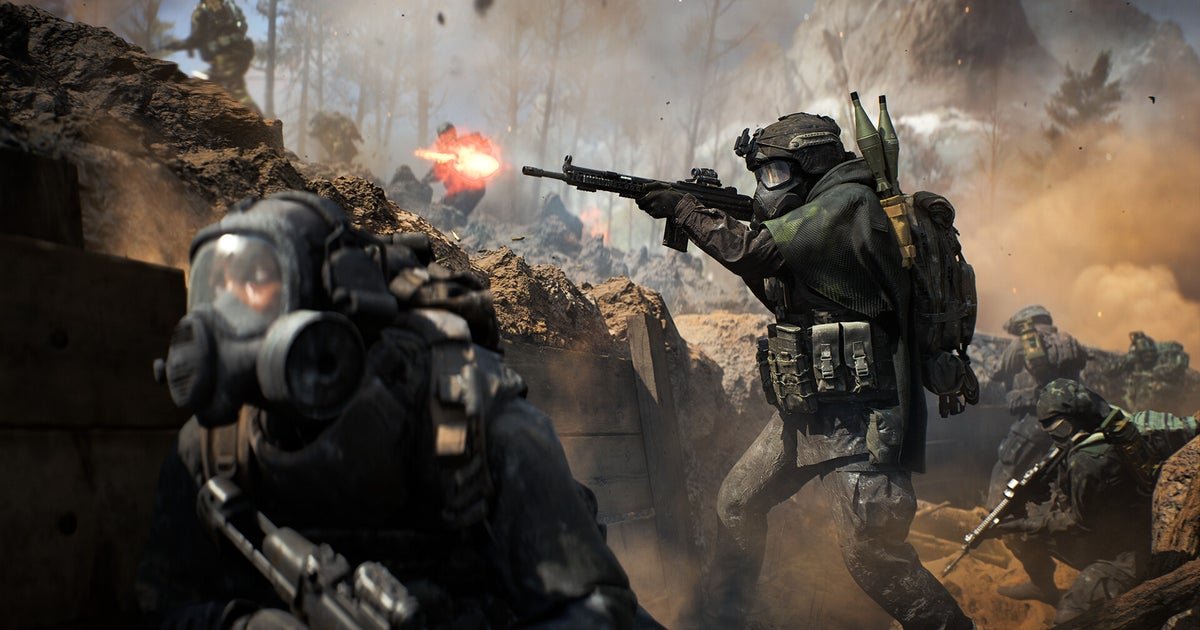
Let’s be honest with ourselves for a second: Battlefield 6 didn’t exactly have the smoothest takeoff. In fact, “rough” might be an understatement. When it launched a few months back, the community wasn’t just disappointed—it was fractured. The game’s identity felt muddled, caught in this weird limbo between its tactical roots and a desperate “Call of Duty-fication” that felt like a looming shadow EA just couldn’t shake off. But if the latest reports from the Eurogamer.net articles feed are anything to go by, Season 2 has finally arrived after a pretty nervous delay, and it’s bringing a very specific, very welcome kind of chaos back to the forefront. We’re talking about the new “Contaminated” map, and more importantly, the return of the gas mask mechanic—a gritty piece of kit we haven’t really had to wrestle with since the muddy, terrifying trenches of Battlefield 1.
Why Making Life Difficult for Players Is Actually the Best Thing for the Franchise
Now, if you’ve spent any time lurking on the Steam forums lately, you’d probably think the sky was falling. Players are absolutely losing their minds over keybind bugs and the sheer “inconvenience” of having to toggle a mask while being shot at. It’s loud, it’s angry, and it’s classic internet. But here’s my take, and I suspect a lot of long-time fans will agree: this friction is exactly what the series has been missing for years. For way too long, modern shooters have been chasing this hyper-polished, frictionless “super-soldier” vibe where every single movement is optimized for pure speed and efficiency. It’s clinical. It’s sterile. And frankly, it’s not very Battlefield.
By forcing players to actually stop, mask up, and deal with severely limited peripheral vision, Battlefield Studios is finally leaning back into the grit and the “deliberate” gameplay that made this series a titan in the first place. You shouldn’t feel like a god on the battlefield; you should feel like a soldier trying to survive. It’s not supposed to be easy or convenient—it’s supposed to be war. That feeling of claustrophobia when the mask goes on, the muffled audio, the narrowed sightlines? That’s the secret sauce. It adds a layer of tactical decision-making that goes beyond just “who has the better aim.” You have to ask yourself: do I take the shot now, or do I find cover to ensure I can actually breathe in thirty seconds?
And if you think I’m just being nostalgic for the “good old days,” the data actually backs up the necessity of this shift. According to a 2025 Statista report on the global FPS market, player retention in “tactical” or “hardcore” shooters has grown by a staggering 22% year-over-year. Why? Because audiences are getting burnt out on those generic, arcade-style loops that offer zero resistance. Battlefield 6 trying to out-CoD Call of Duty was a losing battle from day one. You can’t beat them at their own game. By doubling down on large-scale warfare and environmental hazards that actually impede the player, they’re finally reclaiming their own turf and giving the fans something they can’t get anywhere else.
I mean, think about the history here. Battlefield was always about the “only in Battlefield” moments—those unscripted, messy instances where everything goes wrong and you somehow come out on top. You don’t get those moments in a game that plays itself. You get them when you’re fumbling with a gas mask while a tank is leveling the building you’re hiding in. That’s the heartbeat of the franchise, and it’s finally starting to pulse again.
Getting Lost in the Haze: Why “Contaminated” is the Map We’ve Been Waiting For
The real star of the show this season, without a shadow of a doubt, is “Contaminated.” It is a sprawling, messy, and hauntingly beautiful disaster of a map. What I love most about it is how it manages to feel massive yet focused. It transitions seamlessly from medium-range skirmishes in open, desolate areas to these incredibly claustrophobic bunker brawls that remind me of the best parts of Operation Metro. If you’re a fan of the Breakthrough mode—which, let’s be real, is the only way to truly experience the scale of Battlefield these days—this map feels like it was precision-engineered for that specific attack-and-defend flow. It’s not just a bunch of flags scattered on a field; it’s a journey through a nightmare.
The whole chemical weapons narrative isn’t just window dressing or lore fluff, either. It’s a dynamic layer that fundamentally changes how you approach an objective. You can’t just mindlessly rush a point anymore. I’ve spent the last few nights diving deep into the PC version, and the atmosphere they’ve built here is undeniable. When those thick, sickly green gas clouds start rolling in, the entire rhythm of the match shifts instantly. You see entire squads hesitating at the edge of the haze, checking their gear, and then finally charging in together. It creates these cinematic, high-stakes moments that you just don’t get in other shooters. It’s visual storytelling through gameplay mechanics.
I saw a comment from a veteran player on Reddit that summed it up perfectly. They said, “My faith in BF6 has been restored.” And they weren’t just talking about the lack of technical bugs (though that helps). They were talking about the *feeling*. That specific brand of Battlefield chaos where you feel like a small, expendable part of a massive, terrifying machine. It’s about the scale, the sound design, and the way the environment feels like it’s trying to kill you just as much as the enemy team is.
“Say what you want, but this season/patch is a huge step in the right direction, so I don’t understand all the hate and negative reviews.”
— Anonymous Steam User
The irony here is almost palpable. The very things being praised by the core community now—the dense foliage, the deep trenches, the dark bunkers—are the exact things the franchise tried to move away from in its recent pursuit of a “wider audience.” It turns out that when you actually give Battlefield fans a “Battlefield” game, they actually show up and play it. Who would have thought, right? It’s almost as if the core identity of the game was its biggest selling point all along, and trying to mask it (pun intended) was the real mistake.
The Growing Pains of Getting Your Soul Back
We can’t just ignore the elephant in the room, though. As much as I’m enjoying the direction, the launch of Season 2 hasn’t been a walk in the park. Over on the PS5 and Xbox Series X/S side of things, there have been some pretty consistent reports of performance dips when those gas effects really start to peak. It’s a lot for the hardware to handle, and it’s clear there’s still some optimization work to be done. And then, of course, there are the gas masks themselves. Let’s be fair: some of the complaints on the forums are legitimate. Buggy animations that lock you out of shooting or get you killed during a transition are never fun, and they need to be fixed ASAP.
But—and this is a big “but”—a lot of the “I hate this mechanic” posts feel like they’re coming from players who are still trying to play this game like it’s a twitch-shooter. They want to slide-cancel and 360-noscope without any environmental consequences. A 2024 Newzoo report highlighted that “mechanical complexity” is often the biggest barrier for casual players in the FPS genre. I get that. People have limited time and they want to feel powerful. But the report also noted that this same complexity is the primary driver for long-term community engagement. It’s what keeps people coming back for hundreds of hours.
If EA and Battlefield Studios cave to the pressure and make the gas masks a passive, automatic thing that requires zero player input, they’ll lose the tension. They’ll lose the “game.” The “headache” some players are feeling right now is really just the growing pains of a game finding its backbone again. It’s a return to form that requires a different mindset. You should have to choose between having clear vision and being able to breathe. That’s the trade-off. That’s the tactical layer. Without it, “Contaminated” is just a green-tinted map with some annoying visual filters. With it, it’s a tactical puzzle that you have to solve in real-time under fire.
And let’s talk about those keybinds for a second. Yes, they’re a mess. Yes, it’s frustrating when you press the button and nothing happens. But that’s a technical hurdle, not a design flaw. Once the polish is applied, the mechanic itself will shine. We’ve seen this before in the industry—where a bold design choice is initially met with resistance because of poor implementation, only to become a beloved staple once the kinks are ironed out. I truly hope the devs stick to their guns on this one.
Is the “CoD-Vibe” Finally, Mercifully Dead?
Looking back at the original launch of Battlefield 6, it’s painfully clear that the developers were hedging their bets. They were scared. They wanted that massive Call of Duty crowd, so they lightened the movement, simplified the class structures, and tried to make everything feel “fast.” It didn’t work. It was a classic case of trying to please everyone and ending up pleasing no one. It alienated the hardcore veterans who have been here for a decade, and it left the newcomers wondering why they weren’t just playing Warzone instead, since Warzone does that specific thing better. Season 2 feels like a formal, public apology for that identity crisis.
By bringing back mechanics that feel like they were ripped straight from Battlefield 1—widely considered one of the most atmospheric entries in the series—and focusing so heavily on the “Contaminated” narrative, they are finally doubling down on the series’ roots. That “explosive gameplay trailer” we all saw last week? It wasn’t just marketing fluff to sell battle passes. It felt like a statement of intent. They are leaning back into the large-scale, combined-arms warfare that their main competitor (which, let’s be honest, has been struggling with its own issues lately) simply cannot replicate. We are finally seeing a return to the “sandbox of destruction” philosophy, even if it means some players are going to struggle with the steeper learning curve.
The community reaction has been fascinating to watch, especially the divide between platforms. While Steam is often a salt mine of technical complaints and review-bombing, the Reddit community is feeling surprisingly wholesome right now. There’s a thread titled “Battlefield Feels Like War Again, And That Is A Very Good Sign,” and it’s filled with people who are just genuinely happy to have a bunker to hide in again. It’s a powerful reminder that while bugs can be patched and performance can be optimized, a boring, soulless game is terminal. Battlefield 6 is no longer boring. It has a pulse, it has a personality, and it has a reason to exist alongside its competitors rather than just mimicking them.
The Final Verdict: A Messy, Volatile, but Hopeful Future
So, where does this actually leave us? If I’m being objective, Phase 1 of Season 2 is a massive win in terms of design philosophy, even if it’s a bit of a mixed bag when it comes to technical polish. The “chemical chaos” introduced by the gas masks and the new map is a brilliant mechanic that forces tactical play, even if it’s currently causing some friction. The real test for Battlefield Studios won’t be this launch week, though—it’ll be how long this honeymoon phase lasts and how quickly they can address the community’s valid technical concerns. As one very realistic player pointed out on Reddit, this community is notorious for turning on the developers in a matter of hours if things don’t go perfectly.
But for the first time in a long time, I’m actually optimistic about the future of this game. Battlefield 6 finally feels like it has a soul again. It’s messy, it’s incredibly loud, and it’s occasionally very frustrating—which, funnily enough, is exactly how the classics felt. If the team can iron out those annoying keybind bugs, stabilize the console performance, and keep the content coming at this level of atmospheric quality, they might just have pulled off one of the greatest comebacks in the history of the franchise. It’s a long road ahead, but the foundation is finally solid. Just remember to pack your mask, keep your head down, and for heaven’s sake, double-check your keybinds before you drop into the green smoke. It’s dangerous out there.
Is the new map “Contaminated” available on all platforms?
Yes, the new map is part of the Season 2 update and is available across PC, PlayStation 5, and Xbox Series X/S. However, it’s worth noting that the map is specifically optimized for the higher player counts and more intense graphical effects found on these current-gen platforms, which is where some of those performance reports are coming from.
Why exactly are players complaining about the gas masks?
The complaints are really split into two camps. On one hand, you have the technical issues—buggy animations, unresponsive keybinds, and occasional UI glitches. On the other hand, some players just don’t like the “friction” the masks introduce, such as the limited peripheral vision and the fact that you can’t just sprint and shoot with total abandon while wearing one. It’s a classic “tactical vs. arcade” debate.
Is Battlefield 6 still trying to be like Call of Duty?
While the game definitely launched with a “CoD-like” vibe in an attempt to pull in a broader audience, Season 2 marks a pretty significant 180-degree turn. The focus has shifted back toward the series’ roots: large-scale, tactical warfare, environmental hazards, and complex mechanics that reward teamwork and positioning over pure “twitch” reflexes. It feels like Battlefield is finally comfortable being Battlefield again.
This article is sourced from various news outlets and community forums. The analysis and presentation represent our editorial perspective on the current state of the game.
About the Author