<a href="https://cdn.gamebrott.com/wp-content/uploads/2026/02/Sylus-Captivating-Moment.webp" target="_blank" rel="noopener">Image Source</a>
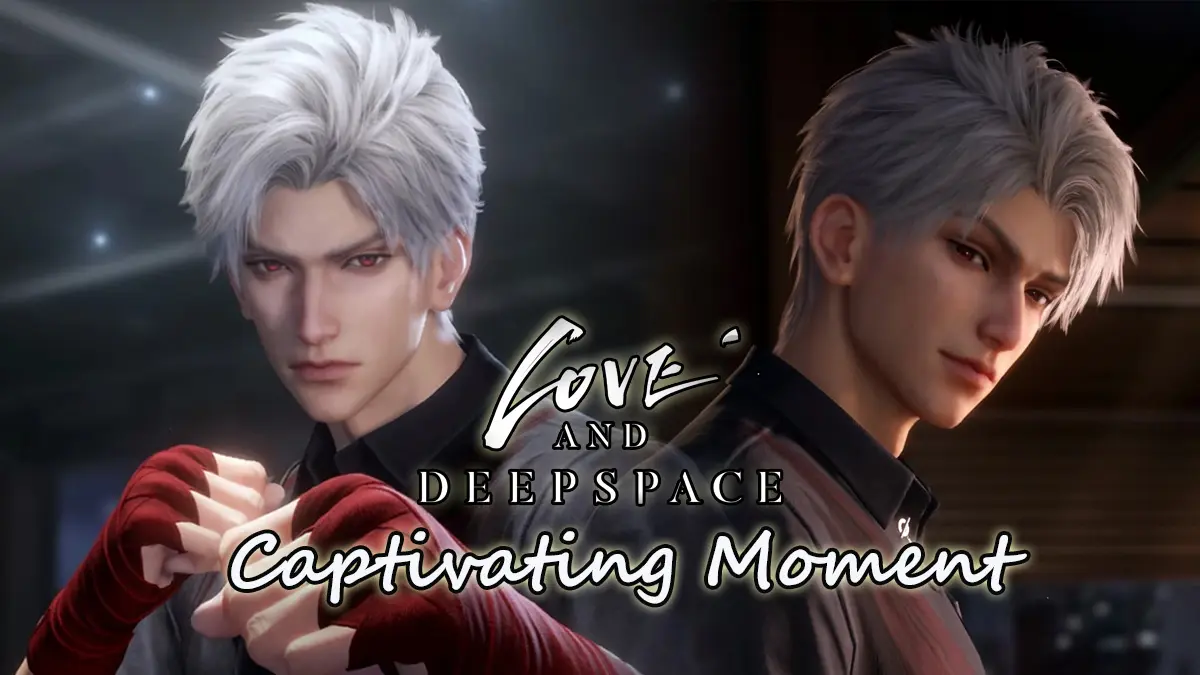
There is this very specific kind of electricity that happens when a game stops treating you like a spectator and starts treating you like a partner in crime. If you’ve spent any time wandering the neon-soaked streets of Linkon City lately, you know exactly what I’m talking about. Since its global launch back in January, Love and Deepspace has evolved into something much bigger than just another 3D otome game—it’s become a genuine cultural touchstone. According to Gamebrott.com, the recent focus on Sylus, the silver-haired leader of the N109 Zone, has sent the entire community into a bit of a tailspin, especially with the release of his “Captivating Moment” Myth.
When Papergames and InFold Pte. Ltd. first introduced us to Xavier, Zayne, and Rafayel, most of us thought we had the “meta” figured out. We had our protective knight, the distant doctor, and the whimsical artist. But then Sylus (and the ever-elusive Caleb) showed up, and the narrative gravity shifted completely. Sylus isn’t just another pretty face to collect; he’s a catalyst for a more mature, high-stakes style of storytelling. It feels less like a dating sim and more like a high-octane action flick. It was a bold move for a mobile title, and honestly? It’s exactly what the genre needed to stay fresh.
Why the N109 Zone feels more like a proving ground than a backdrop
The story kicks off with our MC heading south to a small village where magnetic fluctuations are hitting dangerous levels. It’s your classic “Wanderer invasion” setup, but it comes with a twist: the Aether core. To navigate the chaos, she’s paired with Sylus. Now, in any other game, he’d probably just “protect” her while she watched from the sidelines. Instead, he invites her to his luxury hotel in the N109 Zone. It’s a total power move, sure, but it’s also a narrative anchor. This isn’t just a mission—it’s an invitation into the reality of his world.
What’s really fascinating is the layout of Sylus’s “home.” The upper floors are all luxury and polish, but the basement is where the real work happens—gyms, arcades, and a private boxing ring. It’s a physical manifestation of who he is: refined on the surface, but built on a foundation of grit. When the MC realizes she needs to sharpen her skills to survive the growing Wanderer threats, she doesn’t wait for him to offer help. She just starts training. It’s a small detail, but it’s a massive beat for her character growth.
“The modern otome player doesn’t want to be saved; they want to be the one holding the gun while their partner reloads. Sylus doesn’t coddle the MC; he sharpens her.”
— Editorial Analysis
When Sylus eventually finds her in the ring, he doesn’t tell her to go take a break. He steps in as a sparring partner. He teaches her the stance, the balance, the follow-through. It’s a scene that feels incredibly intimate, not because of some forced romance, but because of shared respect. This “competence porn” is a huge trend in female-oriented media right now. In fact, a 2023 Statista report noted that the female gaming market in Asia has seen a 15% year-over-year growth in “action-integrated” narrative games. It turns out the audience is craving more than just sweet words—they want shared agency.
High stakes, straight flushes, and the art of not waiting to be saved
If the boxing ring was about physical growth, the poker scene in Linkon City is all about psychological warfare. Sylus takes the MC to a game hosted by a man named Kovi, but this isn’t your friendly neighborhood poker night. It’s a high-stakes “business” discussion wrapped in a gambling metaphor. Sylus sits her down and essentially tells her to watch and learn. The tension in the room is thick enough to cut with a knife.
When Sylus goes all-in, everything freezes. You can almost hear the collective breath-holding as the bodyguards start reaching for their weapons. It’s a classic “bad boy” move, but the brilliance is in the MC’s reaction. She doesn’t panic or look for an exit. She calls the game. And she wins. Is a Straight Flush on her first try a bit of a narrative “buff”? Maybe. But it proves she can handle the heat of the N109 Zone. And the best part? When things inevitably turn violent and Kovi’s goons move in, she doesn’t wait for Sylus to save her. She uses his chair to drop a bodyguard, steals his pistol, and disarms him in seconds. It’s messy, dangerous, and exhilarating—and it justifies every second they spent in that boxing ring earlier.
The strange softness of a syndicate leader who buys out food trucks
Every good anti-hero needs a “Save the Cat” moment. In this case, it’s quite literal. After all the chaos of the poker game, we see a completely different side of Sylus. They’re having a picnic in a park—just eating sandwiches and acting like normal people—when a stray cat appears. Sylus gets scratched, and for a second, you expect his “tough guy” persona to flare up. Instead, he goes out and buys every single can of tuna from a nearby food truck to feed the strays. It’s a trope, I know, but it works because of the contrast.
This duality is exactly why Sylus is the “meta” choice for so many players right now. He’s not just one thing. He’s the guy who will help you hide a body, but he’s also the guy who hums to himself while peeling an apple in a private jet’s kitchen. It’s that mix of extreme power and mundane peace that makes him so compelling.
Is Sylus actually a villain or a hero?
Honestly, he’s neither. Within the world of Love and Deepspace, Sylus lives in the gray. He’s a syndicate leader who prioritizes his own goals and the MC’s safety, often using pretty unconventional—and definitely illegal—means. He’s the definition of a classic anti-hero.
How much does the “Captivating Moment” really matter?
It’s huge for the lore. It provides the backstory for Sylus’s relationship with the MC and sets up the stakes for the N109 Zone, which is central to the game’s bigger mystery involving the Wanderers and the Aether core.
What this shift tells us about where the industry is heading
Looking at the bigger picture, Love and Deepspace is pulling off something that many Western developers are still trying to figure out. A 2024 report from Niko Partners found that female gamers are the fastest-growing demographic in the global market, yet they’re often underserved by high-budget, “hardcore” mechanics. By blending top-tier 3D combat, complex politics, and deep romance, InFold is proving you don’t have to sacrifice action for emotion. You can have both.
The success of the “Captivating Moment” arc suggests that the future of the genre lies in these hybrid experiences. We’re finally seeing a “nerf” to the traditional, passive protagonist. The MC here is proactive, she’s violent when she needs to be, and she’s incredibly capable. She’s not a prize to be won; she’s a partner to be respected. This shift is likely going to influence a lot of upcoming titles, maybe even pushing the genre toward PC or console ports as the demand for high-fidelity otome keeps climbing.
That ending, by the way? The transition from a quiet park picnic to a private jet where Sylus is casually peeling an apple while waiting to meet a General is the perfect summary of his character. He’s a man of immense power who finds quiet in the smallest tasks. It leaves you wanting more—not just more romance, but more of the world he inhabits. The bar has been set. Sylus isn’t just a captivating moment; he’s a sign that the game has changed for good.
This article is sourced from various news outlets. Analysis and presentation represent our editorial perspective.
About the Author