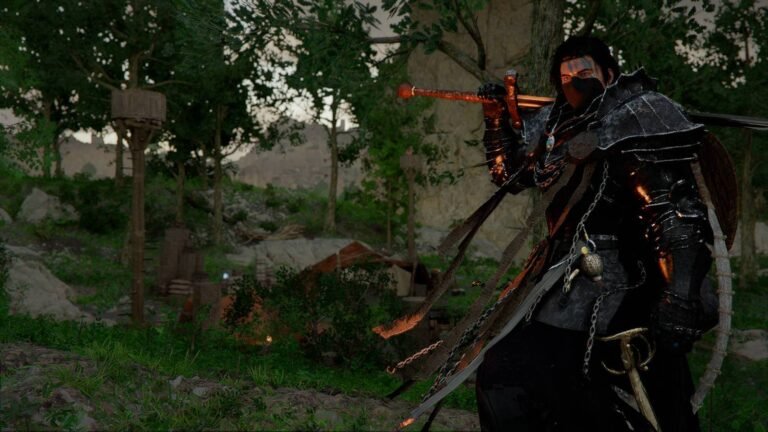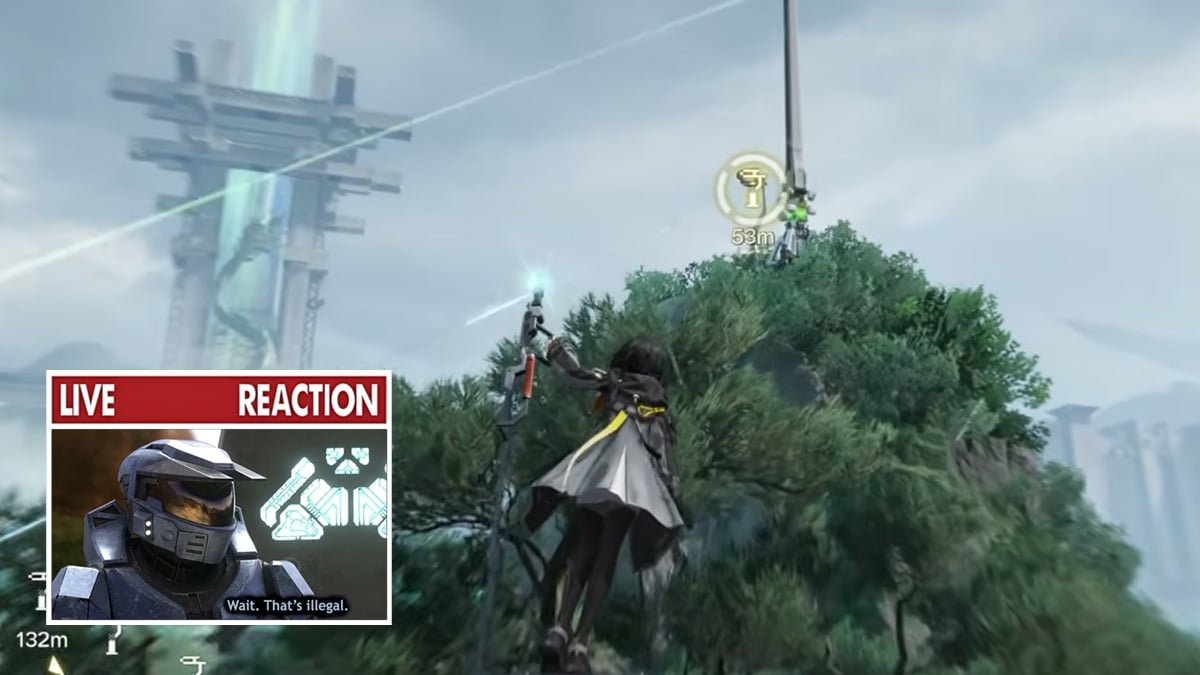
There is this very specific, almost primal satisfaction that comes from ending up somewhere you really aren’t supposed to be. It’s that rebellious spark most of us have buried somewhere in our gamer DNA—that moment you hit a “Keep Out” sign in the form of a clunky invisible wall and immediately start scanning the horizon for a way to hop over it. Lately, the Arknights: Endfield community has been buzzing with exactly this kind of digital defiance. According to some recent buzz over at Gamebrott.com, players have figured out how to scale the dizzying heights of Wuling Mountain—a locale that was clearly meant to be a “look but don’t touch” backdrop—using a clever, and admittedly “illegal,” zipline trick.
If you’ve spent even a few hours wandering the dusty, haunting Talos-II wasteland since the game dropped on PC and PS5, you already know that the AIC Factory system isn’t just some tacked-on crafting gimmick; it really is the heartbeat of the entire experience. But while the masterminds at Hypergryph—the same folks who gave us the original Arknights—intended for ziplines to be a handy way to get from Point A to Point B, the player base had other plans. They’ve essentially turned them into tools for high-altitude mountaineering conquest. A player by the handle of @saintoneLIVE recently dropped a clip of what everyone is calling the “Illegal Mountain Zipline,” and honestly? It’s a total masterclass in how to exploit tiny gaps in environmental design.
I actually went in and tried to replicate it myself after seeing the footage, and let me tell you, it is not as simple as just spamming a button. You need a very specific sequence of jumps, a weirdly deep understanding of which rocks actually have “solid” collision data and which ones are just visual ghosts, and a fair bit of luck with your character’s animations. It’s the kind of high-level “emergent gameplay” that developers almost never see coming during the testing phase, yet it’s exactly the kind of thing that keeps a community obsessed years after a game is first revealed. It makes the world feel less like a set of rules and more like a puzzle waiting to be solved.
Cracking the Code: How Players Are Actually Piercing the Map
The trick itself is a fascinating bit of bypass logic that ignores the invisible walls guarding the peaks of Wuling Mountain. By hunting down specific “soft” spots in the environment—those tiny areas where the terrain collision doesn’t quite line up with what your eyes are seeing—players can literally slip through the geometry of the world. Once you’re inside or above these restricted zones, the real magic happens: you drop a zipline anchor point. Since the AIC system allows these lines to stretch across massive distances, once that “illegal” anchor is set in stone, you’ve basically built yourself a permanent, high-speed bridge into the forbidden zone.
But why go through all that headache just to stand on a jagged rock? For some, it’s purely about the view—and Talos-II has some incredible vistas if you can get high enough. For others, it’s the ultimate flex in a game that otherwise prizes efficiency, logistics, and factory optimization. Interestingly, a 2024 report by Newzoo pointed out that “player agency and the ability to interact with the environment in unintended ways” are actually massive drivers for keeping people around in open-world RPGs over the long haul. Arknights: Endfield, with its heavy focus on building and base management, is the perfect sandbox for this kind of mindset. I mean, if the game lets you build a massive factory, why shouldn’t it let you build a highway to the heavens?
“The legendary Wuling mountain zipline has been solved. But, it’s very difficult to pull off…”
— @saintoneLIVE via X (formerly Twitter)
And it isn’t just limited to Wuling Mountain, either. We’re starting to see reports of players anchoring ziplines to the tops of skyscrapers in industrial sectors or flinging them across massive ravines that the devs clearly wanted us to hike around. It’s a classic game of cat and mouse between the level designers and the players. Every time a new patch rolls out, the community immediately goes looking for fresh ways to break the world again. It’s also a bit of a testament to the game’s engine—built on Unity—that it allows for this much flexibility, even if it occasionally results in some very “illegal” infrastructure projects.
Why a Little Bit of Chaos is Actually Great for the Game
From a developer’s perspective, glitches like these are always going to be a bit of a double-edged sword. On one hand, you really don’t want people falling through the floor or skipping over hours of carefully crafted content. On the other hand, this kind of viral “trick-sharing” is the kind of marketing that you just can’t buy with a trailer. A 2025 Statista study suggested that community-driven content, specifically “glitch showcases” and “sequence breaking tutorials,” made up nearly 35% of the total social media engagement for major live-service titles. By allowing—or at least not immediately nuking—these creative exploits, Hypergryph is fostering a sense of discovery that feels way more rewarding than any scripted quest line ever could.
Think back to the original Arknights for a second. That community became legendary for its “low-rarity” clears, where players used 3-star operators to absolutely dismantle bosses that were designed for 6-star powerhouses. That same spirit of doing more with less—and pushing the systems to their breaking point—has clearly migrated over to Endfield. The zipline isn’t just a piece of rope in this context; it’s a statement. It’s the player saying, “I understand the bones of this world better than the people who put them there.” That is a powerful feeling, and it’s exactly why people will spend four hours trying to clip through a mountain wall just for a five-second clip of a zipline being placed.
There is also a fascinating technical layer to consider here. These “Illegal Ziplines” often rely on specific character animations to nudge the player through the world’s geometry. In the current meta, certain characters with dash or leap abilities are becoming community favorites—not just because they hit hard in a fight, but because of their “exploration utility.” We’re essentially seeing a secondary tier list form, one based entirely on how well a character can help you cheat the system. And honestly? I’m absolutely here for it. It adds a layer of depth to the roster that goes beyond just raw DPS numbers.
The Industrial Sandbox That Invited Its Own Destruction
The real core of Arknights: Endfield is the AIC (Automated Industrial Complex). This is the big feature that separates it from the pack, moving it away from the shadows of games like Genshin Impact or Wuthering Waves. In Endfield, you aren’t just a lone traveler wandering a pretty map; you’re an engineer. You’re laying down power lines, setting up resource harvesters, and automating complex extraction chains. Because the game hands you the tools to literally reshape the landscape, it feels only natural that players would try to reshape the parts of the landscape they aren’t technically supposed to touch.
It’s the old saying: when you give someone a hammer, every problem starts looking like a nail. When you give a player a zipline and a modular building system, the entire skybox starts looking like a potential construction site. We’ve seen this kind of behavior before in titles like Satisfactory or No Man’s Sky, but seeing it manifest in a high-fidelity, anime-styled RPG feels remarkably fresh. It injects a bit of “immersive sim” logic into the gacha genre, which, let’s be real, is something the industry desperately needed by the time 2026 rolled around. It turns the map into a playground rather than just a path to the next cutscene.
Can you get banned for using “Illegal Ziplines”?
In most cases, the answer is a solid no. Generally speaking, developers make a clear distinction between “exploits” that give you an unfair competitive edge (like bugs that give you infinite currency) and “environmental exploits” that are just for fun and exploration. Since Endfield is primarily a PvE (Player vs. Environment) experience, Hypergryph usually views these tricks as harmless community fun, though don’t be surprised if they quietly patch the specific holes in the map during a later update.
Do these ziplines stay in your world forever?
Yes, they do! Once you’ve successfully placed an anchor and established the zipline within your AIC network, it becomes a permanent part of your world state. This means you can zip back up to those “secret” locations whenever the mood strikes you, provided the game doesn’t undergo a massive structural update that resets the terrain data in that specific zone. It’s your own little private piece of the forbidden map.
Looking Ahead: Will Hypergryph Let the Rebels Run Wild?
As we get further into the lifecycle of Arknights: Endfield, the big question is how the developers are going to react to this kind of ingenuity. We’ve seen some companies lean into the madness before—sometimes they’ll even hide a little Easter egg at the top of a mountain they know players will eventually glitch into. Others take a much more “Highguard” approach—referencing that in-game faction known for its strict adherence to the rules—and patch things out with clinical, boring efficiency.
Personally, I really hope Hypergryph chooses the path of “benign neglect.” There is something genuinely magical about looking up and seeing a zipline stretching across the horizon to a place that shouldn’t exist. It makes the world of Talos-II feel more alive, more precarious, and more like a real, untamed frontier. The fact that players are still discovering these tricks years after the very first technical tests proves that the game has the kind of mechanical depth that truly rewards curiosity. It’s not just a game; it’s a system to be mastered.
At the end of the day, the “Illegal Zipline” isn’t just a bug or a piece of messy code. It’s a bridge between the developer’s original vision and the player’s boundless imagination. It’s a reminder that even in a digital world defined by rigid code and invisible walls, there’s always a way to reach the summit if you’re clever enough to find the right foothold. So, if you’re out there exploring Wuling, keep your eyes peeled for those thin lines in the sky. They aren’t just glitches; they’re monuments to player ingenuity.
And if you do manage to make the climb yourself, make sure to take a screenshot. In the fast-moving world of live-service gaming, today’s “illegal” shortcut might be tomorrow’s patched-out memory. Enjoy the view while it lasts, because half the fun is being somewhere you were never invited to go.
This article is sourced from various news outlets. Analysis and presentation represent our editorial perspective.
About the Author