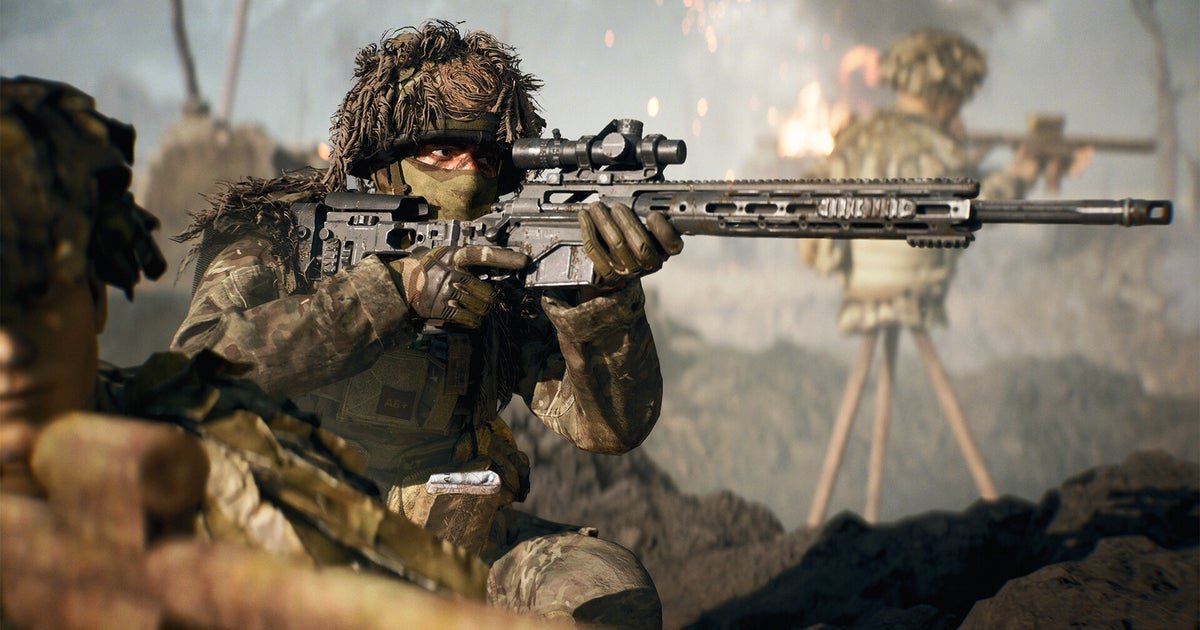
Nobody boots up a shooter after a long day at work hoping to feel like they just clocked into a second shift. Yet, for a solid chunk of the last decade, major studios have treated player progression less like a fun reward system and more like a second job with mandatory overtime. You want that thermal scope? Better grind out 500 headshots in a game mode you despise — a mode you’d never touch if the game weren’t holding your unlocks hostage.
According to Eurogamer, the team behind Battlefield 6 recently had a rather sobering reckoning with this exact problem. Following a rocky launch that saw players bouncing off the game’s brutal meta-progression, DICE had to swallow their pride and gut the entire unlock economy. And honestly? It’s about time a AAA studio admitted they got the math catastrophically wrong.
Scrolling through the initial unlock trees when the game dropped on PS5, Xbox Series X/S, and PC — as of early 2026, when Season 2 landed — was exhausting before you’d even fired a shot. You could practically see the engagement metrics driving the design, the kind of spreadsheet logic that assumes if you force a player to jump through enough hoops, they’ll stick around indefinitely. They don’t. They go play something else, and they tell their friends why.
When Forcing Players Into Bad Playlists Becomes the Product
The core issue wasn’t simply that unlocking a decent underbarrel attachment took too long. It was the forced march through specific, often deeply unpopular, playlists to get there — a hostage situation dressed up as content.
Alexia Christofi, a producer on Battlefield 6, sat down with Game Developer at DICE and laid it all out plainly. “Players didn’t like feeling they were forced into specific modes,” she admitted. That’s putting it mildly. The community backlash was swift and merciless. Die-hard Conquest veterans — the franchise’s backbone — were suddenly sweating it out in close-quarters tactical modes just to unlock a bipod for their LMG. Friction where there should have been flow.
This isn’t an isolated stumble in the industry, either. Developers have been wrestling with the psychology of rewards for years, and the data is unambiguous. A look at player motivation research from Quantic Foundry shows that while completionism drives a dedicated subset of players, the overwhelming majority prioritize autonomy above almost everything else. Strip away a player’s choice of how to play, and you’ve stripped away the thing that made them show up in the first place.
So DICE pivoted. Hard and fast.
“We took a step back, re-evaluated, and as we’re launching future seasons, we’ve changed our ethos a little bit to challenges and player progression in general,” Christofi explained. The result is a drastically nerfed grind — what previously demanded a week of dedicated evening sessions can now be knocked out in a couple of solid sittings. In practice, the difference is immediately palpable. You no longer log off feeling penalized for having a life outside the game.
The 24-Hour Dev Machine Keeping This Thing Alive
Patching a fractured progression system in a live-service title isn’t just a matter of tweaking a few variables and pushing a hotfix. It demands a coordinated, relentless, round-the-clock operation — and the way DICE is executing this is genuinely one of the more fascinating glimpses behind the curtain of modern AAA development.
Christofi detailed a globe-spanning workflow that keeps the updates flowing without pause. “There have been times when I’ve woken up in my morning, we’ve seen something, we’ve got some bugs we need to fix for the next patch, and we haven’t got around to fixing it by the evening… and then we’ve been able to hand it over to someone in LA to take that on and carry on working on that.”
This relay-race approach between DICE in Stockholm and EA’s studios in Los Angeles means the codebase is being actively worked at every hour of the day. An extraordinary logistical achievement — though one that also lays bare the immense pressure these live-service ecosystems generate almost by design. Keeping a sprawling multiplayer game breathing is less a job and more a permanent emergency.
The toll of this kind of continuous deployment is becoming one of the industry’s more uncomfortable open secrets. Per annual developer satisfaction surveys conducted by the IGDA, nearly half of developers working on live-service titles report significant stress tied directly to the demands of rolling updates and rapid hotfixes. The LA/Stockholm handoff might be a clever way to distribute crunch across time zones rather than eliminate it — but it underscores just how many people it takes to keep a game like Battlefield 6 breathing.
RedSec Is Ambitious, Uneven, and Somehow Still Standing
Any honest discussion of Battlefield 6 in 2026 has to reckon with RedSec — the battle royale mode that arrived carrying the weight of two prior failures on its back.
When EA announced they were taking another swing at the genre, the collective groan from the community was practically measurable. We’ve been here before. Firestorm didn’t work. Hazard Zone was a ghost town within a month. RedSec was supposed to be the one that finally cracked it.
The reception? Mixed. Being generous.
Critics and players both acknowledged that the Frostbite engine’s destruction mechanics inject something genuinely distinct into the battle royale formula — when a building collapses on a squad because someone got creative with an RPG, there’s nothing quite like it. But the pacing felt sluggish against the tight tempo players expect after years of Apex Legends, and looting — the tactile, second-nature rhythm that BR veterans barely think about — felt clunky in a way that broke immersion at the worst possible moments. The map flow, too, didn’t quite reconcile Battlefield’s sprawling combined-arms philosophy with the genre’s tighter, more claustrophobic demands. Can a mode built for jeep-and-helicopter chaos also work when the circle is shrinking and every second counts? That tension was never fully resolved at launch.
True to their recalibrated approach, though, DICE didn’t cut bait. They absorbed the feedback and rolled out a suite of targeted adjustments — pacing tightened, the loot pool rebalanced, some of the rougher map corridors quietly redesigned. When actually tested post-patch, the mode plays noticeably better than its day-one version, even if the foundation still shows cracks.
Will it dethrone the current BR kings? Probably not. Market analytics routinely show that player patience for unpolished mechanics in the battle royale space evaporates sharply within the first week of a new launch — and first impressions in that genre are brutally unforgiving. But RedSec has cultivated a dedicated, if smaller, cohort of players who simply want to drop a building on someone’s head instead of engaging in a conventional gunfight. That’s a real niche. Small, but real.
Where the Franchise Actually Stands Right Now
Deep into Season 2, the overall tenor of the community has shifted — from openly frustrated to something closer to cautious optimism, which, for a Battlefield game post-launch, is practically a standing ovation. The new map is a chaotic, gorgeous mess in precisely the right way. The game feels lighter. Less punishing. Less like homework.
But the franchise’s ghosts haven’t been fully exorcised. In his review for Eurogamer, Rick Lane captured the nagging ambivalence many long-time players are carrying right now:
Battlefield 6 delivers a thrilling multiplayer reset and a decent, if derivative single-player. But it still displays nagging doubts about what makes Battlefield special.
— Rick Lane, Eurogamer
He’s not wrong. The soul of Battlefield was never a weapon unlock tree. It was the sandbox — strapping C4 to a jeep and launching it at an enemy tank, or the sheer cinematic delirium of sixty-four players colliding over a single capture point while a skyscraper slowly folds in on itself. When the studio disappears into meta-progression spreadsheets, that sandbox suffocates. The toys are all still there; it’s just that nobody gave you time to play with them.
Is Battlefield 6 worth jumping into right now?
If you walked away at launch because the grind felt like a part-time job, Season 2 is a genuinely solid re-entry point. Weapon unlock requirements have been cut back substantially, and the cross-studio bug-fixing pipeline has ironed out a lot of the technical roughness that plagued the early weeks across all platforms.
Did they fix the RedSec mode?
Meaningfully, yes. DICE has addressed the most glaring complaints around pacing and loot distribution, and the mode plays far more cleanly than it did on day one. It’s still a tough sell in a crowded genre with entrenched competition, but the hands-on reality is that it’s now a fundamentally more enjoyable experience — and one that’s still being actively refined.
By stepping back and making the game easier to digest, DICE is slowly letting the sandbox breathe again — letting players remember why they showed up in the first place. You don’t need a punishing unlock economy to keep servers populated. You don’t need to manufacture engagement through exhaustion. You just need to build something genuinely worth playing and then get out of your own way.
Slowly, stubbornly, Battlefield 6 is becoming that thing.
Reporting draws from multiple verified sources. The editorial angle and commentary are our own.
About the Author