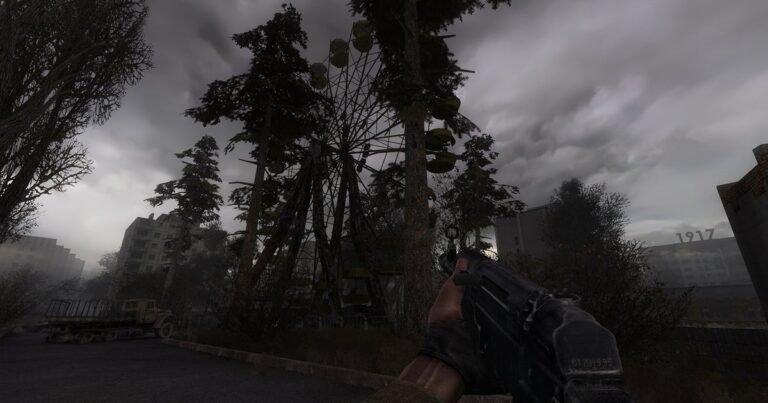
As of early 2025, Konami has been on a quiet mission to turn the entire planet into Silent Hill — and as if we didn’t have enough to contend with between despotic regimes, habitat collapse, and dodgy tech billionaires strip-mining the digital public square, now we have to worry about this too. According to the Rock Paper Shotgun editorial team, this aggressive geographical sprawl of the beloved horror franchise has ignited a rather delightful debate. The premise? Identifying which towns on Earth could absolutely, structurally, never host a psychological nightmare.
Horror Doesn’t Pack Well: Why Fear Has a Local Accent
Consider the evidence. The recent launch of Silent Hill f dragged us through a terrifying, floral-rot vision of 1960s Japan, while Silent Hill: Townfall hauled the dread to the bleak, wind-scoured shores of Scotland. Both titles shoved the franchise well beyond its original foggy American borders — landing on PS5, PC, and Xbox Series X with a blunt message: trauma is a global export. Konami has even floated the idea of taking the series to Central or South America. The implication is hard to ignore. Silent Hill is no longer just a zip code in Maine. It’s a highly transferable metaphor, latching onto unsuspecting nowherevilles worldwide like psychological ivy.
But you can keep your filthy free association, Konami. A line has to be drawn.
Right here, actually. Because however much modern game engines adore rendering photorealistic rust and volumetric fog, not every dot on the map can structurally sustain a psychological horror premise. Some locations are simply — constitutionally, architecturally, spiritually — immune.
Copenhagen: Where Pyramid Head Would File a Noise Complaint
Start with the most obvious barrier to any self-respecting manifestation of human guilt: functional urban planning. Copenhagen is arguably the single worst setting for a Silent Hill game ever conceived. Statistically the happiest city in the statistically happiest country on the planet — that’s not a vibe, that’s a structural problem for the entire horror genre.
Per the World Happiness Report, Denmark consistently scores above 7.5 out of 10 in global life evaluation metrics. The city has gorgeous green spaces, a high median salary, excellent sanitation, and a cycling infrastructure so good it borders on smug. Try — genuinely try — to picture Pyramid Head dragging his enormous blade down a perfectly maintained cycle superhighway while commuters politely ring their bells to pass him on the left. It doesn’t hold together for even a second.
Sure, Copenhagen carries dark history. You could visit the Nationalmuseet and read about the catastrophic 18th-century fires that erased medieval architecture, or the plague outbreaks that hollowed out entire neighbourhoods. But the contemporary cultural scene is just too relentlessly pleasant to let any of that fester into atmosphere. Maintaining a suffocating psychological dread becomes essentially impossible when you’re a five-minute stroll from a world-class sourdough bakery. The sheer civic competence of the place acts as a kind of horror repellent.
“The geography of fear requires a baseline of normalcy to subvert. If the environment is already too alien, or conversely, too perfectly utopian, the psychological friction disappears. The player needs to feel isolated, not supported by robust public infrastructure.”
Dr. Sarah El-Sayed, Interactive Media Psychologist
Çatalhöyük: Too Ancient to Have Sinned Properly
One of the foundational design pillars of the Silent Hill franchise is that it channels real historical iniquity. The masonry remembers. The town itself functions as a sponge for accumulated sin, soaking up decades — ideally centuries — of institutional cruelty. What happens, then, when you pick a place with practically no recorded history to pillage?
Enter Çatalhöyük. Originally constructed in what is now Turkey, it is widely considered one of the earliest recorded human settlements on Earth. This presents a fascinatingly numerical solution to the Konami problem. Because it predates the concept of documented trauma — existing before guilt had even developed a filing system — it carries the quantifiably smallest stockpile of historical baggage available to any location on the map.
Checkmate.
What exactly is a developer going to do here? Produce a survival horror game about the primordial anxiety of inventing the bricklayer’s trowel? You can’t run a terrifying hospital level if the concept of medicine hasn’t been conceived yet. The psychological horror genre leans heavily on twisting recognisable, modern institutional spaces — schools, prisons, apartment complexes, parking structures with flickering fluorescents. Strip all of that away and you’re left playing a very stressful ancient agriculture simulator. Honestly? I’d run that roguelike immediately. But it wouldn’t be Silent Hill.
Northlandz and Portmeirion: When You’re Bigger Than the Monster
Horror demands a specific power dynamic — you must feel small, vulnerable, and physically outclassed by your surroundings. This is precisely why model towns and architectural follies are naturally inoculated against any Otherworld transition.
Take Northlandz in New Jersey, nestled near the Watchung Mountains and billing itself as the world’s largest miniature wonderland. The critical thing about model towns is that you are vastly, absurdly larger than everything within them. Nothing there can threaten you. Are you frightened of a two-inch monster? No. You are Godzilla in this scenario — you could literally step on the manifestation of your darkest psychological sins and then wander off to find a coffee. A 2023 report by the Entertainment Software Association found that nearly 30% of adult gamers seek out horror titles specifically for the adrenaline rush of powerlessness. That particular rush evaporates entirely when you can accidentally kick the final boss over a banister.
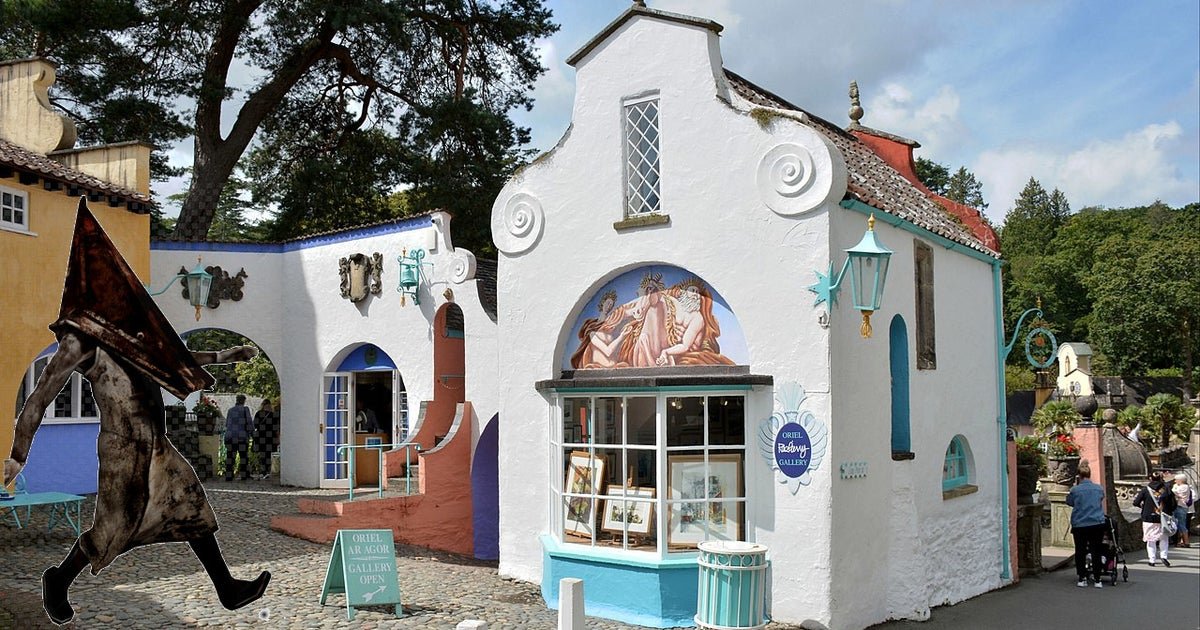
Then there’s Portmeirion — and this one deserves its own moment of appreciation. Not merely a pleasant Welsh town; it’s a deliberate architectural folly. A fabricated village assembled purely to bamboozle tourists with a riot of colorfully crammed-together Italianate buildings that feel like someone took an Uncharted game, superimposed all the different levels simultaneously, and then installed a jam shop somewhere near the entrance.
Silent Hill would never have a jam shop.
Say that aloud right now: “This town is full of monsters! How can you sit there eating jam?” The tension collapses instantly. George Harrison spent his 50th birthday in Portmeirion — and the lead guitarist of the Beatles would categorically never usher us toward a wacky metaphysical predicament. The bricolage silliness of the place repels darkness the way garlic repels something considerably less whimsical.
The Moon Is Already Rusting — Thanks, Earth
NASA’s Artemis base carries two distinct structural advantages when we evaluate settlements at moderate risk of a Konami acquisition. First — and this bears stating plainly — it’s a town on the Moon. That single fact neutralises a substantial chunk of the franchise’s favourite atmospheric tricks.
Sirens? You physically cannot hear sirens in the vacuum of space. Mysterious black mould creeping up the walls? No native flora on the Moon to mutate. Granted, NASA does plan to experiment with fungal habitats up there, and there is whatever microbial life still clings stubbornly to the waste bags left behind by the Apollo crews. But a bag of 50-year-old astronaut waste does not a compelling DLC make. Not even a mid-tier one.
But wait — what about rust? The creeping, reddish-brown decay that signals the shift into the Otherworld?
Bad news on that front, I’m afraid. It turns out the entire Moon is actively rusting. NASA researchers discovered that oxygen from Earth’s upper atmosphere has been making its way across open space, riding the tail of our planet’s magnetosphere, reacting with iron-rich minerals and trace moisture on the lunar surface to form hematite. The Moon — our serene, cratered companion — is undergoing a very slow, very literal Otherworld transformation. Let’s move on swiftly before someone at Konami reads this paragraph and pitches Silent Hill: Apollo in a Monday morning meeting.
The Real Engine Isn’t Fog. It’s You.
Famously — and this is where the franchise earns its longevity — the real trick to Silent Hill isn’t the fog or the cult or the inexplicable industrial architecture. It’s the trauma you carry in with you. Your own unresolved psychological damage gives shape to the monsters and causes the masonry to weep. The town is just the projector. You bring the film.
By logical extension, the ultimate defence against ending up in Silent Hill is simply… not having any severe unresolved trauma. All we need to do is ensure that every person who ever visits a foggy town has lived their entire life in a safe, nourishing, well-resourced environment, saturated in compassion and entirely insulated from violence.
Simple, right?
Sometimes the safest place is the one you already know by heart. Consider Nesfield — the tiny hamlet straddling the border of West and North Yorkshire where the original author grew up. A place of contented early childhoods, keeping chickens, pilfering stray golf balls from the local course, and swimming in the River Wharfe before the sewage situation got comprehensively out of hand. Even the ostensibly spooky spots — the watering well with its barred portal, or the Wishing Tree Wood with its old rusted farm machines swallowed by brambles — held no genuine menace when viewed through the lens of a secure, well-loved childhood. The geography was the same. The interior weather was different.
The scariest thing in Nesfield, in practice, was being pursued by a neighbour’s poodle. And frankly, Pyramid Head has absolutely nothing on a highly territorial miniature poodle who has decided your ankles are the enemy.
As gaming hardware keeps evolving, developers will continue finding new ways to render our deepest fears in spectacular 4K resolution at 60 frames per second — occasionally higher, if your PC rig is the kind that requires its own postcode. Drop the fog in any country, run it on the most powerful hardware available, port it to every platform with a screen. None of that changes the core truth: without human guilt to power the engine, it’s just bad weather. Atmospheric, certainly. Photorealistic, perhaps. But ultimately — just clouds.
Frequently Asked Questions
Will Konami release more Silent Hill games set outside the US?
Yes. Following the success of the Silent Hill 2 remake and the releases of Silent Hill f (set in Japan) and Townfall (set in Scotland), Konami has explicitly stated their interest in partnering with global indie developers to explore localized interpretations of the franchise’s psychological horror themes.
Can I play the new Silent Hill games on the Nintendo Switch?
Currently, the mainline next-gen titles like the SH2 remake and Silent Hill f are built for PC, PS5, and Xbox Series X/S hardware, relying heavily on advanced lighting and SSD speeds. However, smaller narrative spin-offs may eventually see cloud versions or optimized ports for Nintendo platforms.
Based on reporting from various media outlets. Any editorial opinion is that of the author.
About the Author