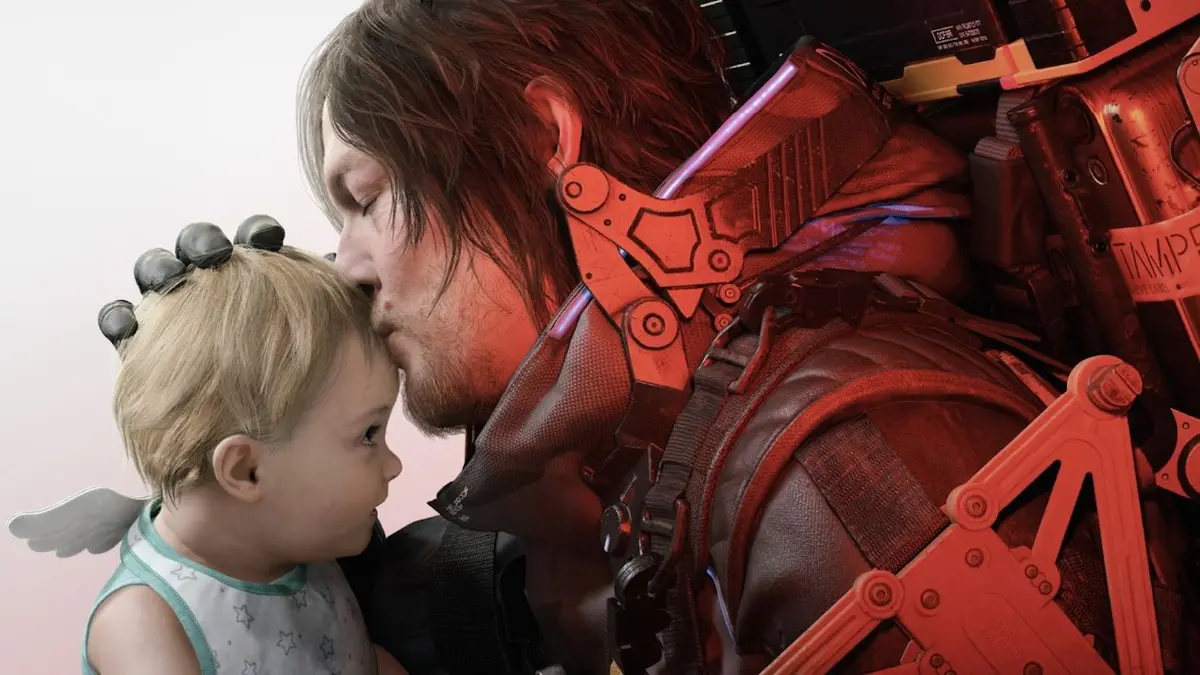
I don’t know about you, but my morning coffee hit a little differently today after seeing the latest headlines. If you were tuned into the State of Play earlier, you caught Hideo Kojima doing exactly what he’s famous for: keeping the entire industry on its toes. According to the latest reports from Gamebrott.com, the big reveal that has everyone talking is that Death Stranding 2: On the Beach is officially making its way to PC on March 19, 2026. Honestly? I didn’t expect us to get a hard-and-fast release date this far out, but here we are—and man, it is looking absolutely spectacular.
It’s really fascinating to watch how much the industry has shifted in such a short window of time. Not that long ago, seeing a “PlayStation Exclusive” sticker meant you either coughed up the cash for a console or you accepted your fate of being left out of the loop for half a decade. But today? Those walls are finally starting to crumble, and I’m absolutely here for it. Seeing Sam Porter Bridges back in action, backed by all the raw power and bells and whistles of a high-end gaming rig, is exactly the kind of energy we need to kick off the first half of 2026. If you’re already sold, pre-orders are live on both Steam and the Epic Games Store. So, if your wallet is feeling a bit heavy and you’re ready to commit, you know exactly where to go.
Beyond the Port: Why the PC Version is the Definitive Way to Play
Let’s be real for a second—calling this a “port” feels almost like an insult. The trailer Kojima Productions just unleashed didn’t necessarily scream about new story beats (not that we ever expect clarity from a Kojima trailer), but it leaned incredibly hard into a technical “flex” that should make any PC enthusiast salivate. We’re talking about the full suite: unlocked frame rates, ultra-wide monitor support that makes those vistas pop, and the holy trinity of modern PC gaming—DLSS, FSR, and frame generation. For those of us who have spent way too much money on GPUs over the last couple of years, this game feels like the validation we’ve been waiting for.
There’s something uniquely immersive about the worlds Kojima builds that just hits different when you’re pushing 120 frames per second. It’s not just about the smoothness; it’s about the presence. A 2025 Statista report recently found that the global PC gaming market revenue has climbed past the $45 billion mark, and it’s clear Sony is paying very close attention to those numbers. They aren’t just dipping their toes in the water anymore; they’re diving in headfirst. The fact that full DualSense support is coming over—complete with all that nuanced haptic feedback and those resistive adaptive triggers—means PC players aren’t getting a “lesser” experience. In many ways, they’re getting the definitive one.
And can we talk about the Decima Engine for a moment? It is, quite simply, a work of art. Seeing those photorealistic, hauntingly beautiful landscapes stretched across an ultrawide display is going to be a genuinely transformative experience. I vividly remember playing the first game and just staring at the rendering of the moss and the rain for twenty minutes at a time. Now, with enhanced textures and even more sophisticated lighting models, I’ll probably spend more time in Photo Mode than I will actually delivering packages. Is that a productivity problem? Probably. Do I care? Not even a little bit. The sheer artistry on display here demands that we stop and look.
“The PC platform has become an essential pillar for our growth strategy, allowing us to reach audiences that previously sat outside the PlayStation ecosystem.”
Sony Interactive Entertainment Financial Report, Fiscal Year 2025
The Xbox Question: Is the Green Team Finally Getting an Invite to the Beach?
Now, we have to address the massive, green-tinted elephant in the room: Xbox. Ever since the news broke that DS2 is hitting PC so soon after the initial hype cycle, the “When Xbox?” questions have reached a fever pitch. If we look back at the history of the first Death Stranding, it was a long, slow walk to Microsoft’s ecosystem, finally landing on their consoles in 2024—nearly five years after the original launch. But the landscape is fundamentally different now. One massive detail a lot of people are overlooking is that Kojima Productions recently gained full control of the Death Stranding IP. That independence changes the math significantly.
While we don’t have an official confirmation for an Xbox Series X|S version quite yet, the “hope” factor among the community is at an all-time high. Personally, I think it’s a matter of when, not if. Kojima is a man who clearly loves his audience, and he’s moving toward a more platform-agnostic future where the art matters more than the hardware it runs on. The fact that he’s also currently deep in development on OD with Xbox Game Studios suggests his relationship with the “green team” is stronger than it’s ever been. But for now, if you want to be there on day one (or even month one), you’re going to need a PS5 or a beefy PC.
It’s definitely a bit of a waiting game for the Xbox crowd, and I know how frustrating that can be. However, if the five-year gap for the first game taught us anything, it’s that patience usually pays off in the end. With the way the industry is moving toward multi-platform releases, I’d bet my last Monster Energy drink—or whatever the in-game equivalent is this time around—that we won’t have to wait half a decade this time. The industry is simply moving too fast for that kind of rigid gatekeeping to last.
Walking a Finer Line: Why a “Lighter” Death Stranding Makes Total Sense
One of the most interesting tidbits to come out of recent interviews is Kojima mentioning that Death Stranding 2: On the Beach won’t be quite as punishingly difficult as the first game. Now, before the “Souls-like” purists and hardcore survivalists start clutching their pearls, let’s think about why this is actually a brilliant move. The first game was an incredible vibe, sure, but it was also a constant, uphill struggle. For a lot of people, having to micromanage weight distribution and stumbling over every single pebble was a barrier to entry that they just couldn’t get past.
By lowering that difficulty floor, Kojima is essentially inviting a much larger audience into his weird, wonderful world. According to a 2024 Pew Research study on gaming habits, nearly 60% of adult gamers now prefer “narrative-driven experiences with adjustable challenge levels” over high-difficulty barriers that stall progress. Kojima isn’t “dumbing it down”—he’s ensuring that the story actually gets heard. And let’s be honest, the story is usually the most compelling, chaotic, and brilliant part of any Kojima project anyway.
He wants you to experience the “On the Beach” weirdness without wanting to hurl your controller out the window because Sam tripped over a rock for the tenth time in a row. It’s about the journey, the human connection, and the sheer spectacle of the world he’s built. If that means I spend less time obsessing over the durability of my boots and more time wondering why there’s a sentient, talking puppet strapped to my hip, I am 100% all for it. Let’s focus on the mystery, not the blisters.
The Kojima Multiverse: Connecting the Dots Between DS2, Physint, and OD
We really can’t talk about DS2 without acknowledging the other massive shadows Kojima is casting across the industry right now. The State of Play didn’t just give us PC dates; it served as a reminder that Kojima Productions is operating like a literal factory of ideas at the moment. We’ve all seen that new teaser poster for Physint, which looks like a glorious return to the tactical espionage roots we’ve been craving since his messy departure from Konami. It feels like he’s finally giving the fans exactly what they want while still refusing to stop pushing the boundaries of what a “game” even is.
And then, of course, there’s OD. That teaser trailer is still haunting my dreams in the best way possible. The level of detail in those facial animations is bordering on the uncanny valley, but it’s done in a way that feels intentional, claustrophobic, and genuinely terrifying. Kojima is clearly playing a long game here. He’s building a multi-genre empire where Death Stranding is just the foundational layer. Bringing DS2 to PC is a strategic move to keep that momentum building while these other massive, experimental projects continue to simmer in the background.
When is Death Stranding 2: On the Beach coming to PC?
Mark your calendars: the game is officially scheduled to launch on PC via Steam and the Epic Games Store on March 19, 2026. It’s a bit of a wait, but it looks like it’ll be worth it.
Will the PC version have exclusive features?
You bet. It’s coming packed with support for unlocked frame rates, ultra-wide monitors, and advanced upscaling and frame generation tech. Plus, you’ll get full DualSense haptic feedback support if you plug in a PS5 controller.
Is there an Xbox version in development?
As of right now, there is no official word on an Xbox release. However, given that Kojima now owns the IP and is working with Xbox on other projects, many fans are hopeful for a release further down the line.
A New Chapter for the Industry’s Most Unpredictable Auteur
Seeing the ESRB rating for the PC version leak a little early was a bit of a spoiler, I’ll admit, but it didn’t really take away from the hype of the official reveal. It honestly feels like Kojima Productions is operating at the absolute height of its powers. They’re independent, they’re experimental, and they’re finally reaching a point where their games are accessible to almost everyone with a screen and a dream. The “exclusive” era is fading, and the “experience” era is taking its place.
March 19th truly can’t come soon enough. Whether you’re a returning Porter who survived the first trek or someone who sat out the original game because it looked too much like a “delivery man simulator,” On the Beach seems to be addressing all the right pain points. It’s prettier, it’s smoother, and it’s coming to the platform where it can truly shine and push modern hardware to its limits. I’ll see you on the Chiral Network, folks—hopefully with fewer tripped-over rocks this time.
This article is sourced from various news outlets and industry reports. Analysis and presentation represent our editorial perspective on the changing landscape of gaming.
About the Author