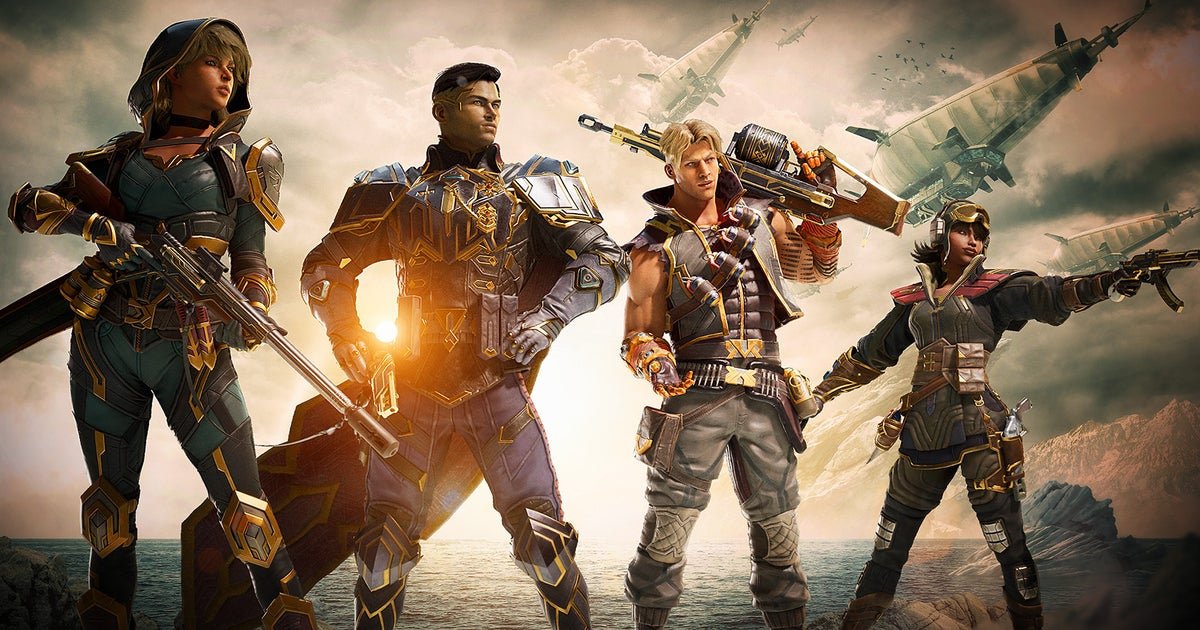
It’s been a strange, somewhat somber year for anyone who’s still out there rooting for Highguard. We’ve all lived through this cycle before, haven’t we? There is the big, cinematic reveal, the frantic hype cycle, the inevitably rocky launch day, and then that long, quiet, agonizing slide into the “maintenance mode” graveyard. But the latest update from the team at Wildlight feels… different. It’s not just about the arrival of new airships or those admittedly shiny Moonbruin mounts—it’s about the optics. It’s about the feeling of a game that seems to be losing its grip on the digital world entirely. According to the latest reports from the Eurogamer.net Articles Feed, Highguard is currently clinging to life with a fresh content patch, even as its own official website has become a literal digital ghost town.
The Ghost in the Machine: When Your Own Front Door Becomes ‘Low Priority’
There is something deeply surreal—and maybe a little bit haunting—about a developer telling its remaining player base that their own website going offline is a “low priority” issue. Why? Because, in their words, the “reputational damage is already done.” It’s a staggering admission of defeat, isn’t it? It’s a promise of persistence wrapped in a shroud of surrender. Wildlight’s staff, specifically a developer known as WL_Coronach, basically laid the whole thing out on Discord: they’re putting their blinders on and focusing on the game itself, not the marketing. And while that sounds noble on paper—the whole “putting the players first” mantra we hear so often—it completely ignores the reality of how we actually consume games in 2026. If I can’t even find your website on a basic Google search, does your game even exist in the cultural zeitgeist anymore? Or are you just whispering into the void?
Honestly, for those of us who remember the high hopes we had for this one, it’s a bit of a gut punch. This wasn’t supposed to be just another generic, run-of-the-mill shooter; it came with a pedigree that most fledgling studios would absolutely kill for. But as we’re seeing in real-time, even the most legendary history can’t save you when the present feels this precarious. So, let’s actually dive into what’s in this patch and why this “low priority” mindset might be the very thing that finally sinks the ship for good.
The Burden of Being the ‘Next Big Thing’ from Respawn Royalty
To really get why Highguard’s current struggle feels so heartbreaking, you have to look back at where this project started. Wildlight isn’t just some random group of developers who got lucky with a seed round; it’s a “core group” (as they explicitly told Eurogamer) that includes genuine veterans from the Titanfall and Apex Legends glory days. When they closed out The Game Awards back in December 2024, the entire industry held its collective breath. We expected that same fluid, kinetic movement, that same tactical depth, and that addictive “just one more round” magic that made Respawn’s earlier hits feel like instant classics.
But the transition from that “Titanfall pedigree” to the harsh reality of Highguard has been anything but smooth. It’s been a slog. According to a 2024 report by Newzoo, nearly 60% of total playtime on PC and console is now spent on games that are six years old or older. Think about that for a second. That means for a new IP like Highguard to even get a foot in the door, it doesn’t just have to be “good”—it has to be transformative. It has to be so undeniably better than the competition that it convinces people to walk away from their thousands of hours in Fortnite, League of Legends, or Apex. And that is a monumental ask.
“We were turned into a joke from minute one,” former Highguard developers reportedly said.
— Internal source via CharlieIntel
That “joke” narrative is a hard thing to shake once the internet decides it’s true. When a game launches and fails to capture that elusive lightning in a bottle, the online community is rarely kind. The layoffs at Wildlight that followed the January release were the first major, visible crack in the hull. Now, we’re looking at a studio that has been trimmed down to the absolute bone, trying to maintain a massive, complex PvP infrastructure with what can only be described as a skeleton crew. It’s a classic David vs. Goliath story, but in this version, David’s slingshot is snapped in half and he’s forgotten where he parked his van.
Selling Owlbears While the Ship Takes on Water
So, what did we actually get in this “overnight” patch? On the surface, if you just look at the bullet points, it’s a decent enough haul for a team of this size. We’ve got a new airship-themed base, which adds some much-needed verticality to the maps—something the fans have been asking for since day one. There’s a new lockpick raid tool, which is clearly a calculated attempt to shake up the current meta and give players more strategic, high-stakes options during their matches. And then, of course, there’s the Store. The Moonbruin—an owlbear-like mount that looks like something out of a dark fantasy novel—is undeniably cool. The Iron Vigil outfits are stylish enough, too, for those who still care about the “drip” in a dying world.
But here’s the thing that keeps me up: you can’t out-content a crisis of confidence. Adding a flashy new mount to a game where the community is openly wondering if the servers will even be turned on next Tuesday feels a bit like—well, to use the old cliché—rearranging the deck chairs on the Titanic. Don’t get me wrong, the developers who are left are clearly working their hearts out. You can see the effort in the details. But when the focus shifts to “expanding what’s on sale in the Store” while your official website is throwing 404 errors, it sends a very mixed message. Are we funding the future of a blossoming game, or are we just paying the electric bill so the lights stay on for one more month?
The lockpick tool is an interesting addition, though, and I want to give them credit for it. It suggests that Wildlight is still thinking deeply about the core gameplay loop. They aren’t just dumping skins and running; they’re trying to refine the actual experience. But in a market this crowded—across PC, PS5, and Xbox—simply “refining” might not be enough to move the needle. We’re in an era where players have zero patience for games that feel like they’re in a permanent “wait and see” mode. If you’re not growing, you’re dying. It’s as simple as that.
A Symptom of a Much Bigger, Much Uglier Industry Trend
The Highguard situation is really just a microcosm of a much larger, much more systemic issue in the gaming industry right now. According to the Game Industry Layoffs tracker, over 10,000 workers were laid off in 2024 alone, and that heartbreaking trend has unfortunately bled right into the current year. Studios are under immense, almost impossible pressure to deliver “live service” hits that can generate reliable revenue for a decade. When a game like Highguard misses that narrow mark, the fallout is immediate, public, and brutal.
That “low priority” comment regarding the website is particularly telling of a cultural shift. It reflects a change in how studios view their own public-facing presence. In the old days, a professional, polished website was the cornerstone of your brand. It was your identity. In 2026, many developers seem to think that a Discord server and a Twitter (X) account are “good enough.” But as many researchers and industry vets have pointed out, relying entirely on third-party platforms for your community infrastructure is a dangerous game. If Discord goes down, or the Twitter algorithm decides to bury your updates, you lose your only direct line to your players. You’re building your house on someone else’s rented land.
Furthermore, that line about “reputational damage already done” is one of the most hauntingly honest pieces of commentary I’ve heard from a dev in years. It’s as if the studio has collectively accepted that the mainstream will never see them as a success again, so they’ve just… stopped trying to impress anyone outside their core “Iron Vigil” fanbase. It’s a strategy, I suppose, but it’s a purely defensive one. It’s the strategy of a besieged fortress, not a thriving kingdom looking to expand its borders.
Does a 404 Error Actually Matter in 2026?
You might be sitting there asking, “Does anyone even use game websites anymore?” And honestly, it’s a fair question. Most of us get our news from Reddit, our patch notes directly from Steam or the Xbox dashboard, and our community fix from Discord. But a website serves as a permanent, official record. It’s where the “About” page lives, where the deep lore is archived for the fans, and where new, curious players go to see if a game is actually legitimate. When a potential player Googles “Highguard” and finds a broken link or a “simplified” placeholder, they don’t see a studio focusing on content. They see a project that is halfway to the grave. It’s about the signal you’re sending to the world.
Is Highguard actually shutting down?
Wildlight has been very clear in their official statements: the game is not closing. They’ve emphasized that a “core group” of dedicated developers remains on board to support the title. However, the combination of recent layoffs and the official website going dark has, understandably, fueled a lot of community speculation about whether the game is viable in the long run.
What platforms can I play Highguard on right now?
Currently, Highguard is available and playable on PC, PlayStation 5, and Xbox Series X/S. If you’re a Nintendo Switch owner, don’t hold your breath—there has been absolutely no word on a port for that platform, especially since the team is currently focused entirely on stabilizing the versions that are already out there.
What exactly was included in this latest patch?
The most recent update was a bit of a mixed bag. It introduced a new airship-themed base to add some vertical gameplay, a lockpick raid tool for more tactical maneuvers, and a fresh wave of items in the Store, including the much-discussed Moonbruin mount and the Iron Vigil-themed vanity outfits.
The Long, Cold Road to a Redemption That Might Never Come
Looking ahead, the road for Highguard isn’t just steep—it’s practically vertical. We’ve seen “redemption arcs” before, of course. No Man’s Sky and Cyberpunk 2077 are the poster children for how to fix a disastrous start and turn it into a victory. But those games had something Highguard doesn’t: massive, deep-pocketed financial backing and, crucially, they didn’t let their websites go offline in the middle of their comeback attempts. They maintained a level of professional polish and public-facing confidence even when the game itself was a buggy mess.
Wildlight’s honesty is refreshing, in a way, but it’s also terrifying. When a developer stops caring about their “reputation” because they think it’s already been destroyed, they lose a vital incentive to perform for the public. They might keep the lights on for the few thousand dedicated players who are left, but the dream of Highguard becoming the next big thing—the “Apex killer” we were all promised back in 2024—is effectively dead. It’s a hard pill to swallow for anyone who saw the potential in those early trailers.
I want to be wrong about this. I really, truly do. I want to log in six months from now and see those airships buzzing with thousands of players, the website back up and running with a vibrant community hub, and Wildlight announcing that they’re hiring back the talented people they had to let go. But in the current climate, where the “Live Service Graveyard” is already overflowing with the corpses of ambitious projects, Highguard feels like it’s just one more “low priority” problem away from the end. For now, we have the Moonbruins. We have the airships. And we have the heavy silence of a website that used to tell a very different story about the future of gaming.
This article is sourced from various news outlets and community reports. The analysis and presentation provided here represent our editorial perspective on the current state of the industry.
About the Author