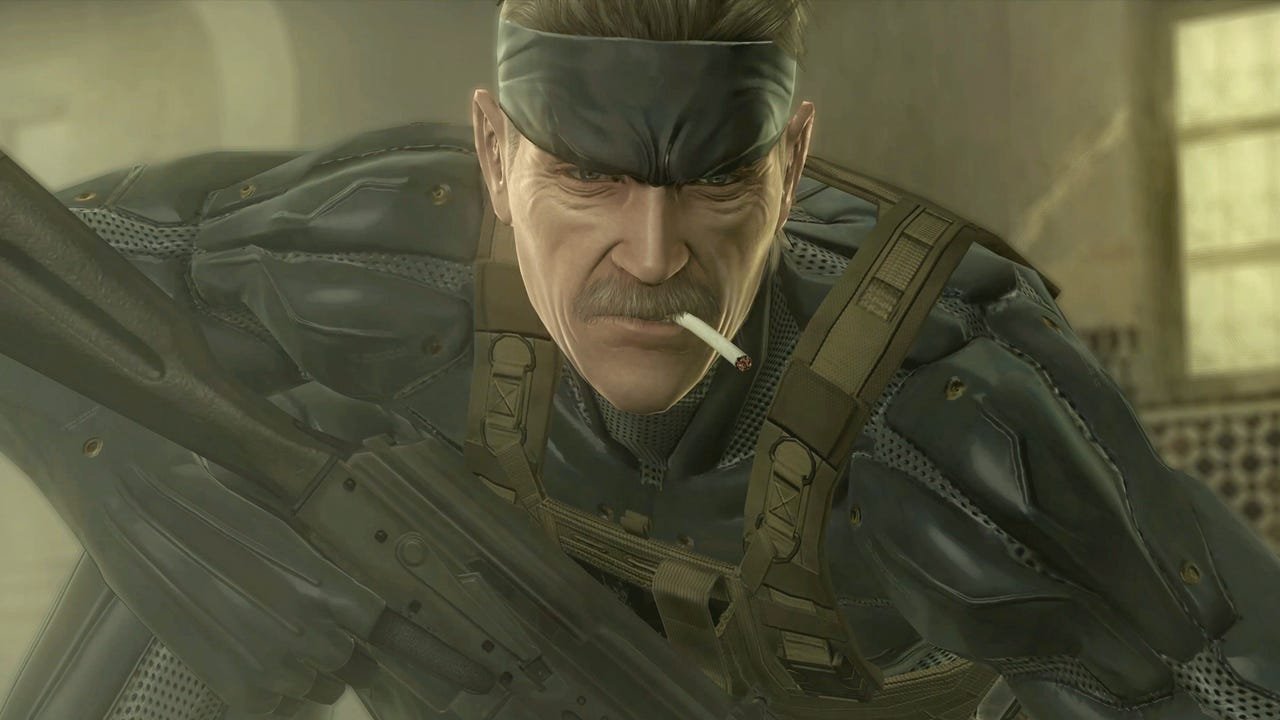
You know that hollow feeling in your gut that only really hits a gamer? It’s that exact moment you head to a digital storefront, ready to reclaim a piece of your childhood, only to be met with a cold “Page Not Found” error where a masterpiece used to be. We’ve lived through this before with licensed racing titles and those obscure RPGs that nobody else seems to remember, but seeing it happen to Metal Gear Solid hits differently. It feels personal. It feels like a piece of the medium’s foundation is being chipped away. According to reports from IGN Video Games, Konami has pulled the trigger and officially scrubbed the original digital versions of Metal Gear Solid 4: Guns of the Patriots and Metal Gear Solid: Peace Walker from sale. And they did it right as the hype for the Master Collection Vol. 2 was starting to reach a fever pitch.
Last week’s State of Play was supposed to be a moment of pure celebration—a long-overdue victory lap for fans who have kept the faith. After years of cryptic rumors and “stay tuned” teasers that felt more like corporate ghosting than actual communication, Konami finally confirmed the news we’ve all been dying to hear: Metal Gear Solid 4 is finally escaping the hardware prison of the PlayStation 3. Along with Peace Walker, it’s officially making the jump to PC, PS5, Xbox Series X/S, and the Nintendo Switch family (Switch 2 included) on August 27, 2026. But the party didn’t last long. Almost as soon as the trailer faded to black, the original listings on the PlayStation and Xbox stores began to vanish into thin air. It’s a classic “out with the old, in with the new” strategy, but in an era where game preservation is already hanging by a thread, it’s a move that genuinely stings.
Escaping the Cell: Why the MGS4 Port is a Technical Miracle (and a Preservation Headache)
To really grasp why people are so heated about this, you have to understand the mythic status of Metal Gear Solid 4. For nearly twenty years, Guns of the Patriots has been the ultimate “white whale” for game preservationists and technical enthusiasts alike. The game wasn’t just built for the PlayStation 3; it was built into it, specifically designed to exploit the console’s notoriously “exotic” and difficult Cell processor. It didn’t just use the hardware—it was woven into the very architecture of the machine. This is exactly why, for over a decade, it remained the only mainline Metal Gear entry that you couldn’t play on modern hardware without a high-end PC running a specialized emulator or a dusty, aging console that sounds like a jet engine preparing for takeoff.
And now, finally, the “Jailbreak” is actually happening. The very idea that we’ll be playing MGS4 on a Steam Deck or a PS5 this August is, if we’re being honest, nothing short of a technical miracle. But does that miracle justify deleting the history that paved the way for it? Konami’s logic is likely rooted in the corporate desire to “avoid customer confusion”—they don’t want a casual fan accidentally buying the 2008 version when a shiny, upscaled 2026 “Master Collection” version is right there in the search results. But let’s be real: it’s also about funneling every single cent toward that new $59.99 (or higher) bundle. It’s a business move, plain and simple, even if it leaves a bitter taste for those of us who value the original, untouched code and the history it represents.
“The industry is moving toward a future where ownership is a temporary license, and the sudden removal of these classics only reinforces that anxiety for longtime fans.”
— Editorial Analysis
The Endangered List: How Digital History is Being Erased in Real-Time
Here’s the frustrating part: this isn’t just a Konami problem. It’s a systemic rot within the industry. We are currently living through a period where digital history is being overwritten and erased in real-time. A 2023 study conducted by the Video Game History Foundation and the Software Preservation Network revealed a heartbreaking reality: a staggering 87% of classic video games released in the United States are now considered “critically endangered.” They are no longer in commercial circulation. That means unless you happen to own the original physical disc and the specific hardware required to run it, you’re essentially out of luck. By delisting MGS4 and Peace Walker, Konami has just added two more legendary titles to that precarious list of games that only exist in their “original” form through the grace of the secondary market and collectors.
Think about the Peace Walker situation for a second. That game has had a wild journey. It started its life on the PSP, eventually made its way to the HD Collection on PS3 and Xbox 360, and has been a staple of backward compatibility for years. It’s a game literally about building a nation (Outer Heaven) from the ground up, and now its own digital foundations are being cleared away to make room for a new storefront entry. While it’s fantastic that it’ll be available on modern platforms, we lose something intangible when the original storefront presence is scrubbed. We lose the historical context, the original pricing models, and the ability for players clinging to older hardware to access the games they might have missed out on.
And then we have to talk about the “streaming” factor. For a while, MGS4 was at least streamable via PlayStation’s subscription services, providing a vital bridge for people who didn’t want to dig a console from 2006 out of their closet. With that bridge now burned, we are entering a genuine dark period that will last until August 27. It’s a six-month gap where one of the most important, culturally significant stories in gaming history is officially “off the shelf.” For a series that defines the medium for so many, that’s a long time to be inaccessible.
The Ghost of Volume 1: Can Konami Actually Earn Back the Community’s Trust?
We have to address the elephant in the room: Master Collection Vol. 1. To say that launch was “troubled” would be a massive understatement. When it dropped in October 2023, fans who had been waiting years were met with frustrating resolution issues, bizarre audio bugs, and a general feeling that these legendary games were just wrapped in a bare-bones emulator rather than being given the “Master” treatment they deserved. It took months of post-launch patches for Konami to finally get those games into a state that felt respectful to Hideo Kojima’s massive legacy. The trust between the publisher and the players took a serious hit during that window.
So, when we see Konami pulling the old, reliable versions of MGS4 and Peace Walker right now, it feels like a high-stakes gamble with our nostalgia. They are essentially telling us, “Trust us, this new version is the only one you’ll ever need.” But that trust hasn’t exactly been earned yet. According to Statista data from 2025, digital software sales now account for over 90% of the total market share for major publishers. With that level of dominance, publishers hold all the leverage. They are the ones who get to decide when a game “dies” and when it is “reborn.” It puts the consumer in a position where they have to accept whatever version is handed to them.
If Master Collection Vol. 2 launches with the same technical hiccups and “day-one” messiness that plagued the first volume, fans won’t even have the fallback option of going back to the older digital versions they knew worked. They’ll be stuck with the new meta, the new bugs, and the new price tag. It’s a “burn the boats” strategy that only works if the new shore is actually worth landing on. We’re all hoping for the best, but the history of these ports makes it hard not to be at least a little bit skeptical about the “definitive” nature of what’s coming.
Why were the games removed so far in advance of the new collection?
Most industry analysts and observers believe this is a preemptive move to consolidate sales and clear the field. By removing the older, often much cheaper versions of the games, Konami ensures that the only way to purchase these titles digitally is through the upcoming Master Collection Vol. 2. It’s about maximizing the ROI on the new development effort.
Will I still be able to play the games if I already bought them years ago?
Generally speaking, yes. Delisting a game usually means it can no longer be *purchased* by new customers. If you already have MGS4 or Peace Walker sitting in your digital library on PS3 or Xbox 360, you should still be able to redownload and play them. However, keep in mind that this is entirely dependent on the longevity and support of those specific legacy storefronts, which won’t stay online forever.
A Legacy of Control: When Metal Gear’s Fiction Becomes Konami’s Reality
There is a layer of deep, almost painful irony in a Metal Gear game being delisted this way. This is a franchise that, at its very core, is obsessed with the themes of legacy, the control of information, and how history is curated and passed down to the next generation. In Metal Gear Solid 2, the villains were literally trying to control the digital flow of information to shape the future of humanity. Now, in 2026, we’re watching a real-life corporation curate the “official” version of its own history by deleting the old files. It’s a case of life imitating art in the most corporate way possible.
But hey, I’m trying my best to stay optimistic here. The prospect of finally playing MGS4 at a stable 60fps (we can hope!) and 4K resolution on a PS5 is something I’ve dreamt about since I first watched Old Snake crawl through the ruins of the Middle East in that 2008 trailer. And let’s not forget Peace Walker—a game that far too many people missed because it was originally tethered to a handheld—which is arguably the most important narrative bridge in the entire series. It deserves to be seen and played by a massive audience on PC and modern consoles without the technical limitations of the past.
We’re also hearing whispers through the grapevine that this collection might include more than just the “big two” titles. With the “stay tuned” messaging Konami started back in August 2024 finally bearing fruit, there’s a real hope that this collection will be the definitive, ultimate way to experience the saga from start to finish. But that “definitive” status shouldn’t have to come at the expense of the originals. We should be able to celebrate the future of these games without bulldozing the path that got us here in the first place.
As we settle in for the wait until August 27, the gaming community is doing what it does best: archiving what’s left, voicing its frustrations, and crossing its collective fingers. Konami has a massive opportunity here to turn the narrative around and prove they are good stewards of this franchise. If Master Collection Vol. 2 turns out to be a masterpiece of porting—if it handles the Cell processor’s legendary quirks with grace and gives us the bells and whistles we expect in 2026—then the delisting of the old versions will just be a minor footnote. But if it’s a mess? Well, we’ll be looking back at those deleted store pages with a whole lot of regret.
For now, my advice is simple: if you’ve still got a PS3 hooked up and a physical copy of Guns of the Patriots sitting on your shelf, hold onto it like it’s gold. It’s not just a game anymore; it’s a piece of history that, for a few months at least, is officially off the grid and out of reach for everyone else.
This article is sourced from various news outlets, including reports from IGN Video Games. Analysis and presentation represent our editorial perspective on the state of game preservation and Konami’s current release strategy.
About the Author