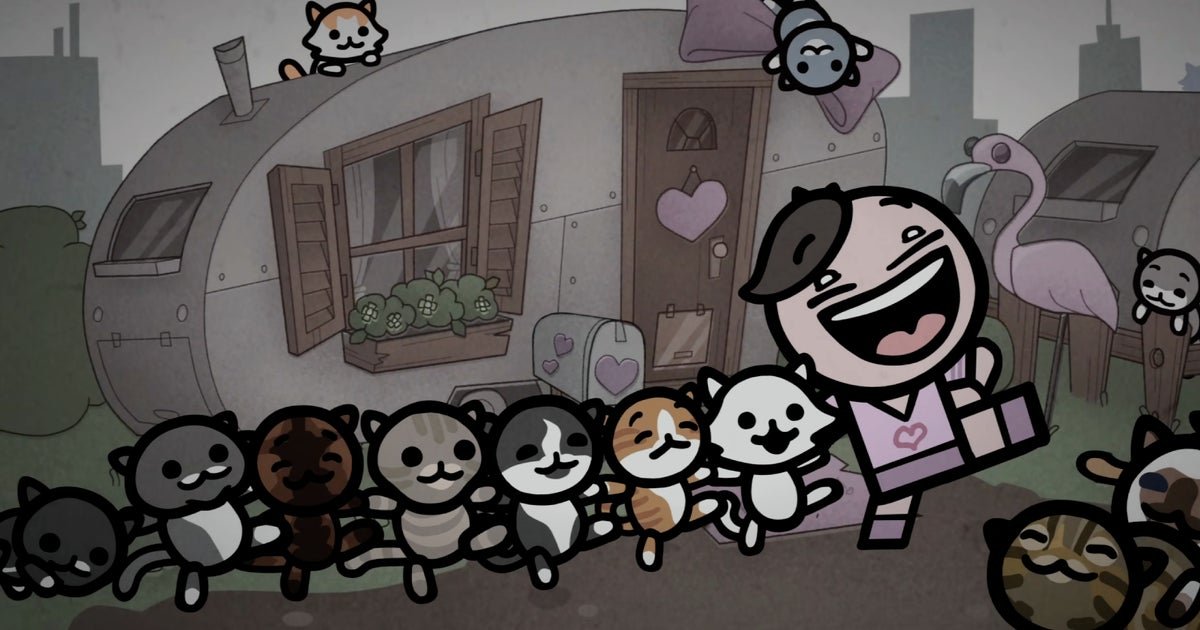
So, it finally happened. Mewgenics is actually out in the wild. After what felt like an absolute eternity of development hell, complete ground-up redesigns, and those tantalizingly cryptic blog posts that Edmund McMillen is so fond of, his cat-breeding roguelike finally hit Steam and consoles earlier this week. If you’ve been following the news over at the Rock Paper Shotgun feed, you already know the initial reception has been pretty much glowing across the board. Honestly, that shouldn’t surprise anyone given the pedigree we’re dealing with here. If you’ve spent any significant portion of your life trapped in a basement with Isaac, you know exactly what to expect: plenty of gross-out humor, incredibly tight gameplay loops, and a level of mechanical depth that makes you feel less like a gamer and more like a slightly unhinged mad scientist. But now that the initial launch dust is starting to settle, a different kind of conversation is starting to bubble up to the surface. And interestingly enough, it’s not about the most efficient breeding meta or whether a specific legendary feline trait needs a nerf. No, everyone is talking about the voices.
To be more specific, the internet is currently losing its mind over who exactly is doing the meowing in this game. McMillen has never been one to shy away from being a provocateur—it’s practically his brand at this point—but the cameo list for Mewgenics is on a whole different level of “wait, what?” We are looking at a cross-section of internet culture that feels less like a standard “who’s who” of gaming and more like a “why on earth is this happening?” collection. From the Kleins of h3h3 fame to the notorious Game Awards stage invader Matan Even, the roster has become an immediate lightning rod for controversy. And honestly? I have a feeling that might be exactly what McMillen was aiming for. He isn’t just making a weird game about mutant cats; he’s essentially constructed a digital ossuary for the fractured, bizarre, and often downright ugly culture of the 2020s internet. It’s a time capsule that screams, and sometimes that scream sounds like a very problematic cat.
A Social Experiment in a Litter Box: Why the Friction is the Point
It’s incredibly easy to take a quick glance at the credits, see Ethan and Hila Klein listed alongside their now-rival iDubbbz, and just assume it’s a cheap play for clout or “engagement.” But if you actually take a second to listen to what McMillen is saying, there’s a clear method behind all this madness. He’s been remarkably transparent about the fact that many of these cameos weren’t recorded yesterday; some of them were captured years ago. Ethan Klein, for instance, was apparently brought into the fold four years back. Now, in the hyper-accelerated, blink-and-you-miss-it timeline of the modern web, four years might as well be a literal century. Since those recording sessions, the Kleins have transformed into central, highly divisive figures in the heated discourse surrounding the Israel-Palestine conflict. That shift has led to massive, very public rifts with former friends like iDubbbz and Anisa Jomha—both of whom also happen to appear in the game. It’s awkward, it’s messy, and it’s undeniably human.
McMillen’s defense of these choices is actually pretty fascinating when you dig into it. He’s claimed that his goal was to fill the game with “iconic voices” that have echoed throughout his own career and the broader internet landscape. But more importantly, he mentions that he purposely kept people in the mix who “clashed or kinda counterbalanced each other.” It’s a casting philosophy that feels more like a social experiment than a marketing strategy. By forcing these conflicting voices into the same digital space, he’s making the player confront the reality of our modern online existence: we live in a world where you simply cannot escape the people you disagree with, even when you’re just trying to relax and breed a cat with radioactive fur on your Steam Deck. It’s a constant, low-level friction that mirrors the real world in a way most games try desperately to avoid.
And let’s be real for a second—the gaming community is probably more polarized right now than it has ever been. Just look at the data. A 2024 report from the Pew Research Center pointed out that roughly 73% of U.S. adults believe that supporters of the “other” political party are significantly more closed-minded than the average American. That kind of ideological friction is basically the water we’re all swimming in at this point. By dragging that exact tension into the supposedly “cozy” (well, as cozy as a McMillen game gets) world of feline genetics, Mewgenics stops being a simple means of escape and starts functioning as a mirror. It’s definitely uncomfortable, but you have to admit it’s a lot more honest than the sanitized experiences we usually get.
Stapling Internet History Together: The Game as a Digital Ossuary
There is something fundamentally “McMillen” about the way he treats these internet personalities. If you look at his past work, bodies are constantly being broken down, mutated, or simply discarded as trash. So, why would his approach to digital celebrity be any different? When you look at the inclusion of figures like Christine Chandler or Matan Even, it’s clear we aren’t just talking about “influencers” in the traditional sense. These people have become symbols of the internet’s terrifying capacity for both obsessive documentation and casual cruelty. Chandler has been the target of documented online harassment for nearly two decades, a living testament to the dark side of the web, while Even became a household name essentially by crashing a stage at fifteen years old. They are artifacts of a very specific, very weird era of human history.
Including them in the game isn’t necessarily a glowing endorsement of their personal lives, their political beliefs, or their various “bits.” Instead, it feels like McMillen is treating them as specimens. He’s capturing a specific moment in time where these figures loomed incredibly large over our collective social media feeds, whether we wanted them there or not. For a developer who has built an entire empire on “stapling together obsessive gameplay loops with juvenile potty humor and more than a sprinkle of morbid horror,” this cameo list is just another manifestation of that horror. It’s the existential dread of realizing just how much mental real estate these people occupy in our brains. We remember them, we react to them, and now, we have to hear them meow at us while we play.
“I understand we live in a time where a meow from someone who has different beliefs as you is scary and frustrating, confusing and controversial… but it felt interesting so I decided to explore it.”
Edmund McMillen, Lead Developer of Mewgenics
That quote really cuts to the chase, doesn’t it? We’ve reached a point in our culture where even a synthesized cat noise can be interpreted as a heavy political statement. It’s objectively absurd, and McMillen is leaning into that absurdity with a massive, mischievous grin. He’s essentially telling the audience that if you are so deeply bothered by a “problematic meow” that you can’t bring yourself to play the game, then you probably weren’t going to enjoy his brand of transgressive art in the first place. It’s a gatekeeping move, sure, but it’s one that’s rooted in a very specific artistic philosophy: the idea that art shouldn’t have to be a “safe space” where everyone agrees and everything is comfortable. Sometimes art is just a collection of things that exist, whether they’re “good” or not.
If You Hate the Meow, Just Throw the Cat in the Trash
One of the most hilarious—and, if I’m being honest, most telling—parts of this entire saga is how McMillen suggests players should handle the cameos they hate. He pointed out quite bluntly that if a cat pops up in your game with the voice of someone you absolutely despise, you have the power to literally throw it in the trash. Or do something much, much worse to it. Within the context of Mewgenics’ core gameplay loop, cats are constantly being sacrificed, sold off, or lost to the brutal, unforgiving elements of the roguelike genre. You aren’t just a passive listener in this world; you have absolute dominion over these digital creatures and the voices they carry. If you don’t like what you hear, you can end it with a click of a button.
This is actually a pretty brilliant subversion of the whole “cancel culture” debate that seems to dominate every corner of the internet lately. Instead of the developer stepping in to sanitize the content or remove a person because of a Twitter outcry, he gives the player the literal tools to “cancel” the content themselves within the fiction of the game world. It’s a level of agency that feels incredibly satisfying in a world where we often feel completely powerless against the non-stop deluge of “main characters” on Twitter (or X, or whatever we’re calling it this week). You don’t like Ethan Klein’s latest take on a complex geopolitical issue? That’s fine. Take the cat he voiced and toss it into a vat of acid. It’s pure, unadulterated catharsis through gameplay, and it’s way more effective than a typical angry thread.
Furthermore, the promise of full, robust mod support means that this entire “controversy” has a built-in expiration date for anyone who is actually bothered by it. According to recent data from Statista, the percentage of PC gamers who actively use mods has grown significantly over the last five years, with some popular titles seeing over 40% of their active player base engaging with user-generated content. If the community truly wants a “Clean Meow” mod that replaces every controversial voice with generic cat sounds, you can bet your life it’ll be on the Steam Workshop within a month of launch. McMillen is fully aware of this. He’s giving the purists an easy way out while keeping his original, messy, and complicated vision intact for everyone else. It’s the best of both worlds, really.
Breaking the PR Seal: Why This Messy Vision Matters More Than a Keanu Cameo
We’ve seen guest stars in video games before, obviously. But usually, those appearances are the result of a very carefully curated, high-level PR move. Think about Keanu Reeves in Cyberpunk 2077 or the endless parade of popular streamers getting their own skins in Fortnite. Those are brand-safe, corporate-approved collaborations designed specifically to move units and generate “positive” buzz. Mewgenics is doing the exact opposite of that. It’s using guest stars to intentionally create friction, to spark heated Reddit threads, and to force players to confront their own internal biases. It’s a “punk rock” approach to casting that we almost never see in an industry that seems increasingly terrified of its own shadow and any potential for negative press.
I have a strong suspicion that as the indie game scene continues to mature and find its voice, we’re going to see a lot more of this. The “archive” style of development—where a game becomes a repository for the specific culture, memes, and people that surrounded its creation—is an incredibly powerful tool for storytelling. Mewgenics feels like a time capsule from the early 2020s, preserved in amber, covered in cat hair, and smelling slightly of a litter box. It’s not always pretty, it’s certainly not “safe,” and it’s definitely going to piss some people off, but it’s a hell of a lot more interesting than another generic, committee-approved voice pack. It has character, even if that character is someone you’d rather not have dinner with.
Why are the cameos in Mewgenics so controversial?
The game features voice cameos from a wide variety of internet personalities who often hold clashing ideologies or have very complicated public histories. This includes people like Ethan and Hila Klein, iDubbbz, and Matan Even. Some players feel that including these individuals is insensitive or “problematic” given the real-world conflicts, political stances, or past controversies associated with them. It has turned the game’s credits into a bit of a cultural battlefield.
Can I remove specific voices from the game?
While the game doesn’t feature an official “mute” button for specific individuals at launch, developer Edmund McMillen has pointed out that the gameplay itself offers a solution: you can simply “throw away” or sacrifice cats whose voices you don’t want to hear. Beyond that, the game’s full mod support means that “clean” voice packs or custom replacements will almost certainly be available via the Steam Workshop very shortly after release.
What platforms is Mewgenics available on?
As of its launch in February 2026, Mewgenics is currently available on PC via Steam, and it has full support for the Steam Deck right out of the gate. To make sure the feline-breeding chaos reaches as many people as possible, versions for the Nintendo Switch, PlayStation 5, and Xbox Series X|S have also been released alongside the PC version.
Final Thoughts: The Meow of the Moment
At the end of the day, Mewgenics is exactly what it was always destined to be: a polarizing, brilliant, and deeply weird experience that refuses to play by anyone else’s rules. McMillen and Glaiel haven’t just delivered a great roguelike with deep mechanics; they’ve delivered a genuine conversation piece. Whether you find the specific cameos in the game to be offensive, hilarious, or just plain confusing, the developers have succeeded in the one thing all artists strive for: they’ve made you feel something. In an era where so many big-budget games feel like they were designed by a massive committee to be as inoffensive and “safe” as humanly possible, that feels like a significant win for the medium.
So, if you’re planning on jumping into the game this weekend on your PC or your console of choice, don’t be too shocked if you hear a very familiar, very controversial voice coming out of a particularly ugly, mutated kitten. You can choose to embrace the chaos of the internet’s weirdest corners, or you can head straight for the nearest trash can and exercise your right to discard it. Either way, you’re playing exactly the game that Edmund McMillen intended for you to play. And honestly? I think the world needs more games that aren’t afraid to let us be a little bit creative with our own personal brands of hate. It’s messy, it’s loud, and it’s perfectly human.
This article is sourced from various news outlets. Analysis and presentation represent our editorial perspective.
About the Author