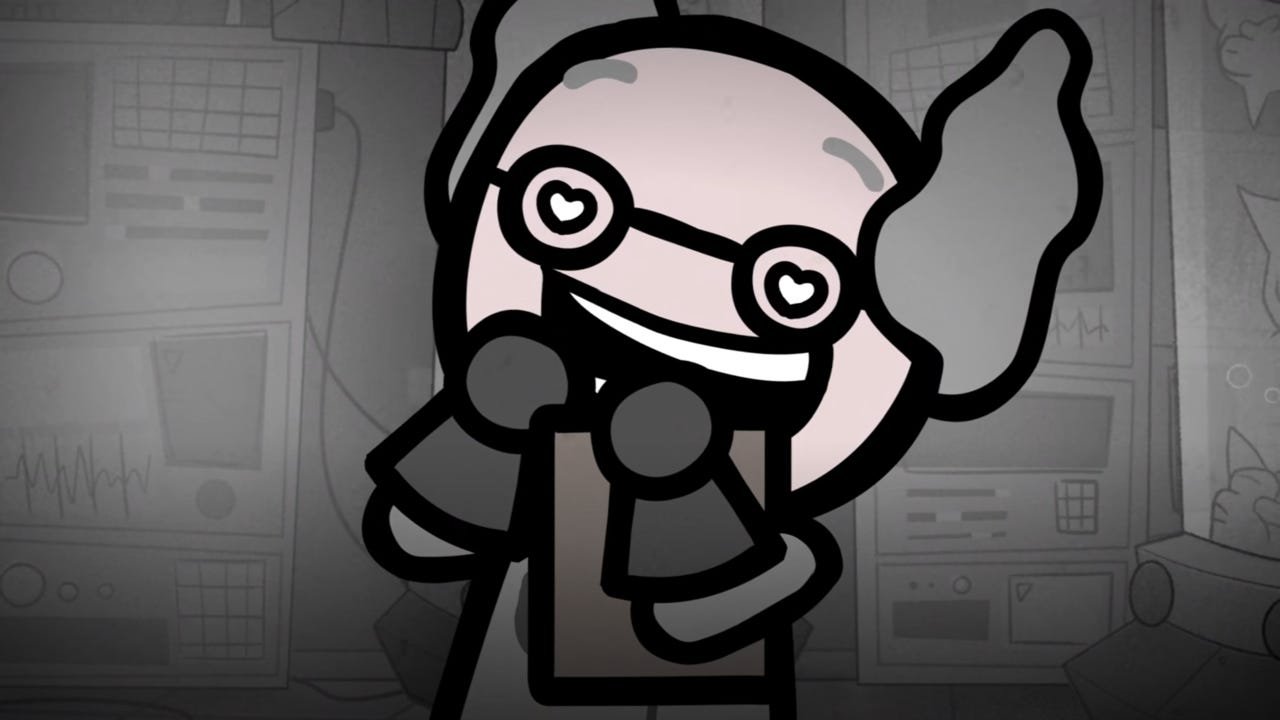
I’ve been sitting here staring at the Steam charts for the better part of the morning, and to be completely honest, my brain is having a serious struggle trying to process the math. We all knew that when Edmund McMillen and Tyler Glaiel finally decided to unleash their long-gestating “cat-breeding tactics roguelike” onto the world, it was going to be a significant event. This isn’t just another indie release; it’s the culmination of years of rumors, blog posts, and “is it dead?” threads. But “big” doesn’t even come close to describing the absolute explosion we witnessed this morning. According to the latest data from IGN Video Games, Mewgenics has completely shattered expectations, moving over 150,000 copies in its first six hours on the digital shelves. Just stop and think about that for a second. That’s not just a “successful” launch for a small team; it’s a tectonic shift that’s going to have people in the industry talking for years.
If you’ve been keeping even a casual eye on the development of this game—which, let’s be real, has been a total emotional rollercoaster for about seven years now—you already know it was never intended to be “normal.” This is a game where you breed cats with horrific genetic mutations and then send those poor, twisted creatures into high-stakes tactical turn-based combat. It sounds like a fever dream you’d have after eating too much cheese late at night, yet here we are on February 11, 2026, watching it outpace some of the biggest expansions and releases in indie history. It’s weird, it’s gross, it’s undeniably McMillen, and apparently, it is exactly what every single person with a Steam account wanted to play today. I mean, who wouldn’t want to manage a bloodline of multi-headed felines?
Is the legendary shadow of Isaac finally starting to fade?
For well over a decade, The Binding of Isaac has been the immovable object, the North Star of the roguelike world. It’s the game that essentially defined a whole generation of indie design and proved that “gross” could be “gold.” Every single time McMillen announced a new project over the last ten years, the inevitable question from the community was always the same: “Can it actually top Isaac?” Usually, the answer was a very respectful “probably not,” simply because it’s almost impossible to beat a game that people have literally sunk thousands of hours into over multiple console generations. But Mewgenics? It might actually be the one to do it. Tyler Glaiel mentioned to IGN earlier today that the game managed to recoup its entire seven-year development cost in less than three hours. Let that sink in. That is a level of financial efficiency and immediate return that most AAA studios would absolutely kill for, especially in today’s volatile market.
Even McMillen himself seems a little bit blindsided by the sheer velocity of these sales. He noted on social media that his previous “best launch day” was for The Binding of Isaac: Rebirth, which moved about 40,000 units on its first day. Mewgenics did nearly four times that amount in less than a quarter of the time. As I’m writing this, we’re looking at a concurrent player peak of over 63,000 on Steam, which is currently breathing down the neck of Rebirth’s all-time record of 70,701. It’s not just a win for the developers; it’s a loud, clear statement that the audience for these deep, complex, and—let’s face it—slightly disturbing systems has grown exponentially since the early days of the indie boom.
“Its a bigger launch than any of the Isaac expansions already, and its only been a few hours. Isn’t that kind of insane?”
— Tyler Glaiel via IGN
And honestly, Tyler is right—it really is insane. But when you take a step back and look at the broader market trends, it starts to make a little more sense why this specific game is hitting so hard. A 2025 report from Statista highlighted that the “tactical roguelike” subgenre has seen a massive 22% increase in player retention compared to traditional RPGs over the last two years. It seems that players aren’t just looking for quick, 15-minute fixes anymore. They want “forever games”—titles they can sink a hundred hours into, mastering every tiny mechanic and hidden interaction. Mewgenics, with its current 9/10 review scores and “Overwhelmingly Positive” Steam rating, is clearly providing that “meat” that players are starving for. It’s a systems-heavy playground that rewards the kind of obsession that McMillen fans are known for.
The Twitch Kingmaker effect and the power of the Northernlion seal of approval
We really can’t talk about a McMillen launch without discussing the community and the content creators who live and breathe these games. Right now, there are roughly 85,000 people watching Mewgenics on Twitch. A massive chunk of that viewership is thanks to creators like Northernlion, who has essentially been the unofficial ambassador of the “McMillen-verse” for over a decade. Watching someone who is genuinely, terrifyingly good at these games navigate the complex tactical grids and breeding menus of Mewgenics is half the fun. It’s the perfect “backseat gaming” experience—everyone in the chat has an opinion on which cat should breed with which, which mutation is a “run-killer,” and which tactical move was a total throw. It’s interactive in a way that goes beyond just pushing buttons.
This social layer is a huge reason why the game is spreading like wildfire across the internet. It’s the ultimate “watercooler” game for the digital age. You see a screenshot on your feed of a cat with three heads, no legs, and a literal cloud of flies following it, and you just have to ask, “How on earth did you get that?” It creates this constant loop of discovery and “show-and-tell” that keeps the meta fresh and the conversation going. According to a 2024 Newzoo study, indie games now account for nearly 35% of total playtime on Steam, and a massive driver of that is the “viral complexity” of games that look great on a stream. Mewgenics is the absolute poster child for this trend. It’s built to be shared, discussed, and obsessed over.
Why the “gross-out” aesthetic is exactly what we need in 2026
There is something really fascinating to be said about the visual identity of this game. We live in an era where so many big-budget games are chasing hyper-realism or those very clean, safe, minimalist aesthetics that feel like they were designed by a committee. In contrast, Mewgenics leans hard—and I mean hard—into the “hilariously gross.” It’s a style that McMillen has spent his career perfecting, but here it feels even more refined and intentional. The tactical RPG elements add a surprising layer of “prestige” to what are, essentially, very elaborate poop jokes. It’s a fantastic, deep tactical RPG that just happens to be covered in cat hair, questionable fluids, and genetic nightmares. And people love it. It feels authentic and human in a way that corporate-designed games rarely do. It has a soul, even if that soul is a bit sticky.
The critical reception has been almost universally glowing so far, sitting at a very healthy 89 on Metacritic. Critics are specifically praising the depth of the genetics system, which isn’t just some shallow gimmick to sell the “breeding” concept—it is the absolute core of the strategy. You’re not just picking stats from a menu; you are actively managing a bloodline and dealing with the consequences of your choices. It feels like XCOM met a biology textbook in a dark alley, and they decided to start a weird experimental band together. The fact that it’s hitting these massive numbers on PC (while fans are already screaming for PS5, Xbox, and Switch ports) shows that there is a massive, untapped appetite for games that don’t pull their punches or sanitize their world-building for the sake of mass-market appeal.
Don’t call it an overnight success—this took seven years of grit
It’s very easy to look at these explosive six-hour stats and think this all happened overnight, but we have to remember the seven long years of work, silence, and redesigns that went into this. Mewgenics is a survivor. It was actually announced, then cancelled, then resurrected in a completely different form. That incredibly long development cycle allowed the team to polish the “roguelike runs” to a mirror sheen. It’s actually quite rare to see a game launch with this much sheer content on day one—people are already reporting that they feel like they haven’t even scratched the surface after ten full hours of play. And with Ridiculon providing another absolute banger of a soundtrack, the atmosphere is just… chef’s kiss. It’s a cohesive, polished experience that belies its messy aesthetic.
So, where do we go from here? If Mewgenics continues on this current trajectory, it’s going to be the dominant conversation in the gaming world for the next several months. We’ll likely see the inevitable “nerf” and “buff” cycle begin as players find absolutely broken genetic combos (which, let’s be honest, is half the fun of any McMillen game), and the “meta” will constantly shift as people figure out the most optimal breeding programs for high-level play. But for right now, we should just take a moment to appreciate the rarity of this: a weird, uncompromising, and deeply personal indie game taking over the world simply because it’s actually, genuinely good. It’s a win for the weirdos.
Is Mewgenics actually harder than The Binding of Isaac?
That’s a bit of a “comparing apples to oranges” situation, honestly. It’s a completely different kind of challenge. While Isaac relies heavily on your twitch reflexes, muscle memory, and bullet-hell dodging skills, Mewgenics is much more about tactical positioning and long-term strategic planning through its breeding mechanics. It’s “hard” for your brain and your ability to plan ahead rather than just being a test for your thumbs. You’ll spend as much time thinking about your next move as you will actually making it.
Will Mewgenics eventually come to consoles like the PS5 or Switch?
Right now, the team is 100% focused on the PC/Steam launch, which is totally understandable given the record-breaking numbers they’re seeing. However, if we look at the history of Edmund McMillen’s previous titles, a console port is almost a certainty. It’s usually just a matter of “when” rather than “if,” once the initial launch bugs are squashed and the dust settles a bit. I’d put money on a Switch 2 version being a big deal later on.
Do I actually need to be a “cat person” to enjoy this?
Honestly? It probably helps if you find cats charmingly weird, but it’s definitely not a requirement. Even if you aren’t a “cat person” in real life, the deep tactical RPG systems, the sheer variety of roguelike builds, and the satisfaction of mastering a complex system are enough to keep any hardcore strategy fan hooked for weeks. The cats are just the (very mutated) vessel for some incredible gameplay.
In the end, the massive success of Mewgenics is a huge win for everyone who likes games that take real risks. It proves—once again—that you don’t need a $200 million marketing budget or a team of thousands if you have a crystal-clear vision, a dedicated community that trusts you, and a game that’s fun enough to make people want to talk about it. Now, if you’ll excuse me, I have some very ugly, very mutated kittens to go breed. You know, for science. And maybe a little bit for the glory of the tactical grid.
This article is sourced from various news outlets. Analysis and presentation represent our editorial perspective.
About the Author