Running Minecraft Java Edition 1.19.4 on my RTX 4060 with an i7-12700 and 16GB RAM. Maxed out settings with fancy graphics, 32-chunk render distance, and all the shader bells and whistles turned on because why not—this rig can handle it. Been playing on and off for about 25-30 hours over the past few weeks, mostly survival mode with occasional creative dabbling when I needed to test redstone contraptions without worrying about Creepers blowing up my work.
Performance Reality Check
Let’s get the technical stuff out of the way first. Di RTX 4060 gue, Minecraft runs like butter—we’re talking a consistent 200-300 FPS on max settings in vanilla Java Edition. With BSL Shaders installed (because I wanted those pretty water reflections), it drops to around 90-120 FPS, which is still perfectly playable. Loading times are negligible; world generation takes maybe 10-15 seconds when creating a new world, and chunk loading as you explore is basically instant with 32 chunks rendered.
The game install is surprisingly hefty at around 1.2GB for the base Java Edition, but my world saves have ballooned to nearly 800MB after 30 hours of exploration and building. RAM usage hovers around 4-6GB depending on how many mods or resource packs you’re running.
Now for the bugs—and yeah, there are bugs even in a game that’s been out since 2011. About 15 hours in, I encountered this weird glitch where baby zombies would phase through closed doors in my village outpost. Not fun when you’re trying to protect villagers for trading. The workaround? Place a slab on top of the door frame. Apparently baby zombies can’t pathfind through that configuration. Another annoying one: occasionally my character would take phantom fall damage when descending stairs too quickly. Not game-breaking, but it cost me a hardcore run when I had half a heart left after a Skeleton encounter.
The lighting engine still has issues post-1.19. I’ve noticed random dark spots that shouldn’t exist—like a single block in my fully-torched base that stays pitch black until you place and break a block next to it. The game then recalculates and fixes it. Minor, but weird for a game this mature.
Gameplay Breakdown
Minecraft’s core loop is deceptively simple: punch tree, get wood, craft tools, mine stone, upgrade tools, dig deeper, find better materials, build stuff, fight mobs, repeat… But that simplicity is the entire point. The game gives you Lego blocks and says “go wild.”
Survival mode is where I spent most of my time. That first in-game day is always frantic—you spawn with nothing, and you’ve got about 10 real-world minutes before night falls and the hostiles start spawning. My typical first-day routine: punch four logs, craft a crafting table and wooden pickaxe, mine twelve cobblestone, craft a stone pickaxe and stone axe, chop more wood, build a 5×5 dirt hut with a door before sunset. Glamorous? No. Effective? Absolutely.
The material progression is the backbone of survival. Wood → Stone → Iron → Diamond → Netherite. Each tier gates what you can mine. You need a stone pickaxe to mine iron ore, an iron pickaxe for diamonds, and a diamond pickaxe for obsidian (needed for the Nether portal). It’s a satisfying climb that can take 5-10 hours if you’re playing casually.
Once you’ve got diamond gear, the game shifts. You’re no longer scrambling for survival—you’re planning. Building farms, exploring for specific biomes, hunting down a Stronghold to access The End. I spent a solid evening just wandering around trying to find a Mangrove Swamp (introduced in the 1.19 Wild Update) because I wanted those aesthetic mud blocks for a build. Found it eventually, but also stumbled into a Deep Dark biome and immediately regretted it.
The Warden is no joke. This thing is blind, hunts by sound/vibration, and hits like a freight train. I made the mistake of breaking a Sculk block, which triggered a Sculk Shrieker, which summoned the Warden. I didn’t even try to fight—just sprinted out of there and didn’t look back. It’s got something like 500 health and deals 30 damage per hit even with full diamond armor. Yeah, no thanks.
Redstone is Minecraft’s secret endgame for engineering nerds. It’s basically electrical circuitry using in-game items. You can build automated farms that harvest wheat and send it to storage chests, create hidden doors with pressure plates, or even construct rudimentary computers using logic gates. I’m not at that level—I managed to build a simple piston door and felt like a genius. Watched a YouTube tutorial for an automated chicken farm and gave up halfway through because I couldn’t figure out why my hopper minecarts weren’t collecting eggs properly. (Turns out I had the rails sloped wrong. Of course.)
What Works, What Doesn’t
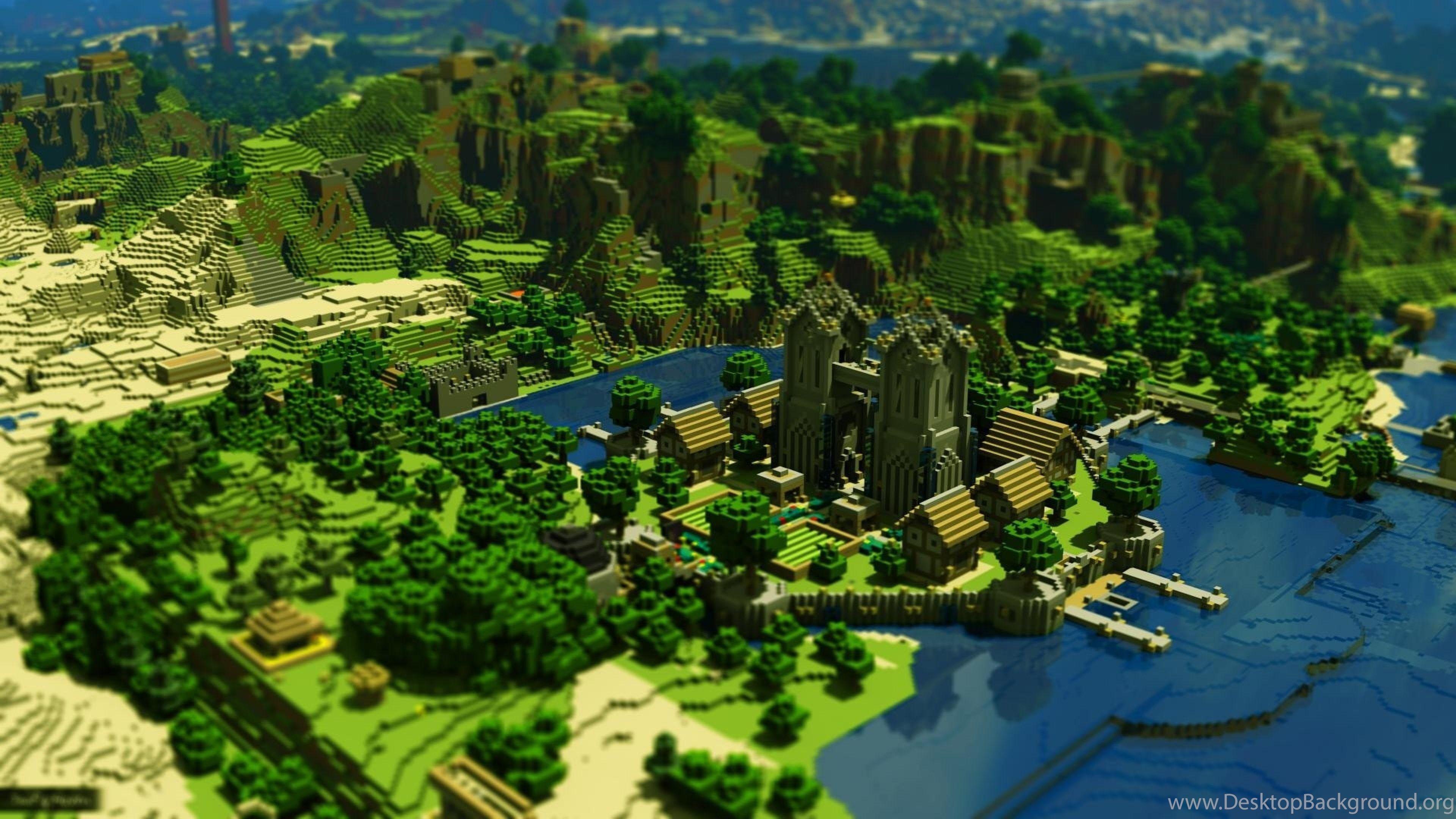
What Works: The creative freedom is unmatched. I’ve built everything from a modest cliffside base to a sprawling medieval village complete with farms, a blacksmith, and a lighthouse. The procedural world generation means every playthrough feels different. One seed gave me a spawn near three villages and a desert temple. Another dropped me on a tiny island surrounded by ocean for thousands of blocks—hardcore mode on that seed was a nightmare.
What Doesn’t: The lack of direction can be paralyzing. Minecraft doesn’t hold your hand. There’s no tutorial beyond a basic recipe book that unlocks as you gather materials. If you don’t know that you need Blaze Rods from the Nether to craft Eyes of Ender to find the Stronghold, you’re not going to stumble into that knowledge naturally. I had to look up the entire progression path to The End on the wiki.
What Works: The mob variety keeps combat interesting. Zombies are slow but swarm you. Skeletons snipe from range. Creepers are silent until they’re right behind you, then BOOM—there goes your base wall. Endermen teleport and get aggressive if you look at them. Each requires different tactics, and nighttime is genuinely tense when you’re undergeared.
What Doesn’t: The combat system itself is clunky. Java Edition still uses the 1.9 combat mechanics with attack cooldown and shield blocking, which feels sluggish compared to the old click-spam system. Bedrock Edition has different combat that’s faster but less tactical. Neither feels great, honestly. Sword swings lack impact, and the hit detection can be janky—I’ve definitely landed hits that didn’t register and taken damage from arrows that visually missed me.
What Works: The building block variety is enormous. The 1.19 update added Mangrove wood, Mud bricks, Sculk blocks, and Froglights. You can mix materials to create distinct architectural styles—Japanese temples with Dark Oak and Stone, Mediterranean villas with White Concrete and Terracotta, medieval castles with Cobblestone and Spruce. The color palette is deep enough for genuine artistic expression.
What Doesn’t: Inventory management is tedious. Your inventory is only 36 slots (27 main + 9 hotbar). When you’re mining, you’ll fill up constantly with cobblestone, dirt, gravel, ores, and random junk. I’ve had to make multiple trips back to base just to empty out because I ran out of space. Shulker boxes help late-game (portable chests), but you need to kill Shulkers in The End first. Early game, it’s just annoying.
What Works: Multiplayer is where the game shines brightest. I joined a friend’s world (private server) and we built a massive trading hall with cured zombie villagers for cheap enchanted books. The emergent gameplay moments—like when another player accidentally unleashed a horde of Piglins into our Nether hub—create stories you can’t script.
What Doesn’t: Server performance can tank with too many players or excessive redstone contraptions. On that same world, we had lag spikes whenever someone activated the automated mob farm. The server owner had to limit hopper usage to keep the tick rate stable. Not a client-side issue, but it affects the experience.
Monetization Transparency
Here’s the deal: Minecraft Java Edition is a one-time purchase at around $27 USD. You buy it once, you own it forever. No microtransactions, no loot boxes, no battle passes. Every update since 2011 has been free—you got the 1.19 Wild Update, the 1.18 Caves & Cliffs overhaul, the 1.16 Nether Update, all without paying a cent extra. This is increasingly rare in modern gaming, and it’s refreshing.
The Minecraft Marketplace exists on Bedrock Edition (console/mobile/Windows 10), where you can buy community-created skins, texture packs, and adventure maps using “Minecoins.” Prices range from $2-$10 for cosmetic packs. I don’t play Bedrock, so I can’t speak to value there, but from what I’ve seen, it’s entirely optional. None of it affects gameplay—it’s just aesthetic. You can also download free skins and mods from community sites if you don’t want to pay.
worlds is the subscription service for private servers—$7.99/month for Java (up to 10 players) or $3.99/month for Bedrock (up to 2 players). I tried the free 30-day trial, and it’s convenient if you want a persistent world that’s always online without running your own dedicated server. Is it worth it? Depends. If you’ve got a group of friends who play regularly, splitting $8/month is nothing. If you’re solo or play sporadically, just host locally or use free server hosting options like Aternos.
Bottom line: Minecraft respects your wallet. You’re not being nickel-and-dimed. The base game is the full experience. Everything else is optional convenience or cosmetics. In 2024, that’s practically revolutionary.
Versus The Competition
Terraria is the closest competitor—2D, similar block-breaking/building gameplay, but with more structured progression and boss fights. Terraria is $10, has way more combat depth, and more directed gameplay. If you want Minecraft but with actual goals and challenging fights, go Terraria. If you want pure creative sandbox, Minecraft wins.
Valheim took the survival crafting genre and added Viking aesthetics, better combat, and gorgeous visuals. It’s $20, but it’s Early Access and the building isn’t as flexible. You’re working with pre-fab pieces instead of individual blocks.
Roblox is free-to-play and technically a creation platform rather than a game, but kids treat it like a Minecraft competitor. The monetization is way more aggressive (Robux for everything), and the user-generated content quality is wildly inconsistent. Minecraft is a better value and a better game.
Dragon Quest Builders 2 if you want Minecraft but as a structured JRPG with story and characters. It’s charming, but once you finish the campaign, replayability is limited. Minecraft is infinite.
For pure creative building without survival mechanics, there’s nothing that matches Minecraft Creative mode. The Sims 4 building is great for houses, but you can’t terraform terrain. Cities: Skylines is amazing for urban planning, but it’s not freeform block placement. Minecraft occupies a unique niche.
FAQ + Final Thoughts
Q: Is it still worth buying in 2024 if I’ve never played it?
Absolutely, especially if you grab it on sale. I paid full price and don’t regret it after 30 hours—and I’ve barely scratched the surface. If you like creative games, survival mechanics, or just want something chill to play when you’ve got time, it delivers. Pro tip: watch a beginner’s guide on YouTube for the first hour so you’re not completely lost.
Q: Java or Bedrock Edition?
Java if you’re on PC, Bedrock if you’re on console/mobile or want cross-platform play. Java has better mod support and runs smoother on my RTX 4060, but Bedrock gets updates slightly earlier and has the Marketplace. I went Java and haven’t looked back—the community mods alone make it worth it.
Q: Can I run it on lower-end hardware?
Yeah, Minecraft is shockingly scalable. Turn off shaders, drop render distance to 8-12 chunks, use fast graphics instead of fancy, and it’ll run on integrated graphics. My friend plays on a 2015 laptop with a GTX 960M and gets 60+ FPS on medium settings. File size is under 2GB, so even old hard drives handle it fine.
Q: How’s the solo experience versus multiplayer?
Both are great for different reasons. Solo is meditative—just you, the world, and whatever you want to build. Multiplayer is chaotic and social—pranks, collaborative builds, emergent chaos. I’ve enjoyed both, but multiplayer creates better stories. If you go solo, expect to spend a lot of time on wikis looking up recipes and progression.
Verdict: Still the king of creative sandbox games, even 13 years later—just don’t expect it to teach you how to play.
About the Author