If you’ve been paying any attention to the gaming industry’s shifting tectonic plates lately, you already know that the old, rigid line between “Eastern giants” and “Western blockbusters” is blurring faster than a speedrunner on a heavy caffeine kick. It’s a fascinating time to be a fan, but it’s an even more interesting time to be an executive. The latest move on the board is a massive one, and honestly, it’s one of the most significant power plays we’ve seen in years. According to the latest reports from Eurogamer, Nexon has officially tapped Patrick Söderlund—the visionary creative force behind Embark Studios and the man who spent years steering the ship at DICE during its absolute peak—as their new Executive Chairman. Now, let’s be clear: this isn’t just another round of corporate musical chairs. This is a loud, definitive signal to the rest of the industry that Nexon is tired of being seen as “just” the MapleStory company in the eyes of Western players. They’re coming for the throne.
I’ve spent a lot of time lately thinking about Nexon’s specific trajectory, and it’s been a wild ride to watch. For years, they’ve been this absolute, untouchable titan in the mobile and free-to-play space. They were essentially printing money in Asia while Western audiences mostly looked on with a mix of mild curiosity and total indifference. But something shifted—visibly—over the last couple of years. They started taking real, tangible risks. They let the team at Mintrocket go off and make Dave the Diver (which was a total masterpiece, let’s be honest, and probably the most charming game of 2023), and they put their full weight behind Söderlund’s Embark Studios to create The Finals and the recently launched Arc Raiders. Now, by bringing Söderlund directly into the inner sanctum of their global leadership, they’re essentially announcing that the “experimental” phase of their Western expansion is over. This isn’t a side project anymore. This is the new blueprint for everything they do moving forward.
Can a Creative Mind Actually Run a Corporate Giant? Why Söderlund is the Wildcard Nexon Needs
It is genuinely rare—and I mean “unicorn in the wild” rare—to see a guy who is so fundamentally, almost aggressively “creative” move into a role as heavy and bureaucratic as Executive Chairman. Usually, those seats are strictly reserved for the MBAs, the spreadsheet wizards, and the guys who think in terms of quarterly dividends rather than frame rates. But Patrick Söderlund is cut from a different cloth. He’s a developer at heart. He’s a guy who understands the “feel” of a high-stakes shooter, the delicate rhythm of a successful live-service loop, and the massive technical hurdles that come with photorealistic environmental destruction. He’s been in the trenches. And that matters more than people think.
By putting him in a position to set the strategic direction for the entire company—working hand-in-hand with CEO Junghun Lee—Nexon is making a very specific bet. They are betting that a creative-first strategy will ultimately lead to better, more sustainable financial returns than a finance-first one. It’s a bold gamble, especially in an industry that feels like it’s currently retracting, but looking at the state of gaming right now, it might be the only gamble left worth making. If you don’t have a soul in your game, the audience smells it a mile away. Söderlund is there to ensure the soul stays intact while the business scales.
Let’s look at the cold, hard data for a second, because the numbers tell a story of their own. According to a 2024 Newzoo report, the global PC and console gaming market reached a staggering $94 billion, with a massive chunk of that revenue being driven by recurring spending in live-service titles. Nexon knows they need a much bigger slice of that specific pie if they want to dominate globally. While they’ve mastered the dark art of the “forever game” in markets like Korea and Japan, translating that success to a picky, often cynical Western audience that has a deep-seated hatred for “pay-to-win” mechanics has been their personal Mount Everest. Söderlund is the sherpa they’re hoping can lead them to the summit. He’s already proven he can do it with The Finals, which brought a level of sheer environmental chaos we hadn’t seen since the Battlefield glory days of Bad Company 2. It felt fresh because it was built by someone who loves the genre, not someone just trying to fill a niche.
“Nexon has all the assets to unleash dramatic growth – incredibly talented people, iconic franchises, large and committed player communities, and best-in-class live service capabilities. This is an enormous opportunity, but one that will require deep focus and discipline.”
— Patrick Söderlund, Executive Chairman of Nexon
The Arc Raiders Phenomenon: How a Single Launch Validated an Entire Strategy
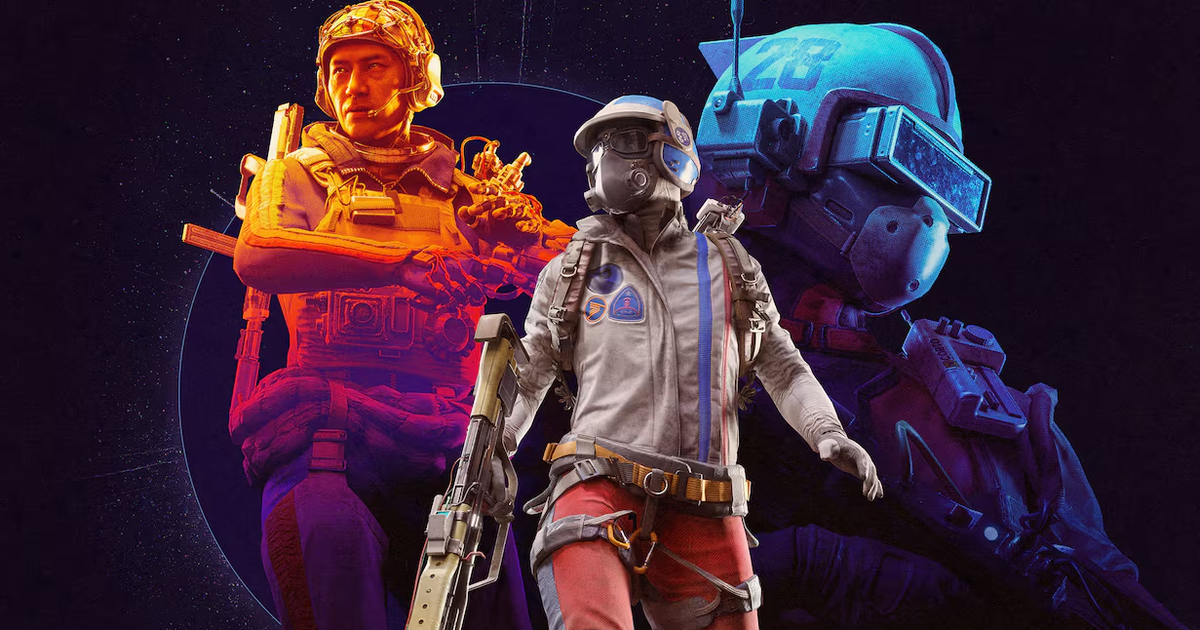
We really have to talk about Arc Raiders, because that game is the real catalyst for this entire leadership shakeup. It launched on PC, PS5, and Xbox Series X/S to a reception that I think genuinely caught even the most optimistic analysts off guard. To see a brand-new IP from a relatively young studio hit nearly 1 million concurrent players on PC alone is, frankly, staggering. That doesn’t happen by accident. It’s the kind of explosive momentum that makes a parent company realize they have a genuine superstar on their hands. It wasn’t just a successful launch; it was a proof of concept for the “Embark way” of doing things.
Of course, it hasn’t been all sunshine and rainbows. The community recently went through a bit of a heart-attack moment with that massive duplication glitch—you know, the one where players figured out how to basically print high-tier loot like they were the Federal Reserve. In the old days, a developer might have just gone silent or started banning people at random. But Nexon and Embark handled it with the kind of “deep focus and discipline” that Söderlund mentioned in his statement. They conducted a full, transparent investigation and actually communicated with the player base. They treated the players like adults, and in return, the community didn’t burn the house down. That’s a level of PR maturity that’s often missing in this industry.
That transparency is part of the Söderlund DNA. He knows that in 2026, you don’t just “release” a game and walk away to start the next one; you manage a living, breathing community that expects constant engagement. The fact that Arc Raiders already has a detailed roadmap of events and updates stretching well into the future shows a level of preparedness that was, if we’re being honest, completely missing from some of Nexon’s earlier Western attempts. Does anyone remember The First Descendant back in 2024? It was… fine. It was a perfectly middling looter-shooter that checked all the right boxes but felt like it was missing a soul. Arc Raiders feels different. It has personality, it has grit, and most importantly, it has that unmistakable “Embark polish” that Söderlund has made his trademark throughout his career.
Beyond the Mobile Gacha: Nexon’s High-Stakes Pivot to the “Core” Gamer
For a long, long time, Nexon was the undisputed king of casual and mid-core gaming. They had the mobile market on a total lockdown. But as the mobile space becomes increasingly crowded and the costs of user acquisition (UA) skyrocket to eye-watering levels, the “core” gamer on PC and console has become a much more attractive—and stable—target. This shift didn’t happen overnight; it really started back in 2023 with Dave the Diver. Even though it was technically a “small” game, it proved to the world (and perhaps to Nexon’s board of directors) that they could publish something that won Game of the Year awards and appealed to people who wouldn’t be caught dead playing a gacha game or a mobile RPG.
The economics of this pivot are actually quite sound. According to data from Statista, the “core” gamer segment typically spends about three times more on high-quality DLC, expansions, and meaningful cosmetics compared to casual mobile users over a five-year period. Nexon is following the money, sure, but they’re doing it by finally following the quality. They’ve realized that if you build something truly great, the monetization takes care of itself. It’s a “build it and they will come” mentality that feels refreshing in an era of predatory battle passes.
There’s also the very real question of what happens to Embark Studios now that their founder is moving up the corporate ladder. Söderlund mentioned he’s ready to “get to work,” and it seems he’ll be keeping his fingers in the Embark pie while also steering the entire Nexon ship. It’s a lot for one person—a massive workload, really—but if anyone has the sheer stamina and the creative bandwidth for it, it’s him. The synergy here is pretty obvious when you think about it: Embark becomes the high-tech R&D lab for the entire company. They can test out new server-side technologies, advanced physics engines, and innovative gameplay loops, which can then be exported to Nexon’s other global teams. It’s a “trickle-down” effect of creative excellence that could elevate their entire portfolio, from their biggest MMOs to their smallest indie experiments.
The Pixar-Style MapleStory and Beyond: What Your Steam Library Might Look Like by 2027
So, what should we actually expect to see in our libraries over the next couple of years? If Söderlund is truly the one setting the strategic direction, I’d be willing to bet on seeing a lot more “hybrid” titles. I’m talking about games that have the deep, addictive, long-term progression systems that Nexon is world-famous for, but wrapped in the high-fidelity, immersive, and technically impressive worlds that Söderlund built his entire reputation on at DICE. It’s the best of both worlds, at least on paper.
Could we see a Western-focused MapleStory reboot that looks and feels like a high-budget Pixar movie? Or perhaps a new tactical shooter that utilizes Embark’s revolutionary server-side destruction tech to change the competitive meta every single week? The possibilities are honestly pretty exciting to think about. We’re talking about a company with nearly infinite resources finally aligning those resources with a creative vision that understands Western sensibilities. That’s a dangerous combination for their competitors.
But—and there’s always a “but” in these corporate stories—this kind of massive transformation isn’t going to be easy. Nexon is a giant, legacy entity with decades of established internal culture and “the way we’ve always done it” thinking. Turning a ship that big to face a completely new direction requires more than just one visionary man at the helm; it requires the entire crew to buy into the new mission. Söderlund and Lee seem perfectly aligned right now, which is the most important first step. If they can maintain that “deep focus” and avoid the inevitable temptation to over-monetize their new hits into oblivion, we might be looking at the birth of a new global gaming superpower. I’m cautiously optimistic, which is more than I can say for a lot of other industry news lately. After all, if anyone can make a corporate spreadsheet look like a creative masterpiece, it’s probably Patrick Söderlund.
Is Patrick Söderlund leaving Embark Studios?
Not at all. In fact, it appears he is retaining his vital leadership role at Embark even as he steps into the Executive Chairman position at Nexon. He’ll be pulling double duty, working closely with CEO Junghun Lee to guide the broader corporate strategy while still keeping a very close eye on his studio’s creative output and technical development.
Which platforms does Arc Raiders support?
If you’re looking to jump in, Arc Raiders is currently available on PC, PlayStation 5, and Xbox Series X/S. It’s a true current-gen experience. The game has seen some pretty incredible success since its launch, recently hitting that massive milestone of nearly 1 million concurrent players on PC alone.
What was the “duplication glitch” mentioned in the news?
It was a bit of a mess for a minute there! Shortly after a major content update, players discovered an exploit that allowed them to double specific items in their inventory, essentially breaking the game’s economy. However, Embark Studios was incredibly proactive, completing a large-scale investigation and implementing both technical fixes and disciplinary actions for those who abused the system.
This article is sourced from various news outlets and industry reports. The analysis and presentation here represent our editorial perspective on the shifting landscape of the gaming world.
About the Author