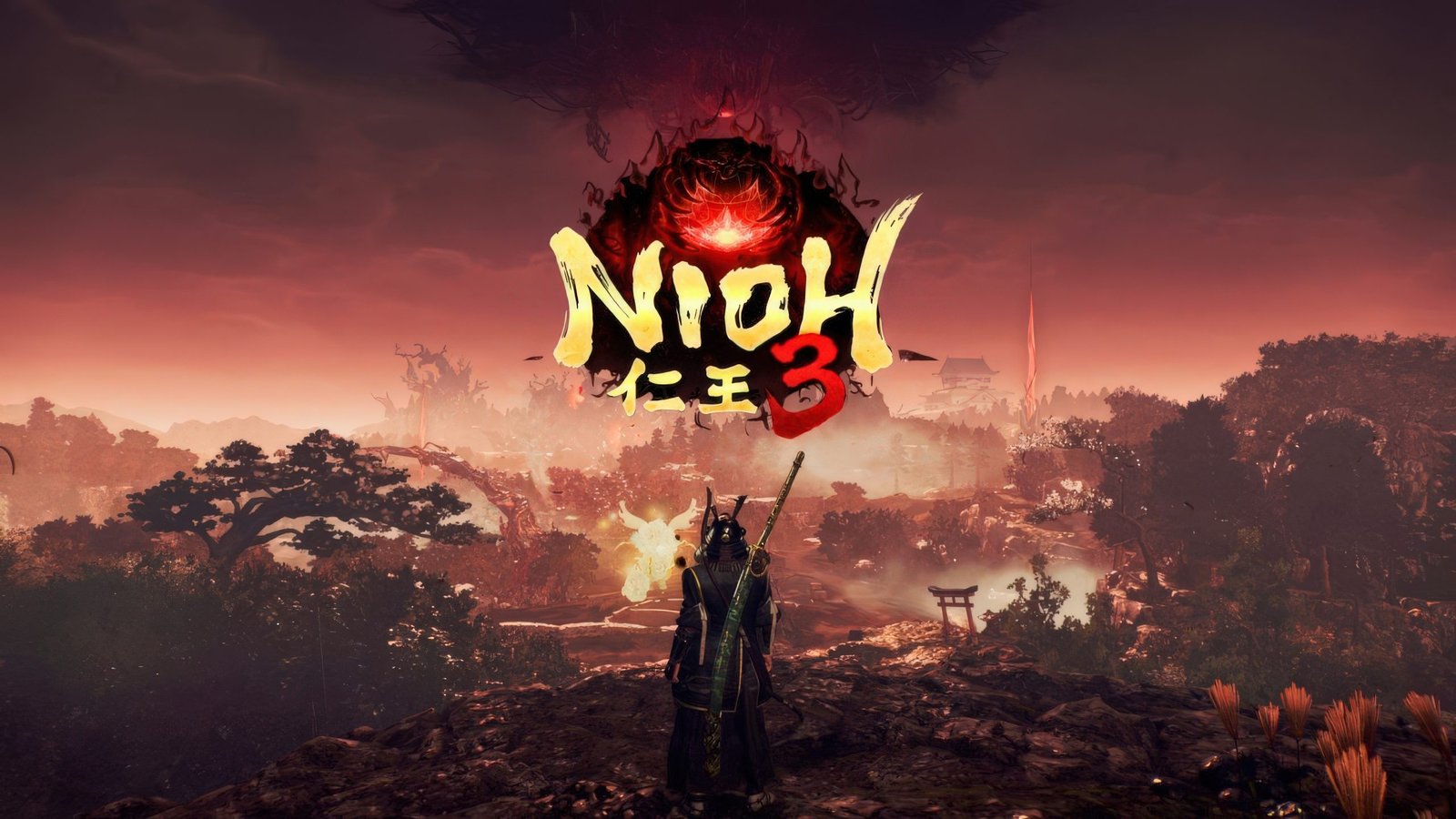
Look, we’ve all been there. You’ve spent the better part of an hour—maybe your entire Friday evening—meticulously learning the telegraphs of a boss that feels like it was coded specifically to ruin your weekend. Your heart is hammering a frantic rhythm against your ribs, your palms are so slick with sweat you’re worried about the controller slipping, and you’ve finally, finally whittled that monster down to its last sliver of health. Then, it happens. You take one stray hit—just one—and you instinctively reach for your healing elixir. You mash the button. You mash it again, harder this time. But nothing. Your character just stands there, seemingly frozen in a state of stubborn refusal, and a heartbeat later, you’re staring at a “Game Over” screen in a daze of disbelief. According to the Rock Paper Shotgun Latest Articles Feed, this specific nightmare has been a recurring, soul-crushing reality for Nioh 3 players since the game launched. Now, the first major patch, version 1.03.01, is finally stepping in to do something about it. But there’s a bit of a catch that’s raising some eyebrows: the fix is officially described as only “partial.”
Koei Tecmo and Team Ninja rolled this update out on February 13th, just a couple of days ago, and it’s already the main topic of conversation across every forum and Discord server dedicated to the game. It’s a bit of a strange feeling, isn’t it? Seeing a major developer actually admit that a fix is only partially working. Usually, patch notes are these exercises in corporate confidence, filled with definitive declarations like “Fixed issue where players could not heal.” Instead, we’re getting this refreshingly honest, if slightly unsettling, admission. It’s a bit like a mechanic telling you they’ve “partially” fixed the brakes on your car. You’re certainly glad they spent some time under the hood, but you’re still going to be white-knuckling it down every steep hill, just in case.
The healing bug in Nioh 3 is particularly egregious because of the specific way the game handles its internal rhythm. This isn’t some slow-paced, methodical dungeon crawler where you have time to ponder your next move; it’s a high-octane, razor-thin dance of death. When your healing abilities go AWOL, it isn’t just a minor inconvenience or a “try again next time” moment—it’s a run-ender that feels like a personal betrayal. We’ve heard plenty of stories about reviewers being pushed to their absolute breaking points during the pre-launch window. Jeremy over at RPS reportedly put a literal hole in his desk while reviewing the game. Now, while we can’t officially confirm if that specific moment of furniture destruction was caused by a failed elixir animation, it certainly paints a vivid picture of the kind of “stubborn lid” frustration this game is capable of inducing in even the most seasoned players.
A Messy, Beautiful Stir-Fry: Why Nioh 3 Refuses to Be Just Another Soulslike
To really understand why the community is so hung up on a healing bug, you have to look at what Nioh 3 is actually trying to achieve as a piece of software. It’s been out for a little while now on PS5, PC, and Xbox Series X/S, and in that time, it has firmly established itself as a fascinating “chanpurū”—which is an Okinawan word for a stir-fry, or a chaotic mix of different things. It’s a bold identity. The game takes the surgical precision of FromSoftware’s best work, blends it with the loot-heavy, spreadsheet-obsessed addiction of a Diablo clone, and then adds the sheer stylistic kineticism of modern Chinese soulslikes like 2024’s Black Myth: Wukong. It tosses all of those disparate ingredients into a high-pressure wok and turns the heat up to eleven.
But that complexity comes at a cost. According to a 2024 Statista report, roughly 60% of AAA games now require significant day-one or week-one patches just to address game-breaking bugs. While that’s a pretty depressing statistic for those of us who still remember the “plug and play” days of cartridges, it’s just the reality of modern game development. Nioh 3 is an incredibly complex machine with a lot of moving parts. When you have overlapping systems for stance switching, Ki pulses, Yokai shifts, and a dizzying array of loot suffixes all running simultaneously, things are inevitably going to break under the hood. The “partial” nature of this fix suggests that the healing issue might be tied to a deep-rooted animation priority conflict—a ghost in the machine that the devs haven’t quite managed to untangle yet.
“Wonky performance aside, Nioh 3 is excellent. It’s a chanpurū of influences that manages to entertain in a wonderful fashion.”
— Jeremy Peel, Rock Paper Shotgun
But even with all the technical wonkiness, there’s a very clear reason why people are sticking with it and gritting their teeth through the bugs. The game earned its “Bestest Best” badge for a reason. It doesn’t have the sterile, practiced, almost robotic elegance of something like Sekiro, but it has a massive amount of soul. It’s messy, it’s loud, and it’s deeply rewarding when you finally find your flow. Whether you’re throwing yourself into the new “Crucible” mode or just taking a moment to cuddle a Chijiko—those adorable little spirits that have effectively replaced the Kodama in our hearts—the game offers a specific texture and flavor that is entirely its own.
Beyond the Elixir: Cleaning Up Hitboxes, Save Files, and… Floating Wigs?
While the elixir issue understandably grabbed all the headlines, Koei Tecmo actually packed quite a bit more into this mid-February update. They’ve gone in and addressed several specific bugs affecting major bosses like Takasugi Shinsaku and Minamoto no Yoritomo—two encounters that have become notorious in the community for some truly bizarre hitbox behavior. If you’ve spent the last week getting clipped by Yoritomo’s sword from halfway across the arena, you might find things feel a bit fairer now. They’ve also tweaked Kajiwara Kagetoki, who was apparently behaving in ways that even the developers didn’t intend during certain phases of the fight.
One of the more interesting, and arguably more important, “quality of life” changes is the addition of automatic save data backups when you load your game. In a world where a single corrupted save can mean losing 80 hours of hard-earned progress, this is an absolute godsend. A 2025 survey by Newzoo found that 42% of ‘hardcore’ gamers actually prioritize mechanical precision and data security over the narrative in action RPGs. Adding an auto-backup feature is Team Ninja’s way of saying, “Look, we know our game is hard, but we don’t want your own hardware to be your toughest enemy.” It’s a layer of protection that every game of this scale should probably have by default.
And then there’s the hair. Honestly, I have to mention the hair. Apparently, if you selected specific base hair models—specifically numbers 11, 32, 33, or 43—in the character creator, you could end up with a “floating” hair situation when picking certain top-of-head styles. It’s a classic, weird RPG bug: the image of an epic, legendary samurai warrior whose wig is slowly levitating away from his scalp during a dramatic, emotionally charged cutscene. Patch 1.03.01 has officially sent those “misbehaving trims” packing. It’s a small, cosmetic thing, sure, but in a game where players spend half their time in photo mode trying to look cool, it actually matters quite a bit.
The Training Grounds and Smoothing Out the Difficulty Curve
The patch also “greatly increased” the health of enemies found in the Training Ground Battle Scroll. At first glance, this might seem like a “nerf” to player satisfaction, but it’s actually a huge buff for the “lab rats” of the community. Players were complaining that they were killing the training dummies far too quickly to actually practice their high-level, multi-stance combos. Now, you can actually wail on a target long enough to figure out how to weave your new DLC skills into your rotation without the target disappearing after three hits. It’s about giving the players the space to actually learn the game’s depth.
On top of that, they’ve made it possible to pray at the shrine during battle in certain specific contexts. This is a massive, fundamental change for the “Crucible” and those longer, multi-stage encounters that can feel like a war of attrition. It significantly reduces the “walk of shame” back to the boss and keeps the momentum of the session going. It shows that Team Ninja is actually listening to the feedback that the game was perhaps too punishing in its friction and UI hurdles, rather than focusing purely on the difficulty of the actual combat.
Navigating the 2026 Soulslike Surge: Can Transparency Save a Hardcore RPG?
When you look at the broader gaming landscape, Nioh 3 is launching into an incredibly crowded and competitive market. Positioned between the looming shadow of the Elden Ring expansions and the creative surge coming out of the Chinese development scene, Team Ninja has had to work incredibly hard to stay relevant and maintain their niche. According to a 2024 report by the Entertainment Software Association (ESA), nearly 70% of players now expect continuous, meaningful post-launch support for at least 12 months for any major RPG release. This first patch is really just the start of that long-term commitment to the player base.
The “partial” fix for the healing elixir is actually a symptom of a much larger trend we’re seeing in game development: transparency. We are seeing more and more developers willing to admit when a solution isn’t 100% there yet, rather than trying to sweep it under the rug. It’s a gamble, though. On one hand, it can make a game feel like it’s still in “early access” even after a full, $70 release. On the other hand, it builds a massive amount of trust with the community. Personally, I’d much rather know that the elixir bug is still a 10% possibility so I can play around it, rather than being told it’s fixed and then losing a massive boss fight because I let my guard down at the wrong moment.
Is Nioh 3 objectively better than its predecessors? In many ways, the answer is a resounding yes. It feels more confident in its own skin. It’s less afraid to be weird, experimental, and challenging. But it’s also carrying a significant amount of technical debt from its incredibly ambitious engine. The “wonky performance” mentioned by Jeremy is still a factor, especially on PC where optimization remains a bit of a mixed bag depending on your rig. But if you have the patience to look past the occasional frame drop and those “stubborn” elixir lids, there is a genuine masterpiece buried under all that grit and blood.
Is the healing elixir bug fully fixed now?
No, not quite yet. Koei Tecmo has specifically labeled it a “partial” fix in the 1.03.01 patch notes. While the bug should occur much less frequently than it did at launch, players should still be aware that it can occasionally pop up during those high-intensity combat sequences where the engine is under a lot of stress.
What platforms is Nioh 3 available on?
As of February 2026, you can pick up Nioh 3 on PlayStation 5, Windows PC (via both Steam and the Epic Games Store), and Xbox Series X/S. There is currently no Nintendo Switch version on the horizon, largely due to the game’s high graphical requirements and the complexity of its physics engine.
What exactly are ‘Chijiko’ in Nioh 3?
Chijiko are the new collectible spirits in Nioh 3, taking over the role that the Kodama played in the previous two games. Finding them throughout the levels provides various passive buffs and is essential for anyone looking to clear the map 100% and get the most out of their character’s stats.
Final Thoughts: A Work in Progress Worth Fighting For
Ultimately, Patch 1.03.01 feels like a step in the right direction, even if it’s a somewhat tentative one. The fact that the developers are already tweaking boss hitboxes and adding critical features like save backups just weeks after launch is a very good sign for the game’s future. It shows a team that is active, alert, and deeply engaged with its player base. Nioh 3 is a beast of a game—it’s huge, it’s complex, and it can be occasionally mean-spirited—but it’s also undeniably one of the most mechanically satisfying experiences you can find in the genre right now.
If you’ve been holding off on a purchase because of the launch-day bugs, this patch might not be the “all clear” signal you were waiting for, but it’s certainly close enough to justify jumping in. Just maybe keep a spare controller nearby in case you encounter one of those “stubborn lids” during a particularly tense boss fight. And if you’re like Jeremy, you might want to look into getting a reinforced desk. We’re in for a long year of DLC and further balancing, and if the “chanpurū” of Nioh 3 continues to simmer this well, it’s going to be a delicious, if slightly spicy, ride for all of us. It isn’t perfect, but games with this much ambition rarely are on day one.
This article is sourced from various news outlets. Analysis and presentation represent our editorial perspective.
About the Author