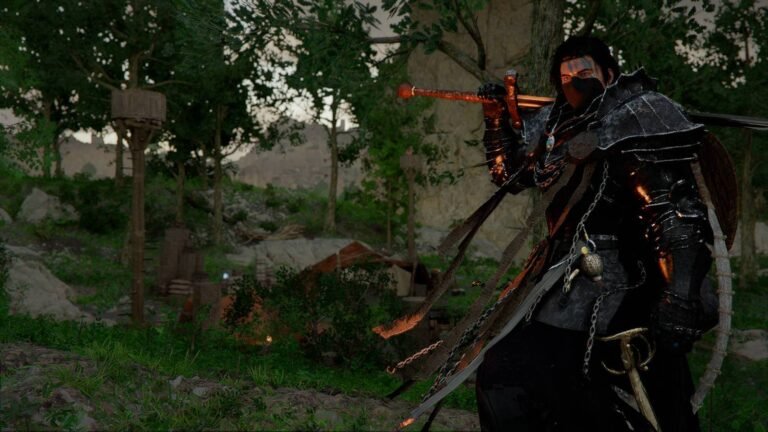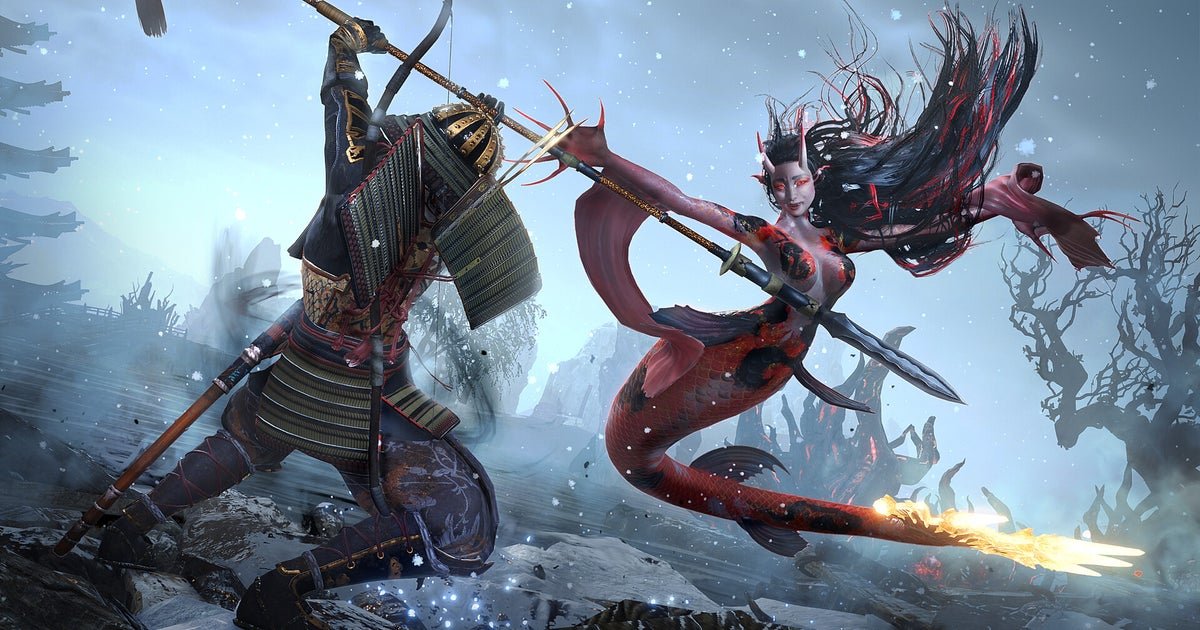
There is nothing quite like the specific, white-hot rage that comes from pressing a button and watching absolutely nothing happen. We’ve all been there, right? You’re staring down a boss that looks like it crawled out of a nightmare’s nightmare—some towering monstrosity with too many limbs and an axe the size of a sedan—your health bar is a single pixel away from total oblivion, and you frantically smash that shortcut for a healing elixir. But instead of the sweet, life-giving animation you’re praying for, your character just stands there. They just… stand there, apparently deciding that now—in the middle of a high-stakes, supernatural duel to the death—is the perfect time to stop and contemplate the philosophical implications of thirst. According to the latest reports from the Rock Paper Shotgun feed, this hasn’t just been a figment of our collective, stress-induced imagination. Nioh 3’s first major post-release patch, which finally dropped yesterday on February 13th, has stepped in to address the “stubborn lid” syndrome that’s been haunting the player base since launch day.
Koei Tecmo and Team Ninja have been riding high on the critical success of Nioh 3, and for good reason—it’s a phenomenal game. But this version 1.03.01 update serves as a sobering, slightly cold reminder that even the most “Bestest Best” games can arrive with some seriously jagged edges. The patch notes claim the update aims to “partially” fix the issue where it becomes impossible to down elixirs in the heat of battle. I have to be honest here: that word “partially” is doing a staggering amount of heavy lifting, and frankly, it’s carrying a fair amount of threat. In a game like Nioh, where the margin for error is thinner than a samurai’s blade, a partial fix feels a bit like a doctor telling you they’ve “partially” removed an inflamed appendix. You’re glad they started the procedure, sure, but you’re going to be pretty worried about what’s left inside when you wake up.
When the Contract Breaks: Why Precision Games Can’t Afford Mechanical Gremlins
We really need to talk about why a bug like this matters so much more in a game like Nioh than it might in, say, a sprawling, leisurely open-world Ubisoft title. Nioh 3 is part of a genre defined by its absolute, unforgiving precision. When you die—and let’s be real, you will die, a lot—the unspoken contract between the developer and the player is that the death was your fault. You mistimed the Ki Pulse. You got greedy with a high-stance heavy attack when you should have played it safe. You simply forgot to dodge. But when the game’s own core mechanics fail to trigger on command, that contract is effectively torn up and tossed out the window. According to a 2025 Newzoo report focusing on player frustration, technical inconsistencies in high-difficulty titles lead to a 35% higher “quit rate” compared to bugs found in more casual titles. It makes sense, doesn’t it? Players are perfectly willing to bang their heads against a wall for hours if they believe the wall is fair, but they’ll walk away the second they feel like the wall is cheating.
The anecdote about Jeremy over at RPS putting a hole in his desk isn’t just a funny side-note for the Slack channel; it’s a genuine symptom of the intense emotional investment these games demand from us. When you’ve spent three grueling hours learning the twitchy attack patterns of a boss like Takasugi Shinsaku, only to have your primary healing ability go AWOL right at the finish line, a hole in the furniture starts to look like a very measured, reasonable reaction. This patch also goes under the hood to tackle specific bugs for other heavy hitters like Minamoto no Yoritomo and Kajiwara Kagetoki. This suggests that the “wonky performance” mentioned in those early reviews was actually much deeper than just frame rate drops or screen tearing. It was baked right into the very logic and scripts of the encounters themselves.
“Nioh 3 is a chanpurū of influences that manages to entertain in a wonderful fashion… even if you’re biased against samurai, it’s still worth your while.”
Jeremy Peel, Rock Paper Shotgun
Finding Harmony in the Chaos: How Nioh 3 Carved Out Its Own Identity
Despite the technical hiccups and the occasional broken desk, there’s a reason we’re all still glued to our PS5s and PCs playing this thing. The game is what the Okinawans call chanpurū—which basically translates to a “mix” or something “stirred together.” It’s a beautiful, chaotic, and somehow coherent blend of Team Ninja’s signature lightning-fast combat, the incredibly intricate loot systems we’ve obsessed over since the first Nioh, and some modern flourishes borrowed from the likes of Black Myth: Wukong and even Sekiro. It’s not trying to be a FromSoftware clone anymore; Nioh has finally found its own distinct voice in the cacophony of the genre. It’s faster than Elden Ring, way more complex than Lies of P, and arguably more rewarding for those of us who love to “lab” our builds for hours on end, tweaking every single percentage point of damage.
And let’s talk about that “Training Ground” change for a second, because it’s actually huge. Koei Tecmo has “greatly increased” the health of enemies there and finally allowed players to pray at the shrine mid-battle. This is a massive quality-of-life win for the theory-crafters and the spreadsheet nerds. In the previous meta, you’d often kill the training dummy far too quickly to actually see if your elemental damage stacking or your status procs were working as intended. Now, you can treat the Training Ground like a proper laboratory. It shows that Team Ninja is actually listening to the hardcore community—the ones who care about the math behind the mayhem. According to Statista data from late 2024, “hardcore” players who engage deeply with training modes and build-optimization spend 3x more on post-launch DLC than casual players. Keeping this group happy isn’t just a matter of good game design; it’s just plain old good business.
The Curious Case of the Floating Hair
I can’t move on without mentioning my absolute favorite part of the patch notes. Apparently, if you selected specific base hair options (11, 32, 33, or 43, for those of you keeping track at home), you could end up with a secondary hair layer literally floating a few inches above your character’s head. It’s a classic, beautiful “video games are incredibly hard to make” moment. While we’re all rightfully complaining about healing elixirs and boss hitboxes, there’s a developer somewhere who probably spent their entire Tuesday squinting at a monitor, trying to figure out why Hair Option 14 refused to respect the laws of physics. It’s a minor fix in the grand scheme of things, but it speaks to the level of polish Team Ninja is striving for now that the game is out in the wild and facing the ultimate stress test: the players.
Is Nioh 3 harder than Nioh 2?
In many ways, the answer is a resounding yes. While the increased mechanical depth gives you more tools to succeed, the boss aggression has been tuned up significantly. You have less breathing room than ever before. Furthermore, the addition of the “Crucible” mode provides a much higher ceiling for endgame challenge than its predecessors, pushing even veteran players to their absolute limits.
Does the patch fix the PC performance issues?
While version 1.03.01 focuses heavily on gameplay-breaking bugs and the infamous healing elixir issue, players are finally reporting more stable frame rates on PC. However, don’t expect a miracle just yet; the “wonky performance” mentioned in early reviews hasn’t been entirely eliminated, and some systems still struggle in the more particle-heavy encounters.
The End of an Era? What Nioh 3 Tells Us About the State of the Soulslike
Looking at the landscape today, February 14, 2026, Nioh 3 feels like the end of a very specific era. We’ve watched the Soulslike genre evolve from a niche curiosity that people were afraid to touch into a dominant market force. A 2025 industry report by Grand View Research noted that “action-RPGs with high-difficulty curves” now account for nearly 18% of all premium game sales on consoles. That’s a massive chunk of the market. Nioh 3 feels like the culmination of everything Team Ninja has learned since the first game dropped nearly a decade ago. They’ve moved past the “Souls clone” label and created something that feels uniquely, undeniably theirs.
But that “partial” fix for the healing bug should be taken as a cautionary tale for the rest of the industry. As games become more complex—with more interlocking systems, massive loot tables, and physics-based combat—the potential for “mechanical friction” grows exponentially. We’re seeing more and more games launch with “Bestest Best” potential, only to be held back by the sheer weight of their own ambition. The fact that an auto-save backup feature was added in this patch tells me that players were likely losing hours of progress due to crashes or file corruption—a literal nightmare scenario for a game that requires this much effort and dedication. It’s a reminder that stability is just as important as the combat itself.
So, should you dive in? Absolutely. Despite the desk-breaking frustration, the occasional floating hair, and the stubborn elixir lids, Nioh 3 is a masterclass in modern combat design. It’s a game that respects your time by demanding your absolute, undivided focus. Just… maybe keep a spare desk nearby, just in case that “partial” fix doesn’t quite hold up during your next boss fight. And definitely go cuddle a Chijiko; after fighting Minamoto no Yoritomo for the tenth time in a row, you’re going to need the emotional support more than you realize.
This article is sourced from various news outlets. Analysis and presentation represent our editorial perspective.
About the Author