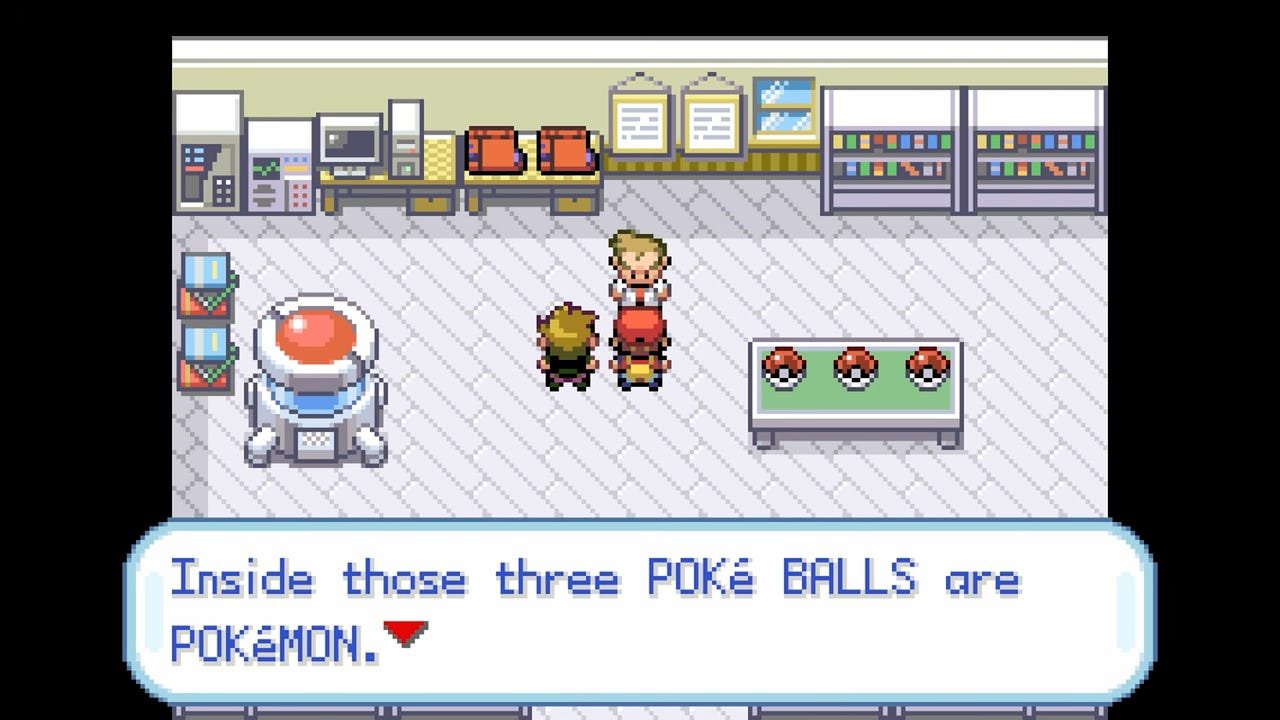
I’ll never forget that satisfying, tactile “click” of sliding my translucent orange FireRed cartridge into the Game Boy Advance back in 2004. At the time, it felt like we were living in the absolute future—a chance to revisit the Kanto region with a fresh coat of paint, vibrant colors, and that chunky wireless adapter that actually worked (well, most of the time, provided you didn’t move an inch). Fast forward to today, and as we gear up for the series’ massive 30th-anniversary celebration next week, those very same adventures are finally landing on the Nintendo Switch. But there’s a bit of a dark cloud hanging over this nostalgia trip. According to IGN Video Games, we’re still in the dark about whether these ports will actually talk to Pokémon Home. And if they don’t? Well, the lifelong dream of “catching ‘em all” might be about to hit a very frustrating, very modern brick wall.
“The explanations and rules are a bit convoluted, but essentially, it’s only through Bank and Home that Pokémon from older games… can be brought forward to modern games.”
Rebekah Valentine, IGN Senior Reporter
For those of us who have literally been carrying the same Charizard across three decades, spanning six different handheld consoles and countless batteries, this isn’t just some minor technicality or a “nice-to-have” feature. Pokémon Home is the digital glue holding this entire sprawling franchise together. It’s more than just an app; it’s a digital museum where our childhood memories are stored in bits and bytes. If FireRed and LeafGreen on the Switch end up being “islands”—games that exist in a vacuum and can’t export their creatures—this 30th-anniversary celebration is going to feel pretty hollow. We aren’t just playing these games to kill time or relive the past for an hour; we’re playing them to keep our living collections alive and growing. We want our new Kanto team to eventually stand alongside our champions from Paldea and Galar.
Now You See It, Now You Don’t: The eShop’s Disappearing Act
The drama really kicked off earlier today when the Nintendo eShop pages for FireRed and LeafGreen finally went live. For a brief, shining moment, it looked like all our prayers had been answered. The game description explicitly promised Pokémon Home support. It was right there, in plain English: “Support for Pokémon HOME is coming soon.” It felt like a win. But then, in a move that feels classic, peak Nintendo, the line was suddenly scrubbed. Deleted. Vanished into thin air. If you go and look at the page right now, there’s just a deafening silence where that promise used to be. It’s enough to give any long-term fan a serious case of whiplash.
So, why does this matter so much? Honestly, it’s because Nintendo and The Pokémon Company have a bit of a track record for being… well, let’s call it “selectively communicative.” We’ve been down this road before. When the original Red, Blue, and Yellow versions hit the 3DS Virtual Console years ago, they did eventually get support for Pokémon Bank. It worked, it was elegant, and it made sense. But the Switch era has been a completely different beast. We’ve seen time and again that Nintendo Switch Online (NSO) titles often exist in their own little bubbles, disconnected from everything else. According to a 2024 Statista report, the Nintendo Switch has sold over 140 million units, making it one of the most successful pieces of hardware in history. With an install base that massive, the expectation for seamless integration isn’t just fan entitlement—it’s just common sense for a modern gaming ecosystem.
If they don’t get this right, we’re looking at a serious “National Dex” catastrophe. See, in the original FireRed and LeafGreen, the game doesn’t just end once you beat the Elite Four and hit 151 monsters. It opens up the Sevii Islands and the Johto and Hoenn regions in the post-game. The catch? A huge chunk of those Pokémon aren’t actually in the game files to be caught in the wild. Back in 2004, you were supposed to trade them in from Ruby, Sapphire, or Emerald. Since those Hoenn games aren’t on the Switch yet, a total lack of Home support means your National Dex will forever have those mocking, empty slots. It’s a completionist’s absolute nightmare, and it fundamentally breaks the endgame loop that made these remakes so special in the first place.
Why Millions of Players Are Losing Their Minds Over a Data Transfer
To really understand why the community is being so vocal about this, you have to look at the sheer scale of what we’re talking about. Pokémon isn’t just a fun weekend hobby; it’s the highest-grossing media franchise on the planet, period. According to The Pokémon Company’s own financial disclosures, the series had moved over 480 million software units worldwide by early 2024. People aren’t just buying these games as disposable entertainment; they are investing in a persistent ecosystem that they expect to last for years. Pokémon Home isn’t just a luxury add-on; for many of the 38 million Nintendo Switch Online subscribers (as reported by Nintendo in late 2023), it’s a foundational tool for how they engage with the brand. We pay a yearly sub for Home specifically so we don’t lose our progress.
When you look at those staggering numbers, the idea of releasing a flagship “classic” port without Home integration seems like a massive, unforced oversight. If I spend forty hours hunting for a Shiny Mewtwo in FireRed on my Switch, I don’t want it to stay trapped on that virtual console forever. I want to be able to bring that beast into Pokémon Scarlet or Violet, or whatever the next big “Gen 10” game ends up being. If these Pokémon are stuck on the Switch port, they’re effectively dead on arrival for the competitive community and the long-term collectors who treat their boxes like a digital legacy. It turns a “living” game into a museum piece that you can look at but never touch.
A Brief History of Our Convoluted Digital Hoops
To be completely fair to the devs, moving Pokémon from 2004 to 2026 has always been a bit of a logistical nightmare. Back in the day, you needed a very specific Nintendo DS with a GBA slot just to use the “Pal Park” feature. Then you needed two separate DS systems to leapfrog them into the Black and White era. After that, you needed a 3DS to get them into Pokémon Bank. It was this absurd, Rube Goldberg machine of hardware, cables, and software versions. The Switch was supposed to be the end of all that nonsense. It was marketed as the final “Home” for everything going forward—the place where the fragmentation finally stopped.
And yet, here we are, just days away from the 30th-anniversary launch, and we’re still playing a guessing game. It’s “real weird,” as Rebekah Valentine so aptly put it. We’ve even seen hints and teasers that GameCube classics like Colosseum and XD: Gale of Darkness might eventually make their way to the service. If those games arrive and still don’t connect to Home, the entire Gen 3 ecosystem on the Switch will be nothing more than a series of disconnected, lonely islands. That doesn’t feel like a celebration of a storied history; it feels like a massive missed opportunity to finally unify the franchise.
A Milestone Birthday or a Missed Connection?
So, what’s the actual play here? There are a few ways this could go down. Maybe the eShop team simply jumped the gun and the Home update isn’t scheduled to roll out until Pokémon Day itself (February 27). Maybe Nintendo is planning a massive “Home 4.0” update that will finally bridge the gap for all NSO titles in one fell swoop. Or—and this is the cynical view—maybe they just don’t think it’s worth the development time and resources to make it happen. But given how much they charge for those annual Pokémon Home subscriptions, that’s a pretty bitter pill for the community to swallow. We’re paying for a service, and we expect that service to actually… well, serve the games we’re playing.
I have a strong suspicion we’ll get a concrete answer during the Pokémon Presents broadcast next week. Nintendo absolutely loves to create a problem or a bit of tension just so they can announce the solution to thunderous applause. By pulling the text from the eShop now, they avoid “promising” something that might not be 100% ready to go on day one. It’s a classic PR move: under-promise, keep everyone guessing, and then (hopefully) over-deliver when the spotlight is brightest. It keeps the conversation focused on them right up until the big reveal.
But let’s be real for a second: the fans are totally right to be worried. We’ve seen how Nintendo handles legacy content in the past. Sometimes it’s a masterpiece of preservation and care, and other times it’s a bare-bones ROM dump with zero extra features or connectivity. For a 30th anniversary, we deserve the former. We deserve a version of Kanto that feels connected to the rest of our twenty-year Pokémon journey, not a stripped-back experience that cuts us off from our collections.
Will my old Game Boy Advance saves work with the Switch version?
Unfortunately, no. These are entirely new digital ports specifically for the Nintendo Switch hardware. There is currently no physical or digital bridge that allows you to move a save file from a dusty 2004 GBA cartridge directly into the Nintendo Switch Online version of the game. You’ll be starting your journey from Pallet Town fresh.
Is local trading available in the Switch version of FireRed/LeafGreen?
Yes! There is some good news here. Nintendo has confirmed that local wireless trading will be supported, which means you can trade and battle with friends who are in the same room as you. However, it’s worth noting that full online trading via the internet hasn’t been confirmed yet and was noticeably missing from the initial feature list, which has some players a bit concerned about the “Online” part of Nintendo Switch Online.
Why can’t I finish the National Dex without trading?
It all comes down to how FireRed and LeafGreen were originally designed. They were meant to be one piece of a much larger puzzle. A huge number of Pokémon from the Johto and Hoenn regions simply do not appear in the wild in these specific games. Without the ability to trade with other Gen 3 titles like Ruby and Sapphire, or the ability to move them in via Pokémon Home, those Pokédex entries are literally impossible to fill. It turns the “Catch ‘em All” mission into an impossible task.
More Than Just Code: The High Stakes of Digital Legacy
At the end of the day, this isn’t just about one or two games from the early 2000s. It’s about how we, as a community and as an industry, treat digital history. Pokémon is in a league of its own because it’s one of the very few franchises where your “progress” and your “partners” can span decades of real-world time. My nephew is currently playing through his first adventure with a Blaziken that I caught when I was exactly his age. That’s not just data; that’s magic. That is the exact thing that makes Pokémon so special and so different from every other RPG on the market.
If Nintendo and The Pokémon Company want to truly honor the legacy of the last 30 years, they need to realize that the “catch ‘em all” slogan isn’t just a clever marketing gimmick from the 90s—it’s a long-term contract with the players. We put in the work to catch them, and they provide the “Home” for them to live in as the hardware evolves. Let’s just hope that when the anniversary celebrations kick off next week, they remember to actually unlock the front door for us.
This article is sourced from various news outlets. Analysis and presentation represent our editorial perspective.
About the Author