If you’ve been smashing the refresh button on the Riot Games storefront trying to snag a booster box of Riftbound’s latest expansion, Spiritforged, you’re definitely not alone in that frustration. Since it officially hit the US market back on February 13, 2026, the game has basically swallowed the tabletop scene whole—both digital and physical. But let’s get real for a second: the official store is a ghost town, and the secondary market? It’s starting to look like a total Wild West of ridiculous markups and scalper prices. According to the folks over at IGN Video Games, the “smart money” isn’t actually in the “pack-cracking lottery” right now. If you want to actually win games without going broke, your best move is the tactical acquisition of singles.
We might only be a week or so into the Western release, but remember, this set has been making waves in China for months already. That gives us a massive, almost unfair advantage. We aren’t just throwing darts at a board and guessing what’s going to be good; we have cold, hard data from the Regional Qualifiers in Fuzhou and Chengdu to back it up. Look, I get it—nothing beats the rush of tearing open a fresh pack and seeing that foil shimmer. But if you’re trying to build a deck that actually survives the current meta, you need to be surgical. Whether you’re grinding on your PC or getting a local tournament together, the jump from the Origins era to Spiritforged hasn’t just been a change—it’s been a total seismic shift in how the game is played.
Why your wallet will thank you for ignoring the “lottery” hype train
Let’s address the elephant in the room right away: scarcity is a nightmare. It’s not just a Riftbound thing, either; it’s part of a much bigger, global trend. If you look at a 2024 report from Research and Markets, the collectible card game industry is on track to hit over $11 billion by 2030. We’re watching that growth explode in real-time with Riot’s TCG. When a set sells out on the very first day, those “chase cards” stop being just pieces of cardboard or digital assets—they basically become high-value commodities. But here’s the secret: you don’t actually need to drop a small fortune to stay competitive.
In fact, some of the most back-breaking cards in the meta right now are just uncommons. Take “Card Sharp,” for example. It’s a total staple for Yellow decks and is currently the reason why Viktor, Herald of the Arcane decks are sitting comfortably at the top of the food chain. It’s cheap, it’s incredibly efficient, and most importantly, it generates Gold. In a meta where these massive, Power-hungry decks are becoming the standard, that Gold generation is often the only thing standing between you casting your game-ending finisher or staring at a “Defeat” screen. If you want to keep your tempo up without emptying your bank account, this is exactly the kind of single you should be hoarding right now.
The move to Spiritforged has also really highlighted how much the community is craving stability. A 2023 Statista report pointed out that both digital and physical card games have seen a 15% year-over-year jump in active tournament players. Translation? The competition is getting way sweatier. You can’t just cross your fingers and hope for good luck anymore. You need a deck that can handle the new “Repeat” mechanic with some level of grace, and you need cards that aren’t going to just fold to the inevitable board wipes that everyone is running.
“The newest expansion has been out in China for a couple of months now… so we’ve seen a general picture of how the new cards are impacting the metagame.”
Myles Obenza, IGN
The “Gotcha” Moment: Why Green is finally playing the game on its own terms
If you spent any time playing during the Origins meta, you probably still have nightmares about “Icathian Rain.” It was absolutely everywhere, and frankly, it was oppressive as hell. However, thanks to a recent errata regarding reflexive triggers, the script has been completely flipped. It used to be that defensive spells like “Not So Fast” were a bit of a coin flip—you might manage to negate one instance of damage, but the rest of the spell would still go through and ruin your afternoon. Now? You can shut down the entire spell in one clean motion. Honestly, it’s about time.
This is a massive “W” for Green decks. We’re seeing a shift toward a much more interactive, “permission-based” style of play that you usually only see in veteran TCGs like Magic. It’s a system that actually rewards players who can read their opponent’s intentions, rather than just rewarding whoever can pile up the most stats the fastest. If you’re a Green player, “Not So Fast” isn’t just a sideboard card anymore; it’s a mandatory three-of in your main deck. It’s become the ultimate “gotcha” card in a meta that’s being increasingly dominated by these huge, flashy, game-swinging spells.
And since we’re talking about flashy, we have to talk about the “Repeat” mechanic. Cards like “Bellows Breath” are completely redefining what the early-game board state looks like. Being able to wipe out smaller units while keeping your own presence on the field is the kind of pure value that wins tournaments. It’s not just about raw, brute power; it’s about having the flexibility to adapt. In a best-of-three match, having cards that scale effectively from the first turn all the way to the late game is absolutely invaluable.
Ezreal, the engine that never quits, and why Purple is terrifying right now
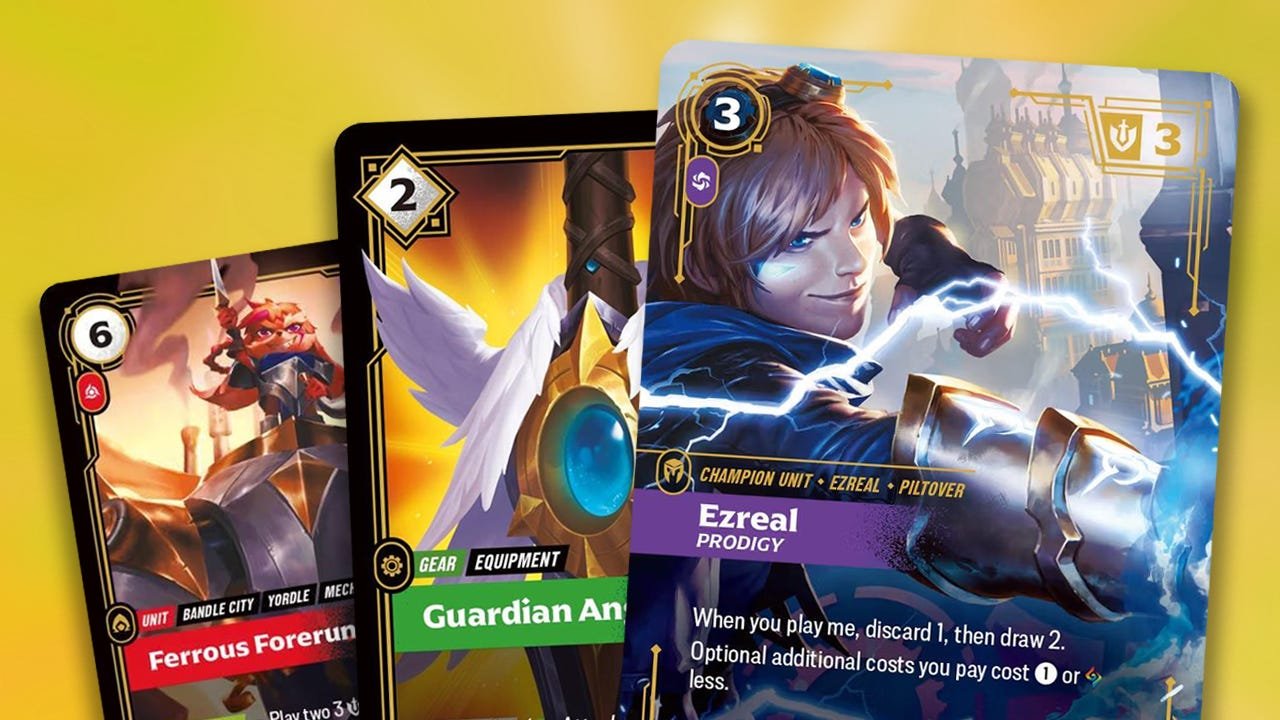
If we’re being totally honest here, Purple is looking a little scary. While the Draven, Glorious Executioner lists are technically the “deck to beat” at the moment, a lot of the top-tier pros are starting to pivot toward Ezreal, Prodigy. Here’s the thing: Ezreal isn’t just a card. He’s a full-blown engine. His ability to filter through your deck in the early turns means you’re seeing your win conditions way more often than your opponent is seeing theirs.
In any TCG—I don’t care which one it is—consistency is king. If you can’t find the answers you need when you need them, it doesn’t matter how high your deck’s power level is. Ezreal bridges that gap perfectly. He fits into so many different archetypes, which makes him easily one of the safest investments you can make if you’re buying singles. Combine him with “Called Shot”—which, let’s be real, is probably the best draw spell in the game right now—and Purple decks have a level of velocity that we just haven’t seen before. A 0-Energy spell that repeats? That’s the kind of value that makes veteran players break out in a cold sweat. Even if it cost 1 Energy, it would be a staple. At 0? You’re basically throwing if you aren’t running it.
Is Master Yi finally having his second wind?
For those of us who actually enjoy a more defensive, “hold the line” kind of playstyle, Master Yi, Wuju Bladesman is still very much a part of the conversation. The fact that Riot included “Trinity Force” and “Guardian Angel” in this set honestly feels like a love letter to long-time Yi players. Trinity Force lets you store up extra points, which has perfect synergy with Yi’s buffs for defending units. It’s a slow-burn, “grind ‘em out” strategy that absolutely punishes aggressive decks for overextending and playing too greedy.
Then you’ve got Guardian Angel, which basically acts like a redundant copy of Zhonya’s Hourglass, but with the massive added bonus of being an equipment. This means you aren’t just saving a unit from the graveyard; you’re actually making it a bigger threat in the process. Back in the Origins meta, Yi was great at winning through attrition and just outlasting the opponent. But with Spiritforged, he finally has the tools to actually close out games before they turn into a two-hour slog. It’s a much more proactive version of a classic archetype, and honestly, it’s really refreshing to see him back in the mix.
Is it actually worth paying the markup for Spiritforged booster boxes?
In short? No, probably not. Unless you’re a hardcore collector who is specifically hunting for those rare “chase” foils, the markups you see on sites like TCGplayer usually end up costing way more than the actual value of the cards you’ll find inside. Buying singles is the only way to guarantee you get exactly what you need for your deck without having to gamble on a box that might be a total bust.
What’s the most “future-proof” card in the entire Spiritforged set?
If you’re looking for a safe bet, Ezreal, Prodigy is your guy. That kind of deck-filtering ability is a universal mechanic that is always going to be useful. No matter how the meta shifts or what new expansions come out, being able to find your best cards faster than your opponent will always be a winning strategy.
How much has the “Repeat” mechanic actually changed the pace of the game?
It’s made the early game significantly more volatile. You can’t just play units on curve and hope for the best anymore. Because players can now interact multiple times in a single turn if they have the right setup, you have to be much more careful and calculated about when you decide to commit your resources to the board.
Looking Ahead: What the post-regional landscape looks like
As we get further away from those Chengdu and Fuzhou qualifiers, the meta is only going to get more defined and “hardened.” We’re already starting to see people drop the experimental, “for fun” builds in favor of refined lists that use cards like “Ferrous Forerunner” to create a really sticky, annoying board presence. It actually reminds me a bit of the old Wurmcoil Engine days—you think you’ve dealt with it, you kill it, and then it just splits or leaves something behind that’s even more frustrating to deal with. That kind of resilience is exactly what defines a championship-level deck.
The real beauty of Riftbound right now is that even though there are some decks that are clearly the “big dogs,” the tools to beat them actually exist in the card pool. You just have to be willing to look past the shiny Legendary cards and find those utility uncommons that really keep the gears of the deck turning. Whether you’re playing on your PS5 from the comfort of your couch or sitting across from a real person at your local shop, the Spiritforged era is turning out to be a masterclass in how to design a TCG expansion. Just do yourself a massive favor: don’t give your money to the scalpers. Buy the singles you actually need, build a solid deck, and let your playmaking do the talking.
This article was put together using info from various news outlets. The analysis and the “hot takes” provided are strictly from our editorial perspective.
About the Author