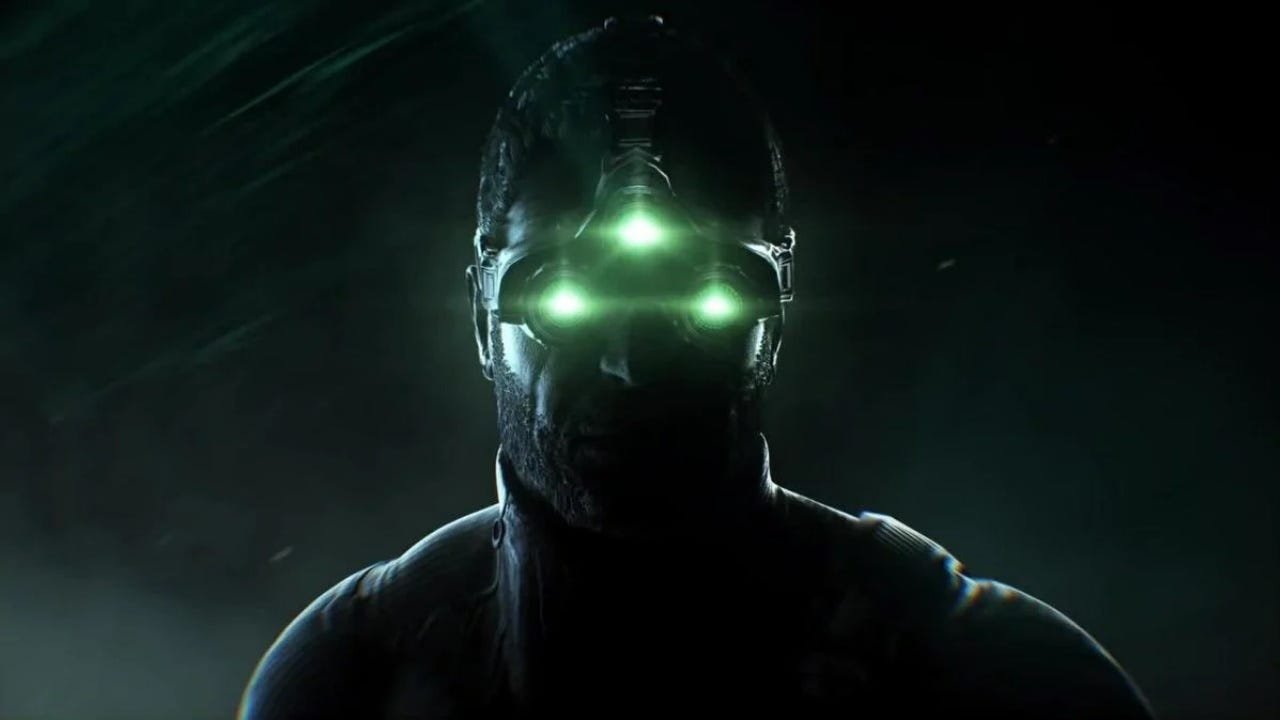
If you’re a fan of Splinter Cell, you’ve learned to live in a very specific kind of silence. It’s not the satisfying, heart-pounding quiet that follows a perfect “Ghost” run through a high-security compound; it’s that agonizing, decade-long radio silence between Sam Fisher sightings. We’ve been sitting in the dark for what feels like an eternity, waiting for those three iconic green lights to click on. And for a while there, it looked like the lights might have been cut for good. Back in 2024, the rumor mill was spinning at a frantic pace when IGN reported that Ubisoft Toronto—the lead studio tasked with the high-stakes remake—was hit by another wave of layoffs. Forty people were shown the door. In an industry that has started to feel like a revolving door of “restructuring” and “pivoting,” it was incredibly easy to assume the worst: that Sam Fisher had finally been retired to the shadows permanently.
Waiting for the Goggles to Glow: Why the Remake is Still the Mission
But here we are, blinking in the light of early 2026, and Ubisoft is still holding the line. They’re adamant that the Splinter Cell remake isn’t just a pipe dream; it’s a living, breathing project. They’ve doubled down on the fact that it’s being built from the ground up on the Snowdrop engine—the same powerhouse tech that gave us the gritty streets of The Division and the sprawling vistas of Star Wars Outlaws. It’s a bold stance to take, honestly, especially when you consider that the project has been largely MIA since that initial teaser back in 2021. We’ve all seen this movie before, haven’t we? High-profile remakes like Prince of Persia: The Sands of Time have spent years in development hell, getting passed between studios like a hot potato. Yet, against the odds, Sam Fisher is still hunkered down in Toronto, even if the team working on him is looking a little leaner than it did a few years ago.
I’ve spent a lot of time lately wondering why Ubisoft is clinging to this specific project with such a death grip. It can’t just be about nostalgia, right? I mean, nostalgia is a powerful drug, but in a market that’s currently drowning in massive open-world RPGs and “live-service” shooters that demand forty hours of your week just to stay relevant, there is a massive, Sam Fisher-sized void in the gaming landscape. We’re starving for that tight, linear, high-stakes tension that only Third Echelon can deliver. We want the pressure of knowing that one tripped laser or one squeaky floorboard means game over. But as the developer landscape continues to shift under our feet, the real question isn’t just “when” we’ll finally get to play it. It’s “what” is actually going to be left of the original vision after so many internal cuts and “strategic realignments.”
The Human Cost of the Industry’s “Great Reset”
To really get why those 40 layoffs in Toronto sent such a chill through the community, you have to zoom out and look at the wreckage of the mid-2020s. It’s been a brutal, unforgiving era for the people who actually make the games we love. If you look at the 2024 data from Statista, the numbers are staggering: the video game industry saw over 10,000 layoffs in 2023 alone. That trend didn’t just stop; it bled right into the following year as massive corporations tried to “over-correct” after the hiring frenzy of the pandemic years. Ubisoft wasn’t just a bystander in this. They’ve been aggressively trimming the fat, shuttering offices in places like Halifax and Stockholm, and letting go of talented staff at RedLynx and Massive Entertainment. They call it a “global cost-savings plan,” which sounds very clean and corporate on an earnings call, but for us players? It feels like watching our favorite franchises get put on a crash diet they never asked for.
When the news broke about the Toronto cuts, Ubisoft was very quick to issue a statement saying Splinter Cell was “unaffected.” We hear that phrase a lot in this business, and if I’m being honest, it usually only tells half the story. Sure, the core leads might still be at their desks, but the loss of institutional knowledge and the support staff who do the heavy lifting always creates a ripple effect. It’s like trying to run a marathon after you’ve spent a week skipping meals—you might cross the finish line, but you’re going to feel every single mile in your bones. It doesn’t help that the Toronto studio is also pulling double duty, acting as a co-developer on Rainbow Six and several other secret projects. It makes you wonder just how much actual bandwidth is being dedicated to Sam Fisher’s long-awaited return to the PC, PS5, and Xbox Series X|S.
“This decision was not taken lightly and does not in any way reflect the talent, dedication, or contributions of the individuals affected.”
Ubisoft Spokesperson, 2024
And yet, despite the corporate gloom, there’s a genuine glimmer of hope if you know where to look. Late in 2024, we got word that David Grivel—the original director who had briefly stepped away from the company—was back in the fold. Honestly? Getting the captain back on the bridge is a huge win. It’s a signal that Ubisoft understands they can’t just “content-mill” a remake of a genuine masterpiece. You need someone at the helm who understands the “meta” of stealth—the delicate dance of light and shadow, the gadgets that feel like tools rather than toys, and the deliberate pacing that made the 2002 original an instant classic. If they try to “nerf” the difficulty or, god forbid, try to turn this into some kind of looter-shooter hybrid, they have to know the backlash would be legendary. You don’t mess with the DNA of a legend unless you’re prepared for the consequences.
Playing it Safe: Why Remakes are the New Industry Security Blanket
Let’s talk shop for a minute. Why is Ubisoft putting all this energy into a remake instead of just giving us Splinter Cell 7? The answer is as simple as it is frustrating: risk management. According to a 2024 Newzoo report, the PC and console market has seen a massive shift toward “safe” bets. In fact, about 80% of total playtime is being spent on established franchises or their latest iterations. In that climate, building a brand-new Splinter Cell from the ground up is a $100 million gamble that keeps executives up at night. But remaking the first one? That’s a proven blueprint. It’s a way for Ubisoft to stick a toe in the water and see if a modern audience—the one raised on the relentless challenge of Elden Ring and the twitch-reflexes of Call of Duty—actually wants a game where you might spend ten minutes crouched in a dark corner just waiting for a guard to sneeze so you can make your move.
But there’s a trap hidden in the “modernization” process, isn’t there? Ubisoft has dropped hints about updating the story for a “modern audience,” and that’s a phrase that can mean a lot of things. In a perfect world, it means better character writing, more nuance, and maybe a little less of that early-2000s “USA! USA!” jingoism. That would be great. But in our world? Fans are terrified it means adding a shop where you can buy different colored night-vision goggles for five bucks a pop. Given Ubisoft’s recent track record with aggressive DLC and in-game storefronts, that anxiety is well-earned. We want the suffocating tension of the CIA headquarters mission, not a battle pass that lets us unlock a neon-pink skin for Sam’s karambit. There’s a fine line between updating a classic and stripping it of its soul.
The Snowdrop engine is the real wildcard in all of this. It’s an absolute beast of a toolset. If the team can truly harness it to create dynamic lighting—where Sam can shoot out a single lightbulb and watch real-time, ray-traced shadows stretch and shift across the room—we’re looking at a generational leap for the entire stealth genre. But technology is only as good as the people who are using it. With the Toronto team being pulled in three different directions at once, the level of polish we’ve come to expect from a flagship Ubisoft title is definitely going to be under the microscope. We’re not just looking for a coat of paint; we’re looking for a revolution in how we interact with the dark.
Haunted by the Ghosts of Canned Projects
We have to address the elephant in the room: the long list of Ubisoft projects that simply didn’t make it to the finish line. When those layoffs hit Toronto, it was heavily implied—though never explicitly stated—that the cuts were tied to the cancellation of several unannounced games. Ubisoft has been absolutely ruthless lately, axing at least six major projects in the last couple of years. The biggest warning sign for Splinter Cell fans is the Prince of Persia: The Sands of Time remake. That project was completely rebooted and moved to Ubisoft Montréal after the version being built by Toronto and Mumbai failed to meet the internal bar. That is the ghost that haunts Sam Fisher’s return.
If Splinter Cell doesn’t show us something substantial soon—I’m talking a real gameplay trailer, a concrete release window, anything—it risks falling into that same “reboot loop” where projects go to die. The fact that it’s still in active development at all is a testament to how much power the brand still holds. Sam Fisher isn’t just a character; he’s the face of Ubisoft’s hardcore legacy. In an era where Assassin’s Creed has basically become a full-blown fantasy RPG and Far Cry has turned into a chaotic, explosive sandbox, Splinter Cell is the last bastion of the “tactical” Ubisoft we all grew up with. Losing this project wouldn’t just be a financial hit for the company; it would be a total loss of identity. It’s the last thread connecting the modern Ubisoft to the studio that redefined action games in the early aughts.
Is the Splinter Cell remake still coming out?
Yes, as of early 2026, Ubisoft Toronto has confirmed that the game is still very much in active development. Despite the previous staff reductions and the general industry turbulence, the project remains a priority for the studio. However, we are still waiting on an official release date.
Which platforms will Splinter Cell be on?
The remake is being built specifically for the current generation: PC, PlayStation 5, and Xbox Series X|S. While there hasn’t been any official confirmation regarding a Nintendo version, rumors of a “Switch 2” port have been circulating in the industry for a while now.
Who is directing the Splinter Cell remake?
David Grivel is back in the director’s chair. He returned to Ubisoft to lead the project after a brief departure in 2022. For fans, his return is a huge relief, as he’s seen as someone who will protect the game’s core stealth mechanics from being watered down.
Can Sam Fisher Still Survive in the Modern World?
So, where does that leave us? Personally, I think the Splinter Cell remake is the most important project Ubisoft has on its plate right now, even if it’s not their biggest money-maker. It’s a bridge. It’s the link between the company they used to be and the company they’re trying to become. If they can deliver a tight, focused, 12-hour masterpiece that actually uses the power of the PS5 and Xbox Series X to innovate on stealth, they’ll prove to the world that they haven’t lost their “magic touch” for prestige single-player experiences. But if it falters, or if it gets “Ubisoft-ified” with five hundred map icons and endless busywork, it might be the final nail in the coffin for the stealth-action genre as we know it. And that would be a tragedy.
The layoffs at Toronto were a painful symptom of a larger industry sickness, but they don’t have to be a death sentence for Sam. The return of veteran leadership and the commitment to the Snowdrop engine suggest that the intent—the soul of the project—is still there. Now, they just need to execute. We’re ready to put the goggles back on, Sam. Just make sure the lights are actually off when we get there. And please, for the love of everything tactical, don’t take away our quick-save button. Some of us still like to experiment with our mistakes.
We’ll be here, watching the shadows. Hopefully, the next time we get an update from Ubisoft Toronto, it won’t be about budget cuts or restructuring. Hopefully, it’ll be a release date that finally brings the King of Stealth back to his throne. It’s been a long, long wait, but some agents—and some legacies—are absolutely worth the time.
This article is sourced from various news outlets and industry reports. The analysis and presentation here represent our own editorial perspective on the state of the franchise.
About the Author