There’s a very specific brand of psychic damage that only a 90s television theme tune can truly inflict. You know exactly the one I’m talking about—that soaring, unapologetically optimistic orchestral swell that used to signal it was time to shove the half-finished math homework off the coffee table and settle in for an hour of high-concept technobabble. According to the latest updates from the Rock Paper Shotgun feed, Star Trek: Voyager – Across the Unknown has finally made its debut on PC, and it’s brought that iconic, Jerry Goldsmith-inspired theme right along with it. Honestly? I’m not entirely sure my ego was braced for such a blunt chronological reminder of how much time has passed since I first sat on that shag carpet.
It has been over thirty years since we first watched the Intrepid-class vessel get hosed into the Delta Quadrant like a stray frisbee landing in a particularly mean neighbor’s yard. Seeing it again in 2026, now rendered through the gritty, granular lens of a survival RPG by the folks at Gamexcite and Daedalic Entertainment, feels less like embarking on a fresh adventure and more like attending a high-stakes high school reunion where everyone has suddenly become dangerously obsessed with the price of fuel. It turns out that surviving the cold, uncaring vacuum of space isn’t just about perfectly timed phaser banks and clever diplomacy; apparently, it’s mostly about making sure you have enough lockers for the crew’s gym clothes. Who knew?
When Being a Captain Feels More Like Being a High-Stakes Landlord
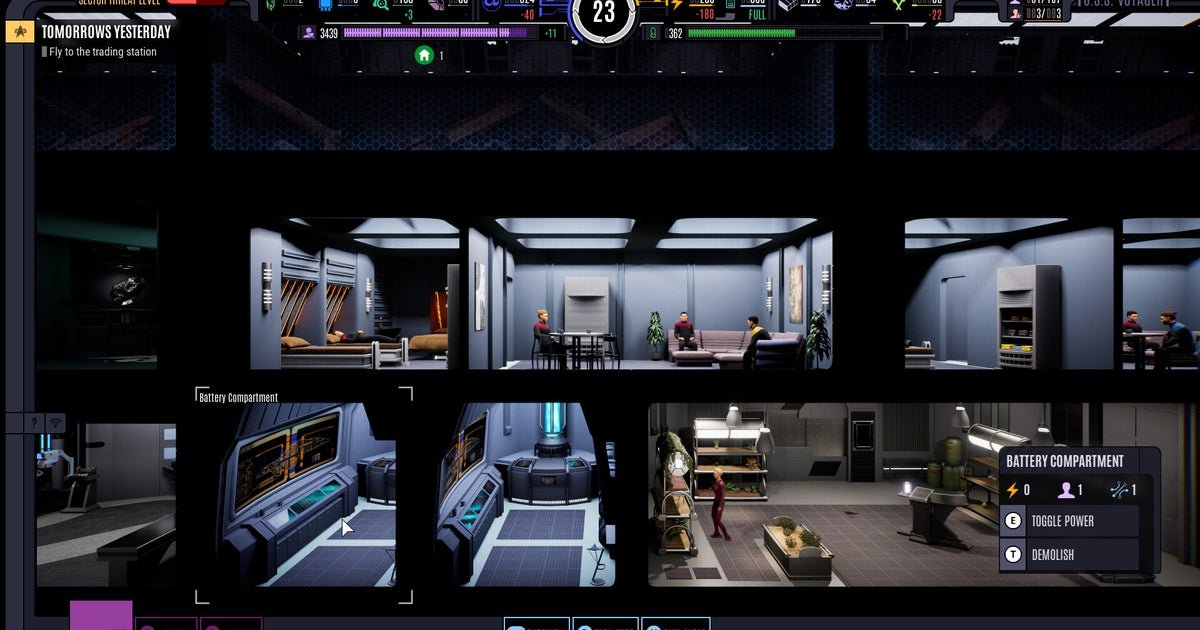
In the original run of the show, Voyager’s constant struggle for basic resources was usually just a low background hum—the kind of thing that only flared up into a major plot point when the script writers needed a “no coffee” joke to humanize Janeway. But in Across the Unknown, that background hum has been replaced by a screaming tactical siren. The game leans incredibly hard into the survival-management meta that has basically colonized the mid-tier PC market over the last few years. You aren’t just the Captain in this version of the story; you’re the Chief Logistics Officer, the lead Architect, and the Head of Human Resources all rolled into one very stressed-out command chair.
It’s a design choice that actually reflects broader industry trends. According to a 2025 Newzoo study, approximately 42% of mid-core gamers now prioritize deep resource management and strategic planning over the traditional action-heavy mechanics we used to see in licensed titles. You can really feel that shift here. You’ll spend a surprising amount of your playtime staring at a cutaway “dollhouse” view of the ship, agonizing over exactly where to place a new storage room or how to squeeze an extra 2% efficiency out of the warp engine’s Deuterium consumption. It’s a massive departure from the breezy, episodic nature of 90s television, but it captures the sheer stress of being 70,000 light-years from a friendly port in a way the show often chose to gloss over for the sake of pacing.
“The spectacle of Voyager sliding over gas giant rings remains pristine in my mind, but I don’t remember the crew losing faith in me because I failed to build a locker room in time.”
Editorial Reflection on Legacy Gaming
There is a strange, lingering tension in playing a game that forces you to micromanage the morale of a crew that, in our collective nostalgia, was always largely unflappable. If you run out of “juice” for the transponder, your bridge officers start to look at you like you’re the deadbeat roommate who forgot to pay the electric bill. It’s a deeply humbling experience, really. It turns the legendary, heroic journey of the Voyager into a series of frantic errands and supply runs, and yet, there’s something undeniably addictive about the whole loop. You find yourself saying “just one more trade” at 2:00 AM, which is usually the sign of a game that’s found its hook.
The Uncanny Valley of the Delta Quadrant
We really need to talk about the visuals, because they are a journey all on their own. Daedalic has a bit of a history with… well, let’s call it “eclectic” art direction. While Captain Janeway looks just enough like Kate Mulgrew to command your respect (despite a certain “demon Botox” quality that early players have been complaining about on the forums), some of the other crew members haven’t fared quite as well. Tom Paris looks like he’s aged twenty years in a weekend and spent most of them at a very high-end buffet, and Kes… well, the less said about her “dunked in custard” aesthetic, the better. It’s a bit of a mixed bag, to put it politely.
But maybe that’s part of the charm? This isn’t trying to be a multi-billion dollar AAA cinematic experience. It’s a survival RPG that feels more like a high-quality Holodeck simulation—the kind of thing Reg Barclay might have programmed during a particularly intense fever dream. The game uses procedural generation for its star systems, which means no two journeys back to Earth are exactly the same. This adds a layer of “roguelike” unpredictability that keeps the 30-cycle gameplay loops from feeling too stale, even if the actual 3D space battles are largely automated affairs that you watch rather than fly.
The Moral Weight of Breaking the Prime Directive
One of the most genuinely intriguing features of Across the Unknown is the freedom it gives you to completely ignore the “Janeway Way.” Right in the prologue, you’re hit with the infamous decision regarding the Caretaker Array. Do you blow it up to protect the Ocampa, or do you use it to insta-warp yourself back to the Alpha Quadrant? The game actually lets you choose the latter. Of course, the consequences of leaving that kind of tech to the Kazon are apparently dire, but it’s a bold move for a licensed game to let you break the very foundation of the show’s premise within the first sixty minutes of play.
And yet, I suspect most of us won’t actually take the shortcut. We’re too conditioned by years of watching the show. We want to be the heroes we grew up with on Tuesday nights. This brings up a fascinating psychological point: a 2024 Statista report found that the global RPG market, currently valued at a staggering $24 billion, thrives on “legacy immersion”—that deep-seated desire players have to inhabit a specific moral framework they already admire. We don’t play Voyager because we want to be space pirates; we play it to see if we could have been as principled as Kathryn Janeway when the Deuterium hits the fan and the lights start flickering.
Where Does the Star Trek Meta Go From Here?
The release of Across the Unknown on PC (with plenty of whispers about potential PS5 and Xbox ports coming later this year) suggests a real shift in how studios are handling the Star Trek IP. We’ve finally moved past the era of mediocre bridge simulators and into something much more granular and personal. This game feels like a distant cousin to XCOM or even Fallout Shelter, but it carries the added emotional weight of thirty years of fandom. It’s not trying to be a summer blockbuster; it’s trying to be a hobby you sink dozens of hours into.
The lack of full voice acting is a bit of a sting, I won’t lie. Reading dialogue bubbles in 2026 feels a little archaic, especially when the script actually does a decent job of capturing the snarky “flyboy” energy of Tom Paris or the Doctor’s famously dry wit. But the “Choose Your Own Adventure” style away missions manage to bridge that gap fairly well, offering enough narrative flavor to distract you from the fact that the characters are silent. It’s a “sparser creation,” as the RPS feed correctly notes, but it’s one that relies on your own memories to fill in the gaps.
Is Star Trek: Voyager – Across the Unknown a direct sequel?
No, think of it more as a “retelling” of the original series journey. It allows players to experience the major plot points of the show while making their own tactical and moral decisions that can wildly deviate from the established canon we know.
Which platforms is the game available on?
As of February 18, 2026, the game is officially out on PC via Steam. There is also a free demo available for those who want to test the ship management mechanics before committing to the full voyage.
Does the game include the original cast’s voices?
Unfortunately, no. The game relies on text-based dialogue and player choices. However, it does feature the official theme music and a script that very closely mimics the distinct personalities of the original crew.
Final Thoughts: Still Looking for Coffee in the Nebula
Ultimately, Across the Unknown is a game built for the people who still remember 6:00 PM as a sacred hour of the day. It’s for the fans who genuinely want to know if they could have handled the Borg, the Kazon, and a failing life-support system all at once without losing their minds. It’s a bit “bog-standard” in its core mechanics, borrowing heavily from the survival and base-building genres, but it’s elevated by its obvious heart and affection for the source material.
It makes me feel old, sure. But it also makes me realize that the enduring appeal of Voyager wasn’t just the sleek ship or the phaser fire—it was the idea of a family stuck in a truly bad situation, just trying their best to make it work. If you can forgive the “sturdy” character models and the silent dialogue, there’s a deeply satisfying loop here. Just do yourself a favor and build those locker rooms on time. Morale is a finite resource, and out in the Delta Quadrant, you’re going to need every single bit of it you can find.
This article is sourced from various news outlets, including the Rock Paper Shotgun Latest Articles Feed. Analysis and presentation represent our editorial perspective.
About the Author