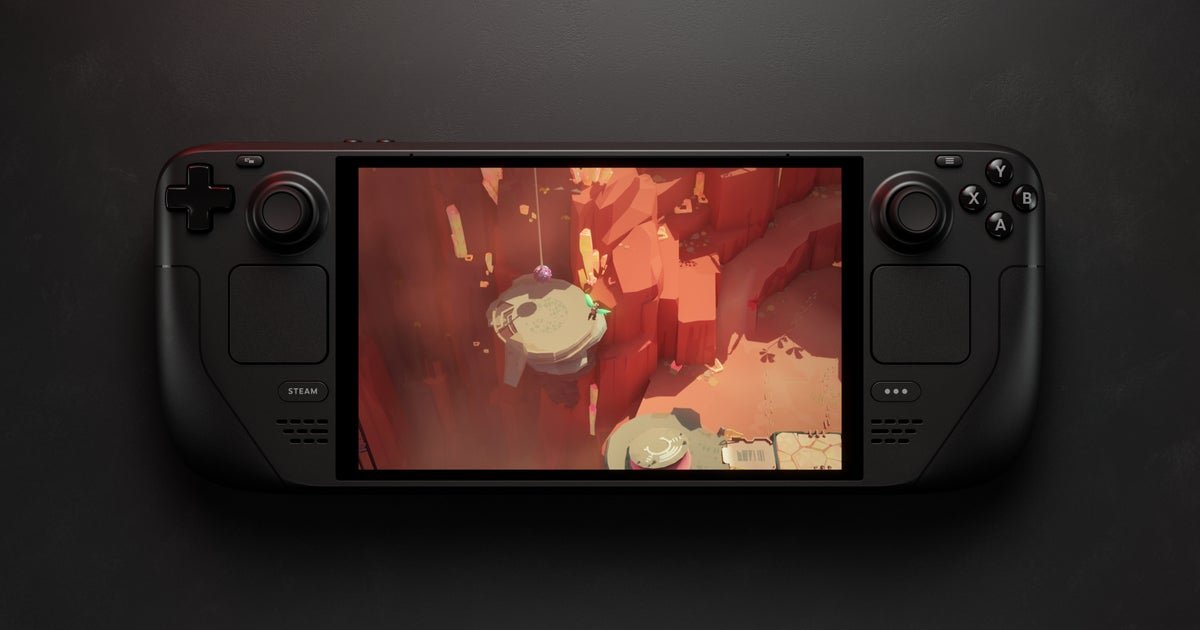
According to Rock Paper Shotgun, when Asian distributor Komodo pushed through a sudden price hike for the Steam Deck OLED in Japan, South Korea, and Taiwan, it sent a quiet tremor through the portable gaming community. That was early 2024. Now, sitting in 2026 and looking back at what seemed like a contained regional adjustment, the whole episode reads less like a local anomaly and more like a sprawling, neon-lit warning sign for the wider hardware world.
Nobody enjoys waking up to find their coveted tech just got brutally more expensive. But the mechanics behind that specific price bump reveal a fascinating, messy truth about how modern gaming hardware actually reaches our hands — and who absorbs the pain when the math stops working.
Valve’s handheld had been riding a tidal wave of genuine goodwill. The OLED revision was a critical darling, correcting the battery complaints and screen shortcomings of the LCD original. Behind the scenes, though, the numbers were getting ugly — the kind of ugly that eventually forces someone’s hand.
Why Your Gaming Hardware Costs More Than the Box It Came In
Komodo Station, Valve’s appointed seller for the Deck across Asia, didn’t soften the message. They pointed squarely at the twin pressure points of the modern tech world: surging logistics costs and wildly shifting exchange rates. In practice, when you actually trace those numbers back through the supply chain, the complaint holds up.
Hardware pricing, it turns out, isn’t purely about what the microchips cost to manufacture. It’s about what the currency used to buy those microchips is actually worth on any given Tuesday. Per Reuters market data, the Japanese Yen spent the bulk of 2023 and 2024 sliding to historic multi-decade lows against the US dollar — the kind of depreciation that turns a comfortable import margin into a slow financial hemorrhage. When your local currency loses that much purchasing power, importing premium electronics priced against the dollar stops being a business and starts being a liability.
The raw numbers from that March 6th adjustment tell the story plainly. Japan’s 512GB OLED Deck jumped from ¥84,800 to ¥99,800 — a crisp ¥15,000 increase that, when converted at prevailing rates, meant Japanese buyers were suddenly paying the equivalent of $637 for a device retailing at $549 in the United States. The 1TB model absorbed an identical ¥15,000 hike, pushing it to roughly $733 against the $649 US sticker. South Korea and Taiwan took comparable hits — the Korean 1TB model spiked to ₩1,048,000, Taiwanese units climbed to NT$22,480.
Hong Kong, curiously, was spared entirely. Komodo noted the impact there was “relatively limited.” The reason? The Hong Kong Dollar is pegged directly to the US Dollar. Stark proof — the undeniable kind — that this wasn’t corporate opportunism. Pure currency defense. Nothing more.
When Memory Markets Go Haywire, Everyone Pays
There was another ghost haunting the tech supply chain back then, one that engineers and procurement managers had taken to calling “RAMnarök” — half joke, half existential dread. Memory shortages were creating a chokepoint that rippled outward in ways consumers rarely see until the price tag changes.
We tend to think of gaming hardware as static. A console launches at $500, holds that price until a slimmer version arrives, and the world keeps spinning. That assumption — comfortable as it is — doesn’t survive contact with the PC handheld market, which is deeply tethered to the volatile rhythms of PC component pricing.
A 2024 analysis by TrendForce found that DRAM contract prices surged nearly 20% in a single quarter during that period. Devices built around unified high-speed RAM — the Steam Deck very much among them — feel that squeeze almost immediately, with no buffer between the component market and the retail shelf. Komodo’s vague reference to “logistics costs” almost certainly folded in the sheer difficulty of sourcing these constrained parts at predictable prices.
The reality of third-party distribution is harsh. Valve can afford to take a hit on hardware to sell you software. Their distributors cannot.
Industry Hardware Analyst
Getting components onto a container ship, keeping regional warehouses adequately stocked, and absorbing the friction of localized shortages creates a cascading cost effect. When supply tightens, the per-unit economics of shipping and handling move in exactly the wrong direction. Add a collapsing currency on top of that. Then add a memory crunch. That’s not a headwind — that’s a perfect storm, and Komodo was standing directly in it.
Valve’s Distribution Gamble — and Who Gets Left Holding the Bill
To understand why the Asian market absorbed the blow while the US and UK largely coasted, you need to understand the structural difference in how the hardware actually moves.
In the West, Valve sells the Steam Deck directly to the buyer. Manufacturer, distributor, storefront — all one entity, all one margin. Valve can afford to price hardware aggressively, almost self-destructively, because they have a clear line of sight to what happens next: you unbox the device, open Steam, and start buying games. Roguelikes. A sprawling AAA RPG or two. Some DLC you’ll feel mildly guilty about. Valve takes their standard 30% on all of it. The hardware is practically a delivery mechanism for software revenue.
Komodo doesn’t have that luxury. Not even close.
As a regional distributor, Komodo receives no slice of your Steam library purchases — not a single yen, won, or dollar from your digital spending. They acquire the hardware, ship it across an ocean, localize the marketing, handle the warranty claims, and sell the box. Their entire business model rests on the margin of that physical transaction. When the Yen craters and memory prices spike, that margin doesn’t shrink. It evaporates. Passing the cost to the consumer isn’t a choice so much as a matter of survival.
What this dynamic exposed — quietly but unmistakably — was a structural vulnerability baked into Valve’s global expansion strategy. When you outsource your distribution, you outsource your pricing control. Simple as that.
The Anglosphere Watched, Braced, and Then… Exhaled
At the time, buyers in the US and UK were understandably anxious. If Asia was absorbing inflation and component pricing this visibly, was the English-speaking world next? “Sadness Island” — the UK’s affectionate self-deprecating nickname for its perpetually punishing tech prices — seemed primed for another gut-punch.
It didn’t materialize. Not in the sweeping, coordinated fashion many anticipated.
Valve held firm in their primary direct-to-consumer territories, at least for that cycle. But the Asian adjustments left behind something that couldn’t be walked back: the reminder that cheap, subsidized tech was never a universal condition. It was always contextual — contingent on currency stability, component availability, and the specific business model of whoever was selling the device in your postcode. Sony had already demonstrated this a year earlier, raising the PS5’s price across nearly every global territory except the United States, citing the same macroeconomic headwinds.
The pattern is hard to ignore. Hardware manufacturers — when forced to choose — typically protect the US market first. If you’re buying electronics outside America, your entry price to premium gaming is, in some meaningful sense, hostage to macroeconomic forces that have no interest in your hobby.
The Handheld Market Grew Up — and Got More Expensive
Fast forward to today. The handheld PC space is genuinely crowded — ASUS, Lenovo, MSI, and a constellation of Chinese boutique brands all competing for the same backpack slot. The category has matured at a pace that would have seemed implausible before the Steam Deck proved the concept.
Recent projections from Statista show the global handheld gaming computing market posting aggressive double-digit growth year over year since the Deck’s introduction. More competition, you’d think, should push prices down. It hasn’t. The baseline cost of a premium handheld has crept steadily upward, and the Komodo episode — looked at honestly — helps explain why.
That ¥99,800 price tag on a 512GB OLED Deck in Japan didn’t kill momentum. Enthusiasts complained at volume, clutched their wallets theatrically, and then — almost uniformly — bought it anyway. That consumer resilience, when tested against a hard price ceiling, gave the broader industry a kind of implicit permission slip: stop chasing the mythical $399 price point. The market will follow you higher if the product earns it.
Trace a line from those regional 2024 adjustments to the premium handhelds arriving now — many pushing confidently past $700, some approaching $800 — and the connective tissue is right there.
Why did Valve use a third-party distributor in Asia?
Expanding into Asian markets requires complex localized customer support, distinct warranty handling, and entirely different retail logistics. Partnering with an established local entity like Komodo allowed Valve to enter Japan, South Korea, Taiwan, and Hong Kong much faster than building out their own infrastructure from scratch.
How do current PC handheld prices compare to traditional consoles?
PC handhelds remain significantly more expensive than base consoles like the Nintendo Switch or standard Xbox Series models. Because PC handhelds rely on specialized, miniaturized APUs and high-density memory without the benefit of massive, closed-ecosystem software subsidization in all regions, they naturally sit at a premium price point.
Portable Power Has Always Come With a Price Floor — We Just Forgot
There’s a ceiling — or more accurately, a floor — on how cheap genuinely capable portable electronics can get. The physics of cramming desktop-class architecture into a chassis light enough to hold on a train dictates a manufacturing cost that no amount of market competition has yet managed to undercut in any meaningful way. When that floor gets tested by currency volatility and component shortages simultaneously, something breaks. In 2024, what broke was the price.
The Asian adjustments stripped away a comfortable illusion: that gaming hardware exists in its own sealed ecosystem, insulated from the messier forces of global finance. A currency chart moving in Tokyo directly shapes what a commuter in Osaka pays to run Elden Ring on the train. A memory fabrication plant throttling output in Taiwan quietly dictates the Christmas inventory strategy of a retailer in London. These systems are connected in ways that become visible only when something goes wrong.
We are all, in some sense, paying a tax levied by a deeply interconnected and genuinely fragile global supply chain — one that was never designed with gaming budgets in mind. The Steam Deck OLED remains a remarkable piece of engineering. Spending time with it hands-on, the build quality and screen still hold up against anything released since. But sitting at the bleeding edge of portable hardware means accepting, occasionally and with some grace, that staying there costs real money.
The canary sang in 2024. The industry heard it, noted the consumer response, and adjusted its ambitions accordingly. Higher. Always higher.
Source material compiled from several news agencies. Views expressed reflect our editorial analysis.
About the Author