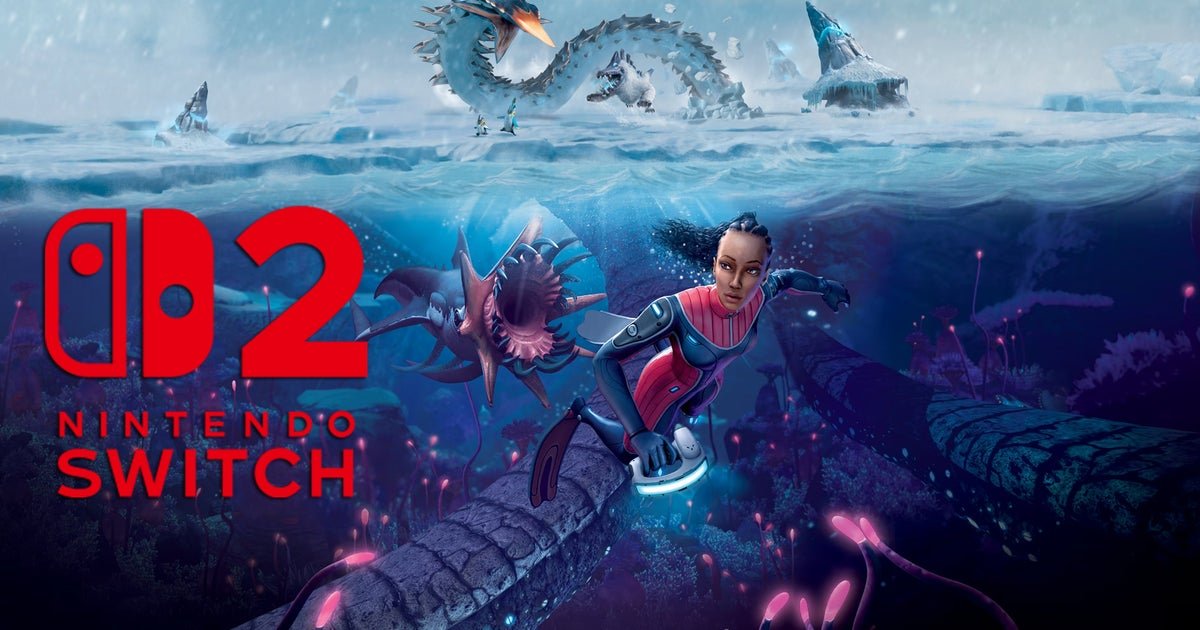
If you’ve ever spent time drifting through the alien oceans of 4546B, you know exactly which brand of dread I’m talking about. It’s that haunting, stomach-churning moment when the seafloor suddenly vanishes beneath your fins, leaving you suspended over an absolute, ink-black abyss where light simply refuses to go. In those moments, the only things keeping you tethered to reality are the rhythmic, mechanical hum of your Seamoth and that distant, bone-chilling roar of something—well, something much, much larger than you. For years, the Nintendo Switch community has braved these terrifying depths, though we’ve had to do it while navigating a few technical hurdles that, let’s be honest, occasionally broke the immersion. But if the latest reports from the Eurogamer.net feed are anything to go by, that’s all about to change in a way that feels almost too good to be true.
Yesterday, February 11th, we were hit with the kind of surprise announcement that makes the entire gaming community collectively hold its breath. Krafton and the team at Unknown Worlds didn’t just drop a minor update; they announced that both the original Subnautica and its icy successor, Subnautica: Below Zero, are getting massive, completely free upgrades specifically tailored for the Nintendo Switch 2. And here’s the kicker: we aren’t going to be sitting around for months waiting for these enhancements to arrive. The patches are scheduled to go live on February 17th. That is just a few days from now. It’s a move that feels less like a standard patch and more like a victory lap for a franchise that has essentially redefined what a survival game can be, and it sets the stage perfectly for the full-blown sequel arriving later this year.
Why 60 FPS isn’t just a luxury—it’s the survival tool we didn’t know we needed
Let’s take a moment to address the Reaper Leviathan in the room: performance. The original Switch ports of these games were, in many ways, minor miracles of software engineering. The fact that those sprawling, resource-heavy underwater worlds ran at all on a handheld from 2017 was impressive. But let’s be real—they weren’t exactly “smooth.” We’re talking about a game where your visibility and your split-second reaction times are often the only things standing between you and becoming fish food. Trying to pilot a Prawn Suit through a jagged, narrow cavern while the frame rate chugged along was, to put it mildly, an exercise in absolute frustration. It’s hard to feel like a master of the ocean when your screen is stuttering during a life-or-death escape.
The new technical specifications for the Switch 2 versions are, quite frankly, a godsend for anyone who values their sanity. We are looking at a crisp 1440p resolution when the console is docked to your TV, and a solid 1080p when you’re playing in handheld mode. But the real headline—the thing we should all be shouting from the rooftops—is the 60 frames per second (FPS) target across both modes. If you’ve spent any time following the tech side of gaming recently, you know that 60 FPS has become the gold standard for true immersion. It’s not just about things looking “prettier”; it’s about the game feeling responsive. According to a 2024 survey by Newzoo, nearly 60% of core gamers now prioritize frame rate over raw resolution in action-oriented titles. For a first-person experience like Subnautica, where you’re constantly scanning the horizon and the murky depths for the slightest hint of movement, that extra fluidity is going to fundamentally change the entire vibe of the game. It makes the world feel solid, reactive, and infinitely more dangerous.
And the improvements don’t stop at the pixel count. The official press release made a point to mention “optimized controls” specifically designed for the new Joy-Con 2. While the developers have been a bit mysterious about the nitty-gritty details, the promise of “more precise movement” and “refined interaction” suggests that the haptic feedback on the new hardware is finally being put to work. Just imagine for a second: feeling the subtle, low-frequency thrum of a nearby Reefback vibrating through your controllers, or the sharp, directional jolt of a Crashfish exploding just behind your left shoulder. It’s these small, tactile touches that turn a good game into a hauntingly real world that you can almost touch. It’s about closing the gap between the player and the environment.
“The transition to 60 FPS isn’t just a luxury for a game like Subnautica; it’s a fundamental shift in how the player perceives the environment. When the world moves as fast as your eyes do, the fear becomes much more immediate.”
— Editorial Analysis, February 2026
More than just a patch: This is Nintendo’s way of proving the Switch 2 is the real deal
This announcement feels like a strategic masterstroke for both Nintendo and Krafton. We are still in that “proving ground” phase for the Switch 2, where the console needs to demonstrate that it can handle modern, demanding experiences without the dreaded “Switch tax”—that compromise where we accept downgraded visuals and blurry textures just to play on the go. By offering these upgrades for free, the developers are rewarding the loyalists who already bought the games on PC, PS4, Xbox One, or the original Switch, while simultaneously giving new owners a compelling reason to dive in for the first time. It builds a massive amount of goodwill at a time when gamers are increasingly wary of being asked to pay twice for the same content.
There’s a broader economic story here, too. A 2023 Statista report highlighted that the global handheld gaming market had surged to nearly $190 billion, driven largely by a growing demand for “PC-quality” experiences that don’t tie you to a desk. By hitting 1080p/60fps in handheld mode, Subnautica is essentially matching the performance of many mid-range gaming laptops. It’s a bold statement of intent: the Switch 2 isn’t just a minor iteration or a “Pro” model; it’s a serious piece of hardware that can finally do justice to the sprawling, bioluminescent beauty of Planet 4546B. It means you can take the full, uncompromised experience of the Lost River or the Aurora wreckage with you on a plane or a train without feeling like you’re playing a “lesser” version.
But there’s a deeper layer to this narrative that we shouldn’t ignore. There has been some “past drama” floating around—specifically regarding Krafton’s previous comments about the sequel’s monetization and the potential for a “games as a service” model. That news left a bit of a sour taste in the mouths of long-time fans who just wanted more of the lonely, atmospheric survival they fell in love with. This move, providing high-quality, free upgrades to the existing library, feels like a genuine peace offering. It’s a way of saying, “We still care about the core experience,” even as they prepare for the massive launch of Subnautica 2 later this year. It keeps the IP relevant and keeps the fans engaged and happy during the final, grueling stretch of the sequel’s development. It’s smart PR, but it’s also just good for the players.
Setting the stage for a sequel that actually feels like next-gen
Speaking of the sequel, the timing of this patch is absolutely no accident. Alongside the Switch 2 news, Unknown Worlds dropped a brand-new developer vlog that gave us a peek behind the curtain. If you haven’t seen it yet, do yourself a favor and go watch it, if only to see how far the engine has come since the early days of Early Access. The sequel is being built from the ground up to take full advantage of current-gen technology, and the fact that they are bringing the older games up to speed on the Switch 2 suggests that Nintendo’s new console will likely be a primary platform for Subnautica 2 right out of the gate. They are essentially training us to expect high-end performance on a Nintendo device.
We’ve seen a lot of “remasters” and “remakes” lately that feel like nothing more than cynical cash grabs designed to pad out a fiscal quarter. This doesn’t feel like that at all. This feels like a studio that is genuinely proud of what they’ve built over the last decade and wants it to be experienced in the best possible light. Whether you’re a veteran diver who has already built a sprawling, multi-story base in the depths of the Lost River, or a complete newcomer who hasn’t yet had the “pleasure” of meeting their first Stalker, the February 17th update is the perfect excuse to head back into the water. It’s a chance to see these worlds as they were always meant to be seen.
And let’s be honest for a second: we all need a little more “silky smooth thalassophobia” in our lives. There’s something uniquely meditative, almost therapeutic, about the Subnautica loop—the constant cycle of gathering, building, exploring, and surviving. It’s a game that respects your intelligence, your curiosity, and your sense of wonder. Seeing it run at a fluid 60 FPS on a handheld device is going to be a revelatory experience for a lot of people. It’s the version of the game we’ve been dreaming about since the first time we picked up a Switch, and it’s finally, finally almost here. It feels like the hardware has finally caught up to the developers’ imagination.
What does this mean for the future of the franchise?
I suspect we’re looking at a new standard for the industry as a whole. As hardware capabilities finally start to catch up to developer visions, we’re seeing that “legacy” games aren’t being left behind to rot on old systems; they are being elevated and brought forward. It’s a massive win for game preservation and an even bigger win for the players who have invested hundreds of hours into these worlds. If this is how Krafton is handling the transition to the Switch 2, it gives me a lot of genuine hope for how they’ll handle the eventual launch of the sequel. They aren’t just selling us a product; they’re maintaining a living world that they want us to keep visiting for years to come. It shows a level of commitment to the brand that is becoming increasingly rare in the AAA space.
Will the physical versions of the games get the upgrade?
Absolutely! If you’re like me and still love owning physical media, don’t worry. If you own the physical cartridges for the original Switch, the system should automatically prompt you for a free digital download of the “Enhanced” version the moment you insert the game into your new Switch 2 console. It’s a seamless process that ensures your physical collection doesn’t become obsolete overnight.
Is there any new content in these upgrades?
While the developers haven’t added new story beats or biomes in this specific patch, the “optimized controls” for the Joy-Con 2 and the massive jump in performance essentially make it feel like a brand-new game. The increased draw distance and lack of pop-in change the way you explore. Plus, it’s arguably the best way to refresh your memory and prep your skills for the sequel coming later in 2026. Think of it as the ultimate “definitive edition” of the story so far.
What about save transfers?
This is the big question everyone is asking, and thankfully, Unknown Worlds has confirmed that cloud saves will be fully compatible. This means you can pick up right where you left off on your original Switch—whether you’re halfway through building a Cyclops or just starting your first base—and continue the journey on the Switch 2 with a much better frame rate and higher resolution. No need to restart your hundred-hour save unless you just want to experience the beginning again in 60 FPS.
So, go ahead and mark your calendars for February 17th. Double-check your oxygen tanks, make sure your batteries are fully charged, and maybe keep a light on in the living room if you’re playing at night. The ocean is calling for us again, and this time, it’s going to look—and feel—better than it ever has before. It’s a great time to be a fan of survival games, and an even better time to be a Switch owner.
This article is sourced from various news outlets. Analysis and presentation represent our editorial perspective.
About the Author