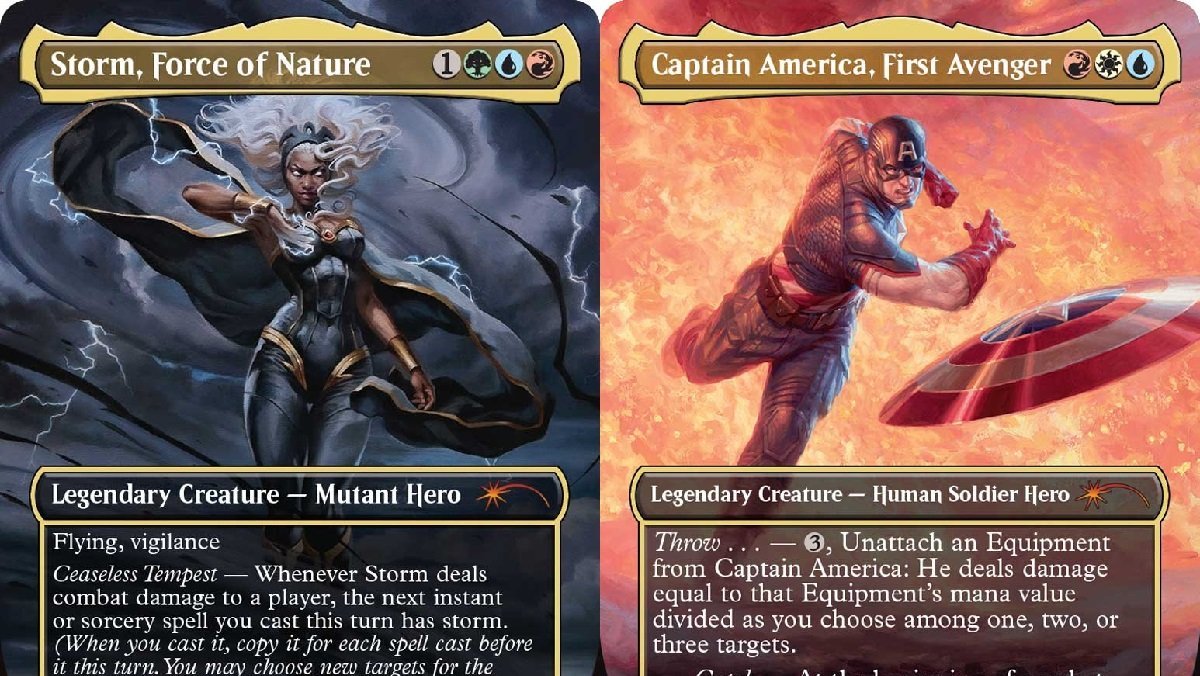
According to IGN Video Games, Magic: The Gathering’s crossover frenzy shows no sign of cooling — and Marvel officially lands on our tables this June. The set packs plenty of iconic heroes and villains from across the comic universe. But if you want the real treasures — the chase cards that command serious respect and even more serious cash — you have to look toward Collector Boosters.
That’s where things get painfully expensive.
As of early 2025, sitting just a few months out from the summer launch, a Collector Booster display box carries a market price hovering around $677. Want just a single pack? That’ll run you about $67. Let that sink in for a second — sixty-seven dollars for fifteen pieces of printed cardboard. In practice, that price tag lays bare a fundamental shift in how publisher Wizards of the Coast handles its biggest releases, leaning hard into premium pricing whenever a beloved intellectual property is involved.
Why a Box of Cardboard Now Costs More Than Your Rent
We’ve seen this pattern before. The trading card industry detonated over the last several years, morphing from a niche tabletop hobby into a full-blown alternative asset class. A recent industry analysis of the global trading card game market (per Grand View Research) valued the sector at over $6 billion globally. Companies aren’t just selling game pieces anymore. They’re selling lottery tickets dressed up as nostalgia.
Wizards of the Coast knows exactly what they’re doing. By fracturing their product line, they attempt to serve two entirely different audiences — one that wants to play, and one that wants to possess.
On one side, Play Boosters. These hold to their standard, far more accessible MSRP — functional, approachable, and perfectly suited for actually sitting down and playing the game. Want to build a Spider-Man deck to dismantle your friends at the kitchen table? Play Boosters handle that without drama.
Then there are the Collector Boosters. These exist purely for the whales. The foil obsessives. The high-roller speculators treating cardboard like a brokerage account.
Since the full card list hasn’t been revealed yet, we can only speculate about what these $67 packs conceal. A serialized Infinity Gauntlet? A one-of-a-kind alternate art Wolverine? Whatever it turns out to be, the odds of pulling it are vanishingly slim — which is precisely what sends box prices into the stratosphere on the secondary market.
The One Ring Already Broke the Mold — Now Everyone’s Chasing the Sequel
You can trace this particular pricing logic directly back to the Lord of the Rings crossover. When Wizards printed a solitary, serialized “One Ring” card, the community descended into an absolute frenzy. People bought Collector Boosters by the pallet — literally.
The card was eventually unearthed and sold to Post Malone for $2 million. That single transaction permanently rewired the DNA of Magic: The Gathering.
“The introduction of third-party intellectual property fundamentally shifted the economic ceiling of tabletop gaming. Fans aren’t just buying game pieces; they are competing for high-end pop culture memorabilia.”
— Independent TCG Market Analysis
Every major crossover set since has been chasing that same bolt of lightning. The Marvel set is positioned beautifully to try. Comic book collectors already have artificial scarcity baked into their bones — they’ve spent decades hunting variant covers and first appearances, losing sleep over print runs and graded slabs. Fusing that existing collector psychology with Magic’s aggressively tiered booster pricing is a recipe for financial bedlam.
Hasbro, the parent company of Wizards of the Coast, understands this dynamic with uncomfortable precision. Last year, the gaming division reported over $1 billion in revenue, driven substantially by these sprawling Universes Beyond crossovers. The formula, at this point, is almost embarrassingly legible: acquire a beloved franchise, attach it to mechanically distinct Magic cards, bury the most visually spectacular versions inside expensive wrappers, collect revenue. Repeat.
You Don’t Have to Spend $677 — But the Workarounds Are Slim
Refuse to drop nearly seven hundred dollars on a single booster box? A handful of backdoor options do exist for securing a Collector pack without torching your savings account.
The Bundle: Gift Edition runs $89.99. Inside: nine standard Play Boosters, some basic lands, a storage box, and exactly one Collector Booster. Decent middle ground, honestly. You get enough standard cards to actually construct a deck, plus one scratch-off ticket for that ultra-rare Doctor Doom card you’re probably not going to pull.
Draft Night is the other route — a $129.99 boxed product designed for a group experience. It packs 12 Play Boosters for drafting, with a single Collector Booster positioned as the prize for whoever wins. Available for preorder right now.
Draft Night is, frankly, the healthiest way to engage with these premium packs. The reward is tethered to actual gameplay rather than raw gambling impulse. You’re not ripping packs alone in your car at midnight, hoping to strike gold. You’re earning it across a table with people you actually know.
Digital Players Live in a Different Economic Universe
Paper Magic is only half the picture. Over in the digital space, MTG Arena players on PC, Mac, and mobile inhabit a completely different economic reality — and in some ways, a more rational one.
Digital players sidestep the artificial scarcity of physical cardboard entirely. On Arena, a Mythic Rare Iron Man costs the exact same number of digital wildcards as a Mythic Rare bulk card from three years ago. The client flattens the economy into something almost aggressively democratic. Secondary market fluctuations become irrelevant. The current meta’s best deck remains equally accessible whether you started playing last week or in 2017.
But physical tabletop Magic remains the beating heart of the franchise. And the physical game is fracturing — visibly, uncomfortably — between the haves and the have-nots.
When a single pack of physical cards carries the same sticker price as a brand-new AAA release on PS5 or Xbox, the barrier to the premium experience stops feeling like a minor inconvenience and starts feeling genuinely hostile to average players. Sure, the base game stays relatively accessible. Nobody needs the shiny foil Marvel cards to pull up a chair. But in a hobby built entirely around personal collection and self-expression, being priced out of the most spectacular versions of your favorite characters — that stings in a specific, lasting way.
Commander Pods Are About to Get Very Expensive, Very Fast
The ripple effects of these costly cards don’t stay confined to collectors’ binders. They bleed directly into how the game is actually played — nowhere more acutely than in the Commander format, currently the most popular way to play Magic. Commander runs on 100-card decks typically themed around a single legendary creature, which means thematic coherence matters enormously to the players who love it most.
When Marvel drops, every Commander pod at your local game store will feature someone attempting a Captain America or Magneto build. Guaranteed.
Here’s the uncomfortable part: if the best synergy pieces for those decks end up locked behind higher rarity tiers with steep secondary market valuations, casual players get squeezed toward the margins. We watched this exact phenomenon unfold with the Fallout and Doctor Who sets — the most mechanically distinctive cards spiked immediately after release, leaving budget-conscious players scrambling for inferior substitutes. The hands-on reality is that Commander, a format that once celebrated creativity over budget, increasingly rewards whoever can afford to chase the premium pulls.
Will Play Boosters contain any rare Marvel cards?
Yes, Play Boosters still contain standard rares and mythic rares from the Marvel set. However, the highly sought-after alternate arts, serialized cards, and special foil treatments are typically locked almost exclusively behind the more expensive Collector Boosters.
Sixty Sets a Year and a Community Running on Fumes
All of this forces a genuinely uncomfortable question. Who is this relentless volume of product actually built for?
Magic players are, by most accounts, deep in product fatigue. There is always another set. Always another Secret Lair drop materializing in the inbox. Always another crossover event demanding attention and wallet space. The Marvel set arrives in June — but by August, the conversation will almost certainly have pivoted to whatever sprawling intellectual property Wizards has lined up next. The cadence is punishing.
Recent hype cycles tell a consistent story. The Avatar: The Last Airbender set triggered a frenzied rush, though Amazon deals occasionally surface to soften the blow for collectors arriving late to the party. The pacing doesn’t slow down. It accelerates.
Is that sustainable? That’s the question nobody at Wizards seems eager to answer publicly.
If you’re planning to engage with the Marvel crossover, set a firm budget before the first pack hits shelves. Decide early whether you want to actually play the game with your friends around a table, or whether you want to own a gleaming piece of comic book history behind protective sleeves. Chasing both simultaneously — that’s how wallets get emptied. Quickly.
This article is sourced from various news outlets. Analysis and presentation represent our editorial perspective.
About the Author