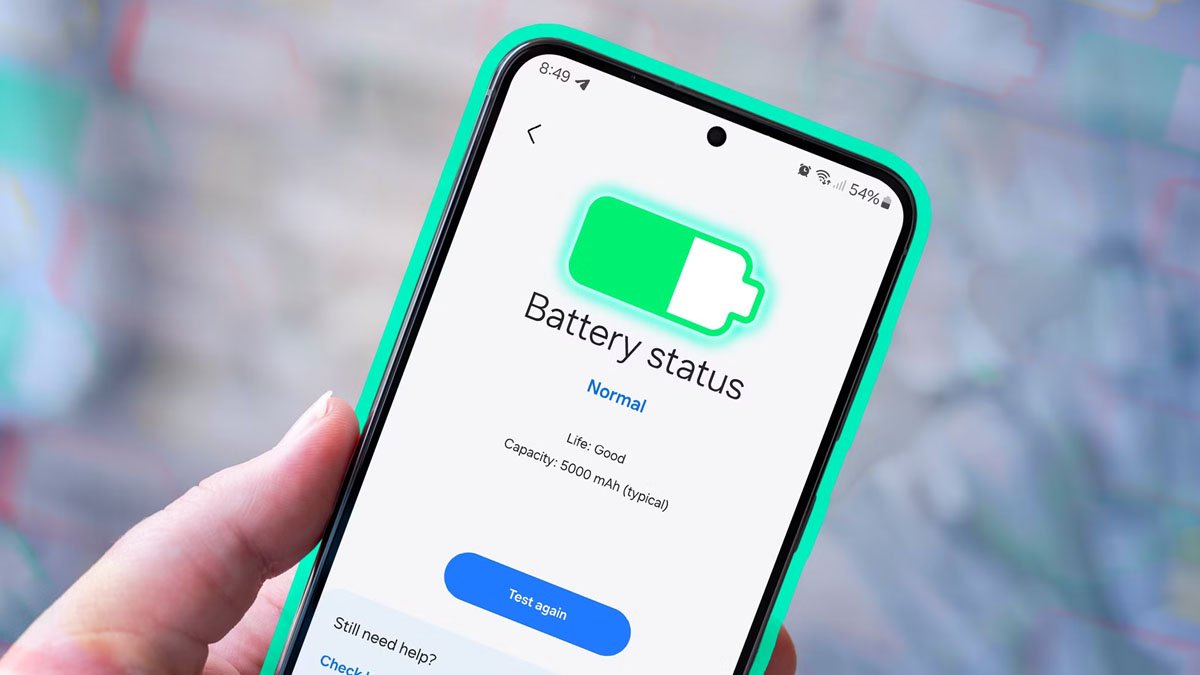
We all remember the exact moment it happens. You buy a brand-new, painfully expensive flagship phone. For weeks, you treat it like a Fabergé egg — something fragile, irreplaceable, almost sacred. Then, one random Tuesday, you open the settings menu out of sheer curiosity and see it. Maximum Capacity: 99%.
Your heart drops. The honeymoon is officially over. Entropy wins again.
According to Gamebrott.com, this particular strain of technological anxiety — what they aptly dub “crazy battery health disease” — has metastasized into a full-blown epidemic among modern smartphone users. A feature originally designed purely for transparency has warped into a persistent source of digital dread. We buy these extraordinarily powerful pocket supercomputers to make our lives easier, yet we end up white-knuckling over a single, inevitably declining metric.
Having watched this behavior escalate across nearly a decade of tech coverage, I can tell you: as of 2026, the obsession has reached genuinely absurd heights. We are letting a tiny, fluctuating percentage dictate how we interact with hardware we literally paid thousands of dollars to own.
Your Phone Is Dying. It Always Was. That’s Fine.
Get the harsh reality out of the way first. A lithium-ion battery is a consumable chemical component — not a monument, not a legacy, not something to be preserved under glass. It is fundamentally engineered to degrade.
Think of it like the tires on a car. Nobody buys a sports car and then refuses to take it on the highway because they’re anxious about wearing down the tread. But with smartphones, we treat the battery as though it’s supposed to be immortal — as though the laws of chemistry should bend themselves around our anxiety. When you examine the fundamental chemistry of lithium-ion cells, this degradation isn’t a design flaw. Physics. That’s all it is.
Yet a 100% battery health score has become a badge of honor in certain corners of the internet. Maintaining that pristine figure for months is, in various online communities, treated as a competitive sport — the kind with unspoken rules and genuine social pressure. The moment it slips to 98% or 97%, panic floods the thread. Users start performing bizarre, almost superstitious rituals: obsessive reboots, useless “calibration” cycles that haven’t been remotely relevant since the nickel-cadmium era, elaborate charging schedules mapped out in spreadsheets.
Statista data shows that global smartphone replacement cycles have stretched well past the three-year mark across many regions. Because we’re clinging to devices longer, we’re forced to watch their physical decline in real time — every percentage point a small funeral. But obsessing over the number doesn’t slow the clock. It just poisons the time you have left with the device.
You Paid for a Racecar and You’re Driving It in First Gear
Here is where the psychology curdles from fascinating into genuinely maddening. The dread of battery degradation is actively reshaping how people use their tech — and nowhere is that more visible than in mobile entertainment.
PC gamers don’t throttle their liquid cooling or deliberately downclock their GPUs to protect resale value. PS5 and Xbox owners don’t lie awake worrying about thermal paste decay every time they boot up a demanding AAA title. They load the game. They play it. Simple. But in the mobile space? Completely different psychology at work.
Mobile gamers will drop serious cash on a top-tier flagship — a device running a state-of-the-art Snapdragon or Apple silicon chip — built specifically to handle heavy titles like Genshin Impact, stream Xbox Cloud Gaming, or run Nintendo Switch emulators at full clip. And then, almost immediately, they hobble the thing. Graphical settings dropped to low. Framerate capped at 30fps on a gorgeous 120Hz OLED panel. All of it — voluntary.
Why? Because pushing the hardware generates heat, and heat, in the battery health gospel, is the ultimate sin. A 2025 report by Newzoo examining mobile gaming habits found that nearly 35% of high-end device owners actively restrict their in-game settings to manage operating temperatures and protect long-term battery longevity. In practice, what that means is a premium device — one that cost north of $1,000 — running like a budget handset from three years ago.
“We are sacrificing our present enjoyment to preserve a hypothetical future value. It’s the technological equivalent of keeping plastic covers on your living room sofa.”
— The Modern Tech Paradox
That’s the bitter irony baked into all of this. You’ve paid a premium for peak performance, then turned your gaming powerhouse into a glorified email machine — all to appease the battery health gods. The sofa exists to be sat on. The phone exists to be used.
The Secondhand Market Turned Battery Health Into a Weapon
Driving much of this anxiety — particularly in markets like Indonesia, where device resale culture runs deep — is a near-pathological fixation on secondhand value. The pre-owned smartphone market is cutthroat, and buyers have weaponized the battery health metric with surgical precision.
Anything below 90%? Immediate ammunition. Prospective buyers and flippers brandish that figure to brutally negotiate prices down, and the psychological weight of seeing an “8” lead that percentage is enough to knock real money off an otherwise perfectly functional device. Not a cracked screen. Not a failing speaker. A battery reading.
Because of this, users slip into a kind of ultra-protective paranoia — one where they aren’t really using the phone for themselves anymore. They’re babysitting it for the next owner. Years of compromised experience, all to squeeze an extra $40 out of a buyer on Facebook Marketplace sometime in 2027.
Run the actual math and it collapses immediately. Restricting your use of a $1,000 device across 1,000 days — every gaming session throttled, every fast charge avoided — just to sidestep a $70 battery replacement fee somewhere down the road. We’re treating a rapidly depreciating piece of consumer electronics like an appreciating asset. It is not. It never was. And the real cost isn’t measured in dollars — it’s measured in the daily experience we quietly gave up.
The Fast Charger Is Sitting Right There. They Won’t Touch It.
Nowhere does this paranoia reach more theatrical heights than around the act of charging. Which, when you think about it, is the most routine thing a phone owner does.
We are living through a genuine era of charging miracles. Fast charging technology cleared 240W a couple of years back — a number that still seems slightly unreal — and even mid-range phones today can claw back from zero to full in under 30 minutes. The entire point of that engineering effort was freedom: plug in during a shower, walk out the door fully charged. Untethered.
The battery health truthers want no part of it. Convinced that fast charging will incinerate their cells, they excavate ancient 5W bricks from 2014 and commit to four-hour charging sessions as a kind of penance. Those who do work up the nerve to use fast chargers — and this is where things get genuinely theatrical — prop their phones in front of desk fans or crouch them beneath air conditioning vents to keep the chassis cold during the process. Elaborate. Exhausting. Entirely self-imposed.
We pay a premium for convenience, then actively reject that convenience out of fear. The charger sits there, fast and capable, and we reach past it for the slow brick. That’s the hands-on reality of where this anxiety leads: technology designed to give you time back, abandoned because of a number we’ve collectively decided to treat as gospel.
The Battery Was Always Going to Die. Use the Thing.
Breaking this cycle starts with a blunt reframe. A smartphone is a tool — meant to be used, pushed, and eventually worn out. Not curated. Not preserved. Not handed down like an heirloom. We need to stop treating electronic devices and their internal components as permanent artifacts, because they were never designed to be.
If your phone still carries you through the day — email, social media, a heavy roguelike during the commute — the battery is doing exactly what it was built to do. A slide from 100% to 88% isn’t a failure. It’s evidence of a device that has genuinely lived alongside you, absorbed your daily life, held up under real use. That’s the whole point of the thing.
And consider the actual timeline here. By the time battery health degrades enough to genuinely disrupt your day — typically somewhere below 80%, per Apple’s own guidance — the handset itself will, in most cases, already feel obsolete. The hardware refresh cycle will have lapped it. The phone you’re so carefully preserving will be two generations behind before its battery becomes a real problem.
Your mental bandwidth is worth considerably more than a digital estimate buried three menus deep in a settings screen. Stop checking the number. Turn the graphics back up to high. Plug into the fastest charger you own and walk away without a second thought.
Let the battery degrade. That’s precisely what it was born to do.
Based on reporting from various media outlets. Any editorial opinion is that of the author.
About the Author