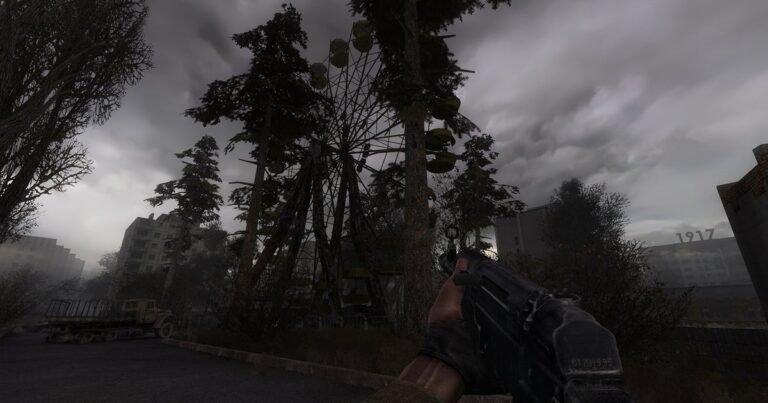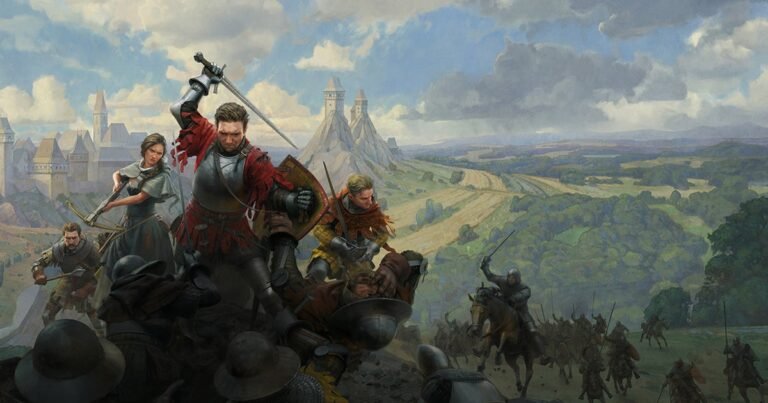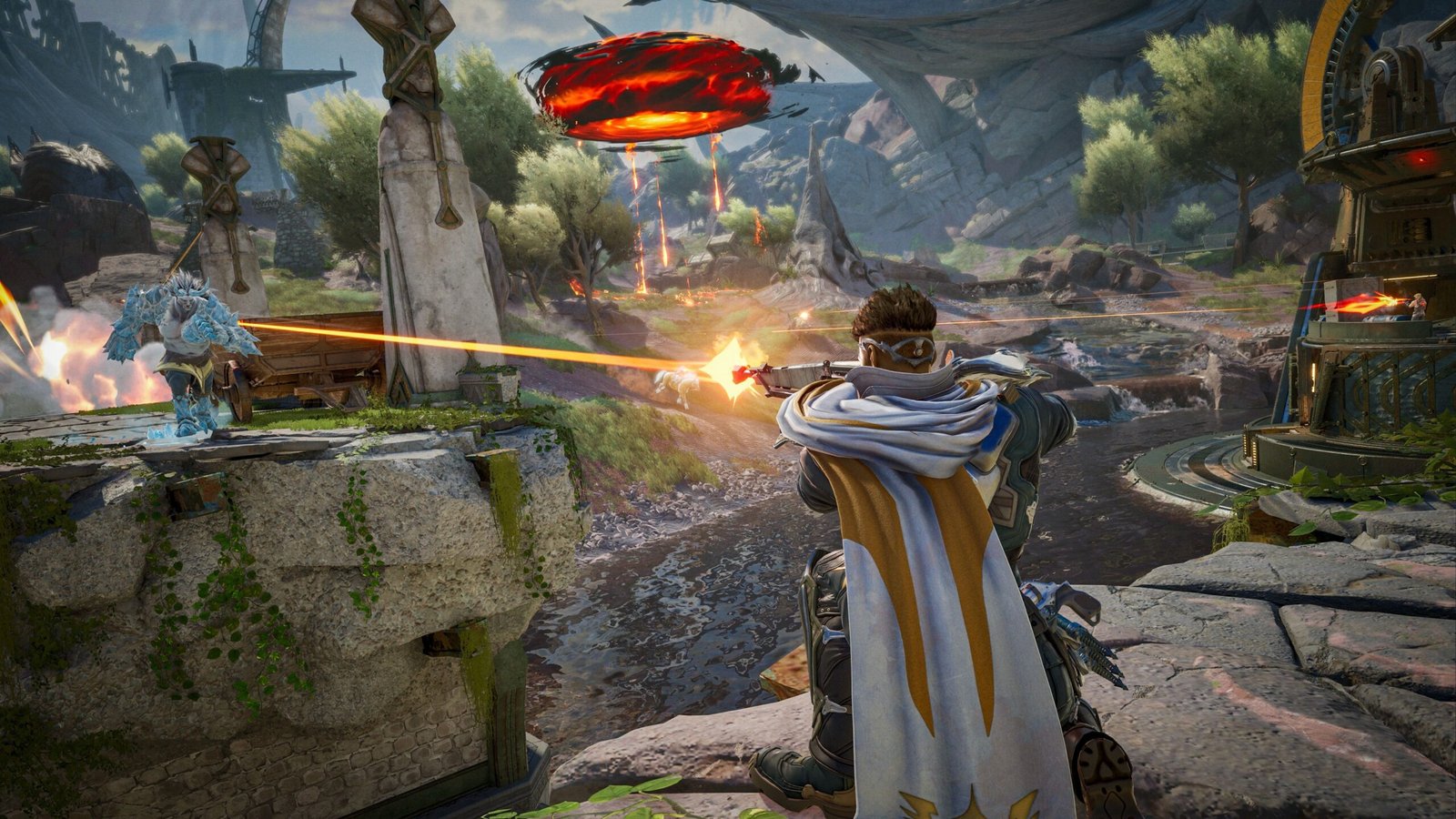
You know that specific, heavy kind of silence that only settles in at 2:00 AM? It’s the moment the credits finally begin their slow crawl across the screen after you’ve poured forty or fifty hours into a massive single-player epic. Your coffee has been cold for three hours, your eyes are definitely bloodshot, and you’re just sitting there in the dark, letting the score wash over you while your brain tries to process everything you just went through. It’s a clean break. A finished thought. And honestly? It’s a feeling we very nearly lost forever during the peak of the “forever game” era.
But something has shifted. According to reports from TheGamer, the industry is currently in the middle of a massive, much-needed internal correction. After years of desperately chasing the mythical “Live Service” dragon—trying to turn every single game into a perpetual revenue stream—major publishers are finally pivoting back to the basics. They’re returning to what made gaming a cultural powerhouse in the first place: experiences that actually have a beginning, a middle, and, most importantly, an ending. It’s a shift that’s been simmering beneath the surface for a while now, but standing here in early 2026, it feels like the fever has finally broken for good.
I distinctly remember sitting at this desk three years ago, watching with a mix of exhaustion and cynicism as every major studio on the planet announced their own “unique” take on a hero shooter or a battle-pass-driven looter. It felt like every new release didn’t just want my money; it wanted to be a second job. But the math was always flawed. The market can only support so many “second jobs” before players simply run out of hours in the day and patience in their souls. We are seeing the fallout of that collective burnout right now, and for once, the hard data actually backs up the vibes.
The math finally caught up with the “engagement” obsession
Let’s dig into the numbers for a moment, because they tell a story that marketing departments tried to ignore for far too long. According to a 2024 Newzoo report, roughly 43% of gamers across PC, PS5, and Xbox explicitly stated that they prefer single-player games over any other genre. It’s a staggering percentage when you consider that for the better part of five years, the industry’s biggest players spent billions trying to force us into “engagement loops” and social hubs we never asked for.
The collapse of several high-profile live-service projects throughout 2024 and 2025 served as a brutal, expensive wake-up call for the suits. We watched games that cost hundreds of millions of dollars and took half a decade to build get their servers shut down within months of launch. And it wasn’t always that the games were fundamentally “bad” in a mechanical sense. It was simpler than that: the “meta” had become too crowded. Think about it—how many daily logins can one human being actually manage? If you’re already committed to Destiny 2 or Warframe, you literally don’t have the bandwidth for another game demanding 20 hours a week just so you don’t miss out on seasonal gear. We reached a point of total saturation.
That’s where the industry analysis gets really interesting. Publishers finally realized that while live service games have a sky-high ceiling for potential profit, they also have a basement that is essentially a bottomless pit of ongoing development costs and server maintenance. A 2025 Statista survey found that nearly 60% of players felt “overwhelmed” by the sheer volume of seasonal content and battle passes being shoved down their throats. It turns out we didn’t want *more* content just for the sake of having things to do; we wanted *better* content that actually respected our time.
“The industry spent half a decade trying to build digital treadmills, forgetting that most people actually play games to get somewhere, not just to keep running in place.”
— Senior Editorial Analysis, 2026
The quiet triumph of the “Prestige” single-player game
If you take a look at the biggest cultural hits of the last eighteen months, the pattern is impossible to miss. From the record-breaking success of last year’s GTA VI—which, let’s be honest, most people bought for the single-player narrative and the chance to cause chaos at their own pace—to the continued dominance of Nintendo on the Switch’s successor, the “prestige” game has reclaimed its throne. These are games that respect you. They don’t try to “nerf” your favorite weapon every two weeks just to balance a competitive ladder you have zero interest in climbing. They just let you play.
The massive resurgence of the roguelike genre has also played a sneaky-important role in this cultural shift. Titles like Hades II proved that you could create a “repeatable” and deep experience without relying on the predatory monetization of the live-service model. You get the depth, you get the challenge, and you get that “one more run” feeling, but you can also put the controller down for three months and not feel like you’ve been “left behind” by a seasonal power creep. It’s a much healthier relationship between the creator and the player.
But there’s a deeper, almost psychological element at play here, too. In an era of 24/7 connectivity, doomscrolling, and algorithmic feeds that never stop, there is something deeply rebellious—almost therapeutic—about a game that doesn’t need the internet to function. On the PS5 and Xbox Series X, we’re seeing a return to the “cinematic” experience. These are games that push the hardware to its absolute limits not to host a 100-player lobby, but to tell a story that feels personal, contained, and visually breathtaking. It’s about the art again.
Why Nintendo’s “stubbornness” became the industry’s North Star
We really can’t talk about this shift without giving Nintendo their flowers. While Sony and Microsoft were busy fighting a war over subscription models, cloud streaming, and “games as a platform,” Nintendo just kept doing what they’ve always done: releasing polished, finished, and incredibly fun games. The launch of their new console last year only solidified this philosophy. They’ve stayed out of the live-service arms race almost entirely, and that refusal to follow the trend has paid off spectacularly.
It’s funny, isn’t it? We spent years listening to tech pundits talk about “cloud-native” gaming and the inevitable end of traditional hardware cycles. Yet here we are in 2026, and the most exciting thing in the entire industry is a handheld that plays incredibly well-optimized, single-player adventures. It turns out that a flashy gimmick or a subscription hook will never actually beat fundamentally good game design. People want to own great games, not just rent access to a never-ending stream of mediocre ones.
And speaking of platforms, PC has become the ultimate sanctuary for this movement. The indie scene on Steam has been keeping the single-player flame alive for years while the AAA space was lost in the woods. Now, the big publishers are finally taking notes. We’re seeing fewer “half-baked” launches that promise to be fixed in a “Year One Roadmap” and more titles that arrive on day one with a sense of completeness that we haven’t seen since the early 2010s. It’s a return to quality control that feels almost nostalgic.
Where does this leave the “Forever Games” that actually work?
Does this mean the live service model is dead and buried? Of course not. That would be a naive take. Titles like Fortnite, Roblox, and Apex Legends are essentially digital ecosystems at this point; they aren’t just games, they’re social platforms. But the era of the “mid-tier” live service game—the one that exists solely to extract $20 a month for character skins and weapon wraps—is effectively over. The cost of entry is simply too high, and the audience’s patience for “service” elements in a game that doesn’t need them has hit zero.
What we’re seeing instead is a much more sensible hybrid approach. Publishers are starting to release large-scale, premium single-player games and then supporting them with meaningful, traditional DLC expansions rather than “seasons.” Think back to how The Witcher 3 or Elden Ring handled their post-launch content. That’s the model everyone is scrambling to replicate now. It provides the longevity and revenue the executives want without the player resentment and “fear of missing out” (FOMO) that engagement metrics usually breed. It’s a win-win that should have been the standard all along.
Are live-service games going away entirely?
Not at all. The titans of the industry like Fortnite will remain, but the trend of every new IP being forced into a live-service mold has drastically slowed down. Expect to see fewer, higher-quality multiplayer projects and a much larger focus on self-contained single-player experiences that you can actually finish.
Is the focus on single-player making games more expensive?
Development costs for “AAA” games remain a massive hurdle, and that isn’t changing anytime soon. However, the industry is finding that a successful single-player game has a much longer “shelf life” on digital storefronts. A great story stays relevant for years, whereas a multiplayer game with dead servers is essentially worthless after the hype dies down.
The Editorial Verdict: A much-needed return to form
I honestly believe we’re entering a new golden age of game design, one where the player is finally being treated like a consumer again, rather than a “user” to be “retained.” It’s a subtle distinction in language, but it changes everything about how a game is built from the ground up. When a developer isn’t trying to figure out how to keep you logged in for 300 days a year, they can focus all that energy on making the 30 hours you *do* spend with them absolutely unforgettable. They can focus on the pacing, the emotion, and the craft.
And that, ultimately, is why this shift matters so much. Gaming is at its absolute best when it’s treated as an art form, not a utility or a habit. We’re seeing developers take real risks again—weird narratives, experimental mechanics, and art styles that don’t have to appeal to the widest possible demographic of a battle royale lobby. It’s refreshing. It’s exciting. And honestly? It’s about damn time the industry remembered why we fell in love with this medium in the first place.
So, the next time you see a major game announcement that doesn’t mention a “five-year roadmap” or a “Year One Season Pass,” don’t be worried. Celebrate it. It means the industry is finally listening to the people who actually play their games. They’ve realized that the most valuable thing we have to offer isn’t our credit card—it’s our attention. And they’re finally starting to earn it again by giving us something we can actually finish, put down, and remember forever.
This article is sourced from various news outlets. Analysis and presentation represent our editorial perspective.
About the Author