As of early 2025, the executive musical chairs at Ubisoft are spinning faster than anyone can track — and the music just stopped for one of the medium’s most genuinely singular creative minds. Clint Hocking has left the building.
The news, first surfaced by VGC and relayed to staff this week, marks the departure of the creative director who was supposed to be steering Assassin’s Creed Codename Hexe. If you’ve been following the breadcrumbs since the game’s initial tease back in 2022, you know this was billed as the strange one. The occult one. The one that was finally going to wrench the franchise out of its comfortable, map-clearing stupor.
Now? Jean Guesdon — the newly appointed head of content for the brand — is settling into the director’s chair. Guesdon is a veteran. A steady pair of hands. And, frankly, that’s precisely what worries me.
Clint Hocking Made Games That Bit Back
To understand why this stings, you have to understand who Hocking actually is. Not just a guy who directed games — he’s the patron saint of the messy, unpredictable, emergent sim. The designer who decided that in Far Cry 2, your weapon should randomly jam mid-firefight, and your character should occasionally crumple from malaria. It wasn’t always fun. But it meant something.
Hocking also coined the concept of ludonarrative dissonance — that deeply awkward rupture when a game’s story insists you’re a reluctant hero, while you spend the next three hours cheerfully mowing down pedestrians in a stolen hatchback. He thought about games as systems of meaning rather than content delivery pipes. That distinction matters more than it sounds.
His return to Ubisoft for Watch Dogs: Legion produced the “play as anyone” mechanic — an audaciously ambitious system that practically dared the game engine to buckle under its own weight. In practice, when actually testing it, the seams showed. Sometimes spectacularly. But that willingness to let the player detonate the mission from the inside — to let the proverbial grenade roll back down the hill — is exactly what gave his work its pulse. Most AAA games are engineered to prevent failure. Hocking’s games invited it.
And that brings us to Hexe.
Witch Trials, Wicker, and a Franchise Desperate to Surprise Itself
When Ubisoft first unveiled Assassin’s Creed Codename Hexe, the pitch landed like a cold glass of water to the face — in the best possible way. Set against the grim, paranoid backdrop of the witch trials in the Holy Roman Empire, it felt like a deliberate repudiation of the bloated, 150-hour RPG sprawl the series had collapsed into. Something darker was promised. Something leaner, stranger, more unnerving.
With Hocking at the helm, the community allowed itself to hope for an immersive sim wrapped in an Assassin’s cloak. Intricate social stealth mechanics. System-driven hunts through fog-soaked 16th-century German forests. The prospect of dropping this kind of high-budget weirdness onto PS5, Xbox Series X, and high-end PC hardware — hardware genuinely capable of rendering that dread — felt genuinely thrilling. The hands-on reality, had it materialized the way fans imagined, could have been something the series hadn’t produced in a decade.
Instead, we got this:
“We sincerely thank [Clint] for his vision, creative contributions, and dedication over the years, and we wish him the very best in his next chapter. Development on Assassin’s Creed Codename Hexe continues with a seasoned team. The game will deliver something distinctive within the Assassin’s Creed franchise.”
— Ubisoft spokesperson
“Distinctive” is doing a heroic amount of lifting in that statement. Guesdon stepping in isn’t a slight against Guesdon himself — the man has shipped enormous, commercially successful titles, and his competence isn’t the question. But he represents the establishment. The formula. When an eccentric, friction-loving visionary exits mid-project and the head of content assumes control, the jagged edges tend to get sanded smooth. You don’t get malaria and jamming guns. You get another skill tree, a raven that tags enemies from the sky, and thirty hours of side quests that feel like administrative tasks.
Ubisoft’s Executive Suite Is Eating Itself
Hocking’s exit doesn’t exist in isolation — it’s the latest tremor in what has been a genuinely turbulent stretch for the French publisher. Ubisoft is currently mid-transformation into a network of so-called “creative houses.” Whenever a publisher reaches for that particular phrase, hold onto your wallet. It typically means consolidation dressed up in aspirational language.
Over the past couple of years, Ubisoft has quietly canceled a cascade of unannounced projects, shuttered satellite studios, and walked developers out the door at a pace that would’ve been unthinkable a decade ago. They’re hardly alone in this — the broader industry has been hemorrhaging talent at a rate that’s hard to look at directly. Per tracking data compiled during the industry-wide developer layoffs, over 10,000 game industry professionals lost their jobs in 2024 alone, according to industry analysts. That bloodletting ran straight through 2025 without pausing for breath.
Inside Ubisoft specifically, the pressure cooker has clearly blown its lid entirely. Former Assassin’s Creed executive Marc-Alexis Côté is currently suing the company for £1 million, alleging he was effectively pushed out the door — a lawsuit that paints a vivid picture of an executive suite that is frightened, reactive, and increasingly hostile to its own institutional memory. The people who built the thing are being shown the exit. That should alarm anyone who cares about what comes next.
And CEO Yves Guillemot’s solution to this slow-motion crisis of confidence? He’s stressed the need for “disciplined workforce management” — a phrase that means exactly what you think it means — right around the same period he appointed his own son to co-run their flagship new studio. You genuinely cannot write this stuff.
Why the Math Always Beats the Vision
Here’s the uncomfortable truth behind all of it. Math. Terrifying, unforgiving math.
Producing a AAA video game in 2025 is a financial tightrope walk over a live volcano. A report published by the UK’s Competition and Markets Authority during the Microsoft-Activision merger review revealed that major publisher budgets for a single franchise installment regularly clear $200 million — sometimes surging past $300 million. And that figure doesn’t touch marketing.
At that scale, executives don’t want “emergent gameplay.” They don’t want grenades rolling back down hills. They want a predictable, auditable meta. Retention metrics. A roadmap for paid DLC, seasonal battle passes, and a steady drip of microtransactions that photograph well on a quarterly earnings slide. What does friction look like in that spreadsheet? It looks like a bug report. It looks like a refund request.
Hocking’s design philosophy is structurally incompatible with that kind of sanitized engagement loop. He builds games that push back — that make demands of the player rather than simply rewarding them for existing. Can you imagine pitching “your gun randomly jams and you might get malaria” to a risk committee overseeing a $250 million budget? In today’s hyper-consolidated AAA environment, friction is treated as a design failure. But friction — real, meaningful friction — is exactly what lodges a game in your memory five years after you’ve stopped playing it.
What Hexe Becomes Without Him
So where does this leave the witch-hunting ambitions?
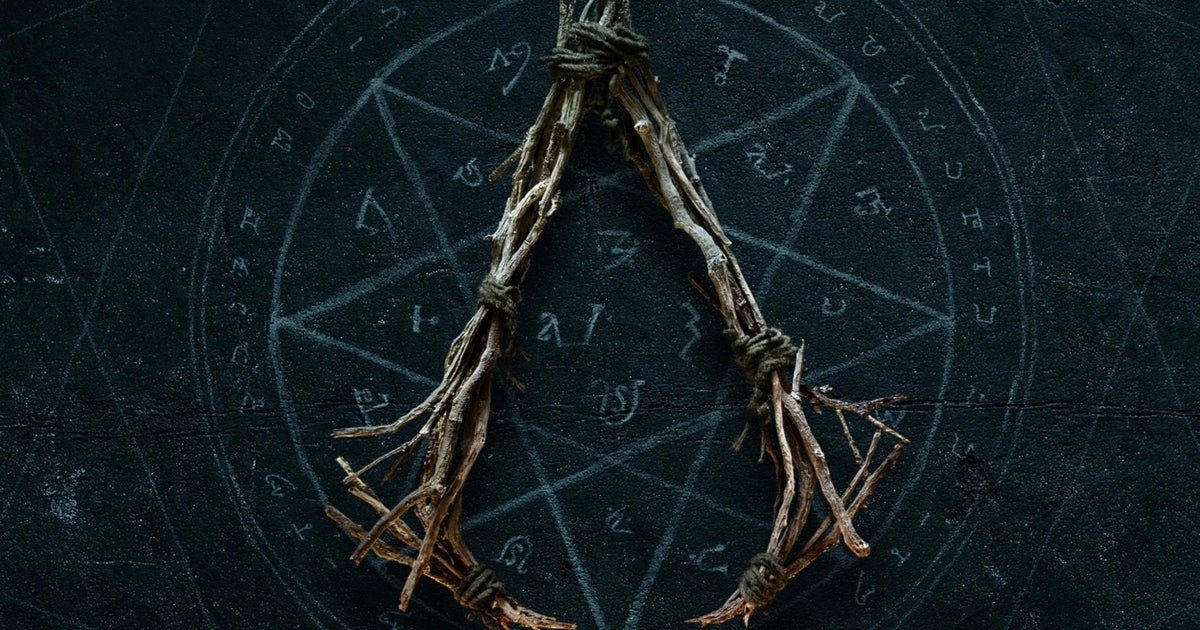
Development continues. The remaining team is clearly talented, and they’re working under circumstances that nobody would envy. Hexe will still ship. It will almost certainly retain a dark, atmospheric aesthetic — those twisty wicker emblems will still appear in marketing materials, the color palette will stay muted and foreboding, the trailers will keep leaning on unsettling folk-horror imagery.
But the soul of the project? That’s the real open question.
Ubisoft is desperate for a win right now. With major franchises visibly straining and player fatigue eroding engagement across their live-service titles, they need something that makes people genuinely excited to open their wallets again. Hexe was positioned as exactly that — the palate cleanser after years of oversized, overstuffed open worlds. The project that would demonstrate the company still had the nerve to try something genuinely odd.
The danger — and it’s a real one — is that Hexe gets quietly reverse-engineered to fit a safer mold. The occult horror elements become set dressing. A fresh coat of atmospheric paint over the same stealth-action chassis that’s been driving since 2017. A different map. A different historical era. The exact same checklist, reorganized.
Is Assassin’s Creed Hexe canceled?
No. Ubisoft has confirmed that development is continuing under Jean Guesdon’s leadership. While the creative direction may shift following Hocking’s exit, the project itself remains alive and headed for modern platforms — though what shape it ultimately takes is now a genuinely open question.
I hope I’m wrong about all of this. I genuinely do. The development team still working on Hexe deserves the chance to protect whatever strange, ambitious ideas got greenlit back in 2022, and there’s always the possibility that Guesdon surprises everyone. Stranger things have happened in this industry.
But when the designer who quite literally defined the concept of games as systems of meaning — who spent his career fighting for the right to make players uncomfortable — decides it’s time to pack up his desk and walk, it’s hard not to read the room. The weird era of Ubisoft isn’t on life support. It’s been quietly, officially, and rather unceremoniously buried.
Based on reporting from various media outlets. Any editorial opinion is that of the author.
About the Author