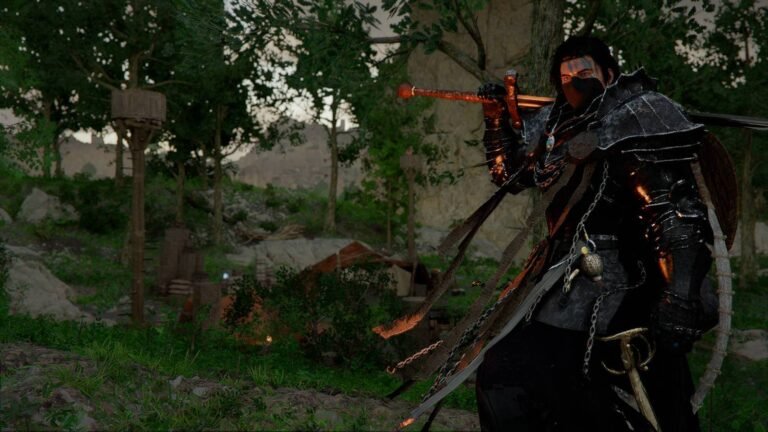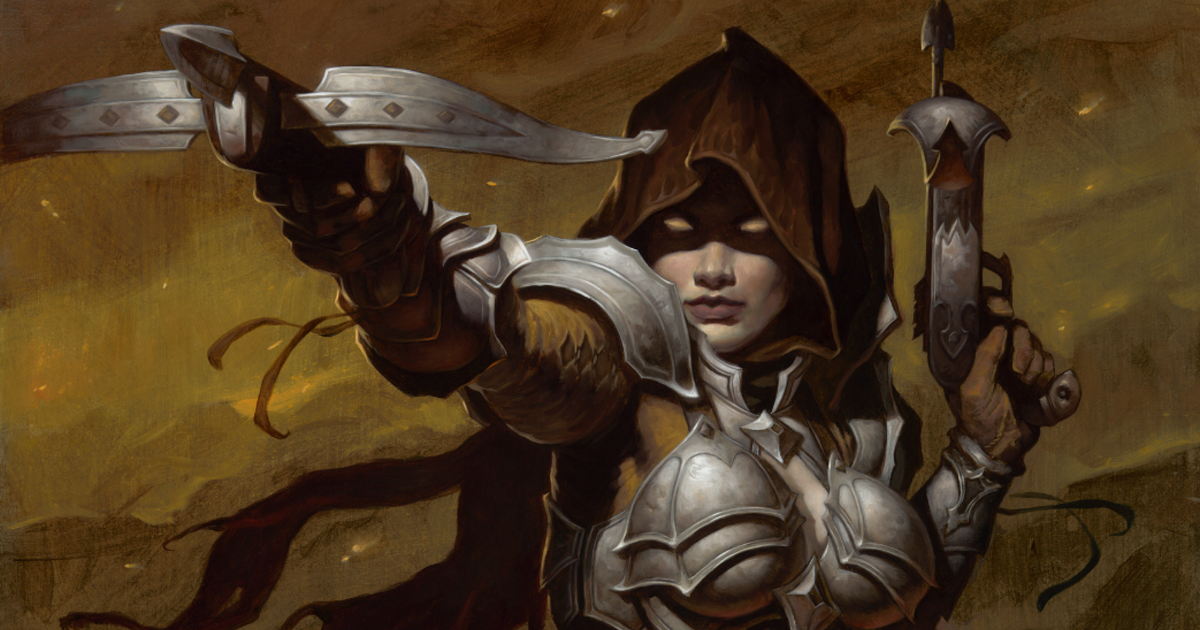
We’ve all heard the story before: a shiny new sequel arrives, and the old game is supposed to just… go away. In the high-speed world of modern gaming, there’s this persistent myth that once the “next big thing” hits the shelves, the predecessor is expected to politely pack its bags and head off to the digital retirement home. We saw it happen quite literally with the transition from the original Overwatch to its successor, and we see it every single year when a new Call of Duty drops and the previous entry’s player count falls off a cliff. But the ARPG genre—and specifically the house that Blizzard built—seems to operate on a completely different set of physics. If you look at the Eurogamer.net Latest Articles Feed, you’ll see that Blizzard is currently pushing back hard against the narrative that Diablo 3 has been relegated to the history books. In fact, they’re making the bold claim that the game still commands a “massive” audience that numbers well into the millions.
Now, let’s be real: that’s a pretty staggering claim to make in 2026. Diablo 4 has been the shiny, dark centerpiece of the franchise for a while now, and Diablo 2: Resurrected recently set the entire community on fire with its massive “Reign of the Warlock” expansion. You’d naturally think the 2012 entry—the one that famously launched with the much-hated Real Money Auction House and those “Error 37” memes that defined an era of frustration—would be a total ghost town by now. But as Matthew Cederquist, the Diablo Legacy executive producer, pointed out in a recent interview, the reality of player behavior is far more fluid than we give it credit for. Those “millions” of players aren’t just sitting there out of some weird sense of spite or nostalgia; they’re part of a seasonal migration pattern that looks more like a healthy, breathing ecosystem than a dying franchise.
Why We Keep Coming Back: The Genius of the Seasonal Cycle
If you’ve spent any meaningful amount of time in Sanctuary, you already know the drill. A new ladder season starts, and suddenly your friends list on Battle.net lights up like a Christmas tree. It’s a ritual. But what’s truly fascinating here is how Blizzard has leaned into what they call “inter-cannibalization.” In a typical corporate setting, “cannibalization” is a dirty word—it means your own products are eating each other’s profits. But here, it’s a strategy. Instead of fighting for every single second of a player’s time in one specific title, they’ve intentionally staggered the releases of seasonal content across Diablo 2: Resurrected, Diablo 3, and Diablo 4. They aren’t trying to trap you in Diablo 4 forever; they just want to make sure that whenever you feel like killing demons, you’re playing a Diablo game.
Cederquist noted that players frequently jump from the gritty, modern, and somewhat slower aesthetic of D4 back to the high-speed, arcade-like explosion of power that defines the D3 experience. It usually happens for an opening weekend or a full week of intense grinding. At the end of the day, it’s a “flavor” thing. Sometimes you want the heavy, tactical weight of the latest engine on your PS5 or Xbox Series X—where every hit feels like it has physical consequence—and sometimes you just want to see a screen full of neon numbers and gold flying at your face while you blast through a Rift on your PC or Nintendo Switch. It’s about mood as much as it is about mechanics. According to a 2023 report from the Entertainment Software Association (ESA), the average gamer is now 32 years old. This “Diablo Dad” demographic—a term even the developers are using in meetings now—doesn’t always have the 40 hours a week required to maintain a high-level presence in a rigid, MMO-like environment. They need games that respect their time, and D3 does that in spades.
“It’s less like World of Warcraft: Classic, where that’s your home, you don’t move… There’s so much inter-cannibalisation. The player habits are just different in a long-form progression game.”
Matthew Cederquist, Diablo Legacy Executive Producer
This represents a massive shift in how the industry thinks about “player retention.” In the old days, if your new product didn’t immediately kill your old one, the board of directors would be asking questions. If your old product kept people from buying the new one, it was seen as a disaster. But Blizzard seems to have realized that the Diablo brand is more of an umbrella than a single product. Whether you’re playing the 14-year-old D3 or the brand-new D2R expansion, you’re still within their ecosystem. You’re likely still interacting with their services, checking their news feeds, and keeping the general brand sentiment high. It’s a holistic approach to a franchise that few other developers have managed to pull off without one title completely eclipsing the others.
The “Diablo Dad” Phenomenon and Why Low-Pressure Gaming is Winning
One of the most insightful things to come out of the Legacy team recently is the acknowledgment of why Diablo 3 specifically remains so “sticky” for players. Tim Vasconcellos, the lead designer, really hit the nail on the head when he talked about the lack of “class-role dynamics.” Think about World of Warcraft for a second. If you’re the designated healer for your raid group, you have a genuine social obligation to show up at 8:00 PM on a Tuesday. If you don’t show up, 39 other people are annoyed with you, and your guild’s progress stalls. At that point, the game has become a job, not a hobby.
Diablo just doesn’t do that to you. In the world of D3, every single class is a DPS machine. You can play solo, you can jump into a random rift with total strangers for ten minutes, or you can carry your friends through a high-level run. There is effectively zero social pressure to “perform” a specific role or maintain a schedule. For an aging playerbase—people with kids, mortgages, and demanding careers—this is the ultimate selling point. Diablo 3 has become the perfect “podcast game.” You can turn your brain off, listen to a show or a news update, and feel like you’ve made meaningful progress in a 20-minute session. You can’t really do that in a survival horror-adjacent title like the original Diablo, and even Diablo 4 still feels a bit too “heavy” and involved for a quick coffee break session.
And then there’s the competition to consider. While Path of Exile 2 has certainly carved out its own massive slice of the hardcore, complex ARPG pie, Diablo 3 remains the most accessible entry point for someone who just wants to feel powerful immediately without needing a spreadsheet. It’s the “comfort food” of the genre. According to data from Statista, the global action RPG market has seen a steady 5% year-over-year growth in player engagement, and a large chunk of that is actually attributed to “legacy” titles that offer low-friction gameplay loops. When it comes to low friction, D3 is still the undisputed king.
That New Warlock Smell: Is D2R Stealing the Spotlight for Good?
While Blizzard is adamant that D3 is doing great, we do have to address the elephant in the room: Diablo 2: Resurrected just got its first brand-new class in a quarter of a century. The “Reign of the Warlock” expansion, which surprise-dropped earlier this week, has fundamentally shifted the balance of the “Legacy” playerbase. This isn’t just another balance patch or a new ladder reset; it’s a full-blown injection of new DNA into a game that many purists consider the greatest ARPG ever made. It’s a big deal, and it’s naturally drawing a lot of eyes away from the other titles in the stable.
The Warlock class itself is a fascinating addition, bringing a mix of necrotic debuffs and high-risk, high-reward life-tap mechanics that feel surprisingly fresh even within a 25-year-old engine. When you combine that new content with the game’s recent launch on Steam and its inclusion on Game Pass, it’s no wonder Rod Fergusson (before he left for 2K) noted that D2R was actually outperforming D3 in several key metrics. But as Cederquist argued, that’s likely a “fleeting state.” Of course D2R is winning the popularity contest right now—it has a shiny new toy for everyone to play with. But give it three months, and when the next D3 season introduces some wild new “Altar of Rites” style mechanic or a game-breaking power boost, the pendulum will swing right back. And then it will swing toward D4 when its next major DLC arrives. It’s a constant, rhythmic movement.
It’s a brilliant, if somewhat chaotic, way to run a franchise. By maintaining three distinct “flavors” of the same core dark fantasy, Blizzard has effectively insured themselves against player burnout. If you’re tired of the D4 meta or the grind for a specific Unqiue, you don’t go play Last Epoch or Grim Dawn; you just hop over to D3 for a week to scratch that itch for speed. It’s a closed loop that keeps the “millions” within the fold, regardless of which specific game icon they’re clicking on that day.
Can We Actually Trust Those “Millions” of Players?
Of course, we have to take Blizzard’s “millions” with a healthy grain of salt. In the world of corporate PR and shareholder meetings, the word “players” can mean anything from “active daily users” to “anyone who logged in once this month to check their mail.” However, even a conservative estimate suggests that Diablo 3 is significantly outperforming many modern live-service games that were released just last year with massive marketing budgets. This speaks to a much broader trend in the industry: the sheer longevity of well-designed, satisfying loops. A game that is “finished” and “polished”—which D3 eventually became after the Reaper of Souls expansion fixed its early identity crisis—is often more attractive to a casual player than a “live service” game that is still struggling to find its feet and its fun factor.
The “Legacy” team’s jurisdiction is arguably the most interesting corner of Blizzard right now. They aren’t trying to reinvent the wheel or chase the latest industry trends; they’re just keeping the wheels greased and occasionally adding a fresh coat of paint to keep things looking sharp. In an era where AAA development takes 6 to 10 years and costs hundreds of millions of dollars, the return on investment for keeping Diablo 3 and Diablo 2: Resurrected running must be astronomical. They are the ultimate “long-tail” products, continuing to provide value long after their initial development costs have been recouped ten times over.
Is Diablo 3 still getting new content?
While it doesn’t receive massive, game-changing expansions like Diablo 2: Resurrected‘s “Reign of the Warlock,” the developers still provide rotating seasonal themes. These often include new cosmetic rewards, unique power-up mechanics, and periodic balance adjustments that keep the meta shifting just enough to keep the ladder races interesting for the community.
Which platform has the most Diablo 3 players?
Blizzard is usually pretty tight-lipped about specific platform breakdowns, but the PC version remains the primary hub for competitive ladder play and the most hardcore fans. That said, the Nintendo Switch version has a massive and dedicated following because its portability fits the “Diablo Dad” playstyle—grinding a few rifts in bed or on a commute—absolutely perfectly.
Do I need to play Diablo 2 or 3 before Diablo 4?
Not at all. Each game is designed to stand on its own as a complete experience. However, if you’re a lore buff, playing the older titles can provide a lot of deep context for the world of Sanctuary. It’s also a great way to see how the mechanics of the ARPG genre have evolved over the decades.
The Future of Sanctuary
Looking ahead, this “Diablo ecosystem” model seems to be the blueprint for how legacy franchises will survive in the future. We are slowly moving away from the era of “The Sequel Kills the Original” and entering the era of “The Multi-Generational Platform.” Blizzard has managed to create a unique situation where Diablo isn’t just a game you play once and finish; it’s a hobby that you rotate through depending on your mood, your available free time, and your current schedule.
And honestly? That’s a massive win for the players. We get to keep our characters, our hard-earned memories, and our favorite gameplay loops, while still having the option to jump into the “next big thing” whenever we feel like it. Whether you’re a hardcore D2 purist who lives for the item hunt, a D3 speed-runner looking for that perfect rift, or a D4 casual explorer soaking in the atmosphere, Sanctuary is more crowded than it’s ever been. And as long as Blizzard keeps the seasons staggered and the “Diablo Dads” happy, those “millions” aren’t going anywhere anytime soon. They’ve found a way to make the middle child of the family just as important as the newborn.
This article is sourced from various news outlets, including the Eurogamer.net Latest Articles Feed. Analysis and presentation represent our editorial perspective.
About the Author