I remember sitting at my desk just a few years ago, scrolling through a release calendar that felt less like a source of genuine excitement and more like a never-ending chore list. It was an exhausting cycle of “Season 4” this and “Limited-Time Battle Pass” that. But as we’ve walked into 2026, the air in the room feels different. There’s a specific kind of quietness settling over the industry right now—and no, it isn’t the silence of a dying medium. Instead, it feels like the calm of an industry that has finally figured out what it wants to be when it grows up. According to recent reporting from TheGamer, we have officially hit the “Live Service Wall,” and the fallout from that impact is reshaping everything. We’re seeing it in how we play on our PS5s, what we’re buying on Steam, and especially in what we expect from the next generation of Nintendo hardware.
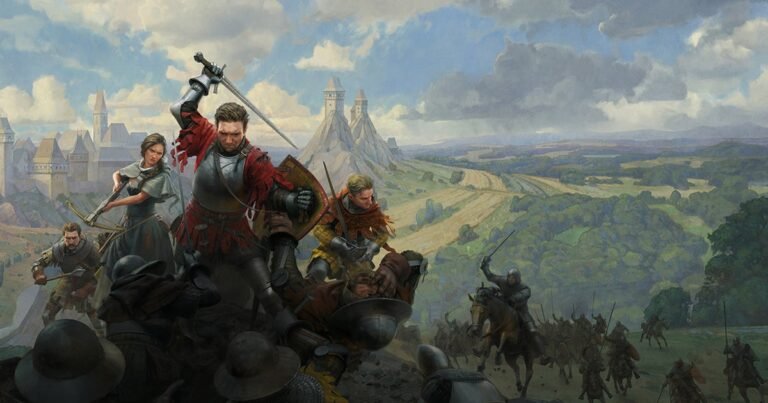
It’s funny, isn’t it? How these things always seem to come full circle. We spent nearly a decade being told by every executive in a suit that the “single-player experience” was a relic of the past—a dinosaur just waiting for the meteor of microtransactions and recurring revenue to strike. But look at the charts today, February 11, 2026. The games dominating the conversation, the ones people are actually talking about at the water cooler (or on Discord), aren’t the ones asking you for $20 for a blue character skin every other Tuesday. Instead, we’re witnessing a massive, undeniable resurgence in self-contained, high-quality adventures that actually have the audacity to have an ending. And honestly? My SSD has never been happier to host them.
The Math Finally Stopped Working: Why We Can’t All Have Five “Forever Games”
The report from TheGamer hits on something that I think we’ve all been feeling in our gut for a while now: the math just doesn’t work anymore. For years, every major publisher—from the giants at EA to the open-world machines at Ubisoft—tried their hardest to catch that Fortnite lightning in a bottle. They all wanted “forever games.” They wanted a piece of your life that you’d never give back. But here’s the fundamental problem they ignored: players only have so many “forever” slots in their lives. You simply cannot play three different 100-hour live service games simultaneously while also holding down a job, maintaining a social life, or, heaven forbid, getting eight hours of sleep. It was a bubble, and it finally popped.
The data is pretty staggering when you look at it. According to a 2024 Newzoo report, over 50% of gamers across all platforms were already starting to prefer single-player titles back then. That trend hasn’t just continued; it has accelerated at a breakneck pace as we’ve moved into the mid-2020s. We’ve been watching the “Great Nerf” of the live service model happen in real-time over the last eighteen months. We saw big-budget projects—games designed with “ten-year plans”—being shuttered after barely six months because the “meta” wasn’t balanced or the “endgame” was essentially non-existent. It turns out that building a digital treadmill is incredibly hard, and keeping people running on it indefinitely is even harder. But this shift isn’t just about failure; it’s about the incredible, refreshing success of the alternatives. When you look at the landscape of PC and PS5 gaming today, the most beloved titles are the ones that respect the player’s time rather than trying to colonize it.
“The industry spent years trying to build malls where we used to have playgrounds. We’re finally seeing a return to the playground, where the fun is the point, not the commerce.”
— Senior Industry Analyst, 2025 Global Games Summit
And let’s be clear—it’s not just the AAA space that’s changing. The indie scene has been carrying this torch for a long time, but now it has become the primary driver of innovation for the entire medium. Think about the “Roguelike” boom that’s currently taking over our libraries. These games offer nearly infinite replayability, but they do it without the heavy baggage of a seasonal subscription or a daily login bonus. You jump in, you die, you learn something new, and you repeat. It’s a pure, unadulterated gameplay loop that doesn’t require a roadmap or a community manager to write a 3,000-word blog post explaining why your favorite weapon just got a 15% damage reduction in the latest patch. It’s just… a game. What a concept, right?
The Handheld Revolution: How the “Switch 2” and Steam Deck Rewrote the Rules of Play
Of course, we have to talk about the hardware, because that’s where the shift becomes physical. By now, the successor to the original Switch has been out in the wild for a while, and it has completely changed the “meta” of how we consume games. While the PS5 and Xbox Series X are still the undisputed kings of the living room big-screen experience, the handheld market has become the true battleground for our attention. The “Switch 2” (or whatever name you’ve settled on calling it this week) didn’t just iterate on the specs; it validated the idea that we want premium, console-quality experiences on the go without the lag or the frustration of cloud streaming.
But the competition is fierce out there. The PC handheld market—spearheaded by the Steam Deck and the wave of successors that followed—has forced Nintendo to play a much more aggressive game. We’re no longer seeing those “miracle ports” that run at a shaky 20 frames per second with textures that look like a bowl of lukewarm oatmeal. Developers are now building games with “handheld-first” architectures from day one. According to Statista, the handheld gaming market was projected to reach a valuation of over $30 billion by the end of 2025. Honestly, looking at the sheer number of people I see playing high-end RPGs on the subway every morning, that feels like a conservative estimate. It’s a golden age for the “comfy gamer.”
What’s really fascinating is how this hardware shift is actually dictating game design. When you’re playing on a handheld, you want games that are snappy. You want “pick up and play” mechanics that work whether you have five minutes or five hours. This has led to a brilliant blend of genres we didn’t see coming. We’re seeing “AAA Roguelikes” and “Cinematic Platformers” that feel right at home on a 7-inch screen. Even the “DLC” model has shifted in response. Instead of those predatory, time-gated battle passes, we’re seeing a return to the “Expansion Pack” mentality—meaningful, chunky bits of content that add real, permanent value to the base game you already love. It’s about quality over quantity, and it’s about time.
The Trust Gap: When Gaming Started Feeling Like a Second Job
So, why did the live service dream fail so spectacularly for so many studios? If you ask me, it really comes down to a fundamental break in trust. A 2025 Pew Research study found that “digital ownership concerns” were a top-three issue for gamers in the 18-34 demographic. When you buy into a live service game, you aren’t really buying a game; you’re buying a ticket to a show that the developers can cancel at any time. We’ve all seen too many of our digital libraries disappear when the servers go dark. In 2026, players are finally voting with their wallets for games they can actually keep on their hard drives.
Then there’s the “burnout” factor, which I think we’ve all experienced at some point. The constant “fear of missing out” (FOMO) that these games relied on eventually turned gaming into a second job. “If I don’t log in this week, I’ll miss the limited-time event.” “If I don’t finish this pass by Sunday, I’ve basically wasted my money.” That isn’t fun; that’s an obligation. And in a world that’s increasingly stressful and demanding, the absolute last thing people want from their hobby is more stress. We’ve seen a massive, industry-wide pivot toward “cozy” experiences and deep, single-player narratives where you can pause the game, walk away for a month to deal with real life, and come back exactly where you left off without feeling like you’ve been left behind.
And let’s be real for a second—the quality of the games themselves suffered under the old model. When you’re designing a game meant to be played for 500 hours, you inevitably end up with a lot of “filler.” You get those tedious fetch quests, repetitive grinding, and map markers that feel more like a grocery list than an adventure. By contrast, a focused 20-hour campaign feels like a gourmet meal. Developers are finally rediscovering the lost art of the “curated experience,” and as a result, the writing and world-building in 2026 are better than they’ve been in a decade. We’re seeing games that actually have something to say, not just games that have something to sell you in a pop-up menu.
What This Means for the Rest of Your Year (and Your Wallet)
Does this mean the end of multiplayer? Of course not. That would be a ridiculous thing to suggest. But the *type* of multiplayer we’re seeing is changing for the better. We’re seeing a return to “social gaming”—the kind of stuff you play with your actual friends for the sake of the interaction and the laughs, not for the sake of the battle pass progression. The “meta-chasing” culture is being replaced by a more relaxed, “play how you want” attitude. Even the big publishers are starting to realize that a successful $70 premium release is a lot more sustainable in the long run than a “free-to-play” gamble that costs $200 million to develop and fails to find an audience in a month.
Is the “Live Service” model completely dead?
Not exactly, but it has definitely evolved into something less intrusive. The games that survived the “Great Nerf” are the ones that offer genuine, transparent value and consistent, high-quality updates without being predatory. Think of it as a “survival of the fittest” moment where only the most player-friendly titles managed to keep their communities intact.
Will we see more “DLC” instead of Battle Passes?
Yes, the industry is noticeably shifting back toward traditional expansions. These offer a “complete” package of content that players feel much better about purchasing, as it adds permanent value to their library rather than just temporary access to a list of rewards that expire at the end of the month.
How has the “Switch 2” impacted game development?
It has effectively bridged the gap between mobile convenience and console power. Developers are now prioritizing scalability more than ever, ensuring that games look incredible on a 4K TV via a PS5 but also run flawlessly on a high-end handheld. This focus on optimization has actually led to better-performing games across the board, which is a win for everyone.
Looking ahead to the rest of 2026, I’m genuinely optimistic for the first time in a while. We’ve moved past the “growth at all costs” era and into an era defined by “sustainability and soul.” The games coming out this year feel like they were made by people who actually love playing them, not just by committees looking at engagement metrics and retention graphs. Whether you’re a PC enthusiast, a PS5 trophy hunter, an Xbox Game Pass subscriber, or a Switch devotee, the message is loud and clear: the player is finally back in the driver’s seat.
And honestly? It’s about time. We spent too many years being treated like “users” or “monetization opportunities.” In 2026, we’re finally being treated like gamers again. So, if you’ll excuse me, I have a single-player campaign to finish, and the best part is, I don’t have to check a calendar to see if I’m allowed to enjoy it at my own pace.
This article is sourced from various news outlets. Analysis and presentation represent our editorial perspective.
About the Author