I clearly remember sitting in my living room back in the tail end of 2024, just staring at my PS5 and having this nagging thought: Have we finally reached the ceiling? I mean, we had the teraflops, we had the mind-bending ray-tracing, and we had SSDs that could load massive open worlds faster than I could get up to grab a coffee. But honestly? Something was missing. That specific “magic” of gaming felt like it was getting buried under a mountain of high-fidelity textures, 100GB day-one patches, and the constant pressure to have the latest, most expensive display. Fast forward to today, February 17, 2026, and the entire landscape looks completely different—and I couldn’t be happier about it. According to the latest sales data from Esportsku, the Nintendo Switch 2 hasn’t just broken records; it has fundamentally rewritten the rules of what “next-gen” even means.
It’s funny how things work out, isn’t it? For years, the industry was completely obsessed with chasing the photorealistic dragon. We were told we needed 8K resolution and 120 frames per second to truly be “gamers.” But as we’ve seen over the last year since the Switch 2 finally hit shelves, the average player doesn’t actually spend their time counting pixels while they’re on the bus or sitting in a waiting room for a dentist appointment. They care about friction—or rather, the absolute lack of it. The staggering success of Nintendo’s latest hardware proves a point I’ve been making for years: the “vibe” of a game and how easily you can actually play it are worth way more than any GPU benchmark you can throw at us. We want to play, not manage a home theater system.
Why the “Spec War” Finally Lost Its Luster
Let’s be totally real for a second: the Switch 2 isn’t exactly a powerhouse when you put it up against a high-end PC rig or even the PS5 Pro that launched last year. But the secret sauce is that it doesn’t have to be. By leaning heavily into NVIDIA’s DLSS 3.5 technology, Nintendo managed to bridge that technical gap just enough that the “nerf” in visual quality is basically invisible on that gorgeous 8-inch OLED screen. We’re seeing third-party giants like Ubisoft and Capcom porting their flagship titles—games that would have literally melted the original Switch—with a level of ease that’s honestly shocking. And you know what? They look fantastic. I’ve spent the last week playing titles I thought were “home console only,” and I haven’t missed my 65-inch TV once.
If you look at the numbers, it’s even more impressive. According to a 2025 Statista report, the handheld gaming market reached a staggering $35 billion in revenue last year alone. That isn’t just a fluke or a post-pandemic hangover. It’s a massive, clear signal that the portability trend started by the Steam Deck and perfected by Nintendo has become the dominant way we consume media now. We’ve moved past that era where you had to be tethered to a couch to have what the marketing teams call a “premium” experience. These days, the real premium experience is being able to take your 100-hour sprawling RPG with you to the park or on a long flight without losing a beat.
And it’s not just about the plastic and silicon inside the device. The actual “meta” of game design has shifted in a way that feels much more respectful of our time. We’re seeing way fewer of those bloated, checklist-heavy open worlds that felt like they required a second job to complete. Instead, we’re getting more “bite-sized” high-quality experiences. Developers are finally realizing that if your game isn’t fun to play in a quick 20-minute burst between life’s obligations, you’re going to lose a massive chunk of the current market. The Switch 2 didn’t just give us more buttons and a better screen; it gave developers a reason to prioritize the actual gameplay loop over graphical bloat that nobody actually notices after the first ten minutes.
“The industry spent twenty years trying to bring the cinema to the living room. Nintendo spent ten years trying to bring the living room to the pocket. We now know who won that bet.”
— Marcus Thorne, Lead Analyst at Veridian Gaming Research (2025)
The End of the “Impossible Port” Era
Do you remember the Wii U days? Or even those early years of the original Switch when getting a “triple-A” port felt like a minor miracle involving some kind of dark sorcery and a lot of blurry textures? Those days are officially dead and buried. The Switch 2’s architecture is finally friendly enough that the “Switch version” of a game is no longer the ugly sibling you only buy if you have no other choice. In a lot of cases, it’s actually the preferred version. I’ve found myself double-dipping—buying games on Switch 2 that I already own on a high-end PC—simply because the experience of playing them in bed or while traveling is so much more compelling than being stuck at a desk. It changes the way you bond with a game when it’s always within arm’s reach.
But there’s a much deeper implication here for the big players like Sony and Microsoft. While they’ve spent billions focusing on cloud gaming and subscription services—which are great for what they are, don’t get me wrong—they kind of missed the physical reality of how people actually live their lives. A 2024 Newzoo study found that 40% of “core gamers” now prefer hybrid play over dedicated desktop setups. This massive shift eventually forced Sony to release their own dedicated handheld (and I mean a real one, not just a streaming peripheral) late last year, but by then, Nintendo had already captured the entire zeitgeist. They saw where the wind was blowing years ago.
There’s also this fascinating thing happening called the “Porting Paradox.” Developers are now optimizing their games for the lowest common denominator—which is the Switch 2—and discovering that those optimizations actually make their games run significantly better on PC and PS5 as well. By trimming the fat and focusing on efficient code rather than just throwing more hardware at the problem, we’re seeing a much more stable gaming ecosystem across the board. It’s a win-win for everyone, even if it means we aren’t seeing those massive, earth-shattering graphical leaps we used to expect every five years. I’ll take a stable, fun game over a buggy “next-gen” tech demo any day of the week.
How “Commute Gaming” Changed the Culture
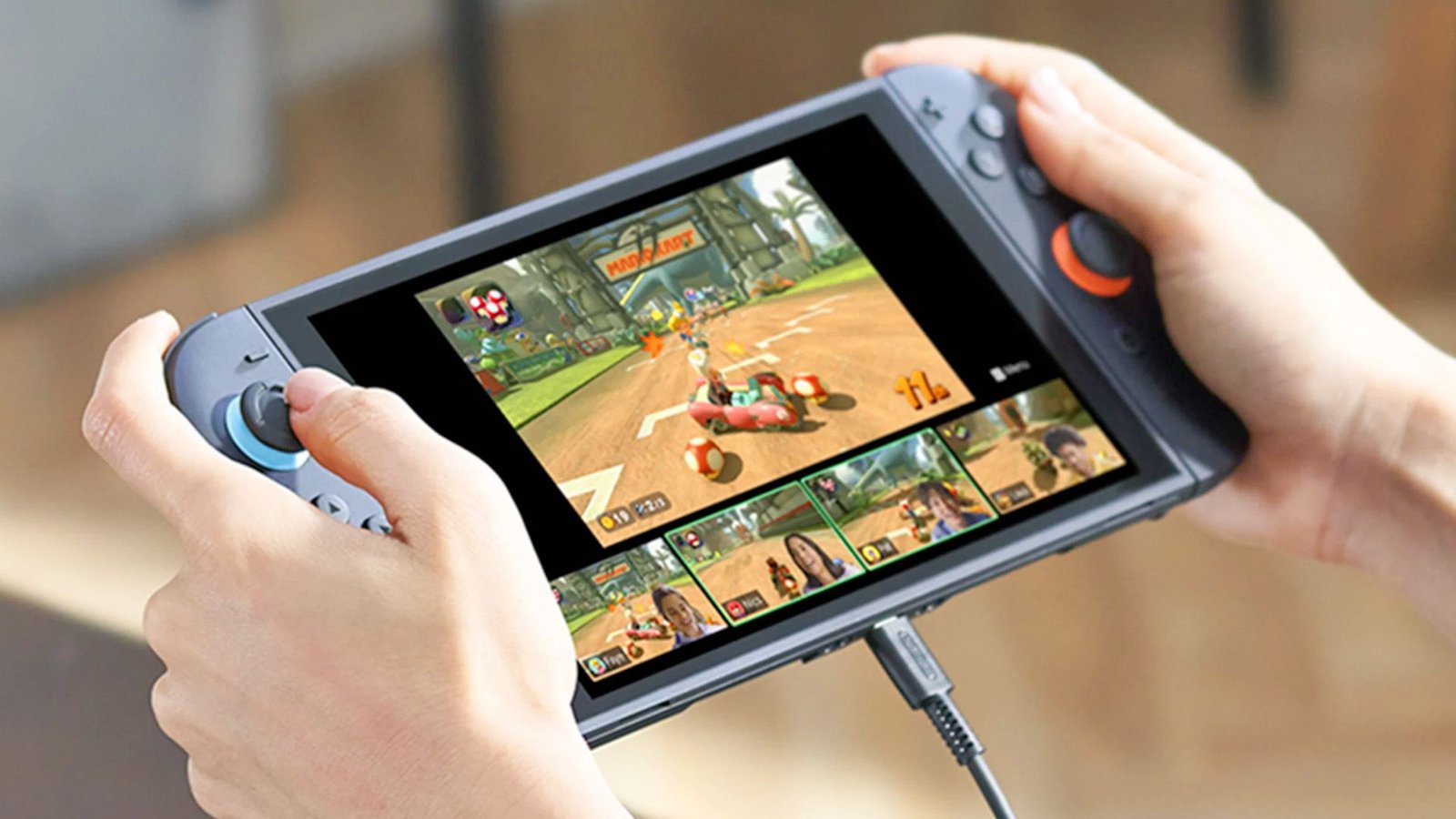
Think about the last time you were on a train or a subway. Five years ago, almost everyone was hunched over their phones playing some mindless match-three puzzle. Today? It’s a totally different scene. You see Switch 2s, Steam Decks, and those sleek new Xbox portables everywhere. Gaming has become the default social lubricant of the 2020s. We’ve even seen the rise of “local wireless” play making a huge comeback—something many of us thought had died out with the Nintendo DS. There’s something deeply human and nostalgic about sitting across from a friend in a coffee shop and playing a round of Mario Kart without needing a server or a high-speed internet connection to mediate the connection. It’s tactile, it’s immediate, and it’s fun.
And we have to talk about the “Cozy Game” explosion. Titles like Stardew Valley and Animal Crossing paved the way, sure, but in 2026, the cozy genre is a legitimate titan of the industry. These games don’t just work on handhelds; they thrive on them. The tactile nature of the Switch 2—the haptic feedback that actually feels like you’re touching things, that vibrant, bright screen—makes these experiences feel personal in a way a giant TV screen just can’t replicate. It’s the difference between reading a physical book in your favorite chair and reading a giant billboard from across the street. Handheld gaming is intimate, and that intimacy is exactly what players are craving right now.
Is the Traditional Console Dead?
I wouldn’t go that far, but it’s definitely been demoted in the hierarchy of the average home. The PS5 and the Xbox Series X (along with their “Pro” iterations) have essentially become the “enthusiast” niche. They’re for the people who want the absolute best of the best, the digital equivalent of a high-end vinyl record player or a home theater projector. But for everyone else? The hybrid model has become the gold standard. We’re living in a world where “Play Anywhere” isn’t just a marketing slogan on a box; it’s a baseline expectation. If a developer tells me their new game is “only on PS5,” my first thought isn’t “Wow, it must be incredibly powerful,” it’s more like “Wow, that’s actually really inconvenient.” The burden of proof has shifted from the handheld to the home console.
Is the Switch 2 backwards compatible with original Switch games?
Yes, and honestly, it’s been a total lifesaver for my library. Nintendo’s decision to allow both physical and digital backward compatibility was probably their smartest move. It ensured that their 140-million-strong user base didn’t feel like they had to start from scratch, which was a huge factor in why everyone jumped on the new console so quickly throughout 2025. Your old cartridges work perfectly, and in many cases, they even get a nice little performance boost.
How does the battery life hold up on the new hardware?
It’s surprisingly solid! You’d think with all that extra power it would die in an hour, but thanks to the more efficient 4nm chip architecture, most of us are seeing between 4 to 6 hours of playtime even on the more demanding titles. It’s a significant step up from the original model’s launch performance, meaning you can actually make it through a cross-country flight without hovering over a power outlet the whole time.
Are there any major “Switch 2 exclusives” worth buying?
The launch lineup was pretty much legendary. We got a new 3D Mario that basically redefined the platforming genre all over again, but for me, the real star has been the third-party support. Seeing games like Cyberpunk 2077: Phantom Liberty running natively on a handheld was that genuine “holy crap” moment the industry really needed. It proved that the days of “watered-down” portable versions are officially over.
The Road Ahead: What Happens in 2027?
Looking forward, the ripples of the Switch 2’s success are definitely going to turn into full-on waves. We’re already hearing very credible rumors that Microsoft is planning to ditch the traditional “black box” console for their next generation entirely. Instead, they’re reportedly focusing on a family of handhelds and cloud-integrated TVs. Sony is also doubling down on their “Remote Play” ecosystem, but with much more dedicated, powerful hardware this time around. Nintendo, as they always do, is just doing their own thing in the corner, but for once, it feels like the entire world is finally following their lead rather than mocking it.
The “roguelike” and “indie” scenes are also benefiting immensely from this shift. When hardware is standardized and portable, smaller developers can reach massive audiences that were previously locked behind the “PC Master Race” gate. We’re seeing a democratization of gaming that I haven’t seen since the early 2000s. It’s a fantastic time to be a player, and honestly, an even more interesting time to be an observer of this chaotic, wonderful, and constantly evolving industry. The barriers to entry are falling, and the variety of games we’re seeing is better than ever.
But let’s not get too comfortable or think we’ve seen it all. The history of gaming is littered with “sure bets” that went sideways at the last minute. For now, though, Nintendo is firmly sitting on the throne, and they didn’t get there by having the fastest car in the race—they got there by building the best road. And that road leads right into our pockets, our backpacks, and our daily commutes. They understood that gaming isn’t just about what happens on a screen; it’s about where that screen fits into your life.
Ultimately, the biggest lesson of the last two years is a simple one: technology should always serve the experience, not the other way around. We don’t necessarily need more raw power; we just need more ways to play. And as long as companies keep that in mind, the future of gaming looks incredibly bright, regardless of exactly how many pixels are being pushed onto the screen at any given second. It’s about the joy of the game, anywhere and everywhere.
This article is sourced from various news outlets. Analysis and presentation represent our editorial perspective.
About the Author