It’s been a little over six months since the Marvel Super Heroes set officially detonated within the Magic: The Gathering multiverse, and we’ve finally reached a point where the dust has settled enough to see what’s left of our hobby. Let’s be honest: this wasn’t just another release. It was arguably the most anticipated—and, without a doubt, the most punishingly expensive—crossover in the three-decade history of the game. When the partnership was first teased, the community didn’t just have an opinion; we were practically split down the middle. On one side, you had players who were absolutely salivating at the prospect of a Captain America Commander deck. On the other, you had the purists who were essentially mourning the “death of flavor,” terrified of the moment a Spider-Man card would swing past a Llanowar Elf on the battlefield. It felt like the end of an era for some and a glorious new dawn for others.
But looking back from our current vantage point in early 2026, the real story here wasn’t actually about the comic book art or the specific mechanics of the cards. It was about the sheer, unadulterated “premiumization” of Magic as a hobby. According to reports from IGN Video Games, the hype train for this set started chugging months before the June 2025 launch, and it set a precedent for pricing that still makes my wallet ache just thinking about it. We’ve seen expensive sets before, but this was a different beast entirely. It felt like Wizards of the Coast wasn’t just asking for our patronage; they were asking for a significant portion of our savings accounts.
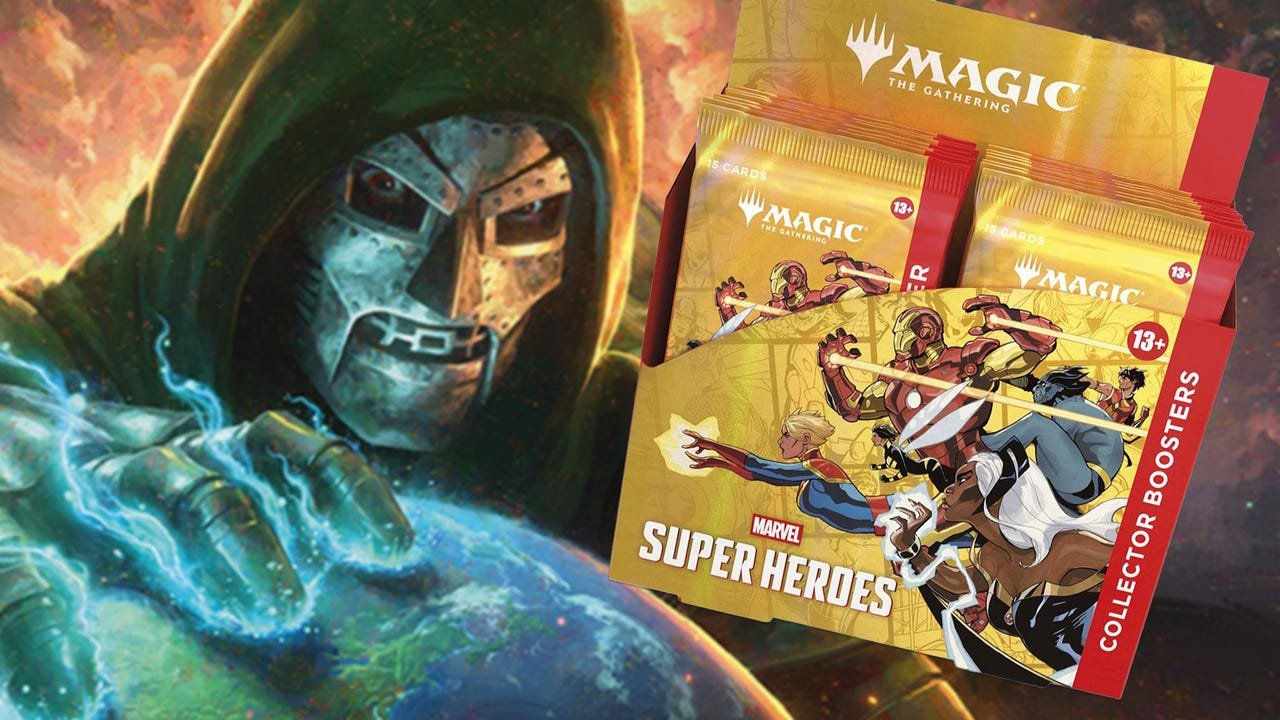
I vividly remember sitting in my local game store (LGS) last spring, just watching the pre-order numbers climb on the shop’s monitor. At the time, a Collector Booster display box was hovering around a staggering $677. Just let that number sink in for a second. We’re talking about a hobby that, at its heart, used to be accessible for roughly the price of a movie ticket and a popcorn. Suddenly, if you wanted to enter the “chase” for those elusive Marvel variants, you needed the kind of capital usually reserved for high-end gaming laptops or a very decent used car. And while the set has been out for a while now, the ripples of that aggressive pricing strategy are still being felt across the secondary market on platforms like TCGPlayer and CardMarket. It changed the math of being a Magic player.
The $67 Gamble: Is This Luxury Gaming or Just Predatory Pricing?
The core of the Marvel set experience was always designed to revolve around the Collector Boosters. These weren’t just packs of cards in the traditional sense; they were essentially lottery tickets wrapped in shiny, premium foil. At roughly $67 per single pack leading up to the launch, the barrier to entry was, frankly, astronomical. But why the massive markup? Well, it’s what many of us call the “Universes Beyond” effect. When you take the world’s most popular trading card game and mash it together with the world’s most dominant film and comic franchise, you aren’t just selling game pieces anymore—you’re selling high-end memorabilia. You’re selling a piece of pop culture history.
The analysis here is actually pretty straightforward if you look at the business side of things. Wizards of the Coast (WotC) realized something important: Marvel fans and Magic “whales” are often the exact same people. A 2024 Hasbro financial report had already indicated that the “Universes Beyond” product line had become a primary driver for the company’s growth, with licensed sets frequently outperforming their original IP releases like Wilds of Eldraine or Lost Caverns of Ixalan. By 2025, they weren’t just testing the waters with Marvel; they were diving headfirst into the deep end of the pool. The high price tag on Collector Boosters was a calculated move to capture the “collector” segment of the market, even if it meant alienating the “player” segment who just wanted to build a fun deck without having to take out a second mortgage on their home.
“The intersection of high-end collectibles and functional game pieces has created a new tier of ‘luxury’ Magic that simply didn’t exist a decade ago.”
Senior Market Analyst, TCG Trends (January 2026)
But here’s the thing—despite the grumbling on Reddit and the local game store counters, people paid it. They paid it because the cards were, objectively speaking, gorgeous. The “chase” cards—those serialized versions and ultra-rare alternate-art treatments—became the definitive status symbols of the 2025 meta. If you showed up to a Friday Night Magic event and dropped a foil, borderless Wolverine onto the table, you weren’t just playing a creature with high power and toughness; you were flexing. This shift toward “status-symbol” cards has fundamentally changed how we as a community perceive the value of a booster pack. We’ve moved away from the old mindset of “I hope I get a good rare for my deck” and transitioned into “I hope I pull a card that covers my rent this month.” That’s a heavy shift for a game played with cardboard.
The Play Booster Compromise and the “Diet” Magic Problem
To be fair to the folks at WotC, they didn’t leave the “average” player completely out in the cold. The Marvel set followed the now-standard “Play Booster” model, which replaced the old Draft and Set boosters we grew up with. These stayed much closer to the MSRP we’re used to, making them the obvious go-to for anyone looking to actually play the game rather than just speculate on it like a day trader. And honestly? The Play Boosters were actually great. You could still pull the iconic heroes and villains, and the gameplay mechanics—like the “Heroic” and “Assemble” keywords—were surprisingly well-integrated into the existing Magic ecosystem. It didn’t feel as clunky as some of us feared it would.
However, there was always that nagging feeling in the back of your mind that you were playing the “lite” version of the set. When the most desirable art and the highest-rarity finishes are cordoned off in $67 packs, the standard boosters start to feel a bit like a consolation prize. It’s a bit like buying the base version of a AAA video game when you know there’s a “Gold Edition” out there with all the cool skins and exclusive DLC. You have the game, sure, and you can play the matches, but you don’t have the prestige. In a hobby that is built almost entirely on the “collectible” aspect, that distinction matters more than a lot of us like to admit. It creates a class system within the game store.
According to a 2025 survey conducted by a major tabletop gaming advocacy group, nearly 40% of Magic players felt that the “Collector-only” card treatments were becoming “excessively restrictive.” They felt like they were being pushed out of the “cool” parts of their own hobby. Yet, the sales figures tell a completely different story. The Marvel set was a commercial juggernaut, proving once and for all that even if we grumble about the prices and post angry threads online, we’re still going to buy the packs. It’s the classic gamer’s dilemma: we hate the monetization, but we absolutely love the shiny cardboard. We’re addicted to the pull.
Finding a Middle Ground: Gift Editions and the Return of the Trophy
One of the more interesting ways WotC tried to bridge the gap between the casual fan and the high-roller was through the Bundle: Gift Edition and the special Draft Night boxes. The Gift Edition, which was priced at $89.99, was actually one of the better values you could find—assuming you could actually find it at MSRP and not a marked-up price. It gave you nine Play Boosters and one single Collector Booster. It was essentially the “gateway drug” for the high-end experience. You got the thrill of opening that one expensive, high-stakes pack without having to drop $700 on a whole box and risking a total bust. I know several people at my shop who pulled their most valuable cards—including a serialized Iron Man—from that lone Collector Booster in their Gift Bundle.
Then there was the “Draft Night” box, which retailed at $129.99. This was a clever bit of marketing and game design. By including 12 Play Boosters and specifically earmarking a Collector Booster for the tournament winner, WotC incentivized in-store play in a way we hadn’t seen in a while. It turned the high-value pack into a literal trophy. It felt like a return to the roots of the game—playing with your friends, drafting a deck on the fly, and competing for a prize that actually mattered. But even then, the shadow of the secondary market was hard to ignore. I remember seeing a local tournament where the winner didn’t even crack the pack; they immediately sold their Collector Booster to a guy standing in the back of the shop for $60 in cash. The “game” was just a delivery mechanism for the “commodity.”
But was it actually good for the game’s health?
Looking back now, months after the initial frenzy has died down, the Marvel Super Heroes set has had a weirdly stabilizing effect on the meta. While we all feared Captain Marvel would completely break the game (and let’s be real, she definitely needed that slight nerf in the first ban list update), the cards have mostly found their niche. They haven’t completely overtaken every format, but they’ve certainly added a new flavor to the table. The real impact, however, has been on the relationship between the publisher and the developers. We’ve seen more crossovers since then—Disney, Star Wars, and even some persistent rumors about a full Nintendo set—and they all seem to follow the “Marvel Blueprint.” For better or worse, this is how Magic is made now.
Are Marvel MTG cards still legal in standard play?
No, the Marvel Super Heroes set was released as a “Universes Beyond” product. This means it is legal in Eternal formats like Commander, Legacy, and Vintage, but it is not part of the Standard rotation. This has actually helped keep the competitive Standard meta somewhat insulated from the “superhero fatigue” that some players were worried would ruin the game’s traditional feel.
How have the prices changed since the 2025 launch?
It’s been a bit of a mixed bag. While the sealed Collector Booster boxes have held their value remarkably well—some have even increased to over $800 as the supply has dwindled—many of the non-serialized single cards have become much more affordable. You can now pick up a standard version of the most popular heroes for a fraction of what they were going for during the pre-order hype, though the high-end variants and serialized cards remain firmly in “whale” territory.
Final Thoughts: Welcoming the Era of the Mega-Brand
If you’re a fan of Magic: The Gathering, you’ve probably had to accept by now that the game isn’t what it was in 1995, or even 2015. We are officially living in the era of the “Mega-Brand” crossover. The Marvel set was the moment the training wheels finally came off. It proved that Magic could handle the biggest intellectual property in the world and that the player base would support a “luxury” tier of products, even at price points that would have seemed insane just five years ago. It showed that the market has a much higher ceiling than we thought.
But there’s a cautionary tale hidden in all this success, too. As we look forward to the next big releases of 2026, the community’s “wallet fatigue” is a very real thing. You can only ask people to pay $67 for a pack of 15 cards so many times before they start looking at other hobbies—or just decide to stick to high-quality proxies. The Marvel set was a triumph of marketing and art direction, but it also drew a very clear line in the sand between the “haves” and the “have-nots” of the Magic world. And as much as I genuinely love playing my Iron Man Commander deck, I can’t help but wonder if we’ve traded a bit of the game’s soul for a whole lot of shiny foil and brand recognition. Only time will tell if the cost of heroism was too high.
This article is sourced from various news outlets. Analysis and presentation represent our editorial perspective.
About the Author