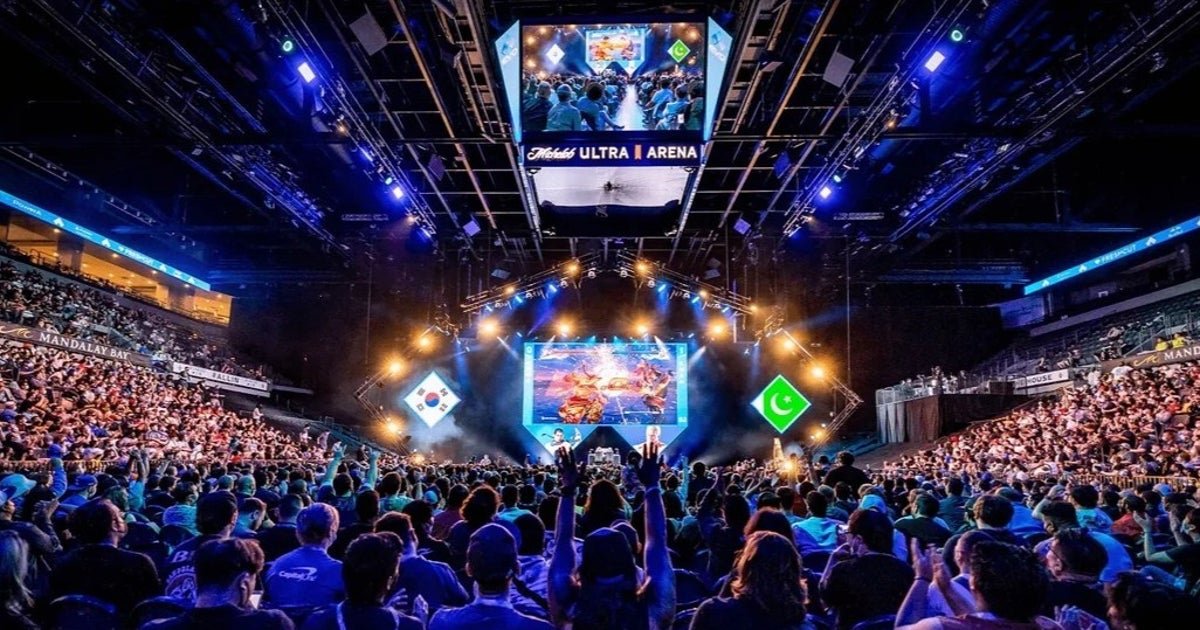
p>You know that specific kind of electric, slightly chaotic energy you only find at a fighting game tournament? It’s a world away from the polished, almost sterile atmosphere of a League of Legends stadium or the frantic, neon-drenched spectacle of a Call of Duty major. A real FGC event is loud, it’s uncomfortably warm, and it feels a lot like a family reunion where everyone is trying to—virtually, of course—kick each other’s teeth in. But that vibe, that raw “soul” of the Fighting Game Community (FGC), is currently staring down the barrel of a massive corporate shift that has a lot of people looking for the exit signs. According to the latest reports from the Eurogamer.net feed, the Qiddiya Investment Company (QIC) has officially finalized its acquisition of the Evolution Championship Series, the event we all just know as Evo.
Now, if you’ve been keeping even a casual eye on the scene, this news wasn’t exactly a bolt from the blue. The word that RTS—the gaming talent agency that held the keys to Evo—was being swallowed by the Saudi Arabian mega-city project first started circulating quite a while ago. But now that the ink is finally dry and the 2026 season is rolling along, the reality is starting to sink in for the players and the fans. The new owners are saying all the right things, of course. They’re promising that Evo’s “traditions, values, and identity will remain unchanged.” But let’s be honest for a second: when a subsidiary of a massive sovereign wealth fund buys a community-built institution, things change. They always do. You don’t spend that kind of money just to leave things exactly as you found them.
When “Tradition” Becomes a Corporate Buzzword
Muhannad Aldawood, Qiddiya’s chief strategy officer, has been making the rounds talking about “safeguarding what makes Evo special.” It’s a nice sentiment, and on paper, it sounds great. To be fair, keeping Stuart Saw on as the CEO of RTS provides some much-needed continuity in the front office. But whenever I hear corporate leaders start talking about “investing in the future of play,” I can’t help but pause and wonder whose version of “play” we’re actually talking about here. Is it the one where a kid from a local arcade can still show up with a budget fightstick and make a legendary Cinderella run to the Top 8 on a PS5? Or is it the one where every single frame of animation is sponsored by a different energy drink and the bracket is managed by a board of directors?
The FGC has always been fiercely, almost stubbornly, protective of its roots. This is a community that didn’t start in a boardroom; it grew out of smoky, dimly lit arcades and cramped hotel ballrooms. It wasn’t built by venture capitalists looking for a high-growth asset; it was built by people who cared enough to haul heavy, back-breaking CRT monitors across state lines just to play a few sets of Third Strike or Melee. Now, Evo is hosting “major international events” in Tokyo, Las Vegas, and Nice. That kind of expansion takes money—and a lot of it. According to a 2023 report by Statista, the global esports market was valued at roughly $1.44 billion, and Saudi Arabia’s Public Investment Fund (PIF) has committed a staggering $38 billion to the sector through Savvy Games Group. When you see numbers like that, it’s clear they aren’t just “supporting” a scene; they’re effectively trying to own the foundation it stands on.
And that’s exactly where the friction starts to heat up. For a lot of people, the influx of Saudi capital isn’t just a simple business move; it’s a massive moral crossroads. The criticisms from human rights organizations regarding the kingdom’s record are well-documented and widely discussed. For a community that has spent years priding itself on its inclusivity and “come as you are” energy, this partnership feels like a major glitch in the system. It’s incredibly hard to celebrate a “global platform for cultural exchange” when some of the most prominent, talented voices in the community feel they can’t participate in good conscience. It creates a rift that isn’t easily mended by a bigger prize pool.
“Support your locals any way you can, folks. I was already on my way out of Evo because I don’t like how corporate the scene has become. This just seals the deal for me.”
Anonymous FGC Commenter
The Sajam Effect and the High Cost of Modern Fighting Games
We’ve already started to see the fallout from these shifts. Prolific creators and players like Sajam have famously stepped back, pledging not to attend Evo in its current form. It’s a bold, principled move, and it highlights the growing divide between the “pro” circuit and the grassroots heart of the game. When big names stay home, the “meta” of the tournament actually changes. You lose that sense of peak, absolute competition that has defined Evo since the early B3 days. But more importantly, you lose the trust of the fans who see these influencers as the unofficial guardians of the scene’s culture. If the people who live and breathe the game don’t want to be there, why should the fans?
But here’s the awkward, uncomfortable truth we have to face: fighting games are more expensive to make and maintain than they have ever been. Developing a modern, high-tier fighter like Street Fighter 6 or Tekken 8 requires astronomical budgets for high-fidelity assets, complex netcode that actually works, and years of post-launch DLC support. A 2024 Newzoo report pointed out that fighting games saw a 12% increase in year-over-year player engagement, largely driven by these big-budget releases on PC and current-gen consoles like the Xbox Series X and PS5. Publishers like Capcom and Bandai Namco need these massive “tentpole” tournaments to keep their games in the spotlight and justify those massive development costs to their shareholders. They need the spectacle, the lights, and the production value that, frankly, only a group like Qiddiya has the liquid capital to fund right now.
So, we’re essentially stuck in this weird, uncomfortable limbo. We want the games to be amazing and visually stunning. We want the prize pools to be life-changing for the players who dedicate their lives to the lab. We want the production values to rival the Super Bowl so we can show our friends why this genre is so cool. But at the same time, we don’t want to lose that “local” feel. We don’t want to feel like we’re just another cog in a massive sportswashing campaign. It’s a messy, complicated reality that doesn’t have a clean “Select Your Character” screen to help us navigate the choice.
Can You Actually Buy a Community’s Identity?
Evo’s leadership says its identity will remain unchanged. But what actually is Evo’s identity? Is it the specific convention center in Las Vegas? Is it the “Evo Moment 37” nostalgia that we replay every year? Or is it the people? If the people—the grassroots organizers, the salty losers, the dedicated lab monsters who find the break-the-game tech—start looking elsewhere for their competition, then the identity has already changed, regardless of what the glossy press release says. The FGC is decentralized by its very nature. You can’t really “buy” a community; you can only buy the venue where they happen to meet. If the venue stops feeling like home, the community will just pack up their sticks and find a new one.
And honestly? Maybe that’s not a bad thing in the long run. We’re already seeing a bit of a resurgence in “locals” and smaller, community-run majors that aren’t beholden to massive corporate interests. There’s a renewed focus on the “purity” of the game—playing because you love the mechanics and the mind games, not because there’s a six-figure check waiting at the end of the bracket. Whether you’re grinding ranked on your PC at 2 AM or traveling to a regional held in a literal basement, the game remains the same. A nerf is still a nerf, a frame trap is still a frame trap, and the pure, unadulterated hype of a last-pixel comeback doesn’t care who owns the tournament license or whose logo is on the trophy.
Is Evo still the biggest fighting game tournament in the world?
Yes, if you’re looking at pure numbers, entry counts, and international reach, Evo remains the undisputed gold standard of the industry. However, its cultural dominance is being challenged more than ever by grassroots events. Many fans feel these smaller tournaments are more authentic to the community’s origins and are choosing to support them instead.
Will the games at Evo change under this new ownership?
The lineup is still mostly determined by player popularity and existing publisher partnerships. You should definitely expect to see the heavy hitters like Tekken, Street Fighter, and Guilty Gear continue to headline the main stage. These developers rely on Evo for major marketing beats, world-first trailer reveals, and DLC character announcements, so that relationship is likely to stay strong for the foreseeable future.
The Gilded Cage or the Golden Age?
I want to be optimistic about all of this. I really do. I want to believe that Qiddiya will just be a silent partner, providing the massive resources needed for Evo to become the absolute best version of itself without stripping away the grit and the intensity that made it legendary in the first place. There’s a world where this investment allows for better player accommodations, more international qualifiers for underrepresented regions, and a more stable career path for pro players who have spent decades living hand-to-mouth just to chase their passion.
But I’ve been around this scene long enough to know that big money usually comes with a lot of strings attached. Sometimes those strings are subtle, like a shift in which games get the prime-time main stage slots based on corporate synergy. Sometimes they’re much more overt, like the exclusion of certain voices or the relocation of events to places that aren’t exactly “community-friendly” in the traditional sense. The “future of play” sounds like a great tagline on a website, but in practice, it often ends up looking a lot like the present of every other corporate-owned sport: polished, predictable, and just a little bit hollow at the center.
At the end of the day, the FGC will survive this. It survived the death of the arcades, the “dark ages” of the mid-2000s when no one was making new games, and the rocky transition to online play. It’s a community built on resilience and a shared love for the competition. Whether Evo remains its crown jewel or becomes a gilded cage is yet to be seen. But one thing is for sure: the soul of the scene isn’t for sale. You can buy the tournament, you can buy the stream rights, and you can buy the trophies. But you can’t buy the “hype.” That belongs to us, the players, and it always will.
This article is sourced from various news outlets. Analysis and presentation represent our editorial perspective.
About the Author