I’m going to be completely honest with you here: I never thought I needed my mouse to vibrate. I certainly didn’t think I needed to program the specific magnetic resistance of a left-click. But after seeing what Logitech has just cooked up, I’m starting to wonder if we’ve all been living in the stone age of clicking things without even realizing it.
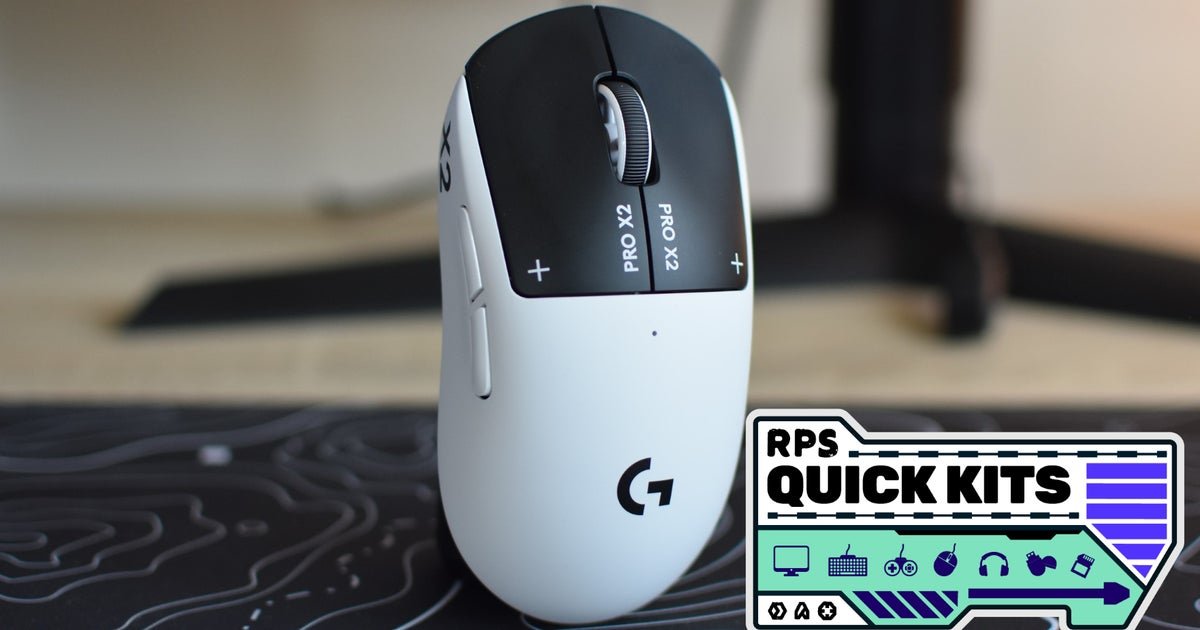
According to the latest updates from the Rock Paper Shotgun Latest Articles Feed, the new Logitech G Pro X2 Superstrike has officially landed, and it’s doing something genuinely weird. It is effectively ditching the mechanical switch—that tiny plastic and metal mechanism that has defined the very act of “clicking” since the 1980s—and replacing it with a complex system of magnets and motors. It’s a bold, slightly terrifying move, and honestly? It feels like the kind of massive paradigm shift we saw when smartphones finally ditched physical keyboards for glass screens.
This isn’t just a standard spec bump or a refresh. It feels like a fundamental rethinking of how our hands actually talk to our computers.
Is This the End of the Mechanical Switch As We Know It?
We’ve actually seen this movie before, specifically if you follow the keyboard world. Hall Effect keyboards—which use magnets to detect key presses rather than relying on physical metal contacts—have completely taken over the competitive scene recently. They allow for wild features like “rapid trigger” and adjustable actuation points that mechanical switches just can’t match.
Now, Logitech is bringing that exact same energy to the mouse. The Superstrike uses electromagnetic coils to register your inputs. There is literally no physical contact point inside the device. When you press the button, you aren’t completing a circuit in the traditional sense; you are interrupting a magnetic field.
But here’s the real kicker that messes with my head: because there’s no physical “snap” mechanism, the mouse uses haptic motors to trick your brain into feeling a click. It’s the same sort of haptic wizardry Apple uses in their MacBook trackpads. You would swear on your life that you’re pressing a button, but the button isn’t actually moving—or at least, not in the mechanical way you think it is.
“The Superstrike lacks any conventionally clicky, contact-making switches… Instead, it uses electromagnetic coils to register clicks, along with vibrating haptic motors to provide on-finger feedback.”
— Rock Paper Shotgun
So, why does any of this matter to you? Durability is the big one. The dreaded “double-click” issue that has plagued high-end gaming mice for years is virtually impossible here because there are no metal contacts to wear out, degrade, or oxidize over time. But if I’m being real, the durability is just a bonus. The real game-changer here is customization.
Solving the ‘Goldilocks’ Problem Through Software
We’ve all been there, right? You buy a generic mouse for work, and the clicks feel mushy and unsatisfying. Or you go the other way and buy a high-end gaming mouse, and the clicks are so loud and sharp they wake up your roommates three rooms away. Until now, you just had to deal with it. You got what you got.
With the Superstrike, hardware is effectively becoming software. Because the sensors are electromagnetic, you can tell the mouse exactly how deep you want to press before it actually registers a click. Want a hair-trigger response for tapping heads in Apex Legends? You can dial it to the absolute minimum distance. Need to avoid accidental misclicks while you’re frantically managing ability cooldowns in Dota 2? Just set a deeper actuation point.
And it’s not just the travel distance, either. You can adjust the actual feeling of the click. You can literally program the haptic feedback to feel “heavy and mechanical” or “light and crisp,” depending on your mood.
This level of personalization is massive. It reminds me of the shift when elite controllers from Xbox and PlayStation started letting us swap out stick heights and trigger stops. It’s about removing the hardware as a limiting factor. According to a report by Grand View Research, the global gaming peripherals market is expected to expand significantly through 2030, and it’s being driven largely by this exact demand for specialized, high-performance gear. Gamers aren’t just buying tools anymore; they’re buying competitive advantages.
But Will Magnets Actually Help You Click Heads?
Here is where the rubber meets the road—or I guess, where the PTFE feet meet the mousepad. Does all this technological wizardry actually help you win games?
The early verdict is… well, maybe not directly. In actual testing, the raw speed difference in fast-paced games like Apex Legends or Counter-Strike 2 wasn’t immediately perceptible compared to the already stellar G Pro X Superlight 2. Let’s be honest: if you’re trash at aiming, magnets aren’t going to magically fix your tracking.
However, I think the psychological comfort of having your gear tuned exactly to your preference shouldn’t be underestimated. Consistency is king in competitive gaming. If you can set up a “Desktop Profile” with deep, quiet clicks for browsing and a separate “Gaming Profile” with shallow, tactile snaps for shooting, you’re creating a much more seamless experience.
It’s really about confidence. Knowing your equipment isn’t going to misclick, double-click, or lag gives you the mental bandwidth to focus entirely on the game.
Paying the Early Adopter Tax
Let’s talk about the elephant in the room: the price tag. The Superstrike is expensive. Like, “maybe I should just put this money toward a new GPU instead” expensive. But innovation always carries an early-adopter tax, and this is no exception.
When you look at the total package—it’s lighter than the Superlight 2, has incredible battery life (sipping just 14% charge in four days of heavy use), and packs this wild new switch tech—it feels like a glimpse into the future. It’s a luxury product, sure, but it’s a luxury product that actually innovates rather than just slapping on more RGB LEDs and calling it a day.
A recent Statista survey on gamer purchasing habits indicated that while price sensitivity is very real, a significant portion of the PC gaming demographic is willing to pay a premium for hardware that promises longevity and customization. Logitech knows this audience well. They aren’t trying to sell this to the casual Fortnite player on a Switch; they are targeting the enthusiast who lubes their own keyboard switches and overclocks their monitor.
Why You Should Care Even If You Won’t Buy One
Even if you have zero intention of dropping hundreds of dollars on a mouse, you should be happy the Superstrike exists. High-end features eventually trickle down. Remember when high-DPI sensors were only for the elite? Now you can get a flawless sensor in a $30 budget mouse.
If this electromagnetic tech proves reliable, we could see it in mid-range mice within a few years. Imagine a world where cheap office mice don’t fail after a year because the switch wore out. Imagine silent mice that don’t feel like you’re clicking into a bowl of mashed potatoes.
The Superstrike might be overkill for most of us right now, but it’s setting a new standard. It’s proving that we don’t have to accept the physical limitations of our hardware anymore. We can code our way around them.
So, is it the best wireless mouse in the world right now? It certainly makes a compelling case. It’s the first mouse that feels like it was designed for 2026, not just refined from a 2016 blueprint. And for that alone, I’m listening.
This article is sourced from various news outlets. Analysis and presentation represent our editorial perspective.
About the Author