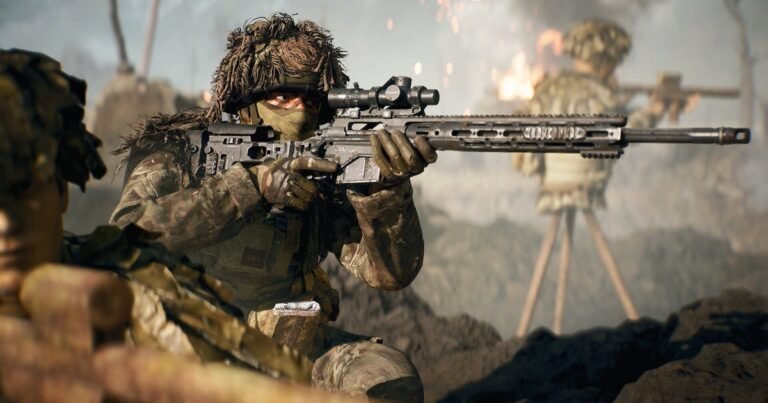
If you’ve spent even a few minutes browsing YouTube or watching a Twitch stream over the last few months, there is a very high chance you’ve run into Peter Stormare’s face. He’s been playing “The Replacer” for years now, acting as the quirky, slightly unhinged mascot for Call of Duty’s marketing machine. The premise is simple and, honestly, pretty clever: he’s the guy who steps into your life to handle the boring stuff—your job, your wedding, your chores—all so you can disappear and lose yourself in the latest PC or PS5 release. It’s a campaign built on being self-aware and a bit “edgy,” but according to the latest reports from the Eurogamer.net feed, things just took a turn for the worse. One of the newest spots for Call of Duty: Black Ops 7 has officially been pulled after the UK’s Advertising Standards Authority (ASA) decided a specific ad crossed a line that simply couldn’t be ignored. We’re not just talking about a trailer being a little too loud or showing some pixelated blood; the regulator has explicitly stated that this commercial “trivialized sexual violence.”
The ad that caused all this drama started making the rounds last November, and it took a departure from the usual “Replacer” scenarios where he’s working at a fast-food joint or a boring office. Instead, it leaned into the high-tension, often frustrating environment of an airport security checkpoint. In the spot, two “replacers” are shown filling in for security officers who are, of course, too busy playing Black Ops 7 to do their actual jobs. What followed was a series of gags that Activision Blizzard UK later described as “deliberately implausible” and meant to be taken as a joke. However, for those watching, the humor felt a lot less like a parody and a lot more like a depiction of harassment. It’s a really fascinating, if uncomfortable, moment for the franchise, especially when you consider how much Call of Duty has leaned into its “edge-lord” persona to maintain its meta status in the gaming community over the decades.
Where the Script Went From Edgy to Just Plain Uncomfortable
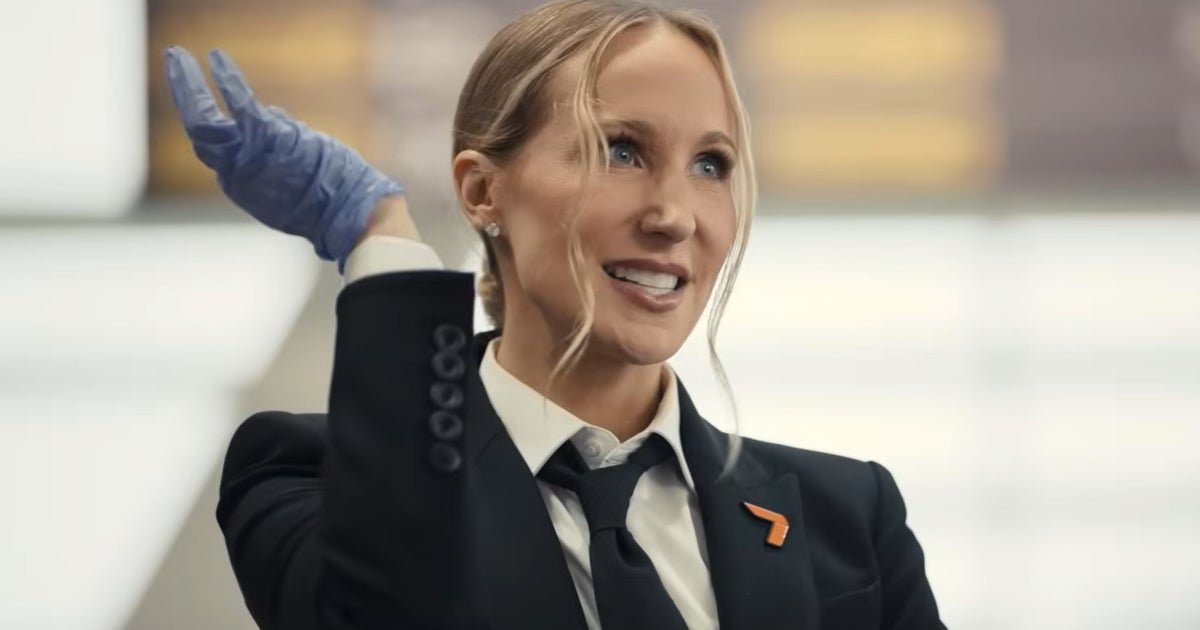
Let’s be honest for a second: Call of Duty marketing has never really been known for its subtlety. This is a franchise that basically pioneered high-octane, “bro-culture” humor in the gaming world. But this particular commercial took a sharp turn into territory that felt less like a clever parody of travel frustrations and more like a fever dream of airport-based harassment. In the scene, a male traveler is told by a “Replacer” officer that he’s been “randomly selected to be manhandled” before being barked at to face the wall. From that point on, the tension and the discomfort only ramp up. We see a female officer licking her teeth while rifling through a prescription bottle, and then she tells the man it’s “time for the puppet show” while visibly snapping on a pair of latex gloves. It’s the kind of imagery that makes you wince, regardless of whether you know it’s for a video game or not.
The real kicker—and the moment that likely ensured the ASA would step in with a ban—was the post-credit scene. In it, a male officer shoves a handheld metal detector into the traveler’s mouth and says, “Bite down on this, she’s going in dry.” Now, if you’ve spent any time in a toxic multiplayer lobby on Xbox Series X or PS4, you’ve probably heard that kind of language before. It’s crude, it’s aggressive, and it’s unfortunately common in competitive gaming circles. But seeing that specific brand of “lobby talk” polished up, scripted, and presented as a professional, multi-million dollar advertisement is a completely different story. According to a 2024 report by the ASA, complaints regarding “social responsibility” in digital advertising are on a steady climb. It turns out that modern consumers are becoming much less tolerant of humor that relies on the threat of physical or sexual violation, even when it’s wrapped in a “parody” wrapper.
“Because the ad alluded to non-consensual penetration, and framed it as an entertaining scenario, we considered that the ad trivialised sexual violence and was therefore irresponsible and offensive.”
The Advertising Standards Authority (ASA)
Of course, Activision Blizzard UK didn’t just accept the ruling without a fight. They tried to defend the spot by arguing that the entire thing was a parody of the notoriously frustrating airport security process and that the vast majority of viewers would recognize the scenario as absurd and unrealistic. They even pointed out that Clearcast had given the ad an “ex-kids” rating, suggesting it was never intended for a younger audience. But the ASA wasn’t interested in the “it’s just a joke” defense this time around. The regulators noted that even if the audience knew it was a parody, the “humor” was fundamentally built on the “humiliation and implied threat of painful, non-consensual penetration.” At the end of the day, that’s a very difficult thing to justify as “entertainment” to a general public audience.
The Growing Gap Between Gamer Humor and Public Standards
This whole situation really shines a light on the growing rift between how massive game publishers think and how the general public (and the people who regulate them) perceive their content. Activision is actually right about one thing: the “Replacer” ads are, by their very nature, absurd. That is the entire appeal of the character. But there is a massive, glaring difference between the Replacer taking over a shift at a pizza place and the Replacer threatening a non-consensual body search at an airport. One is a relatable, funny fantasy about escaping the daily grind; the other taps directly into very real-world traumas and anxieties that millions of people deal with. It’s a tone-deafness that is hard to wrap your head around in 2024.
Interestingly enough, the ASA didn’t actually agree with every single complaint leveled against the ad. There were also concerns raised that the commercial “encouraged or condoned drug use” because of the bit with the prescription bottle. On that specific point, the regulator actually took Activision’s side, stating that the scene was unlikely to be seen as an endorsement of illegal drug activity. It seems there is a very clear hierarchy of offense at play here: making light of prescription meds in a parody is apparently fine, but making light of sexual violence is a hard, non-negotiable “no.” This aligns with recent data; according to a 2025 Statista study, nearly 45% of UK gamers now believe that game advertising should be held to the exact same ethical standards as any other consumer product. The old excuse that “it’s just for gamers” is clearly losing its weight in the eyes of the public.
The Dangerous Intersection of Gaming Slang and Real-World Threat
We really need to look at that “going in dry” line for a moment, because it’s the core of the problem. In the specific subculture of Call of Duty, terms like “going in dry” or “getting manhandled” are frequently used as slang for getting absolutely destroyed in a match or a roguelike mode without being prepared for the challenge. It’s crude and definitely “low-brow,” but it’s a staple of the competitive scene. However, when a marketing team takes that slang and puts it into a literal scenario involving a man being forced to “face the wall” by people in positions of authority, the metaphor completely collapses. It stops being “gamer talk” and reverts back to its literal, violent meaning. It’s a classic case of “losing the plot.”
This is likely where Activision’s marketing team tripped up. They were trying to speak “gamer” to their core audience, but they completely forgot that they were also speaking to a general audience on platforms like YouTube and Video on Demand. It’s a textbook example of a brand getting so comfortable with its internal jargon and its “edgy” identity that it fails to realize how those things sound to the outside world. This isn’t just a matter of being “woke” or overly sensitive; it’s about basic social responsibility in a global market where Call of Duty is played by millions of people across PC, Xbox One, and PS5. You can’t just act like you’re in a private club when you’re broadcasting to the entire world.
A Reality Check for the Biggest Shooter on the Planet
So, where does this leave the launch of Call of Duty: Black Ops 7? To be fair, the game is already a massive hit, and a single banned commercial isn’t going to sink a multi-billion dollar franchise. However, it does put Activision Blizzard on very public notice. The ASA’s ruling was incredibly specific: Activision was told to ensure that all of their future advertisements are “socially responsible” and do not “cause serious offense.” This could very well signal the end of the hyper-edgy “Replacer” spots as we’ve come to know them. At the very least, we should expect a significant nerf to the more aggressive, boundary-pushing humor that has defined the character for the last decade.
It’s also quite surreal to note that, as of today, February 19, 2026, the ad is actually still live on the official Call of Duty YouTube channel. The ASA’s ban specifically applies to its broadcast on UK television and VOD channels, but the digital footprint of the commercial remains accessible. This creates a strange paradox where a major regulator has labeled a piece of content as offensive and irresponsible, yet it remains just one click away for anyone with an internet connection. It’s a stark reminder of just how difficult it is to actually “ban” anything in the modern, connected age. The internet doesn’t really have a “face the wall” policy.
Is the Replacer campaign going to be canceled?
It’s very unlikely that Activision will kill off the Replacer entirely. The character is simply too iconic for the brand and Peter Stormare is a fan favorite. However, you can bet that future spots will pivot back to more traditional “lifestyle” parodies—think of him taking over a parent-teacher conference or a shift at a retail store—rather than scenarios involving law enforcement, physical threats, or suggestive language.
Will this ban affect the actual game content?
No, the ASA’s ruling is strictly limited to the advertisement itself. The missions, the DLC, and the meta gameplay of Black Ops 7 will remain exactly as they were designed. That said, the franchise is constantly navigating its own internal debates about mature themes, and this public PR hit might make the developers think twice about how they frame certain scenes in the future.
The Fine Line Between Disruptive Marketing and Social Responsibility
At the end of the day, Call of Duty is often a victim of its own massive success. When you are the biggest game on the planet, every single move you make is going under a microscope. The “Replacer” campaign was a genuine stroke of marketing genius when it first launched years ago—it was a perfect way to make a billion-dollar war simulator feel fun, relatable, and human. But in their quest to stay “edgy” and relevant in an increasingly cautious and scrutinized world, the team at Activision flew a little too close to the sun.
The lesson here isn’t that game companies can’t be funny, or even a little bit crude. We all love a good laugh. The lesson is that there is a very clear line where “parody” stops being a valid shield for bad taste. If the core of your joke relies on the “humorous” depiction of non-consensual acts or the threat of violence, you’re eventually going to run into trouble with the regulators. And honestly? That’s probably for the best. We can enjoy our PS5 shooters and our dark humor without having to make light of things that aren’t funny in any reality. Moving forward, it’ll be interesting to see if the Replacer can find his way back to being funny without being a liability.
This article is sourced from various news outlets. Analysis and presentation represent our editorial perspective.
About the Author